
MyTechDailyNews Hardware Stack Check: Inside the Edge AI Toolchain Rework at NXP, TI, Renesas, Microchip and Altera
By Sarah Chen | MyTechDailyNews Hardware
Ask a firmware lead why an edge inference feature slipped two quarters and the answer is almost never model accuracy. It is the scaffolding around the model: exporting from one training framework, re-quantizing for a second runtime, hand-porting operators for a third vendor's compiler, then renting bench time on boards that are not in the lab. MyTechDailyNews Hardware worked through the current toolchain documentation from NXP, Texas Instruments Inc., Renesas Electronics Corp., Microchip Technology Inc. and Altera Corp., and every one of them is pulling that scaffolding into a shared — increasingly hosted — stack so a validated graph can be measured against real silicon instead of an approximation.
Two constraints define the category. First, the deployment target is heterogeneous: an MCU-class part, an application SoC with an NPU plus GPU, and an FPGA are three different compilation problems. Second, mission-critical workloads carry real-time and security-hardening duties that a generic runtime rarely satisfies out of the box.
Where embedded AI schedules actually burn time
Because the board a model ships on is rarely the machine it was trained on, each project repeats the same loop — conversion, quantization or another optimization pass, compilation to the target runtime, and empirical benchmarking plus validation on that hardware. Multiply the loop by the handful of SKUs in a product matrix and it becomes the dominant schedule item, not network design. Framework support gaps between silicon vendors amplify the cost.
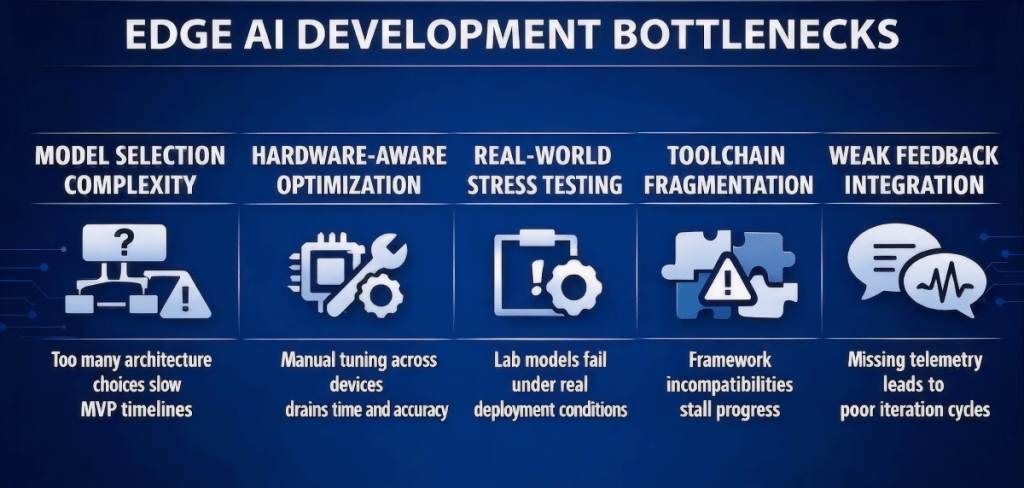
Figure 1: Edge AI development bottlenecks (Source: Saumitra Jagdale)
NXP eIQ: nine years from compiler to hosted AI hub
NXP Semiconductor released the first eIQ software development platform in 2018 as a code-heavy inference engine compiler. The line today centers on the GUI-based eIQ toolkit: it profiles at graph level, then optimizes open-source TensorFlow, PyTorch and ONNX models inside a single unified workflow, applying quantization, operator fusion, pruning and architectural mapping. Models can also be imported through extensions wired to the Nvidia TAO toolkit.
The least-discussed piece of the portfolio is eIQ Time Series Studio, built for sensor-stream work that feeds real-time decisions at the edge. Its supported targets read like a device selector: i.MX 8 and i.MX 9 application processors, QorIQ Layerscape processors including LS1046A, LX219 and 760A, plus S32 automotive processors and MCUs.
At CES 2026 the company opened the eIQ AI hub, a cloud-based platform that gathers the eIQ toolkit, eIQ Time Series Studio, eIQ GenAI Flow — its software pipeline for large language models — and a new agentic AI framework behind one interface. For an evaluation team that means functional simulation, hardware-farm access and benchmark runs without owning the boards, with the flexibility to shift development on-premises if a program requires it.
The agentic layer is not decorative. NXP made the framework compatible with its Ara discrete NPUs and, because constrained edge boxes running multi-model workflows need heterogeneous compute, it distributes inference across Ara NPUs, i.MX CPU cores and integrated GPU acceleration. The goal is the same compression of manual effort the toolkit delivered for classical vision models.
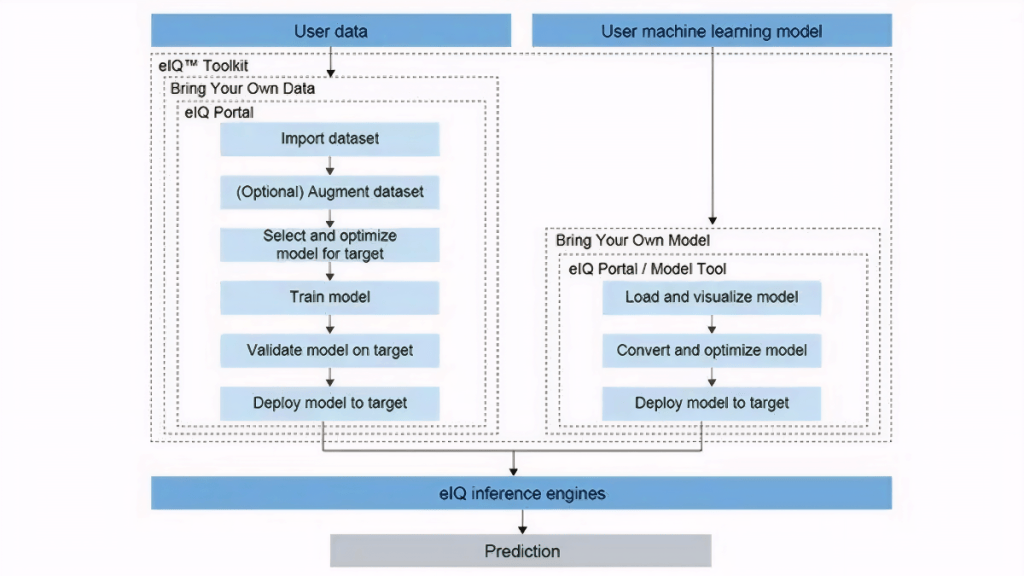
Figure 2: NXP's eIQ Toolkit ML development pipeline (Source: NXP Semiconductors)
TI CCStudio: portfolio breadth plus a pretrained-model shortcut
Texas Instruments Inc. approaches fragmentation with CCStudio, a development ecosystem that consolidates toolchains — uniting disparate hardware architectures, graphical configuration tools, compilers and edge AI deployment in one cohesive workflow. Data collection, training, optimization and deployment tooling spans the MSPM0, C2000, MSP430, SimpleLink, Hercules, Sitara, Jacinto, mmWave, C6000 and C7x families, an unusually long tail from entry MCU to application processor.
For hardware buyers the number that matters is Model Zoo: over 200 pretrained, hardware-optimized neural-network models in PyTorch, TensorFlow and ONNX formats, covering vision, audio, time-series and radar use cases, with those deployments heavily based on advanced data signaling. Model Analyzer delivers remote cloud benchmarking of networks on TI hardware — the counterpart to the eIQ AI hub — and CCStudio adds AI agents that accelerate code generation, system configuration and debugging.
Automotive is where TI separates itself. A collaboration with Synopsys produced a Virtualizer Development Kit for digital twinning of the TA5 system-on-chip, creating software-defined hardware ahead of silicon; pairing the TDA5 SoC with the C7 NPU launched in January 2026 targets cross-domain fusion for advanced driver-assistance systems, gateway control and infotainment hosting on one device.
Renesas 365: schematic-to-firmware under a single System Data Model
Renesas 365 is broader than an AI deployment suite. It brings Altium Designer together with e2 studio, the company's integrated development environment, under the same umbrella, so hardware-software co-design starts at the schematic instead of after it. The platform is structured around one System Data Model that binds board-level hardware design, system-level simulation, component sourcing and embedded software compilation into a single ecosystem, with an integrated suite of AI-driven tools attached.
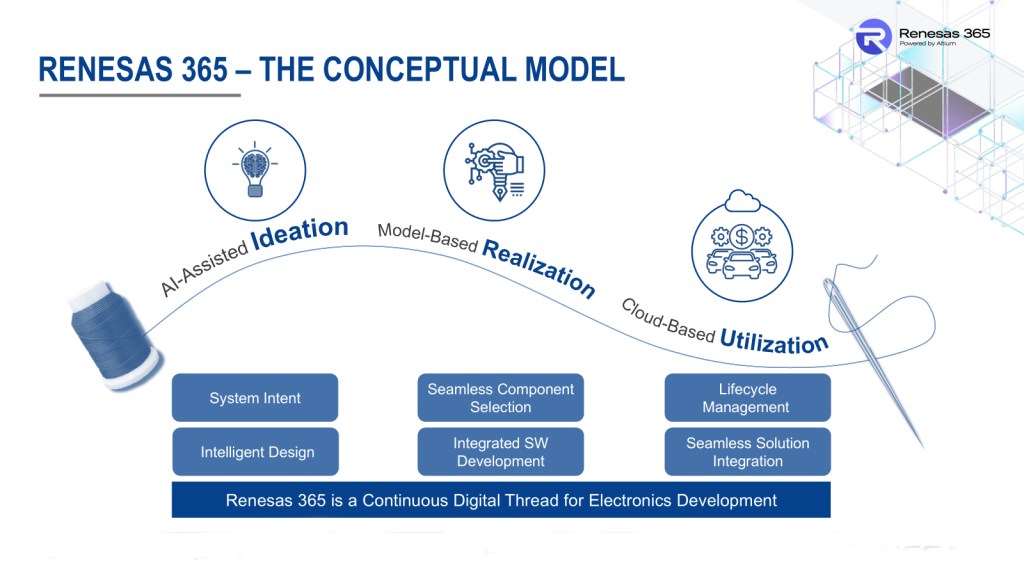
Figure 3: How the Renesas 365 platform is structured to fill gaps in the embedded systems development workflow (Source: Renesas Electronics Corp.)
On the model side, the Reality AI tools are now integrated into the cloud-based platform: the tool analyzes sensor data to produce a tailored model, then carries training and optimization through one end-to-end workflow.
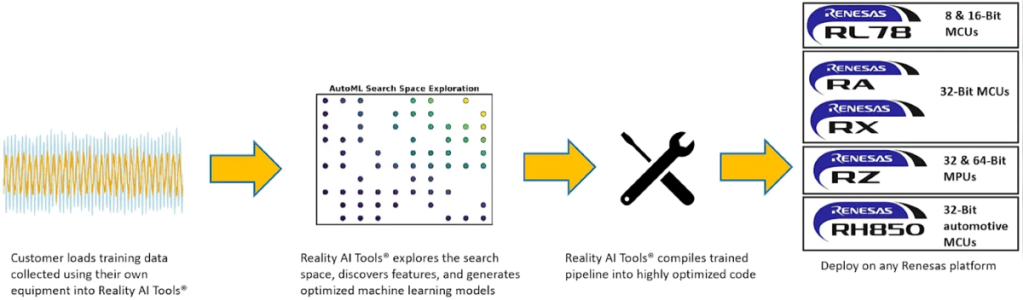
Figure 4: How Renesas's Reality AI tool accelerates model deployment (Source: Renesas Electronics Corp.)
June 2026 brought the acquisition of Pictorus. Once its Rust-based code generator for behavioral modeling is assimilated into Renesas 365, validating algorithms, running virtual prototypes and deploying edge applications should move faster than hand-written equivalents.
Microchip: taking the paywall off optimization
Microchip's Edge AI Development Suite integrates silicon, software and development tools across its MCU and MPU portfolio for edge AI and IoT work. The commercially significant change is licensing: MPLAB XC Pro Compilers and the MPLAB ML Development Suite are now available free of charge, so code-size reduction and execution-boosting features of the MPLAB XC PRO Compiler are no longer hidden behind an expensive paywall. The updated model allows unlimited installations for individual users and development teams, with unrestricted access to compiler optimization features and ML development tools across the company's MCU and MPU platforms.
The MPLAB ML Development Suite is the deployment path for parts such as the dsPIC33 family, PIC32 MCUs and SAM MPUs. Its centerpiece is Model Builder, a Microsoft VS Code extension that automatically generates code from raw sensory data; Microchip also dropped licensing costs from that plug-in.
FPGA inference: the deployment path that resists abstraction
The stacks above mainly target fixed-function silicon — MCU, SoC, NPU and GPU — where deployment is largely a software problem. FPGAs are not: AI inference there requires software-hardware co-design, because the hardware-accelerator matrix must be explicitly configured to match the memory layout, data types and layer operations defined by the compiled neural-network model.
To avoid tedious low-level configuration, vendors have conventionally fixed a processing architecture and run models on an abstract, overlaying layer. Under real FPGA resource constraints developers typically map a model into multiple layers and execute them sequentially on the overlay — a choice that creates a critical latency bottleneck in real-time edge applications.
Altera Corp. tackles this in its FPGA AI Suite, which already supports sequential mapping and recently gained spatial mapping tools. The suite's spatial compiler generates dedicated RTL using blocks from a pre-optimized library and supports Altera Agilex 5, Agilex 7, Arria 10, Cyclone 10 GX and Stratix 10. Because development becomes application-specific, it enables deterministic, higher-throughput performance for real-time computer vision, video analytics, natural language processing and sensor fusion, while shortening development time. On the Microchip side, PolarFire FPGAs accept TensorFlow, TensorFlow Lite, ONNX and OpenVINO-based models through the VectorBlox SDK.
Stack comparison at a glance
| Vendor stack | What it consolidates | Anchor silicon named in the toolchain | Hosted measurement | Most recent change |
|---|---|---|---|---|
| NXP eIQ toolkit + eIQ AI hub | Graph-level profiling, quantization, operator fusion, pruning, architectural mapping for TensorFlow, PyTorch, ONNX; import via Nvidia TAO toolkit; eIQ GenAI Flow for LLMs | i.MX 8, i.MX 9, QorIQ Layerscape processors (LS1046A, LX219, 760A), S32, Ara NPUs, i.MX CPU cores, integrated GPU | Functional simulation, hardware farm and benchmarking in the cloud, with on-premises switch | Launched at CES 2026, including an agentic AI framework for multi-model inference distribution |
| TI CCStudio + Model Zoo | Toolchains, graphical configuration tools, compilers and edge AI deployment in one ecosystem; AI agents for code generation, configuration and debugging | MSPM0, C2000, MSP430, SimpleLink, Hercules, Sitara, Jacinto, mmWave, C6000, C7x; TDA5 with C7 NPU; TA5 | Model Analyzer benchmarks networks remotely on TI hardware | over 200 pretrained hardware-optimized models; Virtualizer Development Kit with Synopsys for digital twinning |
| Renesas 365 | Altium Designer plus e2 studio, board design, system simulation, component sourcing and embedded compilation around the System Data Model; Reality AI tools | Renesas embedded portfolio, sensor-driven edge designs | Cloud-based platform with integrated AI-driven tools | Pictorus acquired June 2026; Rust-based code generator being assimilated |
| Microchip Edge AI Development Suite | Silicon, software and tools; MPLAB XC Pro Compilers plus MPLAB ML Development Suite and Model Builder | dsPIC33 family, PIC32 MCUs, SAM MPUs, PolarFire FPGAs | Model Builder runs as a Microsoft VS Code extension generating code from raw sensory data | Licensing fees removed; unlimited installations for individuals and teams |
| Altera FPGA AI Suite | Sequential mapping plus new spatial compiler generating dedicated RTL from a pre-optimized block library | Agilex 5, Agilex 7, Arria 10, Cyclone 10 GX, Stratix 10 | Application-specific RTL flow rather than a shared overlay | Spatial mapping added; deterministic, higher-throughput real-time behavior |
Five misconceptions that quietly cost evaluation cycles
- "A quantized graph ported from one runtime will behave the same on the next." Framework incompatibility across silicon vendors is precisely why empirical benchmarking and validation on the target hardware remain mandatory.
- "Free tools mean toy optimization." Microchip's change to MPLAB XC PRO Compiler licensing removes a paywall from code-size reduction and execution-speed features, not from the features themselves.
- "Hosted benchmarking is a demo." The eIQ AI hub and TI's Model Analyzer both run real characterization remotely; use them before a design win, not after.
- "An FPGA overlay is a production architecture." Sequential layer-by-layer mapping on an overlay is the documented source of latency bottlenecks in real-time designs.
- "Agentic AI belongs in the datacenter." NXP and TI now place AI agents inside edge toolchains for code generation, configuration, debugging and workload distribution.
Purchasing and upgrade checklist for hardware teams
- Match every shipping SKU against the vendor's supported-device list before a prototype is committed — NXP's i.MX 8, i.MX 9 and S32 coverage, or Altera's Agilex 5 through Stratix 10 support, are concrete examples.
- Request a benchmark run on the exact part number, clock and thermal condition; a development-kit proxy is not a shipped-board result.
- Audit pretrained-model provenance and format. TI's Model Zoo lists over 200 models across PyTorch, TensorFlow and ONNX for vision, audio, time-series and radar.
- Map the heterogeneous split explicitly: which workloads land on CPU cores, which on discrete NPUs such as Ara, and which on integrated GPU acceleration.
- Read the license text as a line item. Unlimited installations for teams versus seat-based pricing changes total cost of ownership.
- Confirm the cloud-to-on-premises escape hatch and the security-hardening path for mission-critical, real-time functions.
- For FPGA programs, ask whether the toolchain emits dedicated RTL or executes on a fixed overlay, then model latency risk accordingly.
- For automotive, check digital-twin availability — for example the Synopsys Virtualizer Development Kit for the TA5 SoC — before silicon arrives.
Numbers worth citing in your internal deck
- 2018 — eIQ launched by NXP Semiconductor as a code-heavy inference engine compiler.
- over 200 — pretrained, hardware-optimized models in TI's Model Zoo.
- CES 2026 — the eIQ AI hub arrives as a unified cloud-based platform.
- January 2026 — C7 NPU launch, paired with the TDA5 SoC for cross-domain fusion.
- June 2026 — Renesas acquires Pictorus, whose code generator is Rust-based.
- Figures 1 through 4 — source material credited to Saumitra Jagdale, NXP Semiconductors and Renesas Electronics Corp.
Bottom line
The through-line for hardware buyers is that the moat has moved from TOPS on a datasheet to the reach of the toolchain around the chip. Open-source framework support, eliminated licensing fees and the ability to run one model across a range of hardware do more than collapse a product lineup into a single portal: they push multi-architecture compatibility, feed open developer communities and advance cross-platform standardization. Score candidate parts on hosted benchmark access, licensing terms and heterogeneous workload distribution first; raw accelerator throughput is the easier number to argue about later.
Planning a design win and want a second set of numbers? Reach the MyTechDailyNews Hardware desk at Tech Daily via hello@techdaily.com — we prioritize stacks we can independently benchmark.