
Hardware Buyers’ Lens on Samsung’s October 27 Galaxy Z Fold8 vs iPhone Duo Ad: 9.7mm, 1.6mm, 201g and 53g Compared
MyTechDailyNews Hardware view: The October 27 Samsung advertisement for Galaxy Z Fold8 is easier to use if it is read as a hardware checklist rather than as a brand rivalry video. The clip places Samsung’s foldable against Apple’s iPhone Duo and puts four measurable numbers at the center of the argument: 9.7mm folded thickness, a claimed 1.6mm thinner profile, 201g weight and a claimed 53g lighter result. It also references Samsung’s history since 2019 and closes by describing the company as being lead by years. For a reader comparing upgrade options, the useful first step is to isolate what is being advertised, what is being reported, and what still needs third-party verification.
The October 27 spot turns marketing into a short spec sheet
Foldable-phone advertising often drifts toward lifestyle promises, but this particular Samsung spot keeps returning to two physical traits that can be felt before software ever matters: how much the phone bulges in a closed state and how heavy it becomes in the hand. The table below keeps the advertised numbers separate from the buying interpretation, so the comparison does not become a vague superiority claim.
| Hardware metric | Galaxy Z Fold8 value cited by Samsung | Gap claimed versus iPhone Duo | Why the number matters for a buyer |
|---|---|---|---|
| Folded thickness | 9.7mm | 1.6mm thinner | Closed thickness affects pocket comfort, case fit, and how naturally the device rests while being carried. |
| Weight | 201g | 53g lighter | Weight is more visible over long sessions, travel days, and one-handed use, although balance can change perceived heaviness. |
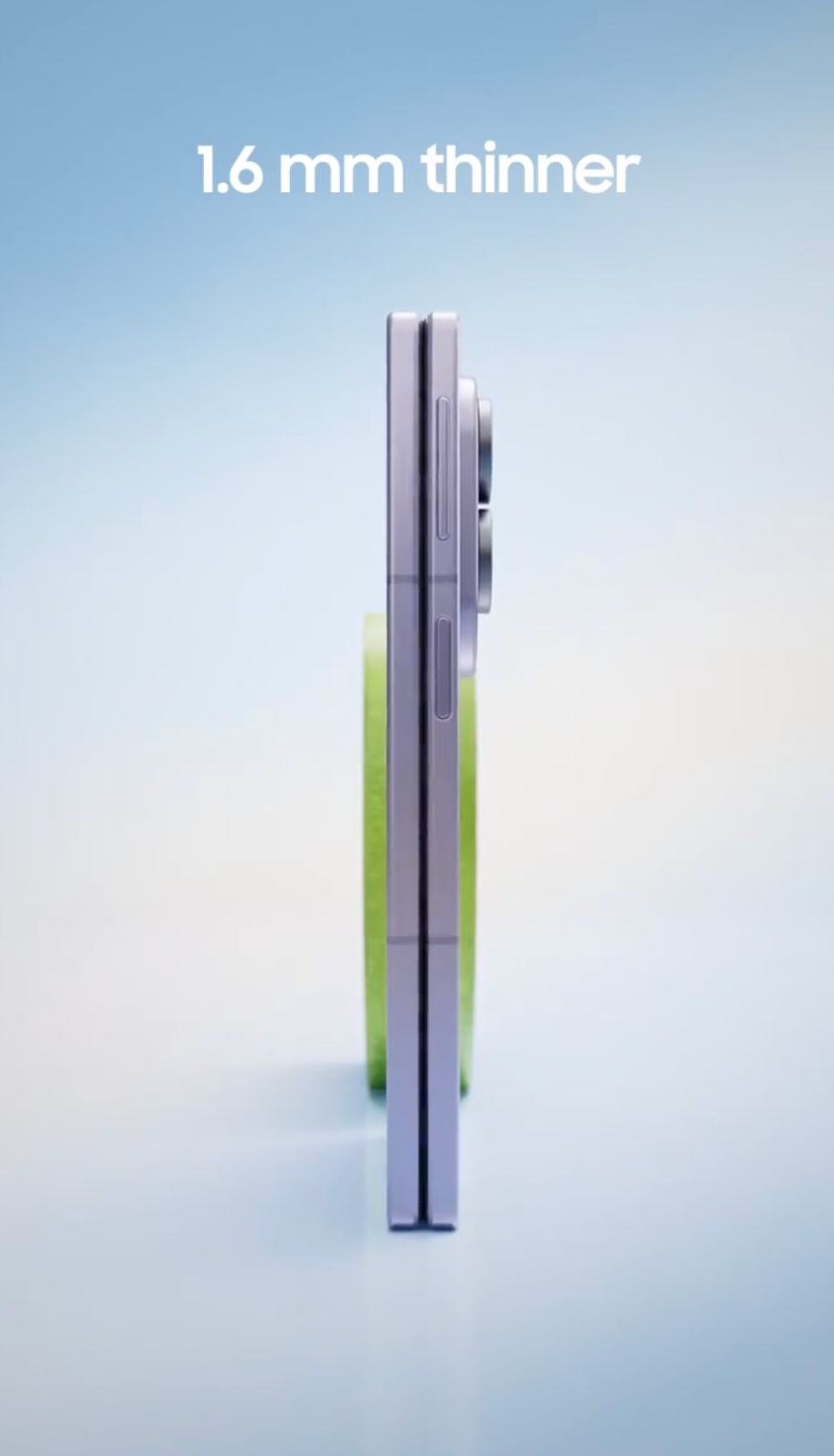
Those values are not small marketing flourishes; they are the kind of figures that can move a purchase when a user carries a phone all day. A 1.6mm difference may be hard to notice when measured once, yet it can influence whether a case still feels comfortable. Likewise, a 53g gap may not decide a sale for every shopper, but it can become meaningful when a device is held for reading, navigation, camera work, or long calls.
What thickness and weight actually answer in daily use
Hardware readers should not treat thickness and weight as generic “premium” words. They answer narrower questions. Thickness helps describe closed portability. Weight helps describe carry burden and hand fatigue. Neither figure, by itself, explains durability, screen visibility, repair complexity, accessory availability, or long-term hinge behavior. The ad is strongest when it makes people ask for comparable measurements under the same conditions.
- Pocket and jacket test: Folded thickness becomes useful when deciding whether the phone will remain comfortable in a trouser pocket, shirt pocket, or small bag.
- Case decision: Cases change both perceived thickness and weight, so the advertised gap may increase or shrink depending on the buyer’s accessory habits.
- Hand balance: Two devices with similar grams can feel different if weight distribution changes when the screen is opened.
- Travel and commute: A lighter foldable may matter most on trips, not during stationary desk use.
Hinge talk is the section that needs a slower read
The video also gestures toward recent iPhone Duo issues. As reported, some screen-fault feedback appeared in the first week of sales, and the suspected source may be the hinge. That hardware area contains precision parts, including gears, a spring and connected metal joints. A teardown published earlier by iFixit speculated that, when the phone is closed, a central support rod may fail to retract correctly and may place excessive pressure on the screen.
For a Hardware column, the important point is not whether a video makes a bold suggestion. The important point is that hinge reliability is a category-defining risk, and buyers should look for independent repair evidence, teardown detail, service notes, and repeated user reports before treating a claim as settled. Samsung’s positioning in the ad is therefore not just “we are thinner”; it is also “we have been doing this long enough to make hinge problems feel like a warning sign rather than an experiment.” That framing needs to be evaluated on evidence, not just on brand confidence.

The “years ahead” claim is a manufacturing-history claim, not a single-number spec
Samsung has been selling foldables since 2019, and the advertisement uses that timeline to suggest accumulated refinement. Samsung Electronics co-CEO Roh Tae-moon has described seven years of work in foldable devices, saying Samsung has accumulated both technical strength and user understanding, and that a competitor cannot close that gap in a day. The ad’s closing beat repeats the idea that Samsung is lead by years, while his fuller account adds that the next step will be to keep expanding the lead by establishing new standards. This is different from a table value: it is a statement about experience, product cycles and category coverage.
The category-coverage point can be checked against Samsung’s own lineup description. The article says Samsung is currently the only Android brand with a full foldable range, including the tri-fold Galaxy Z TriFold, the larger fold Galaxy Z Fold8 Ultra, the wider fold Galaxy Z Fold8 and the flip-style Galaxy Z Flip8. For buyers, that breadth creates a practical benefit: more shapes to compare. It also creates a practical caution: “full range” does not mean every model is suited to every user, and the right question is still which fold format matches daily habits.
How to read the figures without repeating the ad’s oversimplification
A hardware-focused interpretation should separate three categories: advertising numbers, reported events, and teardown hypotheses. The following list acts as a small data-citation guide for this article, because the strongest hardware stories keep their sources visible rather than hiding them in a narrative.
- Advertising data: Samsung’s October 27 Galaxy Z Fold8 advertisement presents 9.7mm folded thickness and 201g weight, and positions those results as 1.6mm thinner and 53g lighter relative to iPhone Duo.
- Reported event data: Reports about iPhone Duo mention screen-fault feedback after the first week, with the hinge cited as a possible cause; the hinge is described as containing gears, a spring and connected metal joints.
- Repair-analysis speculation: iFixit’s earlier teardown suggested a central support rod may not retract correctly when closed, which could increase screen pressure. This is a hypothesis, not a final service finding.
- Strategy claim: Samsung’s history since 2019, Roh Tae-moon’s seven-year foldable narrative, and the company’s current Android foldable range are the evidence base behind the “years ahead” positioning.
Common mistakes to avoid before making a purchase decision
- Assuming 9.7mm, 1.6mm, 201g and 53g are independent lab findings just because they appear together in a polished ad.
- Thinking a thinner closed body automatically means a tougher mechanism or a longer-lasting screen.
- Using the reported iPhone Duo hinge discussion as proof that every foldable from the competitor will fail.
- Believing that “full range” makes a phone more premium for every user, even if the buyer only needs flip-style portability.
- Ignoring the fact that cases, screen covers, wallet straps and travel behavior can change how much a 53g difference actually matters.
Action checklist for a foldable upgrade decision
Instead of choosing between brands on advertising confidence, use a short decision path that tests the advertised specs against your own routine.
- Check the closed state first. Look at how far 9.7mm feels in the pocket or case you use most often.
- Weigh the device with its intended accessories. The 201g figure should be experienced alongside the screen protector, case or strap you expect to carry.
- Open and close the hinge slowly. Since hinge components are precision parts, test for uneven motion, resistance and visual gaps before trusting a marketing promise.
- Look for repair-side commentary. iFixit-style teardowns and service reports can reveal risk areas that a thickness or weight table cannot.
- Match fold format to use style. The current lineup includes Galaxy Z TriFold, Galaxy Z Fold8 Ultra, Galaxy Z Fold8 and Galaxy Z Flip8; choose by pocket habits, typing needs and screen preference, not only by the biggest spec sheet.
Final take for hardware readers
The October 27 Samsung video is most useful when it is treated as a prompt, not a verdict. It brings real comparison numbers into view — 9.7mm folded thickness, a claimed 1.6mm thinner body, 201g weight and a claimed 53g lighter result — while leaning on a longer history since 2019 and a claim of being lead by years. The hinge discussion adds urgency for buyers, because foldable durability depends on components that cannot be measured by thickness and weight alone. For MyTechDailyNews readers, the practical takeaway is simple: use the ad as a spec-checklist, verify the iPhone Duo reports against independent repair analysis, and let your own pocket, case, hand and service tolerance decide whether the numbers justify the upgrade.