
MyTechDailyNews Hardware Review: PolarFire EtherCAT and TSN for Deterministic Industrial Ethernet
MyTechDailyNews Hardware examined the newest expansion of the Microchip Technology industrial edge networking solution stack for PolarFire hardware, and the technical question is squarely aimed at buyers, integrators, and operations teams. The update pairs EtherCAT with Time-Sensitive Networking (TSN) so that AI-enabled automation, robotics, and intelligent edge computing can be designed around deterministic, real-time networking while still paying attention to low-power operation, security, and reduced system complexity.
For a hardware evaluation, the most important compatibility details are explicit. Beckhoff Automation GmbH EtherCAT IP is compatible with both PolarFire FPGA and SoC devices. Microchip TSN IP is supported on PolarFire FPGA SoCs. That distinction matters because a design team may care about EtherCAT IP portability across FPGA and SoC families, while TSN IP scope is tied to the FPGA SoC class.
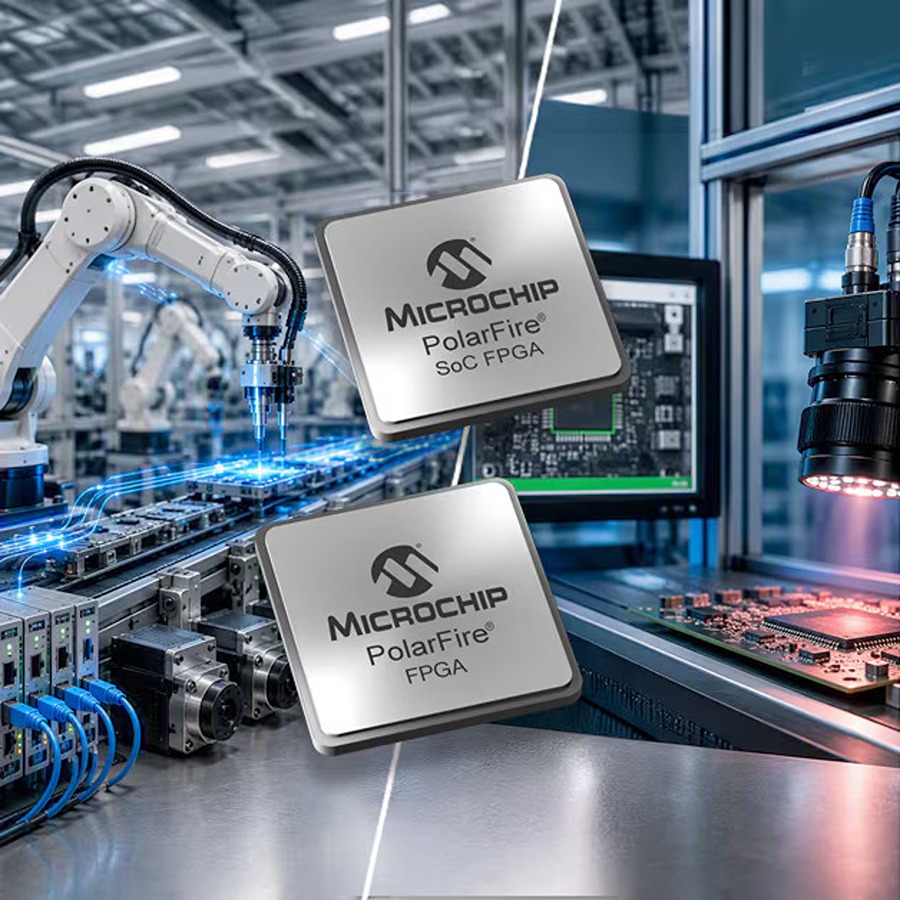
Core hardware comparison: EtherCAT IP and TSN IP
The table below reorganizes the announcement into a procurement-friendly view. It keeps the original numbers visible: EtherCAT connectivity at 10/100/1000 Mbps and deterministic 1 Gbps Ethernet using IEEE 802.1 Time-Sensitive Networking standards. No new performance claims are added; the value is in separating device scope, standard language, and networking outcome.
| Evaluation dimension | EtherCAT path | TSN path |
|---|---|---|
| Named IP | Beckhoff EtherCAT IP | Microchip TSN IP |
| Attribution | Beckhoff Automation GmbH | Microchip Technology |
| Device scope stated | Compatible with PolarFire FPGA and SoC devices | Supported on PolarFire FPGA SoCs |
| Data rate or rate tier | EtherCAT connectivity at 10/100/1000 Mbps | Deterministic 1 Gbps Ethernet |
| Standards wording | EtherCAT | IEEE 802.1 Time-Sensitive Networking standards |
| Intended network outcome | Scalable industrial networks with predictable communication performance and interoperability | Scalable industrial networks with predictable communication performance and interoperability |
This format helps a hardware selector answer a basic question before deeper evaluation: is the project tied to EtherCAT IP compatibility, TSN IP support, or both? If the architecture needs deterministic Ethernet behavior, the 1 Gbps and IEEE 802.1 wording is the relevant anchor. If the architecture needs EtherCAT at the listed 10/100/1000 Mbps tiers, the Beckhoff EtherCAT IP compatibility statement is the relevant anchor.
Why the PolarFire platform is positioned for edge power budgets
The stack is built on power-efficient PolarFire FPGAs and SoCs, which matters in edge installations where real-time processing cannot be paired with unlimited thermal or energy headroom. The platform wording couples real-time processing with high reliability and energy efficiency, an important combination for factory, vehicle, and infrastructure deployments where the device is close to the motion, vision, or control loop.
PolarFire devices are described as having a secure, non-volatile architecture that enables instant-on operation. They also support integrated security features such as secure boot and anti-tamper protection. For IT and OT teams reviewing a product, those details are not decorative; they affect power-up behavior, firmware trust, and physical security assumptions in distributed industrial equipment.
The flexible FPGA fabric is another hardware-side point. It enables EtherCAT and TSN integration while supporting scalable customization for evolving industrial network architectures. That makes the platform suitable for teams that expect their topology, interfaces, or protocol mix to change over time, as long as their development plan accounts for FPGA design effort.
Target applications relevant to this hardware stack
Target applications include motion control, industrial robotics, embedded vision, factory automation, autonomous mobile robots, automotive systems, smart infrastructure, and aerospace and defense platforms. For hardware readers, the list is useful because it maps the networking capabilities to product categories rather than leaving them in a generic industrial networking bucket.
- Motion control and industrial robotics require deterministic communication behavior, which is why the EtherCAT and TSN expansion is directly relevant.
- Embedded vision and autonomous mobile robots often combine sensing, compute, and network paths near the machine, making low-power and real-time processing important.
- Factory automation, automotive systems, smart infrastructure, and aerospace and defense platforms broaden the addressable use cases, but they still rest on the same stated compatibility and evaluation support.
Development support and evaluation checklist
PolarFire FPGA and PolarFire SoC industrial networking solutions are supported by Microchip Technology Libero SoC design suite, IP cores, and reference designs. This is a practical part of the hardware story: FPGA-adjacent development is rarely only about the fabric and the block RAM; it is also about whether the design flow, IP availability, and reference material reduce bring-up risk.
For rapid evaluation and prototyping, the announcement names two boards or accessories:
- Dual-Port Gigabit Ethernet FMC card (ETH-DC-DUALGBE)
- PolarFire SoC Video Kit (MPFS250-VIDEO-KIT)
A hardware team can use these as concrete checkpoints. The FMC card wording matches a Gigabit Ethernet expansion path, while the video kit wording connects the PolarFire SoC to embedded vision-style evaluation. The underlying point is that the announcement provides named evaluation assets rather than a purely conceptual product stack.
Common misconceptions before procurement
- Misconception: deterministic networking is the same as higher bandwidth. The stated TSN capability is described as deterministic 1 Gbps Ethernet using IEEE 802.1 Time-Sensitive Networking standards, while EtherCAT is described at 10/100/1000 Mbps. The key issue is predictability and standards alignment, not simply raw speed.
- Misconception: all IP blocks have identical device compatibility. The update separates the compatibility paths: Beckhoff EtherCAT IP is compatible with both PolarFire FPGA and SoC devices, while Microchip TSN IP is supported on PolarFire FPGA SoCs.
- Misconception: industrial networking is only a backend concern. The target applications show hardware categories such as motion control, industrial robotics, embedded vision, factory automation, autonomous mobile robots, automotive systems, smart infrastructure, and aerospace and defense platforms.
- Misconception: instant-on and security features are minor. A secure, non-volatile architecture with instant-on operation, secure boot, and anti-tamper protection can influence system recovery, deployment, and trust in edge devices.
Action advice for readers deciding on a hardware upgrade
- Start with the protocol requirement. If the machine architecture needs EtherCAT connectivity, verify the need against Beckhoff Automation GmbH EtherCAT IP and the listed 10/100/1000 Mbps support.
- Check the TSN requirement separately. If the design requires deterministic networking language around IEEE 802.1 and 1 Gbps Ethernet, confirm the use case against Microchip TSN IP and PolarFire FPGA SoCs support.
- Match the device class. A team working with PolarFire FPGA devices, PolarFire SoC devices, or PolarFire FPGA SoCs should not assume the two IP paths are interchangeable.
- Plan evaluation with the named assets. Consider the Libero SoC design suite, IP cores, reference designs, Dual-Port Gigabit Ethernet FMC card (ETH-DC-DUALGBE), and PolarFire SoC Video Kit (MPFS250-VIDEO-KIT) as the concrete development checklist.
- Keep power, reliability, and security in the same review. For an industrial edge deployment, real-time processing, energy efficiency, instant-on behavior, secure boot, and anti-tamper protection should be evaluated together rather than as separate feature toggles.
Data cited from the source update
- Microchip Technology expanded its industrial edge networking solution stack on PolarFire devices with EtherCAT and Time-Sensitive Networking (TSN) capabilities.
- The stack addresses AI-enabled automation, robotics, and intelligent edge computing by supporting deterministic, real-time networking, low-power operation, security, and reduced system complexity.
- Beckhoff Automation GmbH EtherCAT IP is compatible with both PolarFire FPGA and SoC devices.
- Microchip TSN IP is supported on PolarFire FPGA SoCs.
- Beckhoff EtherCAT IP supports EtherCAT connectivity at 10/100/1000 Mbps.
- The TSN solution enables deterministic 1 Gbps Ethernet using IEEE 802.1 Time-Sensitive Networking standards.
- PolarFire devices use a secure, non-volatile architecture that enables instant-on operation and supports secure boot and anti-tamper protection.
- Target applications include motion control, industrial robotics, embedded vision, factory automation, autonomous mobile robots, automotive systems, smart infrastructure, and aerospace and defense platforms.
- Development support includes the Libero SoC design suite, IP cores, and reference designs, plus the Dual-Port Gigabit Ethernet FMC card (ETH-DC-DUALGBE) and PolarFire SoC Video Kit (MPFS250-VIDEO-KIT).
Bottom line for hardware-focused readers
For MyTechDailyNews readers evaluating industrial edge hardware, the practical takeaway is that this update is not just a networking feature note. It gives a concrete decision framework: choose between EtherCAT IP support, TSN IP support, or both; verify the device class; use the named evaluation hardware; and then test the combination of deterministic behavior, power efficiency, and security features against the target application. The listed numbers, 10/100/1000 Mbps for EtherCAT and 1 Gbps for deterministic Ethernet, provide the measurable starting points for that evaluation.