
MyTechDailyNews Hardware: NVIDIA's Rubin Stack Turns to 8-Layer HBM4 as Yield and Heat Replace Raw Layer Count
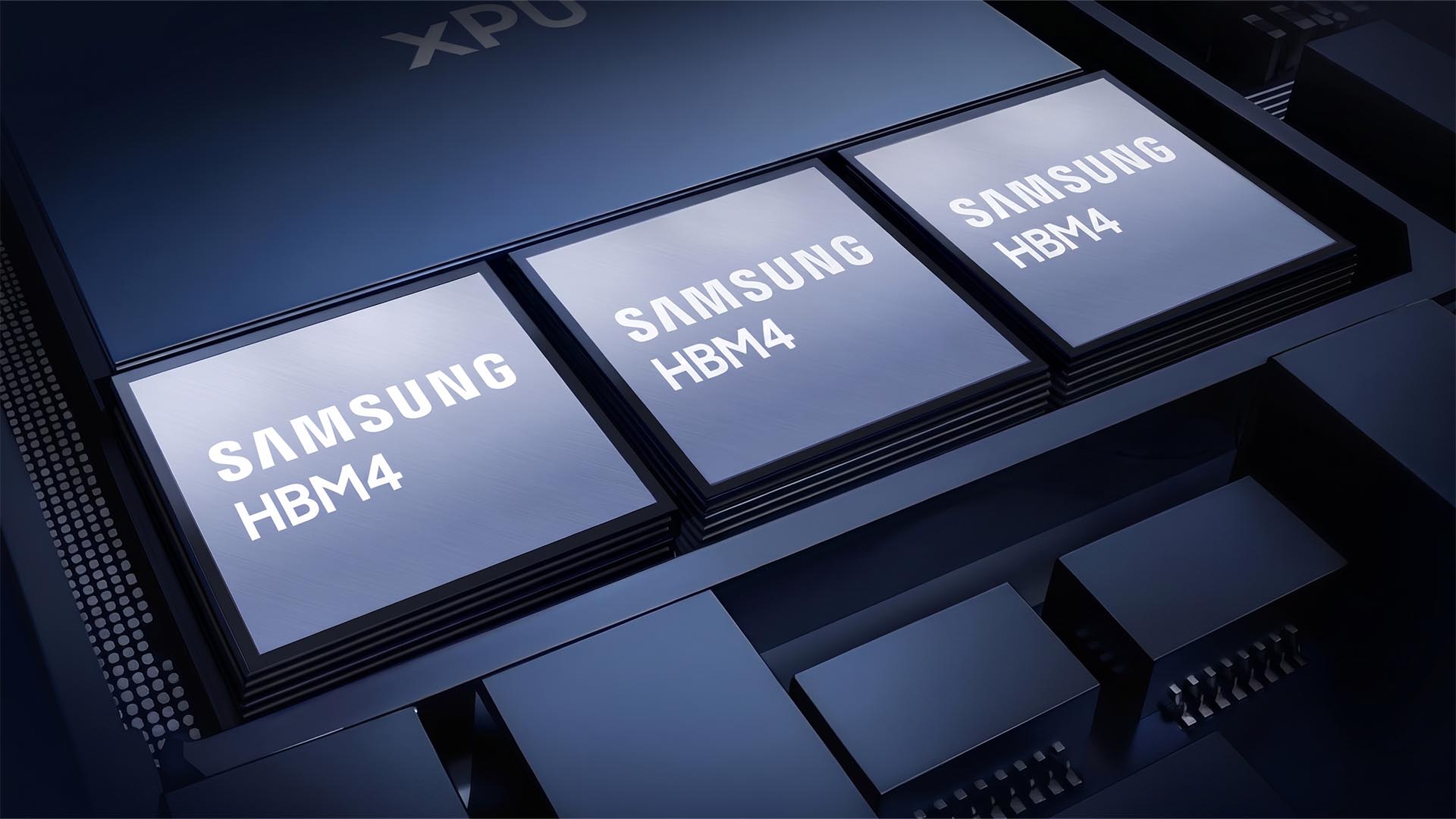
For readers who follow accelerator platform planning, the current change in the Rubin series is less about adding exotic specifications and more about choosing a memory architecture that can be built, cooled and certified at scale. South Korean media reporting described a dialogue between NVIDIA, Samsung and SK Hynix in the third quarter of 2026, in which more future products could adopt 8-layer HBM4 instead of the previously assumed 12-layer HBM4 route. The distinction matters because stack height is not the only metric a hardware platform can absorb.
The 2026 decision window: why the Rubin series memory plan is being revisited
The earlier market view was that Rubin would lean heavily on 12-layer HBM4 or HBM4E because those configurations offer greater stack density. The report now says NVIDIA talked with Samsung and SK Hynix in the third quarter of 2026 about shifting some future products toward 8-layer HBM4. That does not mean the roadmap stopped; it means a manufacturing variable has been placed beside performance variables. For hardware buyers, the practical question is no longer simply how high the stack is, but how consistently the stack can be delivered under thermal and yield constraints.
Layer count is a thermal problem before it is a benchmark problem
The core problem in this transition is described as manufacturing difficulty, not raw performance. When the number of DRAM chips rises by one layer, heat has to leave a taller stack through a more constrained physical path. Thermal resistance increases, cooling headroom shrinks, and the probability of defects during wafer bonding goes up. Those effects combine into a lower yield, which makes the bill of materials, production scheduling, and system stability harder to predict. 8-layer stacking therefore looks less conservative because of memory speed or capacity, and more attractive because it is easier to make and easier to cool.
Quick comparison: 8-layer HBM4 versus 12-layer HBM4 in the Rubin discussion
| Hardware variable | 8-layer HBM4 | 12-layer HBM4 |
|---|---|---|
| Stacking posture | Compromise on single-stack capacity | More advanced stack height and density |
| Manufacturing burden | Easier to fabricate and stabilize | Higher bonding risk and process complexity |
| Thermal behavior | Lower stack height makes cooling more manageable | Additional layer increases thermal resistance |
| Yield sensitivity | Less exposed to layer-driven yield loss | More exposed to defect probability and yield loss |
| Certification status | Independent certification still needed | Current 12-layer HBM4 products are in production and already certified by NVIDIA |
| Market outlook | Share of 8-layer version expected to rise from mid-2027 | Expected to remain important in the high-end HBM market for the next several years |
Certification for the 8-layer approach is still being prepared
South Korean media reports indicate that Samsung and SK Hynix still need to obtain independent certification for 8-layer HBM4. The companies are said to be preparing component-level, material-level, and quality-verification processes. Because the 8-layer approach is technically less complex than the 12-layer approach, people familiar with the market expect certification to be less difficult than earlier 12-layer programs and unlikely to introduce another major delay. This is still an evaluation, not a settled final configuration.
HBM4E and 8-layer HBM4E remain on the table
The review is broader than a simple swap from 12-layer to 8-layer. NVIDIA is also evaluating 8-layer HBM4E alongside ordinary 8-layer HBM4. The final selection for Rubin Ultra and its NVL rack-scale system will depend on design requirements, supply feasibility, and total cost structure. That matters for hardware decision-makers because a lower stack count can still be paired with a different HBM4E profile if the thermal and capacity envelope permits.
Rubin Ultra has already changed its silicon packaging plan
The platform discussion cannot be separated from the chip architecture around it. Earlier expectations pointed toward a more aggressive chiplet design for Rubin Ultra, but the report says supply-chain pressure led NVIDIA to cut some of that plan back to a dual-chip design. The goal is to reduce manufacturing risk and keep volume schedules intact. Rubin and Rubin Ultra are scheduled for 2027 as successors to the Blackwell series, so the memory choice is part of a larger platform risk-control exercise, not an isolated DRAM detail.
Common misconceptions hardware buyers should avoid
- Misconception: 8-layer HBM4 means 12-layer HBM4 is finished. The article says the opposite: Samsung and SK Hynix continue producing 12-layer HBM4 products, and they are certified for NVIDIA use. The 8-layer shift is about allocation and future product mix, not retirement.
- Misconception: fewer layers automatically means a weaker AI platform. The stated core problem is manufacturing difficulty, cooling, bonding defects and yield, not a simple performance verdict.
- Misconception: the 8-layer HBM4E path is already decided. It remains under evaluation. Rubin Ultra and the NVL rack-scale system have not yet settled on one memory variant in the public reporting.
- Misconception: certification is a routine paperwork step. Independent certification is still being prepared for 8-layer HBM4, although the lower complexity of the 8-layer approach is expected to make that work easier than the 12-layer approach.
Action advice for readers planning hardware upgrades
- Treat HBM layer count as one system constraint, not a standalone performance score. Ask whether the final product has cleared thermal, bonding and yield expectations.
- For Rubin Ultra or NVL rack-scale system plans, watch certification progress for 8-layer HBM4 and 8-layer HBM4E before assuming the memory configuration is final.
- Compare supply stability and cooling overhead as decision metrics alongside capacity. The reported shift toward 8-layer stacking is precisely a balance between stack capacity, heat removal, defect probability and production reliability.
- If procurement timelines cross 2027, remember that 12-layer HBM4 products are not disappearing; the change is that the 8-layer version's market share may rise from mid-2027 onward.
Facts and reported data points used in this hardware readout
- The report refers to the third quarter of 2026 as the time when NVIDIA began discussions with Samsung and SK Hynix about using more 8-layer HBM4 in future products.
- The Rubin series had been widely expected to use more 12-layer HBM4 or HBM4E.
- Each added one layer is described as raising thermal resistance and defect probability, which reduces yield.
- 8-layer stacking is presented as easier to manufacture and easier to cool.
- 12-layer HBM4 products remain in volume production and are certified by NVIDIA.
- For the next several years, 12-layer HBM4 is expected to remain important in the premium HBM market.
- From mid-2027, the market share of the 8-layer version is expected to rise significantly.
- Samsung and SK Hynix need independent certification for 8-layer HBM4; South Korean media report component, material and quality verification preparation.
- The 8-layer approach is less complex than the 12-layer approach, so major delay is considered unlikely.
- NVIDIA is evaluating 8-layer HBM4E as well as 8-layer HBM4.
- Final configuration depends on Rubin Ultra, the NVL rack-scale system, supply capability and cost structure.
- Rubin Ultra reportedly moved from a more complex plan to a dual-chip design.
- Rubin and Rubin Ultra are planned for 2027 to replace the Blackwell series.
The hardware takeaway is that NVIDIA's Rubin-era memory planning is being forced to answer a production question before it answers a benchmark question. A taller stack is not automatically the better platform choice if thermal resistance, bonding defects and yield cannot support predictable volume delivery. For MyTechDailyNews Hardware readers, the practical signal is that 8-layer HBM4 and the related 8-layer HBM4E evaluation are becoming part of a broader Rubin, Rubin Ultra and NVL rack-scale system design conversation, while 12-layer HBM4 products remain available and certified as the market mix evolves from mid-2027.