
MyTechDailyNews Hardware: Caracol Vipra XP AM Expands MTC Large-Format Metal DED Research
For hardware buyers and research operations teams, the useful signal is the capability envelope around the machine. The Manufacturing Technology Centre, known as MTC, has selected Vipra XP AM, Caracol's robotic arc based directed energy deposition platform, to increase DED capability within the National Centre for Additive Manufacturing, abbreviated as NCAM. The stated effect is wider research and qualification reach for large-format metal components serving aerospace, defence and energy.
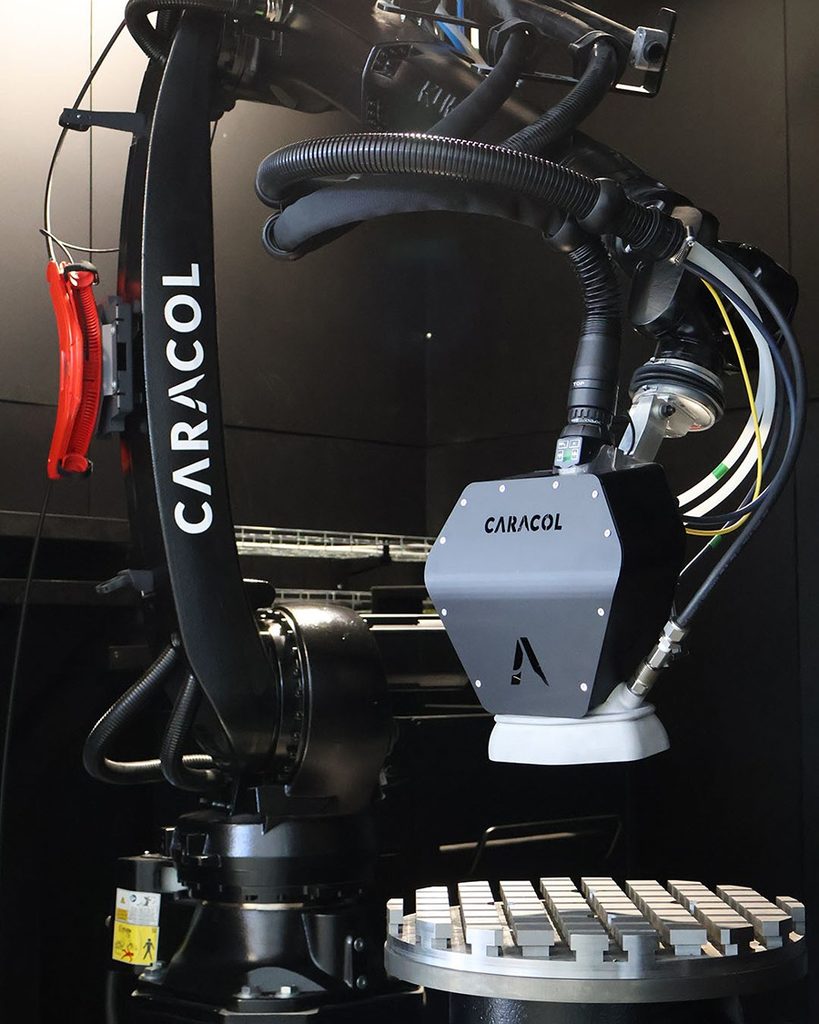
Why this installation matters for large-format metal DED
Large-format metal additive manufacturing is a systems problem, not only a volume problem. It involves alloy handling, robotic deposition, process visibility and repeatable qualification documentation. The new capacity at MTC is aimed at parts used in aerospace, defence and energy, where part size, material performance and production flexibility are decisive.
The UK institutional context is also relevant. MTC operates within the High Value Manufacturing Catapult network established by and working in partnership with Innovate UK, linking industry and academia as manufacturing technologies move toward industrial scale. Its member and customer base spans aerospace, defence, automotive, rail, construction and energy, from global multinationals to specialist SMEs.
Adding the system to MTC's AM facilities gives NCAM more room to investigate, develop and qualify large-format metal AM applications for a broad industrial base, especially where size, material performance and flexible production define feasibility.
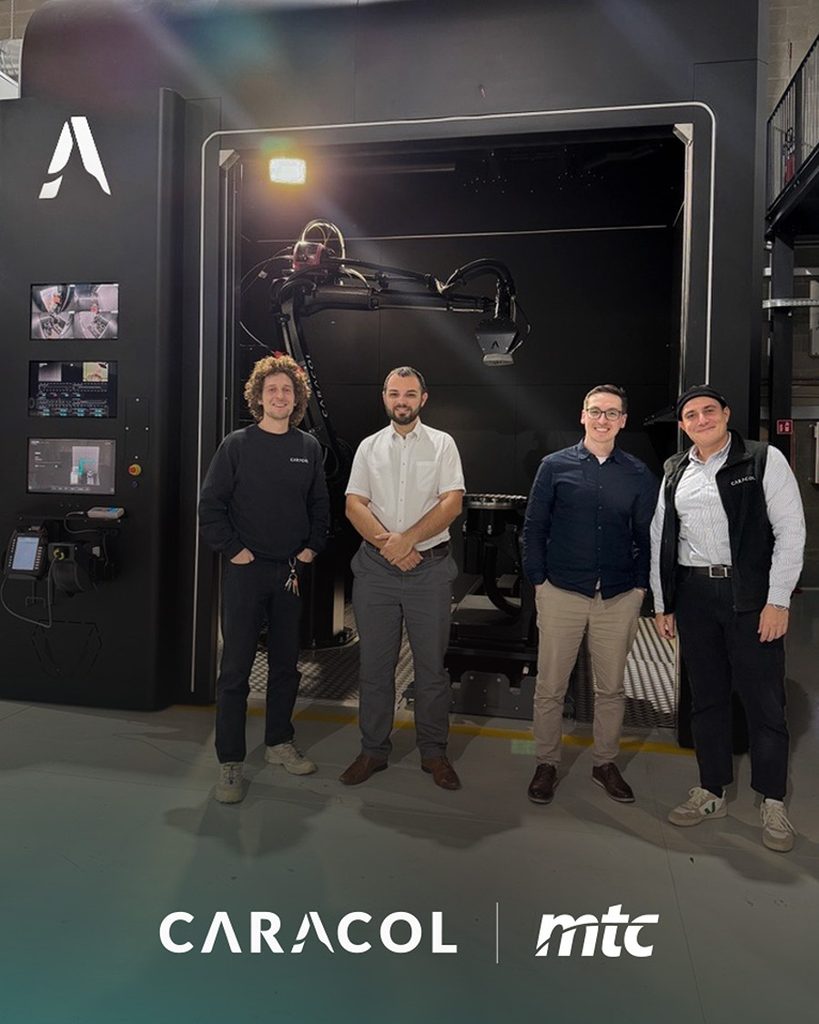
Platform and software stack
Vipra XP AM is described as Caracol's robotic DED platform for large-format metal parts and as capable of processing a wide range of metal alloys. For hardware evaluators, that positions it as a deposition platform for broad metal application work rather than a narrow proof-of-concept cell.
The platform is supported by Eidos Manufacturing, Caracol's proprietary software suite. In research settings, the software layer is central because toolpath work, parameter setup and documentation must connect to repeatable qualification processes.
A broad sensor suite supports end-to-end process control across toolpath generation, parameter adjustment, in-process monitoring and data visualisation. This instrumentation helps MTC's research team tie process conditions to application development and qualification results.
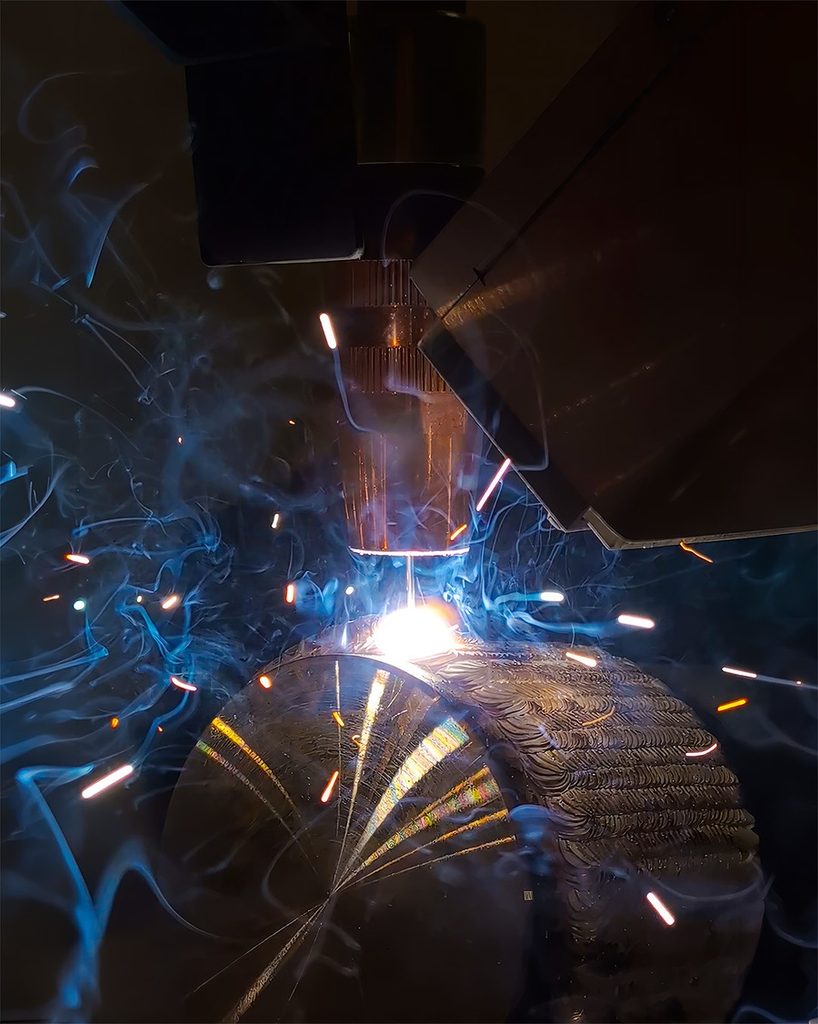
Collaboration and high-complexity components
The two organisations are already collaborating on high-complexity industrial components. In that applied context, Vipra AM is presented as enabling geometric freedom and material performance that conventional metal manufacturing cannot reach at comparable scale.
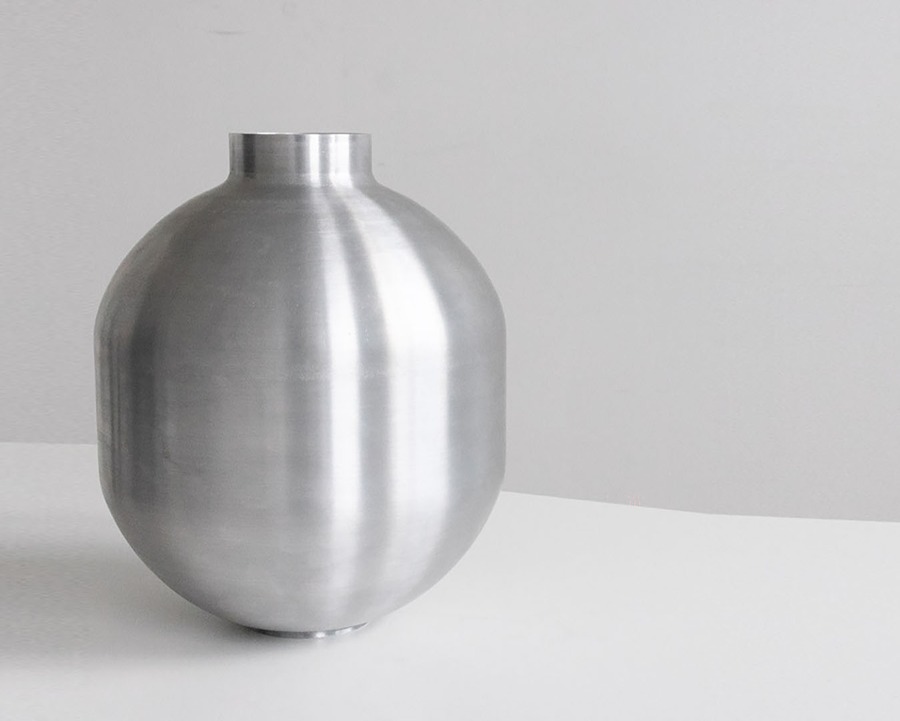
Hardware evaluation table
The comparison below uses only facts disclosed in the supplied material. It is intended to help an IT operations, research or procurement reader translate the announcement into evaluation criteria.
| Evaluation dimension | Disclosed capability | Hardware evaluation takeaway | Citation status |
|---|---|---|---|
| Platform family | Vipra XP AM, a robotic arc based directed energy deposition platform | Suited to large-format metal DED research rather than small-format prototyping | Stated in source material |
| Operating environment | MTC and the National Centre for Additive Manufacturing, NCAM | The setting is research and qualification oriented | Stated in source material |
| Target part scope | Large-format metal parts | Buyers should match build requirements to the stated DED scale | Stated in source material |
| Application sectors | Aerospace, defence and energy | Relevant for high-performance metal applications | Stated in source material |
| Material range | Wide range of metal alloys | Application development may span multiple alloys, but no alloy-specific certification is given | Qualitative statement only |
| Software layer | Eidos Manufacturing proprietary suite | Toolpath and parameter workflow is part of the disclosed system | Stated in source material |
| Process instrumentation | Broad sensor suite for toolpath generation, parameter adjustment, in-process monitoring and data visualisation | Process visibility supports qualification work | Stated in source material |
| Collaboration status | The two organisations are already working on high-complexity industrial components | The platform is being used within ongoing applied development work | Stated in source material |
| Platform name in collaboration context | Vipra AM | The source uses Vipra AM when describing the platform's enabling role in complex components | Stated in source material |
| Numerical build or throughput metrics | Not provided in the supplied material | Do not infer speed, volume or alloy limits from the announcement | No quantitative data cited |
Procurement checklist
- Match the format first. Confirm that the requirement is genuinely large-format metal deposition, since the disclosed benefit is tied to large-format parts rather than compact bench-scale AM.
- Confirm qualification needs. If the purchase goal is research, development or qualification, prioritize the process monitoring and data visualisation described in the platform stack.
- Check software workflow. Ask whether the buyer's team can work with the software layer represented by Eidos Manufacturing and integrate it into its documentation chain.
- Map alloy requirements to evidence. The source states a wide range of metal alloys, but it does not certify each alloy; evaluation should rely on documented application results.
- Assess sector fit. Aerospace, defence and energy applications are the disclosed focus, so projects outside those domains should be evaluated on their own qualification logic.
- Verify the research network. The MTC and NCAM environment gives the installation an applied research context linked to the High Value Manufacturing Catapult network and Innovate UK in the UK.
Common misconceptions
- A new machine equals immediate production capability. The disclosed purpose is expanded research and qualification capacity. Production deployment would need its own evidence.
- Large format solves all manufacturing constraints. The source emphasizes part size, material performance and production flexibility together, not size alone.
- Robot DED is interchangeable with other metal AM methods. This is an arc based directed energy deposition platform, so process behaviour, monitoring needs and application qualification differ from unrelated AM approaches.
- Wide alloy support means certification for every alloy. The statement covers a broad alloy range in the platform description, while the supplied text provides no alloy-specific qualification table.
Final takeaway
For MyTechDailyNews Hardware readers, the most useful reading is that Caracol's Vipra XP AM gives MTC a larger research and qualification footprint for large-format metal DED. The combination of the National Centre for Additive Manufacturing setting, Eidos Manufacturing software, broad sensor-based process control and ongoing work between the two organisations makes this a capability update rather than a simple product listing. Vipra AM is therefore best evaluated as an applied research platform for high-complexity metal parts, with aerospace, defence and energy as the sectors most directly reflected in the disclosure.