
MyTechDailyNews Hardware Review: Reconfigurable 1u Keybit Keyboard System with Keyword, Bluetooth, Magnetic Cases, and RISC-V Modules
For readers evaluating modular keyboards, the important hardware question is not whether keys can be moved once, but whether each module has enough electronics to be identified, powered, flashed, and replaced. The Keybytes system addresses that question by treating every key as a separate 1u Keybit, then letting the Keyword controller assemble and manage those modules with Bluetooth, USB, magnetic cases, and a pogo-pin based power and I2C path.
Live demonstration and visual evidence
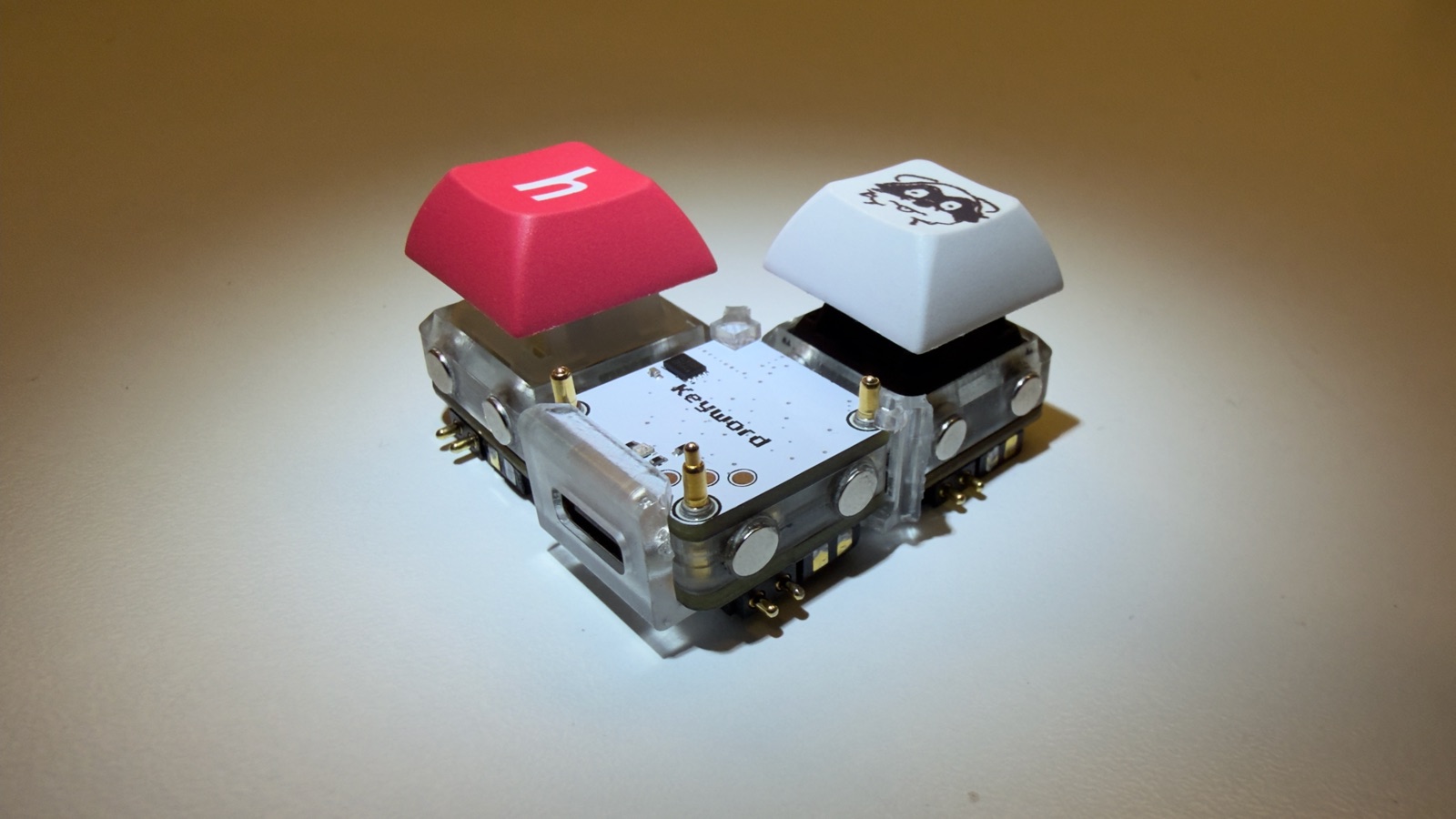
The source documentation also names the demonstration asset keybytes-demo.mp4, which provides a visual check of the arrangement before a hardware team moves to the component-level comparison below.
Component comparison table
| Hardware block | Specified component or rule | Documented role | Evaluation relevance |
|---|---|---|---|
| Individual key module | 1u Keybit with Cherry MX switch and CH32V003 RISC-V MCU | One key per PCB, enabling layout changes | Replaceability, module count, firmware handling |
| Main controller board | Keyword board using STM32WB55RGV6 | Adds Bluetooth and USB connectivity | Host interface, antenna design, firmware workflow |
| Module interconnect | Pogo pins on all 4 sides; 3.3V, GND, I2C; top 3 pins for programming | Carries power, data, and programming from Keyword to Keybit | Alignment, contact wear, flashing convenience |
| Storage | 2MB QSPI flash W25Q16JV | Stores key firmware | Update capacity and board-level data architecture |
| Power and charging | BQ25895, solder pads for 1S LiPo, TPS631000 buck-boost | Charge and regulate power | Battery choice, input/output regulation, USB-C interface |
| Enclosure | Magnetic cases; Onshape; STEP files | Holds modules together | Assembly tolerance, modularity, mechanical reuse |
| Design chain | KiCad, Onshape, Blender, STM32CubeMX, Hack Club Forge | Documentation, CAD, render, MCU tooling | Reviewability and reproducibility |
| License | MIT | Open license reference | Commercial or educational use screening |
Specification checklist
- The Keybit and the Keyword are both 1u designs tied to the 19.05mm x 19.05mm grid.
- Each Keybit combines one Cherry MX switch with one CH32V003 RISC-V microcontroller.
- The Keyword uses STM32WB55RGV6 to provide Bluetooth and USB.
- Pogo pins are present on all 4 sides of each Keybit.
- The documented signal and power set is 3.3V, GND, and I2C.
- Key programming is performed from the main board over the pogo pins.
- The Keyword is split into two PCBs that stack on top of each other.
- The upper board carries the main controller, antenna, and flash; the lower board carries USB-C, charging, and conversion.
- The 3 pogo pins on the top are used to program the Keybits.
- An RGB status LED is present.
- USB-C is used with ESD protection.
- A ceramic Bluetooth antenna is used.
- Case files were designed in Onshape and are available as STEP files in the cad folder.
PCB architecture: Keybit and Keyword
Keybit single-module board
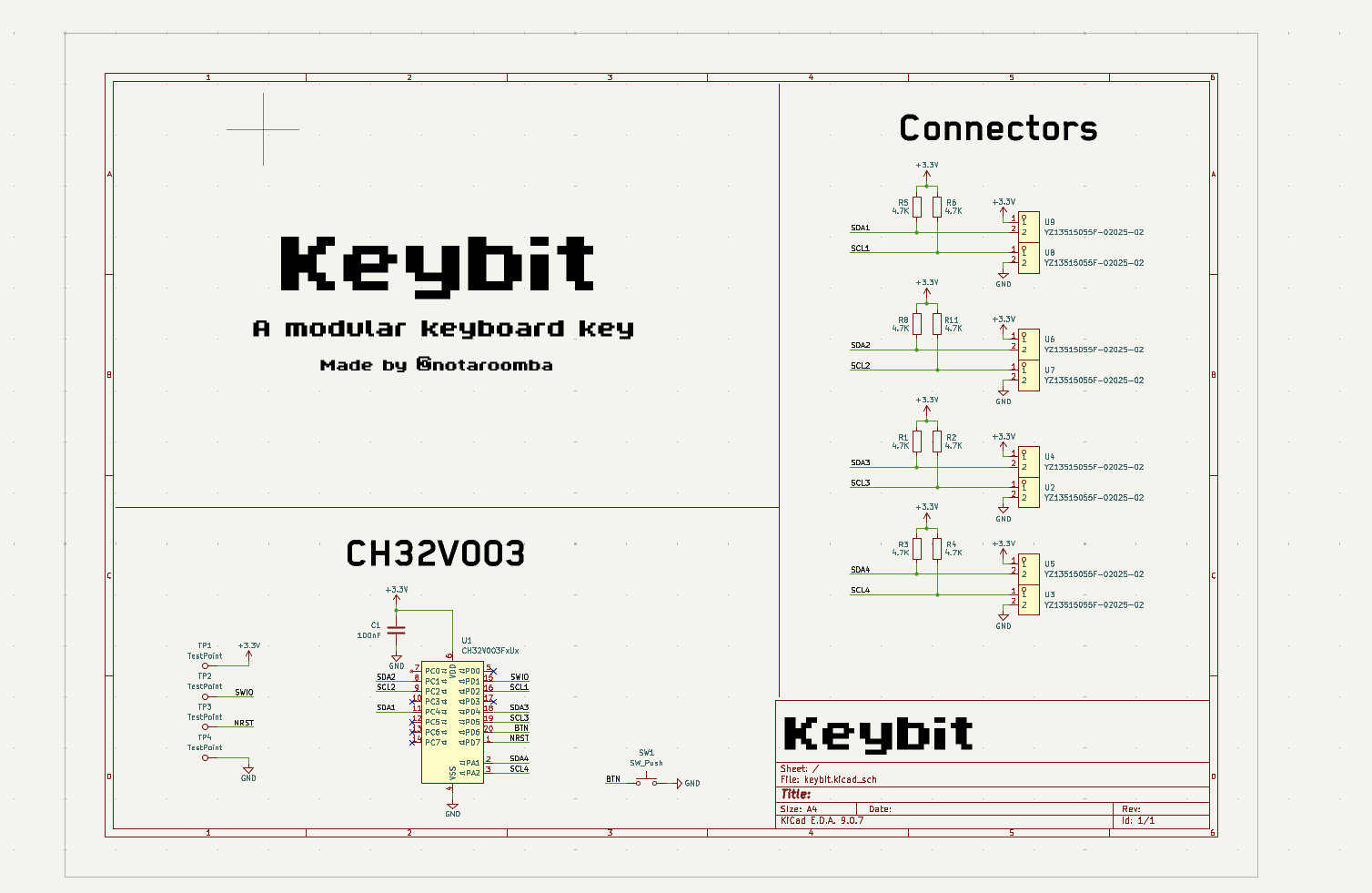
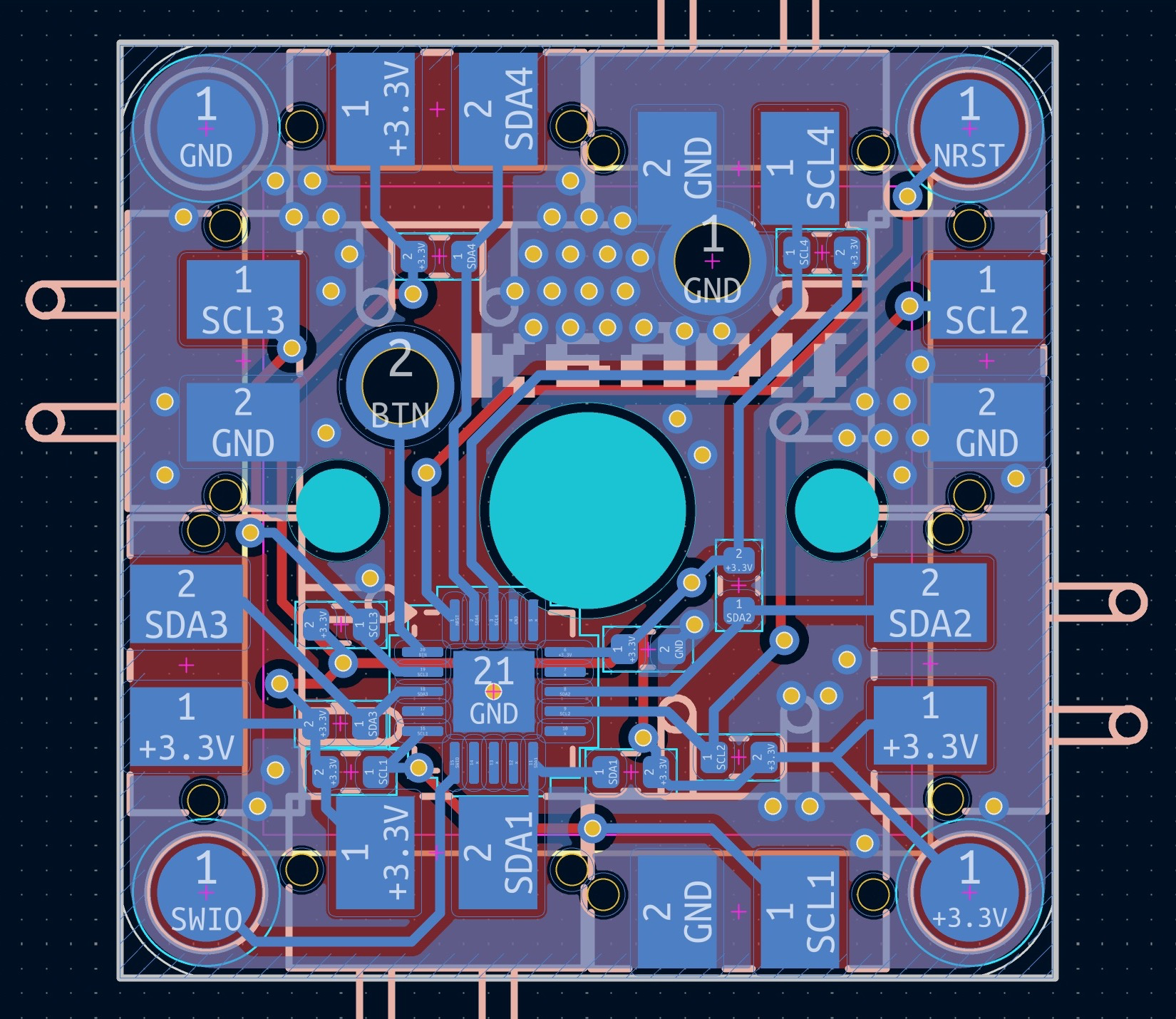
Each Keybit is one key unit. The schematic and layout show the relationship between the switch, CH32V003, corner programming pads, and pogo contacts. Because the board is a 1u Keybit at 19.05mm x 19.05mm, physical arrangement is defined by module count rather than by a single fixed keyboard PCB.
Schematic:
Layout:
Keyword host stack
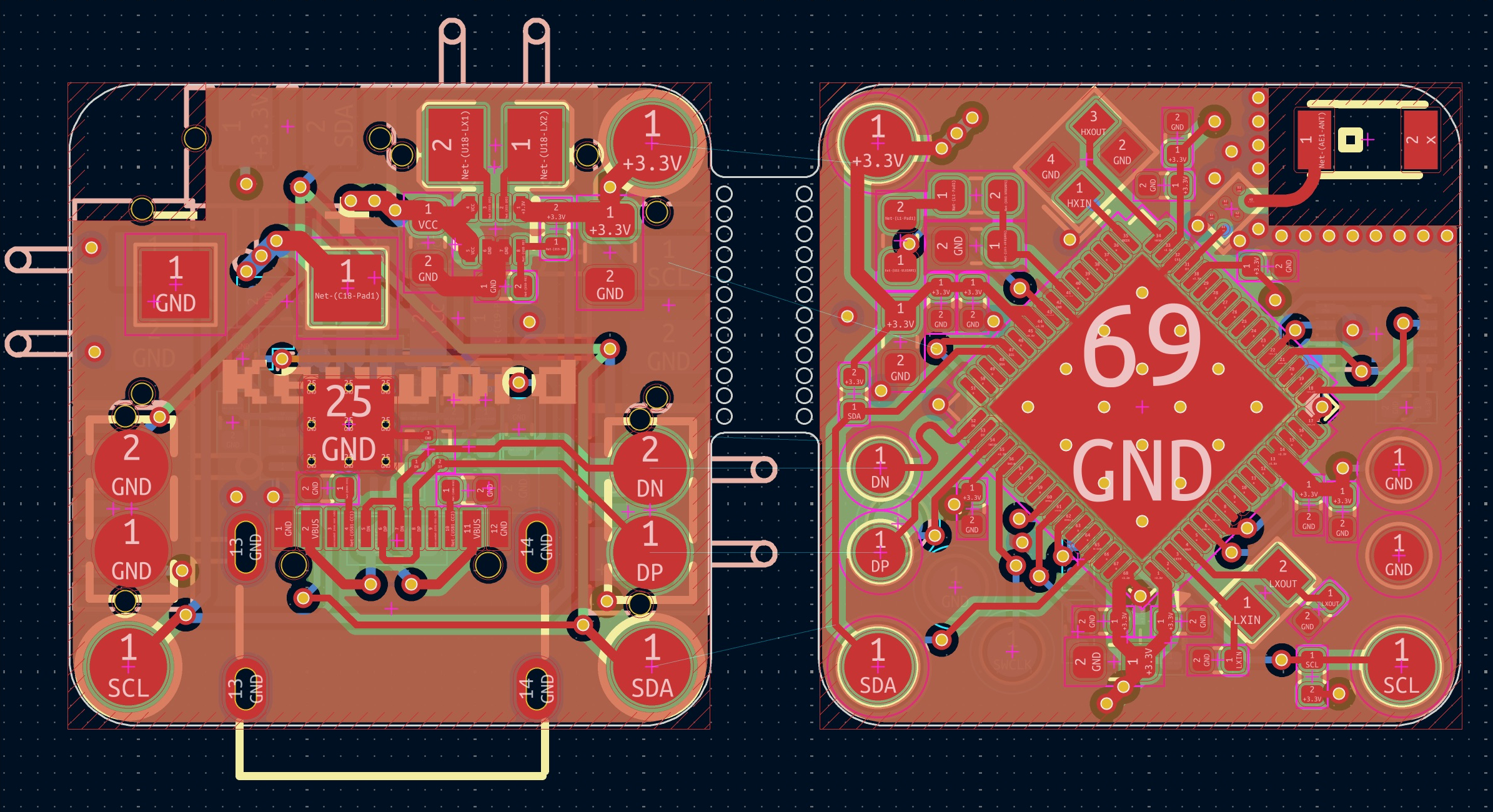
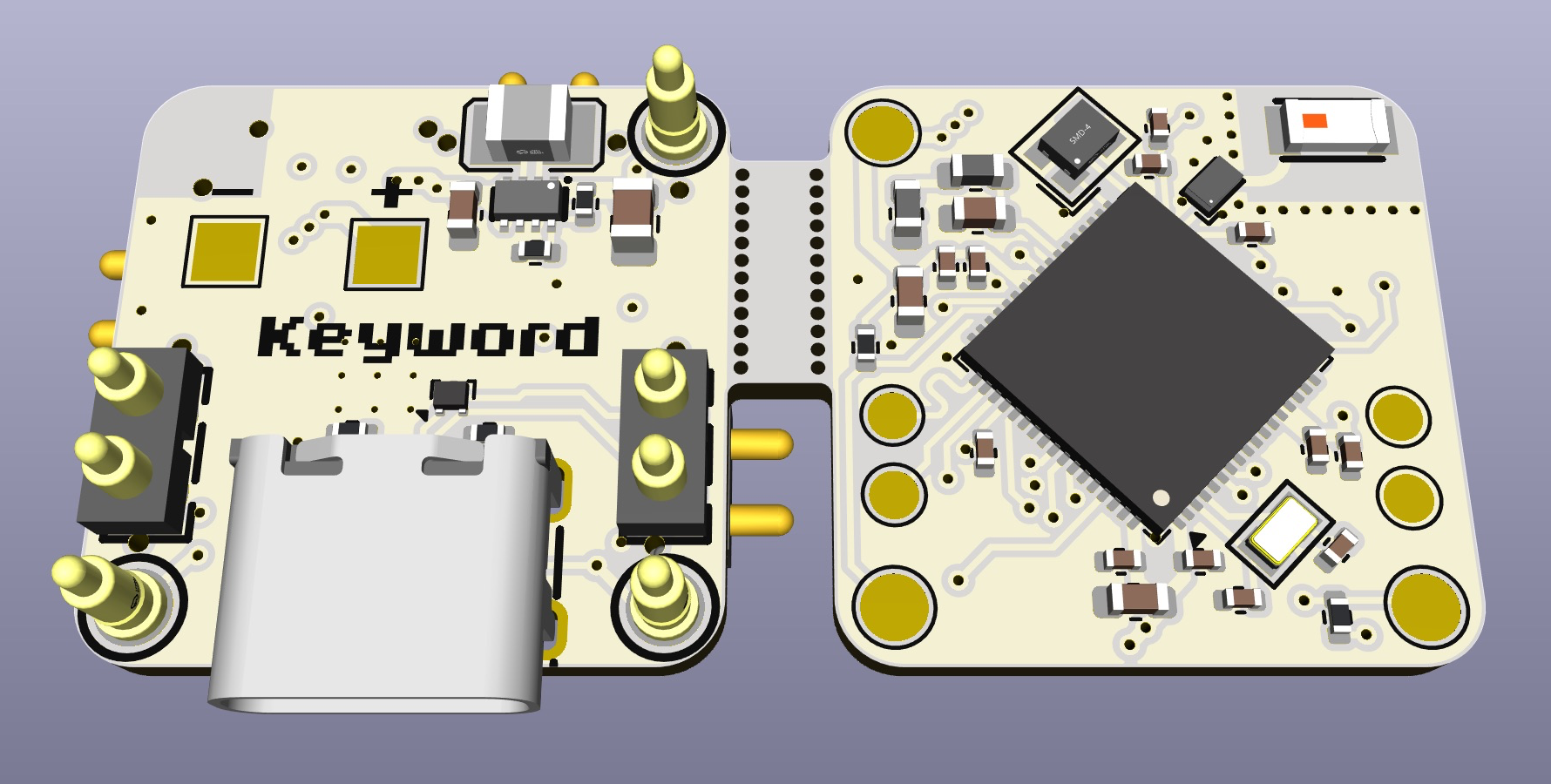
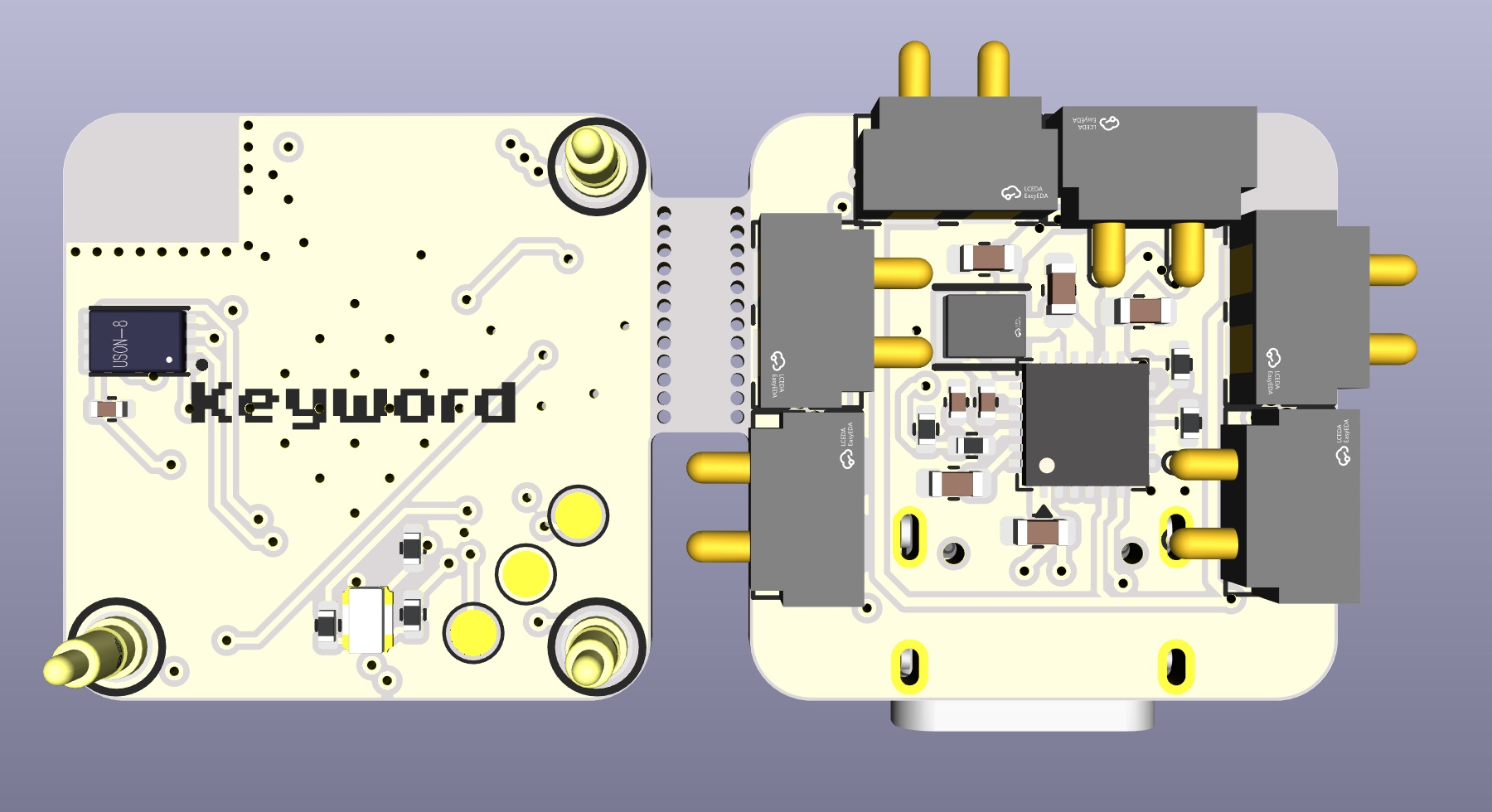
The Keyword is the main board for the Keybits. The documentation describes two boards stacked: one with the STM32WB55RGV6 and its ceramic Bluetooth antenna and the W25Q16JV flash, and one with the USB-C connector, the BQ25895 charger, and the TPS631000 converter. The top side has 3 pogo pins used for programming, while the sides of attached Keybits provide the power and I2C path.
Schematic:
Layout:
3D view:
Case system and mechanical assembly
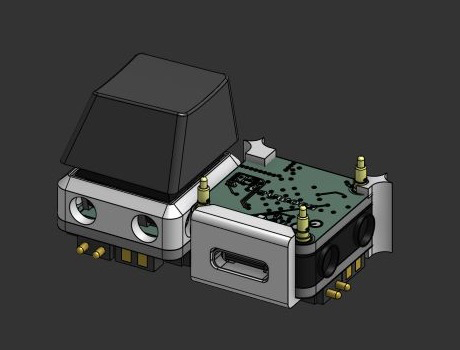
The mechanical enclosure uses magnetic cases. The cases were custom designed in Onshape, and the STEP files are in the cad folder, allowing a hardware reader to inspect fit and stack orientation before ordering parts.
Toolchain and credits
The project credits list KiCad for PCB design, Onshape for case design, Blender for 3D renders, STM32CubeMX for STM32 configuration support, and Hack Club Forge as a referenced tooling environment.
Project references
- Ember is referenced as a USB-C powered reflow hotplate with Bluetooth.
- Cyberboard is referenced as a Raspberry Pi Pico sized STM32 development board with Bluetooth.
- Trace is referenced as a comprehensive PCB ruler with reference footprints.
- Linea is referenced as an EMR tablet.
Common misconceptions
- The system is not just a passive keycap set: each Keybit has a CH32V003 RISC-V MCU.
- The pogo-pin interface is not only a power path: it also carries I2C and is the documented programming channel from Keyword.
- Bluetooth does not eliminate the wired interface: the STM32WB55RGV6 board is associated with Bluetooth and USB.
- The W25Q16JV storage should be read by its stated role, key firmware, rather than as generic user mass storage.
- USB-C is not merely a connector mention: the document pairs it with ESD protection.
Action advice
- Start with the 19.05mm x 19.05mm 1u Keybit geometry because layout feasibility depends on module packing and side pogo contacts.
- Confirm the Keyword stack before ordering: it is divided into two boards, with the controller, antenna, flash, USB-C, charger, and converter distributed across the upper and lower boards.
- Check the programming workflow end to end: Keybits receive 3.3V, GND, and I2C through the 4-side pins, and the top 3 pins are specified for programming from the main board.
- Review the power items together: BQ25895 charging, 1S LiPo pads, TPS631000 buck-boost, and USB-C ESD protection should be evaluated as one subsystem.
- Use the MIT license line as the first compliance gate, then inspect the KiCad and Onshape outputs as the primary reproduction evidence.
- If your goal is physical assembly, download the STEP files before deciding how many modules to order, because magnetic cases and pogo alignment define the final keyboard form.
Data citation
All hardware identifiers cited in this analysis are direct documentation anchors: Bluetooth, 1u, CH32V003, RISC-V, STM32WB55RGV6, USB, 4, I2C, 2MB, QSPI, W25Q16JV, BQ25895, 1S, LiPo, TPS631000, USB-C, KiCad, Keybit, Keyword, 19.05mm x 19.05mm, Cherry MX, 3.3V, two, 3, Onshape, STEP, Blender, STM32CubeMX, Hack Club Forge, Ember, Cyberboard, Raspberry Pi Pico, STM32, Trace, Linea, EMR, and MIT.
This review is prepared for MyTechDailyNews Hardware by Sarah Chen. Readers should treat the documentation list above as the evidence base, not as substitute lab measurements, and route any editorial follow-up to hello@techdaily.com.