
MyTechDailyNews Hardware Breakdown: Apollo Evo Titanium Exhaust Using FS811M-6, TA15, and Beam Shaping
This breakdown reads the program as a hardware case study: how Farsoon Europe GmbH and Apollo Automobil GmbH used laser powder bed fusion, a named titanium alloy, and staged design validation to produce titanium exhaust pipes and exhaust tips for Apollo Evo. The value for readers is the disclosed decision chain, not promotional framing.
For hardware buyers, service teams, and enthusiasts, the key is identifying which parameters were actually confirmed. The confirmed parameters include the FS811M-6 build route, TA15 material identity, the use of Beam Shaping, and the fact that all 10 Apollo Evo vehicles received exhaust systems built on this approach.
Core takeaways
- The disclosed program is a low-volume automotive hardware case, not a mass-production line claim. The stated scope covers all 10 Apollo Evo vehicles.
- Farsoon Europe GmbH contributed additive manufacturing, Design for Additive Manufacturing, and industrial production capability; Apollo Automobil GmbH contributed hypercar engineering and design knowledge.
- TA15, identified as Ti-6.5Al-2Zr-Mo-V, was processed on an FS811M-6 laser powder bed fusion system with increased layer thickness.
- Beam Shaping was used for the enclosed exhaust geometry, enabling single-component pipes without internal support structures.
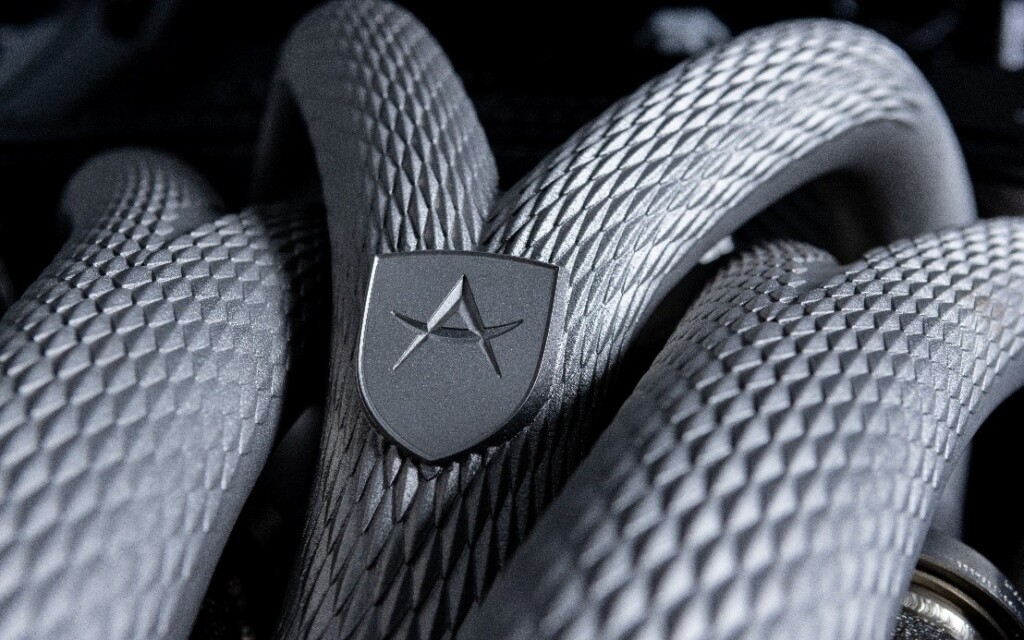
- Dragon Skin was generated during the build process on the Apollo Evo “Caribbean Dragon,” and Apollo reports it assists heat distribution.
What the build data says
| Hardware dimension | Confirmed detail | Decision relevance |
|---|---|---|
| Vehicle program | Exhaust system production for all 10 Apollo Evo vehicles | Defines the project as limited-series hardware, where design integration and risk staging can outweigh high-speed serial methods. |
| Build system | FS811M-6 laser powder bed fusion system | Shows the exhaust components were not prototyped only; they were assigned to an identified industrial LPBF platform. |
| Material | TA15, also known as Ti-6.5Al-2Zr-Mo-V | Provides a clear alloy identifier for material comparison, rather than a generic titanium label. |
| Geometry strategy | Beam Shaping, support-free single-component pipes | Reduces weld seams, internal supports, and post-processing associated with split assemblies. |
| Surface engineering | Dragon Skin created during build; application-specific Farsoon process parameters | Links visual identity to a build-level parameter set instead of a pure finishing operation. |
| Tip finish | Machined details added to achieve chrome-like surface finish | Indicates hybrid manufacturing: additive near-net shape plus machining for cosmetic precision. |
Design integration as the first lever
The project used additive manufacturing at the beginning of design, not as a last-minute substitute for conventional fabrication. That is why the article’s DfAM framing matters: the engineering teams merged multiple parts into one integrated titanium component. From a hardware perspective, the practical effect is fewer assembly needs and fewer later manufacturing steps.
This kind of integration is easiest to value when the part has a tight system boundary. Exhaust piping has enclosed volume, surface visibility, heat exposure, and interface tolerances. If the geometry can be consolidated, the savings are not limited to fasteners or weld passes; they also show up in inspection points, supplier handoffs, and production sequencing.
Caribbean Dragon and the Goodwood reveal
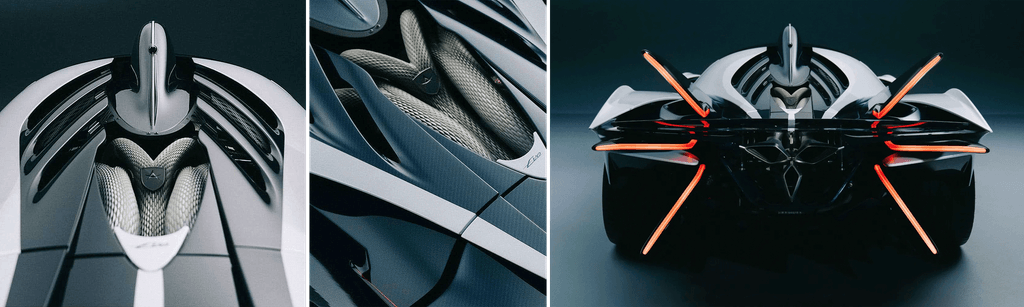
At the 2026 Goodwood Festival of Speed, the first customer vehicle was unveiled as the Apollo Evo “Caribbean Dragon.” The exhaust pipes carried the Dragon Skin surface texture, developed by Apollo and Farsoon for additive manufacturing. Instead of being applied through a separate finishing operation, Dragon Skin is created during the build process. Apollo reports that this surface also assists heat distribution.
That statement separates the texture from pure styling. In consumer hardware terms, the same feature carries brand identity and functional thermal messaging. The exhaust tips, however, follow a different route: they were built using application-specific Farsoon process parameters, then machined details were added to achieve a chrome-like surface finish. That gives readers two different additive outcomes: one surface defined by build-stage texture, one surface defined by post-build machining.
FS811M-6, TA15, and Beam Shaping together
The disclosed machine designation is FS811M-6, and the disclosed material is TA15, also known as Ti-6.5Al-2Zr-Mo-V. The process uses an increased layer thickness to support production of the exhaust components. The material and machine names are central anchors for anyone comparing this build to generic 3D-printed metal examples.
Beam Shaping is the other anchor. For enclosed exhaust geometry, Farsoon used this technology so the pipes could be produced as single components without internal support structures. That reduces post-processing and removes the need to weld together multiple separately manufactured sections. In hardware evaluation terms, support removal inside an enclosed part is not merely annoying; it can become a reliability, cleaning, flow-path, or inspection problem. Avoiding it changes the manufacturing risk profile.
Staged development and sample validation
The development process was divided into multiple stages to manage technical risk and evaluate design options. The same staged process allowed the teams to assess support-free designs in parallel and produce samples for milling tests and surface treatments. The source does not present this as a one-shot print; it presents it as a controlled sequence where design, machine parameters, and finishing decisions were tested before the full low-volume program.
Beyond equipment supply, Farsoon supported the project with application engineering and manufacturing expertise throughout product development. That combination mattered because Apollo Evo hardware decisions had to satisfy vehicle development requirements, additive manufacturability, and customer-facing finish quality at the same time.
Selection checklist for hardware teams
- Confirm whether the part’s value comes from consolidation, surface identity, enclosed geometry, or simply material substitution.
- Check whether the disclosed LPBF platform, here FS811M-6, supports the required build envelope and series quantity.
- Map the alloy designation precisely. Here the reference is TA15, not a generic titanium label, and it is further identified as Ti-6.5Al-2Zr-Mo-V.
- Ask where support structures would form. In enclosed exhaust pipes, support-free strategies such as Beam Shaping can reduce internal cleanup risk.
- Separate texture from finish. Dragon Skin is created during the build process; the exhaust tips require machined details for a chrome-like surface.
- Stage validation before commitment: parallel design assessment, milling tests, and surface treatment samples reduce uncertainty before all 10 Apollo Evo units are addressed.
Common misconceptions
- Misconception: additive manufacturing here simply replaced machining. Reality: the disclosed process is hybrid. Beam Shaping and build-stage texture matter, but the exhaust tips also received machined details.
- Misconception: Dragon Skin is only a cosmetic pattern. Reality: Apollo reports that the surface assists heat distribution.
- Misconception: support-free production is only a convenience. Reality: for enclosed exhaust geometry, omitting internal supports changes post-processing, weld requirements, and the practical cleanup path.
- Misconception: low-volume hardware projects do not need disciplined process control. Reality: the Apollo Evo program used staged development, samples, and process-parameter work.
Action advice
For teams evaluating a similar automotive or hardware component, start from the verifiable anchors before the marketing story: the named machine, TA15, Ti-6.5Al-2Zr-Mo-V, Beam Shaping, and the all 10 Apollo Evo production scope. Then ask whether your part benefits from the same three levers: component consolidation, enclosed-geometry support avoidance, and texture that is either build-stage or machined.
If your decision hinges on aesthetics alone, conventional finishing may be sufficient. If it hinges on reducing assembly and internal cleanup while preserving a visible design identity, the Apollo Evo case gives a clear reference point: Farsoon Europe GmbH and Apollo Automobil GmbH aligned DfAM, LPBF, and staged validation for titanium exhaust pipes and exhaust tips.
Data references
- Program scope: titanium exhaust pipes and exhaust tips were built for all 10 Apollo Evo vehicles.
- Collaboration: Farsoon Europe GmbH and Apollo Automobil GmbH.
- Machine: FS811M-6 laser powder bed fusion system.
- Material: TA15, also known as Ti-6.5Al-2Zr-Mo-V.
- Process technology: Beam Shaping.
- Surface texture: Dragon Skin, created during the build process; Apollo reports it assists heat distribution.
- Launch: Apollo Evo “Caribbean Dragon,” unveiled at the 2026 Goodwood Festival of Speed.
- Tip finish: application-specific Farsoon process parameters, then machined details for chrome-like finish.