
EOS M 400-4 Fleet Update: Reading Evology Manufacturing's U.S. Metal AM Expansion as Hardware Data
For hardware teams tracking capacity changes, Evology Manufacturing reported an equipment update today: an EOS M 400-4 industrial metal AM system has been added. The details worth comparing are the four-laser system, four 400-watt lasers, and 400x400x400mm build volume, plus the announced totals of 10 machines and 10 systems, split as eight metal and two polymer once installed.
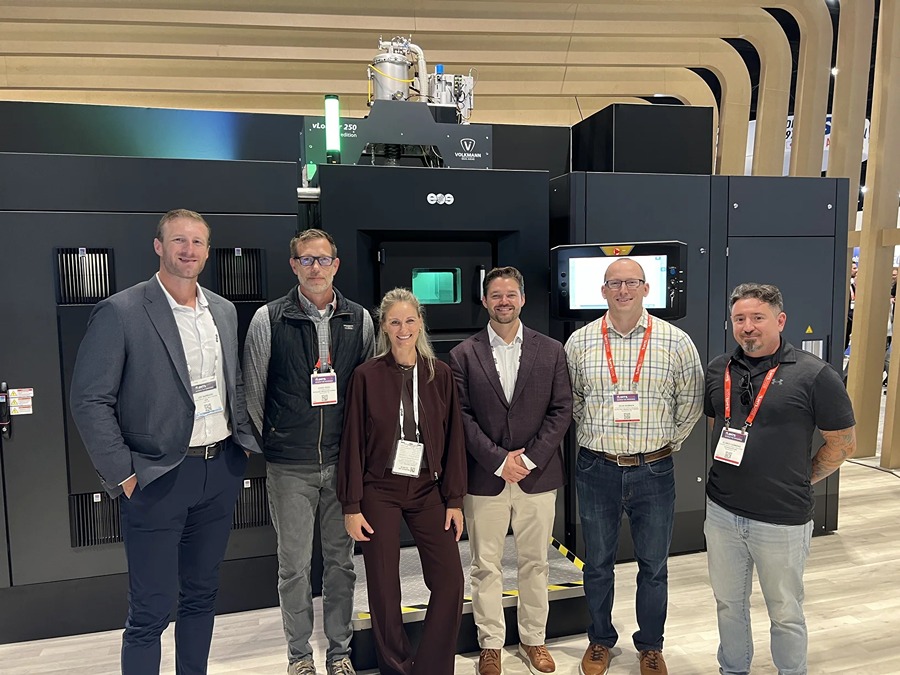 The signing referenced in the announcement took place in 2026 at IMTS 2026. The photo identifies, from left to right: Lee Barbiasz, Area Sales Director, EOS; Chris Keidl, VP of Operations, Evology Manufacturing; Marie Niehaus-Langer, CEO, EOS; Alex Stemper, Area Sales Manager, EOS; Sean Momsen, VP of Business Development & Marketing; and Eliseo Carmona, Business Development Manager, AdvancedTek.
What the announcement gives hardware readers to check
MyTechDailyNews Hardware has reframed the item as a verification note instead of a general news recap. The useful part is a list of figures that can be checked in supplier conversations. The source material centers on one machine, the EOS M 400-4, and on where that system sits inside the Evology equipment base after installation. It also includes a network designation from EOS: Production Partner Network. The people and locations in the captions and company background are useful for traceability, especially because the announcement places the U.S. operation in Waukesha, Wisconsin.
Machine and capacity table
| Category | Confirmed wording from the announcement | Hardware-buying point to verify, not assume |
|---|---|---|
| System model | EOS M 400-4 | Ask for the exact installed configuration and whether it matches the quote package or comparable metal AM system. |
| Laser hardware | four-laser system; four 400-watt lasers | Use the stated laser count and power as a starting spec, then request primary documentation rather than inferring throughput. |
| Build envelope | 400x400x400mm build volume | Compare candidate part dimensions and ask whether fixtures, orientation, recoating, and post-processing reduce usable space. |
| Fleet total | 10 machines | The count is tied to the post-installation fleet; age, material state, and operating schedule are not specified. |
| EOS AM fleet total | 10 systems | The wording refers to the EOS additive manufacturing fleet, not necessarily every machine or tool on site. |
| Process mix | eight metal and two polymer | Use this as the stated split for the named EOS systems and confirm which process category applies to a part program. |
| Location | Waukesha, Wisconsin; U.S. | Location matters for factory visits, logistics, program alignment, and regional supply-chain planning. |
| Network status | Production Partner Network | The update mentions the network membership but does not define service terms, so request the relevant program details separately. |
Data citation: all specifications, totals, locations, network names, and people captions above are taken from the Evology Manufacturing announcement and its image captions.
Fleet positioning and what the numbers support
Once installed, the new four-laser system will bring Evology's fleet to 10 machines. The same announcement says the EOS additive manufacturing fleet will total 10 systems: eight metal and two polymer. EOS also named Evology as the newest member of its Production Partner Network. This section is best read as capacity context rather than a machine benchmark. The source gives a machine count, a system count, and a material/process split, but it does not give cycle time, powder bed parameters, build-rate charts, or part-level qualification results.
What the numbers do support is a narrower hardware conclusion: the company is adding a four-laser metal system to a named U.S. equipment pool, and the stated fleet structure becomes 10 machines and 10 systems, including eight metal and two polymer. That matters for readers who need to distinguish a single equipment purchase from an overall capacity profile. It also makes the build envelope more concrete: a 400x400x400mm build volume gives teams a reference frame for larger metal components, even before any project-specific feasibility check.
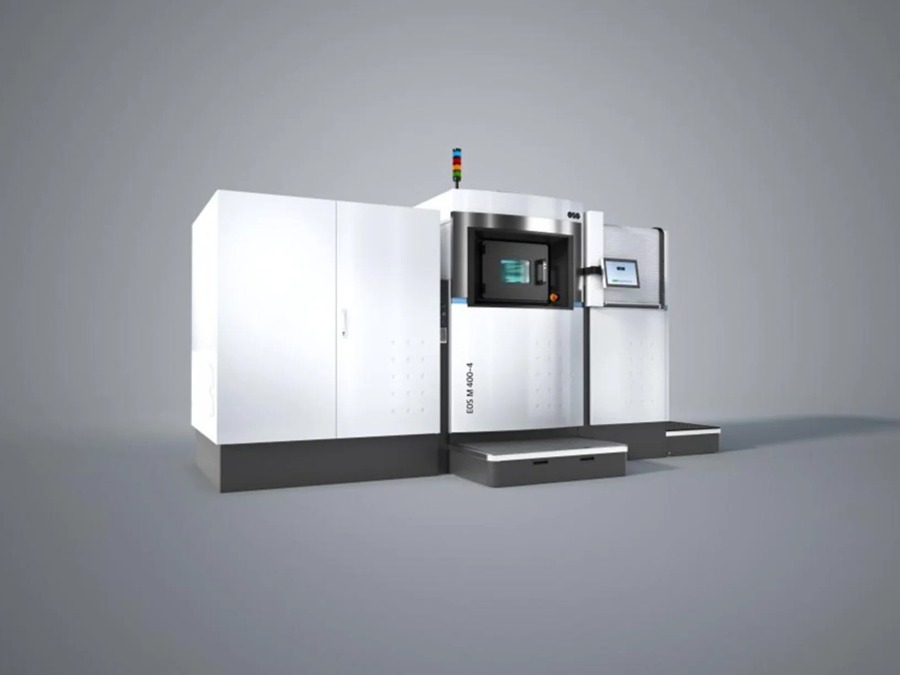 The image accompanying the update shows the EOS M 400-4, described in the announcement as having four 400-watt lasers and a 400x400x400mm build volume; the same larger build envelope and additional production capacity are tied to larger metal components and support for growing customer programs.
Use scenarios that the company background supports
The background paragraph says Evology specializes in industrial additive manufacturing, precision machining, tooling, and production services. It also says the company combines metal and polymer 3D printing technologies with traditional manufacturing methods to produce complex parts, functional prototypes, tooling, and low-volume production components. The industries named are aerospace, automotive, defense, and industrial manufacturing. That gives readers a bounded view of where the new four-laser system may matter: projects involving larger metal components, production support, and programs tied to those named sectors.
Procurement checklist for hardware buyers
- Ask for the exact EOS M 400-4 configuration and installation status rather than treating the purchase announcement as evidence that the machine is already online.
- Confirm whether the build envelope for a specific part is constrained by the 400x400x400mm build volume or by fixtures, recoating, post-processing, and orientation.
- Request the relationship between the four 400-watt lasers and the four-laser system as described in the source; do not convert that wording into unsupported throughput claims.
- Check whether the 10 machines count includes the newly acquired system only after installation, because the announcement ties the total to the installed state.
- Clarify that 10 systems refers to EOS additive manufacturing systems and that the stated split is eight metal and two polymer.
- Ask whether Production Partner Network membership affects quoting, escalation, or program access; the announcement states the membership but not the service terms.
- Use Waukesha, Wisconsin, and U.S. as location anchors when reviewing lead time, travel, inspection, or regional supply-chain needs.
- Map the named use cases back to the part you need: complex parts, functional prototypes, tooling, and low-volume production are the categories included in the company description.
Common misconceptions
- A four-laser system is not automatically proof of a specific production speed. The announcement gives hardware facts, including four 400-watt lasers and a 400x400x400mm build volume, but it does not state cycle time, density, surface finish, or throughput.
- A larger build envelope is not the same as unrestricted part size. The source says the larger build envelope and additional production capacity enable larger metal components, but practical part limits still depend on process and fixturing.
- Fleet totals are not a process-quality claim. The numbers 10 machines and 10 systems are capacity context; the eight metal and two polymer mix describes named EOS systems, not universal performance.
- Partner-network membership is not a machine model. Production Partner Network is a network status mentioned alongside the EOS M 400-4 acquisition.
- The signing timing and installation timing are separate events. The agreement was signed in 2026 at IMTS 2026, while the fleet impact is tied to the machine being installed.
What remains unverified in a short announcement
Because the text is a capacity and partnership update, it does not supply several data points a hardware reviewer would normally want before making a comparison. Missing items include powder bed process parameters, build-rate charts, laser spot settings, atmosphere controls, recoater design, power requirements, footprint drawings, part cost examples, qualification reports, and material certificates. A reader should treat the available figures as equipment and fleet facts, then request primary documentation when making a sourcing decision.
Action recommendations
- Start with the stated hardware facts. Note the EOS M 400-4, four-laser system, four 400-watt lasers, and 400x400x400mm build volume as the confirmed reference set.
- Map your part envelope first. Compare candidate part dimensions against the 400x400x400mm build volume and ask how fixturing or post-processing affects usable space.
- Ask for installation evidence. If the goal is capacity confirmation, verify whether the new system has been installed and counted among the 10 machines.
- Separate fleet composition from capability. Confirm whether the relevant fleet is the 10 systems with eight metal and two polymer, then request process-specific documentation.
- Review partner-network terms. If Production Partner Network matters to procurement, ask for the defined rights, escalation paths, and project-support expectations.
- Use the named industries as screening categories. Aerospace, automotive, defense, and industrial manufacturing are the sectors listed, so align requirements around complex parts, functional prototypes, tooling, and low-volume production.
Bottom line
The update matters to hardware readers because it gives a concrete capacity data point: Evology Manufacturing added an EOS M 400-4, and the announcement says that once installed the new four-laser system brings the fleet to 10 machines and the named EOS additive manufacturing fleet to 10 systems, split as eight metal and two polymer. The machine details are equally specific: four 400-watt lasers and a 400x400x400mm build volume. The U.S. operation is located in Waukesha, Wisconsin, the agreement was signed in 2026 at IMTS 2026, and the people associated with the signing are Lee Barbiasz, Chris Keidl, Marie Niehaus-Langer, Alex Stemper, Sean Momsen, and Eliseo Carmona. For buyers, the correct move is to treat this as a machine and fleet expansion signal, then validate installation status and production documentation before inferring performance.