
MyTechDailyNews Hardware Breakdown: Emerson Rosemount QX1400 Hazardous-Area Gas Analyzer Specs
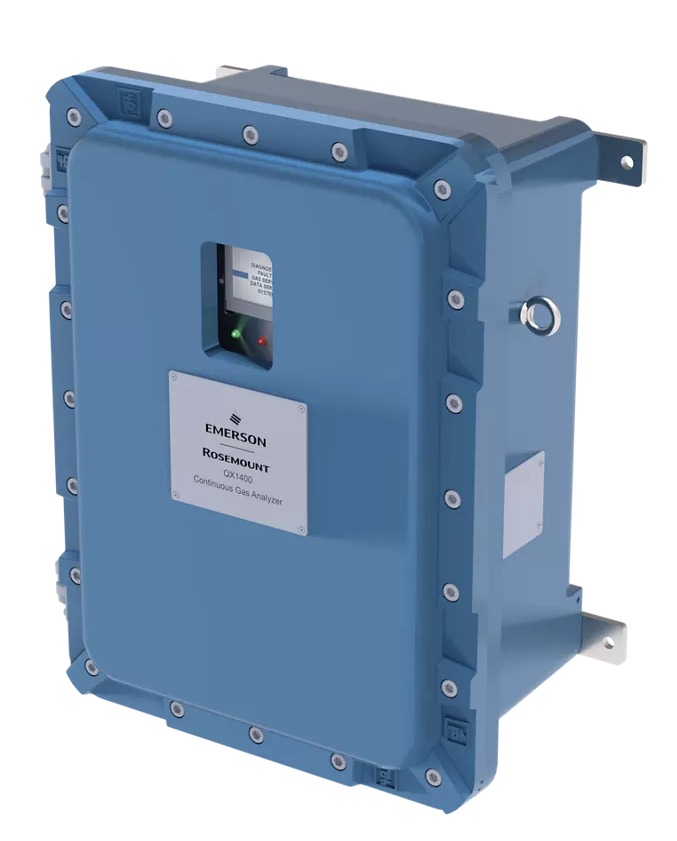
From a hardware and deployment angle, the Emerson Rosemount QX1400 Continuous Gas Analyzer should be assessed through its certification scope, sensing mix, and gas-channel configuration. It is aimed at natural gas quality monitoring, continuous emissions monitoring systems (CEMS), and other industrial uses. Its hardware value comes from bringing forward hybrid laser and paramagnetic sensing already associated with the Rosemount QX1000, then adding hazardous-area approvals that influence where the analyzer can be installed and how sample routing is handled.
What the analyzer inherits and what it changes
The inherited part is the measurement concept: a combination of quantum cascade laser direct absorption spectroscopy for selected gases and paramagnetic detection for oxygen. The added part is the hazardous-area approval package. For teams comparing analyzers, the first is a sensing architecture question; the second is a site-compliance question.
It also continues the QX gas analyzer line, positioning QX1400 as an extension rather than a standalone single-technology device. The practical benefit is that buyers can judge the product by the combination of approved mounting zones and configurable gas streams, instead of treating every analyzer as interchangeable.
Certification data that shape installation choices
For classified-area use, the approval scope is split by market. The following table summarizes the key strings that appear in the product information and the corresponding project consideration.
| Market segment | Declared approval detail | Hardware decision note |
|---|---|---|
| Europe | ATEX II 2G Ex d IIB H2 T4 | Match the European hazardous-area approval string to the site specification before ordering. |
| International markets | IECEx Ex db IIB+H2 T4 Gb | Use when the project references IECEx rather than only a regional scheme. |
| North American | Class 1, Division 2, Groups B, C, D, T4 approval is expected by the end of 2026 | Treat availability as a timing item; do not assume present deployment based on this entry alone. |
The approval details matter because they change enclosure and siting decisions. In classified zones, the analyzer can be installed in designated hazardous locations without secondary explosion-proof or purged enclosures, reducing installation complexity. Where the layout allows, a location nearer to the sample tap can shorten sample lines and reduce sample transport delay.
Measurement methods: what detects O₂ and what detects other gases
- O₂ is measured by paramagnetic detection.
- The other target gases are handled by quantum cascade laser direct absorption spectroscopy.
- The two methods are combined in a modular form, letting a configuration be matched to a particular gas stream.
- Gas selectivity in multi-component continuous streams is provided by the laser-based measurement.
The listed uses of the O₂ channel include liquefied natural gas (LNG), carbon capture and underground storage (CCUS), ethylene purity, hydrogen purity, and various chemical and petrochemical operations situated in classified areas. That makes the oxygen channel a likely anchor measurement, while laser channels address the remaining selected gases.
Gas coverage: one to four standard channels plus optional additions
Standard configurations cover one to four gases from CO, CO₂, O₂, NO, NO₂, and SO₂. Optional configurations can extend coverage to gases including CH₄ and N₂O. This split is important for buying decisions because the base scope is not automatically all target gases.
| Coverage layer | Target gases | Configuration implication |
|---|---|---|
| Standard | CO, CO₂, O₂, NO, NO₂, SO₂ | Select one to four gases for the base analyzer scope. |
| Optional | CH₄, N₂O | Add these only when the application explicitly requires coverage beyond the standard list. |
| O₂ method | O₂ | Paramagnetic detection is the stated method for the oxygen channel. |
| Laser method | Other target gases | Quantum cascade laser direct absorption spectroscopy supports selectivity in multi-component streams. |
Verified data points used in this Hardware breakdown
The following compact reference table pulls together the product facts used above. It is intended as a specification-check table, not as an interpretation of performance beyond the stated details.
| Item | Stated detail |
|---|---|
| Product | Emerson Rosemount QX1400 Continuous Gas Analyzer |
| Lineage | Extends the Rosemount QX1000 measurement concept |
| Measurement approach | two technologies: hybrid laser-based and paramagnetic |
| Europe approval | ATEX II 2G Ex d IIB H2 T4 |
| International approval | IECEx Ex db IIB+H2 T4 Gb |
| North American approval | Class 1, Division 2, Groups B, C, D, T4 expected by the end of 2026 |
| Standard gas count | one to four gases |
| Standard gas set | CO, CO₂, O₂, NO, NO₂, SO₂ |
| Optional gas extensions | CH₄ and N₂O coverage |
| O₂ method | paramagnetic detection |
| Other target gases | quantum cascade laser direct absorption spectroscopy |
Site-fit checklist for Hardware readers
- Confirm whether the project needs a European, international, or North American approval scope.
- Check that the required certification string matches the target site classification before a quotation is accepted.
- For the North American item, verify timing because the stated expectation is the end of 2026.
- Define the target gas list first, then map it against the standard one to four range and the optional CH₄ and N₂O extension.
- Review sample tap proximity. If suitable, mounting the analyzer nearer to the sample tap can shorten sample lines and reduce sample transport delay.
- Assess enclosure burden. The stated installation advantage is that designated hazardous locations may be handled without secondary explosion-proof or purged enclosures.
- Treat CEMS installations, LNG plants, and chemical and petrochemical processing sites as typical application environments that need hazardous-area gas analysis.
Common misconceptions to avoid before specifying QX1400
- Mistaking one approval scheme for global acceptance. The product information separates Europe, international markets, and the North American status.
- Assuming O₂ is a laser channel. The stated detection method for O₂ is paramagnetic.
- Assuming the base analyzer automatically covers every target gas. Standard coverage is one to four gases from the listed set, with CH₄ and N₂O positioned as optional extensions.
- Assuming certification is only a paperwork detail. It affects installation possibilities, including enclosure work and sample line length.
Procurement and integration implications
For IT, engineering, and plant procurement teams evaluating continuous analyzers, the main variables are not just gas names, but approval scope, sample line length, enclosure work, and maintenance burden. The described hardware concept keeps maintenance demands low, while modular gas selection allows a configuration to be aligned to the intended gas stream.
For classified areas, the practical effect is that a suitable mounting point may be closer to the process tap, which can shorten sample transport and reduce the need for additional enclosure measures. In CEMS installations, LNG plants, and chemical and petrochemical processing sites, those effects tend to be more visible because hazardous-area gas analysis is part of the normal operating requirement.
For the MyTechDailyNews Hardware audience, the value of the Emerson Rosemount QX1400 is the combination of two inherited measurement methods, defined hazardous-area certification language, and a configurable gas set that can be aligned to a specific monitoring task. It continues the QX analyzer direction by expanding the line rather than repositioning it around a single sensing principle.