
Hardware Bench: Emerson Rosemount 8795 Magnetic Flow Sensor Specs, Accuracy Tiers and Data Center Cooling Fit
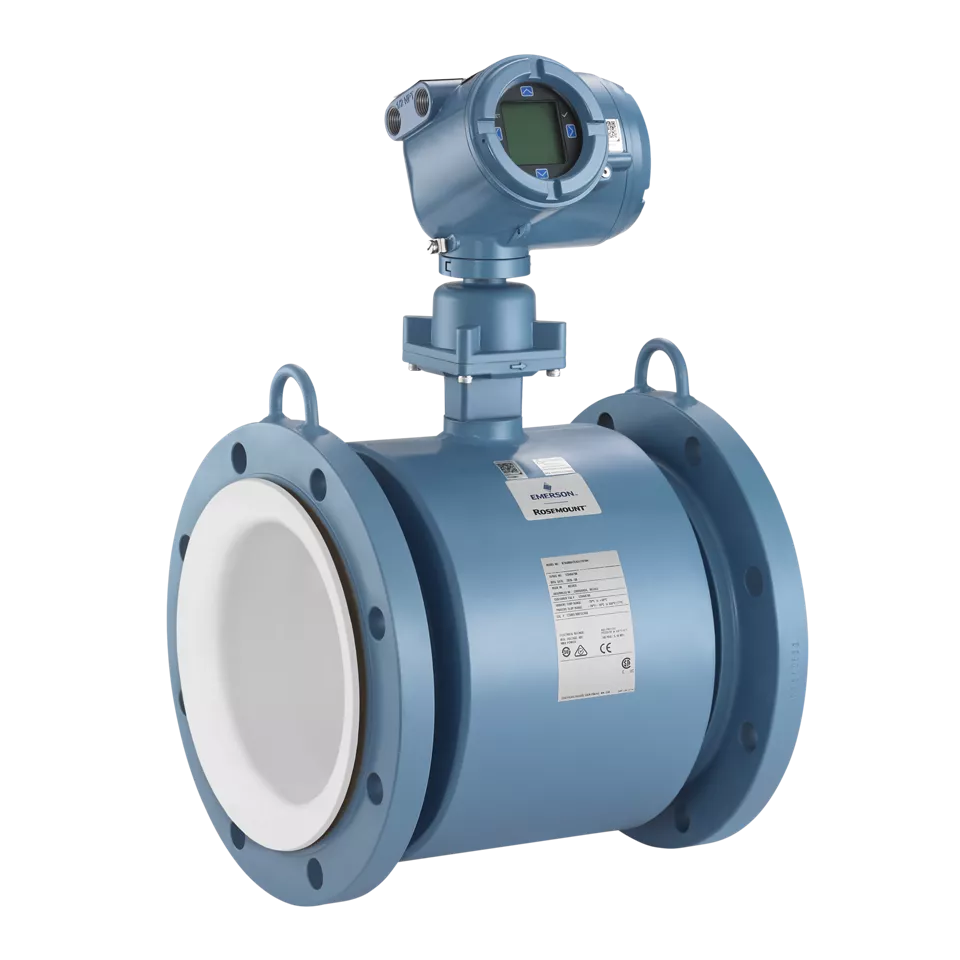
Straight-pipe runway, rather than sensor ingenuity, is normally what decides whether a flow reading inside a hydronic loop deserves trust. That is why the MyTechDailyNews Hardware desk approaches Emerson's newly introduced Rosemount 8795 Magnetic Flow Sensor as a documentation problem first and a product story second: the operative question on a live build is not whether the instrument measures flow at all, but which published figure a particular mechanical room is entitled to claim, and what the paired transmitter must contribute to reach it.
The declared arena is deliberately narrow — chilled water and water-glycol cooling loops — and the stated remit covers the whole delivery chain, from specification through installation into commissioning, with the measured value handed onward to building management systems and data center infrastructure management systems so that WUE, CUE and PUE arithmetic has a live flow input instead of a design assumption.
The Two Published Accuracy Tiers, Side by Side
| Field condition | Geometry available | Required pairing | Published result | Qualifiers attached to the claim |
|---|---|---|---|---|
| Constrained layout where upstream and downstream straight pipe cannot be built | None usable against conventional run requirements | Compatible Rosemount Magnetic Flow Transmitters running Short Run Installation software | 0.5% accuracy at zero diameters of pipe run | Emerson describes the result as a function of upstream disturbance and distance from the electrodes, and as a capability delivered through software rather than a special sensor design |
| Conventional plumbing with room to lay in straight lengths | 5U/2D or more | Compatible Rosemount transmitters | 0.2% ± 2 mm/s flow measurement accuracy | Positioned for cooling-loop monitoring and control; the same class of transmitters also supplies diagnostics and verification functions for commissioning and ongoing operation |
Two numbers, one instrument, two very different site conditions. The lower percentage is not a firmware switch that rescues a badly laid pipe; it is the reward for giving the meter the straight lengths it expects. The 0.5% tier, conversely, exists precisely because retrofit work rarely grants that much runway — which is also why Emerson extends its magnetic flow meter portfolio for data center applications with additional software functions and ordering options.
A third figure sits alongside those tiers: a 0.1% repeatability rating. Repeatability and accuracy are separate line items — the first describes how consistently a value is returned, the second how closely it tracks true flow — and a project that quotes one as if it were the other is misquoting the datasheet.
Datasheet Block: Everything Fixed Before Anything Is Mounted
- Measurement media: chilled water and water-glycol cooling loops, the working fluids on the plant and loop side of data center cooling.
- Line sizes: 2 to 18 inches, described as the sizes common in data center installations.
- Repeatability: 0.1%.
- Wetted construction: PTFE liner with stainless-steel electrodes, intended for primary cooling loops and closed-loop cooling systems.
- Mechanical architecture: no moving parts, which removes the wear-item conversation that mechanical flow technologies normally force.
- Fluid precondition: a minimum conductivity of 5µS/cm — the qualifier that decides whether the technology applies at all.
- Signal outputs: dual 4-20mA together with Modbus.
- Power: AC or DC options.
- Transmitter placement: integral or remote mounting.
- Software: Short Run Installation software included.
- Downstream systems: data delivery to building management systems and data center infrastructure management systems, supporting WUE, CUE and PUE calculations.
Key Parameters, Explained Plainly
- 5U/2D. The conventional straight-run requirement expressed in pipe diameters — the undisturbed length an installation should present upstream and downstream of the sensor. The published 0.2% ± 2 mm/s figure is tied to meeting or exceeding it.
- zero diameters of pipe run. The opposite end of the spectrum: no usable straight length ahead of the electrodes. Hitting 0.5% accuracy there is what Short Run Installation software is stated to deliver.
- 0.2% ± 2 mm/s. A percentage term plus a fixed velocity floor, so at very low loop velocities the absolute term carries the error budget.
- 5µS/cm. The lowest fluid conductivity at which the measurement principle is specified to work in the stated loop media.
- 4-20mA and Modbus. The analog current route and the digital serial route by which flow data leaves the Rosemount 8795 Magnetic Flow Sensor and reaches site reporting systems.
- Integral versus remote transmitter. A site-driven decision about where the electronics physically live, alongside the AC or DC power choice.
Why Geometry Decides the Whole Purchase
Buyers who quote flow points from a nameplate alone tend to discover the geometry problem during commissioning. If a room can supply 5U/2D upstream and downstream, the compatible Rosemount transmitters path yields 0.2% ± 2 mm/s, and with it the diagnostics and verification functions intended for commissioning and ongoing operation. If it cannot — the common case under raised floors and beside densely packed cooling distribution units — the fallback is Short Run Installation software on compatible Rosemount Magnetic Flow Transmitters, producing 0.5% accuracy at zero diameters of pipe run, with the outcome dependent on upstream disturbance and distance from the electrodes.
Emerson's own framing matters for specification discipline: the tight-space capability is delivered through software rather than a special sensor design. In practice that converts the line item into a pairing question. The sensor body starts the conversation, but the accuracy a project may publish is negotiated through which Rosemount transmitter and which software option sit behind it, so ordering configuration carries the specification weight rather than the 8795 part number alone.
Five Readings of the Spec Sheet We Would Not Accept in a Quote Review
- "0.5% is the sensor's default number." It is published for a pairing — compatible Rosemount Magnetic Flow Transmitters plus Short Run Installation software — with upstream disturbance and electrode distance in the causal chain.
- "A cramped site needs a bespoke meter." The capability is described as software-delivered, not as a special sensor design.
- "Any loop fluid can be metered this way." The stated minimum conductivity is 5µS/cm, and the declared target media are chilled water and water-glycol cooling loops.
- "Commissioning ends when a value appears on the BMS screen." Compatible Rosemount transmitters bring diagnostics and verification functions meant to cover commissioning and continued operation.
- "0.1% repeatability means 0.1% uncertainty on flow." Repeatability is published separately from the 0.5% and 0.2% ± 2 mm/s accuracy figures.
Strengths, Trade-offs and Scope
Where the package helps a fleet program
- Accuracy tiers scale with real site conditions instead of assuming every room has straight-pipe luxury.
- No moving parts, plus a PTFE liner and stainless-steel electrodes suited to primary cooling loops and closed-loop cooling systems.
- Dual 4-20mA and Modbus output, AC or DC power, and integral or remote transmitter mounting let one specification survive several building typologies.
- Emerson presents these attributes as support for standardization across hydronic applications at data center sites.
- The same product family spans specification, installation and commissioning, which shortens the hand-off between design and operations teams.
What still has to be earned on site
- The headline 0.2% ± 2 mm/s figure is conditional on 5U/2D or greater straight runs.
- The constrained-layout figure depends on transmitter compatibility and disturbance geometry, not on the sensor alone.
- Loop water must clear the 5µS/cm conductivity floor for magnetic flow measurement to apply.
- Every pipe diameter in scope must fall inside the 2 to 18 inches coverage.
Action Checklist for Facilities, IT Operations and Procurement
- Survey each planned measurement point and log the achievable straight-run length before choosing between the 5U/2D accuracy path and the software-backed fallback.
- Confirm which Rosemount transmitters are compatible with the 8795 at that point, and whether Short Run Installation software is written into the order.
- Sample loop fluid conductivity against the 5µS/cm minimum, including water-glycol mixtures, before the sensor enters a specification document.
- Check every line size in scope against the 2 to 18 inches range the product covers.
- Decide mounting and power architecture early — integral versus remote transmitter, AC versus DC — and trace how dual 4-20mA or Modbus data reaches the building management system and the data center infrastructure management platform feeding WUE, CUE and PUE reporting.
- Budget a diagnostics and verification pass at commissioning, then repeat it during operation instead of treating flow data as set-and-forget.
Bottom Line for the Hardware Desk
For teams standardizing instrumentation across cooling loops, the Rosemount 8795 is best read as a geometry-aware package: wetted construction, output set and the conductivity floor decide eligibility, while the accuracy a facility may publish is set by pipe layout and by the transmitter and software options chosen alongside it. Emerson's extension of its magnetic flow meter portfolio for data center applications lands in exactly that gap — credible flow measurement for chilled water and water-glycol loops in rooms that were never designed to hand a sensor the straight pipe it wants.