
MyTechDailyNews Hardware: ELF-MN1 Breakdown — 403 ppi Panel, One USB-C Cable, 3D Content and ¥54,000 Pricing in Japan
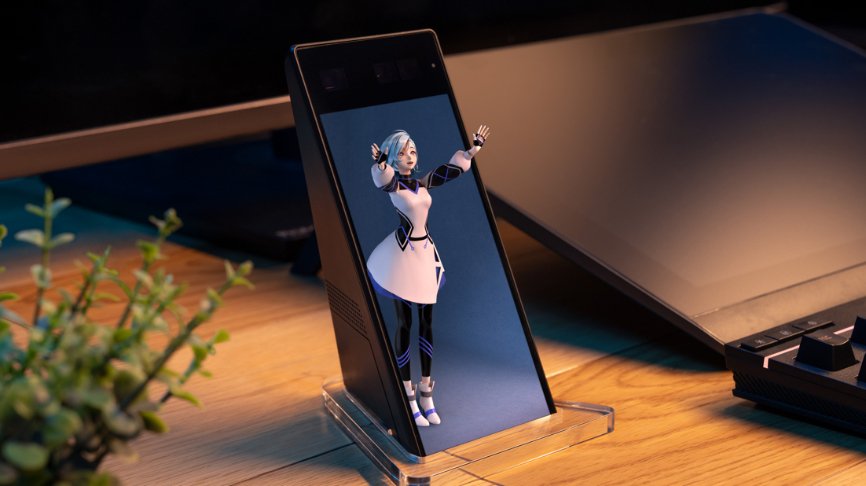 An ordinary monitor holds its picture steady while you move around it. The ELF-MN1 is specified the other way round: it generates and presents a stereoscopic image in real time based on where the viewer is sitting or standing. That single sentence sets the agenda for this hardware breakdown, because every other line of the disclosed specification either serves that tracking loop or has to survive it on a real desk. The figures released for Japan are compact and auditable — a 403 ppi panel, one USB-C cable, infrared support for pupil tracking in dim rooms, confirmed access to Gugenka HoloModels content, and an expected market price of roughly ¥54,000 under open pricing. Below, we read each number as a buying signal instead of a press-release adjective.
Viewer tracking: the subsystem that decides whether the 3D image holds
Stereoscopic rendering tied to viewer position is only worth something if tracking never drops out. The published description states that the ELF-MN1 keeps the eye-tracking sensor already fitted to the device and adds an infrared sensor on top of it, so pupil position continues to be captured even when the room is dark. For desk use, that is the difference between a demo that behaves under bright lighting and a device that still renders correctly beside a window at dusk, or in a room run at low ambient light.
The practical takeaway is that tracking here is a dual-sensor arrangement rather than a single-sensor one. The infrared unit is described as a complement to the existing sight-recognition sensor, not a replacement, so the low-light case is covered without discarding the normal-light path.
Panel and optics: what 403 ppi is actually spending
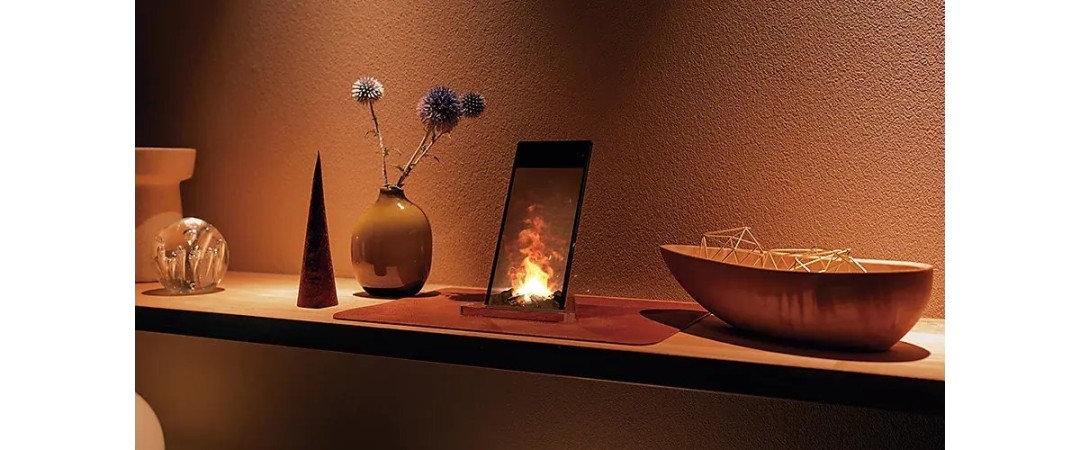 The display area uses a 403 ppi panel. Pixel density is the raw material an autostereoscopic layout burns, because the panel is carrying more than one view at the same time: the ELF-MN1 integrates dual-view display with techniques that suppress blur and ghosting. The stated result of that pairing is cleaner small-size 3D content. In other words, 403 ppi is not a stand-alone quality claim; it is the budget the dual-view optics and the ghosting suppression draw down. A sparser panel would leave nothing to allocate to the second view, and the perceived resolution of each view would fall apart.
For evaluation purposes, that means two disclosures must be checked together: panel density, and the claim of improved clarity for compact 3D content. Both point at the same class of use — small-format viewing on a desk, not a widescreen cinematic surface.
ELF-MN1 spec sheet at a glance
| Item | Disclosed value | How to read it as a buyer |
|---|---|---|
| Model | ELF-MN1 | The only device covered by this breakdown |
| Panel density | 403 ppi | Density budget spent by dual-view display and blur/ghosting suppression on small 3D content |
| 3D presentation | Real-time stereoscopic image based on viewer position, dual-view display | Image quality is hostage to the tracking loop staying locked |
| Tracking sensors | Eye-tracking sensor plus an infrared sensor | Pupil capture continues in dark environments |
| Interface | One USB-C cable to a smartphone or a computer | Single-cable wiring; no additional display connection is listed |
| Mounting | Transparent acrylic stand | Weakening the screen-to-desk boundary, aimed at desks and cabinet tops in confined spaces |
| Stated uses | Viewing 3D digital models, displaying companion-app characters, SDK creation | Three distinct job profiles: viewer, display, maker |
| Confirmed service | Gugenka HoloModels | Official anime character models are the ready-made content hook |
| Roadmap | Sony plans collaboration with XR and spatial-content creators | Dedicated content is described as expanding, not finished |
| Region and price | Open pricing in Japan, expected market price about ¥54,000 | Treat 54,000 yen as the planning figure, not a locked sticker |
Connectivity and footprint: one cable and a stand built to disappear
The device is stated to reach a smartphone or a computer through one USB-C cable. For anyone planning a workstation, a single-cable link is most of the story: no further display connection is listed, and the same physical connector covers both source classes named in the specification. That removes the two annoyances that usually sink a desktop 3D display — cable management, and the recurring question of which source is plugged in.
The second mechanical detail is the transparent acrylic stand, described as reducing the boundary between screen and desk surface. Its stated purpose is placement in limited spaces such as a desk or a cabinet top, where a visible chassis would underline the object's size. Read alongside the small-format target of the optics, this comes across as a device engineered for edge-of-desk positioning rather than centrepiece placement.
Content ecosystem: HoloModels today, SDK and planned partnerships next
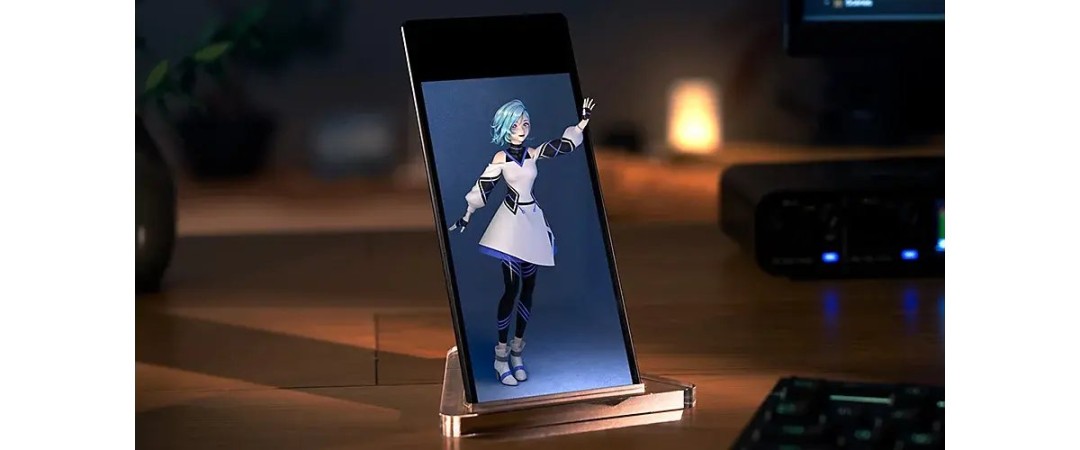 Three content paths are disclosed. The ELF-MN1 can be used to view 3D digital models, to display characters inside companion applications, and to run original work made with an SDK. The one already confirmed is Gugenka HoloModels, through which official anime characters can be seen as 3D models. Sony, meanwhile, is described as planning collaboration with XR and spatial-content creators to keep expanding dedicated content for this display.
As a buying signal, that ordering matters. A confirmed service today plus a creation route through the SDK is a different proposition from a catalogue promise. The Sony work is explicitly framed as a plan, so the rational stance is to treat the current content list as the baseline and the XR and spatial creator pipeline as upside rather than as a spec line.
Data points this breakdown leans on
- 403 ppi — panel density of the display area, quoted from the published specification.
- One USB-C cable — the stated connection path to a smartphone or a computer.
- Infrared sensor — fitted in addition to the existing eye-tracking sensor, for pupil capture in dark environments.
- Small-format clarity — the stated outcome of combining dual-view display with blur and ghosting suppression.
- Gugenka HoloModels — the service already confirmed as supported.
- Japan, ¥54,000 — open pricing, with an expected market price of roughly 54,000 yen.
Four misconceptions worth clearing up first
- 403 ppi by itself guarantees a sharp 3D image. The density figure describes the panel; the clarity of small 3D content is credited to dual-view display working together with blur and ghosting suppression.
- The infrared sensor replaces eye tracking. It is described as an addition, fitted alongside the original sight-recognition sensor so that dark rooms do not break pupil capture.
- The unit needs a separate interface per source device. The disclosed method is one USB-C cable to either a smartphone or a computer.
- ¥54,000 is a fixed retail price. Japan pricing is open, and 54,000 yen is the expected market figure, so retailer quotes can legitimately sit above or below it.
Fit scenarios drawn from the disclosed feature set
- Character or companion display on a workstation. Showing characters from companion applications is one of the listed uses, and the optics target compact 3D content.
- 3D model review. Viewing 3D digital models is explicitly named as a use case.
- Creator sandbox. The SDK is listed for producing original content, which suits makers rather than passive viewers.
- Mixed or dim lighting. The infrared sensor keeps pupil tracking running where visible-light sensing alone would struggle.
- Tight desk or shelf real estate. The transparent acrylic stand is described as easing the screen-to-desk boundary on desks and cabinet tops.
Action checklist before you commit
- Decide which source device will drive the panel, since the disclosed connection is one USB-C cable to a smartphone or a computer.
- Pick your lane: viewing existing 3D models and HoloModels characters, or building your own through the SDK. The two paths cost different amounts of time, not just money.
- Measure the placement surface — desk or cabinet top — and check your sight line, because the image is rendered from where the viewer sits.
- Once the unit is on the desk, test low-light behaviour against the dual-sensor claim of eye tracking plus infrared.
- Use ¥54,000 as the Japan planning number under open pricing, and treat any quote away from it as a comparison rather than a reference.
- Keep the Sony XR and spatial-content collaboration in view as a timeline note: dedicated content is still described as expanding.
Verdict from the MyTechDailyNews Hardware desk: on paper, the ELF-MN1 is an unusually legible product — one density figure to audit, one cable to plan around, one sensor pairing to explain its low-light behaviour, and one price expectation to budget against in Japan. Everything that cannot be verified from a spec sheet lives in how steadily the stereoscopic image survives real rooms and real source devices, which is exactly where our checklist above points you. Sarah Chen, Tech Daily — send your own ELF-MN1 measurements or a question about this breakdown to hello@techdaily.com, and we will fold the useful numbers into a follow-up.