
MyTechDailyNews Hardware Bench Guide: Reading the New BMW X5 iX5 — 460 kW Charging, 800 V Architecture and 144 kWh of Usable Battery
By Sarah Chen | MyTechDailyNews Hardware desk
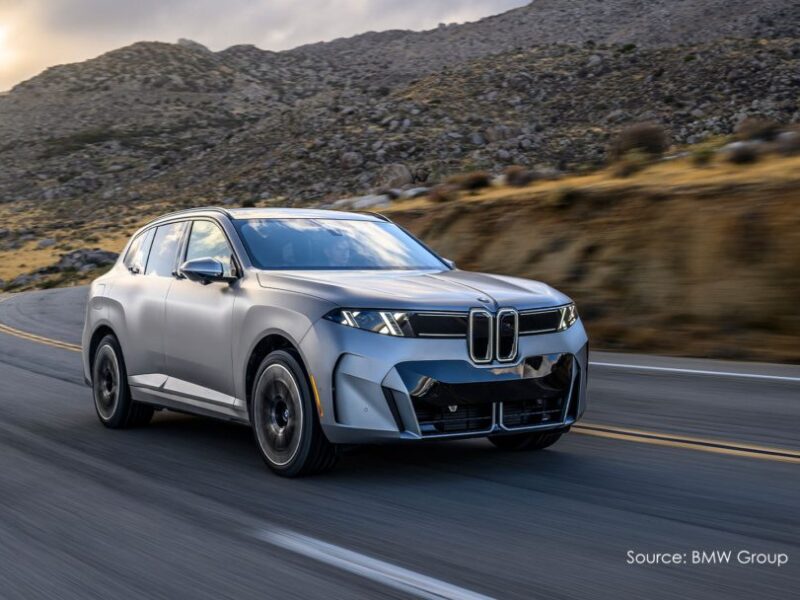
Spec sheets are worth more than press adjectives, and the fifth-generation X5 finally delivers one that can be read line by line. BMW has published the technical frame for an electric flagship called the iX5: sixth-generation eDrive hardware, an 800 V electrical architecture, a 144 kWh usable battery and DC fast charging topping out at 460 kW, paired with a provisional WLTP range stated at about 850 km. This Hardware breakdown converts those claims into comparison tables, a fit-for-purpose checklist, the misconceptions to clear before ordering, and the verification steps that matter when your charging infrastructure — not the badge — decides the purchase.
What actually changed: the lineup in six numbers
Separate the platform story from the powertrain story first, because one vehicle structure now carries four drive concepts.
- Platform: BMW keeps the X5 on its CLAR architecture, so combustion, plug-in hybrid and fully electric systems share a common vehicle platform instead of each needing a dedicated structure.
- Drivetrain breadth: petrol, diesel (market-dependent), plug-in hybrid and battery-electric choices are confirmed, and a hydrogen fuel-cell version is also planned.
- Electric output: the BMW iX5 60 xDrive pairs two electric motors for a combined 425 kW and approximately 805 Nm of torque.
- Magnet-free motors: the front axle runs an asynchronous motor and the rear an electrically excited synchronous motor; neither requires permanent magnets.
- Cell format: BMW's latest cylindrical lithium-ion cells stand 120 mm tall versus 95 mm in the smaller iX3, and Gen6 is credited with 20% higher volumetric energy density than the previous generation of prismatic cells.
- Charging window: 10% to 80% in approximately 23 minutes under suitable conditions, plus bidirectional charging that can pass stored energy to external equipment or a building.
Powertrain matrix: X5 40 xDrive, X5 50e and the electric iX5 side by side
| Variant | Drive hardware | Stated output | Energy storage / electrification | Scheduled market entry |
|---|---|---|---|---|
| X5 40 xDrive | Turbocharged 3.0-litre six-cylinder petrol engine | 294 kW | 48 V mild-hybrid assistance | late 2026, among the first combustion models |
| X5 50e | Six-cylinder petrol engine working with an electric motor | 360 kW combined | Plug-in hybrid with high-voltage battery | early 2027 |
| BMW iX5 60 xDrive | Front asynchronous motor plus rear electrically excited synchronous motor, both magnet-free, on sixth-generation eDrive | 425 kW and approximately 805 Nm | 144 kWh usable battery on an 800 V architecture | early 2027 |
| Hydrogen-powered iX5 | Fuel-cell technology developed with Toyota | Not published in the current briefing | Fuel-cell system | Later; the joint programme targets series production in 2028 |
Read the matrix by duty cycle rather than by headline kilowatts. The two combustion-based rows buy you independence from charging hardware, while the electric row buys you torque, a large usable pack and a charge rate that only pays off if your routes can actually supply it.
One caution for procurement teams: petrol and diesel availability is explicitly market-dependent, so the table describes platform capability, not the exact configuration sheet you will be offered in your region.
Charging and range: the 460 kW headline and its footnotes
| Metric | Manufacturer figure | How a hardware reader should qualify it |
|---|---|---|
| Electrical architecture | 800 V | A system-level design choice that enables the stated charge rate; judge it against real station output, not the label. |
| Peak DC charge power | 460 kW | Demonstrated with charging network operator IONNA and equipment manufacturer Alpitronic in Southern California, using specially prepared infrastructure rather than charging equipment currently available commercially in the United States. |
| 10% to 80% time | approximately 23 minutes | Valid "under suitable conditions": station power split, battery temperature and starting state of charge all move this number. |
| Range, WLTP | up to approximately 850 km, provisional | Depends on specification and is not presented as a final result. |
| Range, US EPA | approximately 724 km | BMW's own estimate under US EPA test procedures — the more conservative planning figure for US duty cycles. |
| Battery capacity | 144 kWh usable | The denominator for any energy-per-minute calculation across the 10% to 80% window. |
| Cell geometry | Cylindrical, 120 mm tall, Gen6 | 20% higher volumetric energy density than the previous prismatic generation, according to BMW. |
Because the peak figure came from a prepared demonstration, the practical takeaway is arithmetic rather than marketing: take the 144 kWh usable capacity, apply the 10% to 80% window, and compare the result against the kilowatts your regular charge posts can actually deliver. A vehicle rated for 460 kW still spends its stopover at whatever the station permits, so the approximately 23 minutes BMW quotes is the best-case end of the distribution, not a guaranteed break length. The distance between the provisional WLTP figure of about 850 km and the US EPA estimate of approximately 724 km is the same story in range terms: the test cycle explains most of the gap, so pick the cycle that matches where you drive.
Cell geometry is the quiet variable: 120 mm versus 95 mm
The most informative number in the briefing may be the least glamorous one. BMW's latest cylindrical lithium-ion cells measure 120 mm in height, against 95 mm in the smaller iX3. BMW attaches a clean percentage to the result — Gen6 delivers 20% higher volumetric energy density than the previous generation of prismatic cells — and that is the mechanical reason a 144 kWh usable pack and an 800 V architecture can sit inside a CLAR structure that also carries petrol, diesel and plug-in hybrid variants of the X5.
For readers tracking supply chains as well as spec sheets, the same Gen6 push has wider consequences. eeNews Europe previously reported BMW's expansion of Gen6 battery production across several regions, including a new US battery assembly facility near the Spartanburg vehicle plant — the same South Carolina site that builds the X5 family.
Control hardware in the cabin and chassis
- Panoramic iDrive is adopted inside the X5 range, including a display projected along the lower portion of the windscreen.
- The electric version adds BMW's Heart of Joy vehicle dynamics controller, which coordinates propulsion, braking and chassis functions.
- Driver assistance covers traffic-light and stop-sign recognition with automatic braking intervention.
- Symbiotic Drive allows certain driver steering and braking inputs without immediately disengaging active assistance — a small but meaningful change for anyone who dislikes being locked out of the wheel on long runs.
Fit-for-purpose checklist: matching variant to use case
- Mostly highway with no reliable depot charging: the X5 40 xDrive, with its turbocharged 3.0-litre six-cylinder at 294 kW and 48 V mild-hybrid assistance, is the least hardware-dependent option and the earliest to arrive.
- Electric daily commute plus occasional long-distance runs on liquid fuel: the X5 50e plug-in hybrid delivers a combined 360 kW from a six-cylinder petrol engine, an electric motor and a high-voltage battery.
- Fleet or fixed-site operation with high-power DC available: the BMW iX5 60 xDrive is where 425 kW, approximately 805 Nm and the 144 kWh pack pay off, provided your infrastructure approaches the 10% to 80% in approximately 23 minutes scenario.
- The vehicle must act as a power source: bidirectional charging on the iX5 can supply external equipment or a building.
- Fuel-cell interest rather than immediate need: the hydrogen-powered iX5 sits behind the rest of the programme, with series production targeted in 2028.
Common misconceptions to clear before you commit
- "460 kW means any modern fast charger will deliver it." No. The capability was demonstrated with IONNA and Alpitronic in Southern California on specially prepared infrastructure, not on equipment currently available commercially in the United States.
- "850 km is the delivered range." It is a provisional WLTP figure that varies with specification, while the US EPA estimate is approximately 724 km.
- "An 800 V label by itself makes charging fast." The architecture works together with the Gen6 cell format and the 144 kWh usable pack, and the station's permitted power remains the ceiling.
- "Electric X5 means permanent-magnet dependency." BMW states that neither the front asynchronous motor nor the rear electrically excited synchronous motor in the BMW iX5 60 xDrive requires permanent magnets.
- "The whole lineup lands at once." Combustion models are scheduled for late 2026, the electric and plug-in hybrid versions follow in early 2027, and the fuel-cell variant comes later still.
Production and availability timeline
- Assembly: BMW builds the new X5 family at its Spartanburg plant in South Carolina, supported by the new US battery assembly facility near that same site.
- late 2026: the first combustion-engine models are scheduled for market introduction.
- early 2027: the electric and plug-in hybrid versions follow.
- 2028: the hydrogen-powered iX5, using fuel-cell technology developed with Toyota, sits behind the rollout, in line with the series-production target previously reported by eeNews Europe.
Action recommendations for buyers, fleets and facilities teams
- Audit your charge posts before trusting the headline. Log the maximum power actually delivered per gun at the stations you use, then decide whether a 460 kW capability is something you will ever touch.
- Model range on the conservative figure. If your traffic is in the US, plan against the US EPA estimate of approximately 724 km rather than the provisional WLTP number of about 850 km.
- Treat 10% to 80% in approximately 23 minutes as a best case. Re-time it under your own conditions — cold starts, high starting state of charge, shared stations — before building schedules around it.
- Confirm the specification-dependent range value at order time, because the 850 km ceiling is provisional and shifts with the option set you choose.
- Validate bidirectional charging against a real load. If supplying external equipment or a building is part of the justification, test that path with your actual gear before committing the vehicle to the role.
- Sequence procurement by phase. Needs that cannot wait past 2026 belong on the combustion side in late 2026; electric and plug-in hybrid volume arrives in early 2027; fuel-cell requirements are a 2028 conversation.
- Check regional configuration separately. Petrol, diesel, plug-in hybrid and electric availability is market-dependent, so confirm your market's list before standardising a fleet specification.
Data sources and notes
- All performance values cited here — 460 kW, 800 V, 144 kWh, 425 kW, 805 Nm, 120 mm, 95 mm, 20%, 850 km, 724 km, 10% to 80% in 23 minutes, 3.0-litre, 294 kW, 48 V, 360 kW — are BMW's own published figures for the fifth-generation X5 and its sixth-generation eDrive / Gen6 battery programme; BMW describes the 850 km WLTP figure as provisional.
- Charging-infrastructure context comes from the demonstration involving IONNA and Alpitronic in Southern California, conducted on specially prepared equipment rather than hardware currently available commercially in the United States.
- Background on Gen6 battery expansion and on the fuel-cell collaboration with Toyota was previously reported by eeNews Europe.
- Have a charge-post log, depot configuration or regional configuration sheet you want cross-checked against these figures? Write to the MyTechDailyNews Hardware desk at hello@techdaily.com and we may follow up in a future update.