
MyTechDailyNews General Guide: Inside the NXP S32K5 Choice for Volkswagen Group’s 2027 SDV Plan
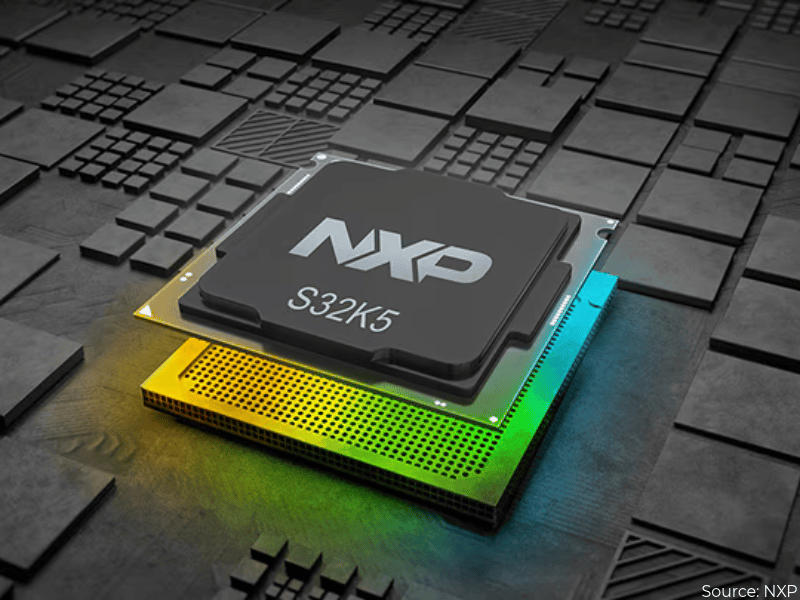
Car technology news often sounds abstract until a supplier decision makes the roadmap concrete. Volkswagen Group’s expanded relationship with NXP Semiconductors now does exactly that: the NXP S32K5 microcontroller family is positioned as the core processing layer inside a zonal software-defined vehicle architecture. The first vehicle planned for this architecture is scheduled for 2027, and the agreement was shared ahead of the International Suppliers Fair (IZB) in Wolfsburg, Germany.
Why this supplier choice is more than a chip story
The deal deepens Volkswagen’s strategy of engaging directly with semiconductor suppliers rather than treating chips as interchangeable components purchased through a long supply chain. It also gives the automotive electronics market a visible example of how standardized microcontroller platforms may support complex vehicle software across many brands.
For automotive chipmakers and electronics developers, the announcement points to a broader trend: reducing hardware complexity while enabling scalable zonal architectures. In that context, NXP S32K5 is not presented as a stand-alone product launch, but as a building block that may help multiple vehicle programs share a common foundation.
What the zonal architecture changes
Traditional vehicle networks rely on many dedicated electronic control units, often called ECUs. A zonal model groups several vehicle functions into fewer controllers. By reducing the number of chips and ECUs, the approach can make vehicle development and component management less fragmented.
Within the architecture being developed by Rivian and Volkswagen Group Technologies (RV Tech), the NXP microcontrollers are described as the connection layer between sensors and actuators. They process data from different vehicle zones and help manage functions including lighting, comfort, chassis, and safety systems. At the same time, central high-performance processors are reserved for heavier workloads such as AI-enabled automated driving and advanced infotainment.
Quick reference: what has been announced
- Platform partner: Volkswagen Group has expanded its partnership with NXP Semiconductors.
- Selected hardware: NXP S32K5 microcontrollers.
- Architecture role: Core processing technology for zonal controllers in a system developed by RV Tech.
- Vehicle brands in scope: Volkswagen Group brands and vehicle segments, plus Rivian vehicles.
- First vehicle milestone: 2027.
- Broader strategic target: Group Target Picture 2030, which aims to harmonize key technologies across brands and regions.
- Announcement setting: Ahead of the International Suppliers Fair (IZB), also referred to as IZB, in Wolfsburg, Germany.
How the two approaches compare
| Approach | Described behavior | Practical reading |
|---|---|---|
| Conventional ECU-heavy setup | Relies on numerous dedicated electronic control units. | Functions are split across many hardware modules. |
| Zonal controller setup | Consolidates multiple functions into fewer controllers and reduces chips and ECUs. | Can simplify development and component management. |
| Central processor layer | Handles demanding workloads, including AI-enabled automated driving and advanced infotainment. | High-performance tasks sit in a separate processing tier. |
Executive framing: scale, lifecycle updates, and trust
“Our future zonal architecture, developed by RV Tech and supported by strategic technology partners such as NXP, creates a scalable technology foundation for multiple Group brands and vehicle segments. By harmonizing key technologies across the Group, we reduce complexity, leverage scale and accelerate innovation while enabling advanced digital capabilities. This allows us to bring digital innovations to our customers faster and continuously enhance our vehicles throughout their lifecycle,” said Werner Tietz, Volkswagen Group executive committee member responsible for research and development.
“Intelligent, software-defined vehicles must operate safely, securely and reliably. Together with Volkswagen Group and RV Tech, NXP is bringing scalable real-time compute, trusted edge intelligence and continuous software innovation together to create a scalable foundation for the next generation of intelligent vehicles,” said Rafael Sotomayor, president and CEO of NXP Semiconductors.
Supply resilience, scale, and NXP’s market position
For Volkswagen, the agreement is also tied to long-term supplier relationships, technology standardization, and improved supply resilience. Defining semiconductor requirements earlier and using common components across brands is described as a route to economies of scale and greater planning certainty for future vehicle platforms.
For NXP, the selection reinforces its position in the automotive SDV market. The master describes that market as increasingly focused on real-time processing, functional safety, and secure over-the-air software updates—areas where the stated requirement is safe, secure, and reliable operation.
Common misconceptions
- “It is only about one semiconductor part.” The announcement frames NXP S32K5 as a core part of a larger architecture, supplier strategy, and Group-wide technology target.
- “It means all car computing moves to the same chip tier.” The described design separates zone-level MCU tasks from central high-performance processors.
- “It is already a consumer product launch.” The first vehicle using the architecture is scheduled for 2027, not the present moment.
FAQ for General readers
What is a software-defined vehicle?
In the article’s context, it refers to a vehicle architecture designed so that software, digital features, and lifecycle updates can be managed more centrally and consistently. The hardware choice supports that idea by providing common processing across zones.
Why would an average reader care?
Because shared platforms can shape how quickly digital capabilities, connected services, and safety-related functions are brought to customers and enhanced over time, according to Volkswagen’s stated rationale.
What milestone should be watched?
The most concrete date in the story is 2027, when the first vehicle using the new architecture is scheduled. The wider strategy is linked to Group Target Picture 2030.
What does “zonal” mean here?
It means grouping vehicle functions into fewer controllers by zone rather than assigning many small, dedicated ECUs. The NXP MCUs are described as processing sensor and actuator data while helping manage functions such as lighting, comfort, chassis, and safety systems.
Action checklist: How to follow the story
- Separate the chip selection from the vehicle rollout: NXP S32K5 is part of an architecture, while the first vehicle is still scheduled for 2027.
- Track whether the standardization language extends across Volkswagen Group brands and Rivian vehicles, because differentiation is described as still possible.
- Read future announcements through three lenses: supply resilience, scalable real-time compute, and continuous software innovation.
- Use IZB as a timing marker, but evaluate later claims against the stated 2027 vehicle milestone and the Group Target Picture 2030 strategy.
The simplest way to understand the announcement is to see it as a hardware standardization decision with software consequences. Volkswagen Group has placed NXP Semiconductors’ NXP S32K5 at the center of a zonal architecture developed by Rivian and Volkswagen Group Technologies (RV Tech), while keeping 2027 as the first practical vehicle checkpoint and Group Target Picture 2030 as the broader technology-harmonization target. For MyTechDailyNews readers, the story is less about one microcontroller and more about how cars may be built to make digital capability easier to scale.