
MyTechDailyNews General: United States Employee Engagement Slips as AI Anxiety and Remote-Work Shifts Reshape Workplace Trust
Recent workplace reporting gathered by MyTechDailyNews suggests that the mood around work in the United States is becoming more cautious. The newest survey picture shows engagement continuing to fall, while artificial intelligence, changing remote-office rules and trust in management now shape how workers experience their jobs.
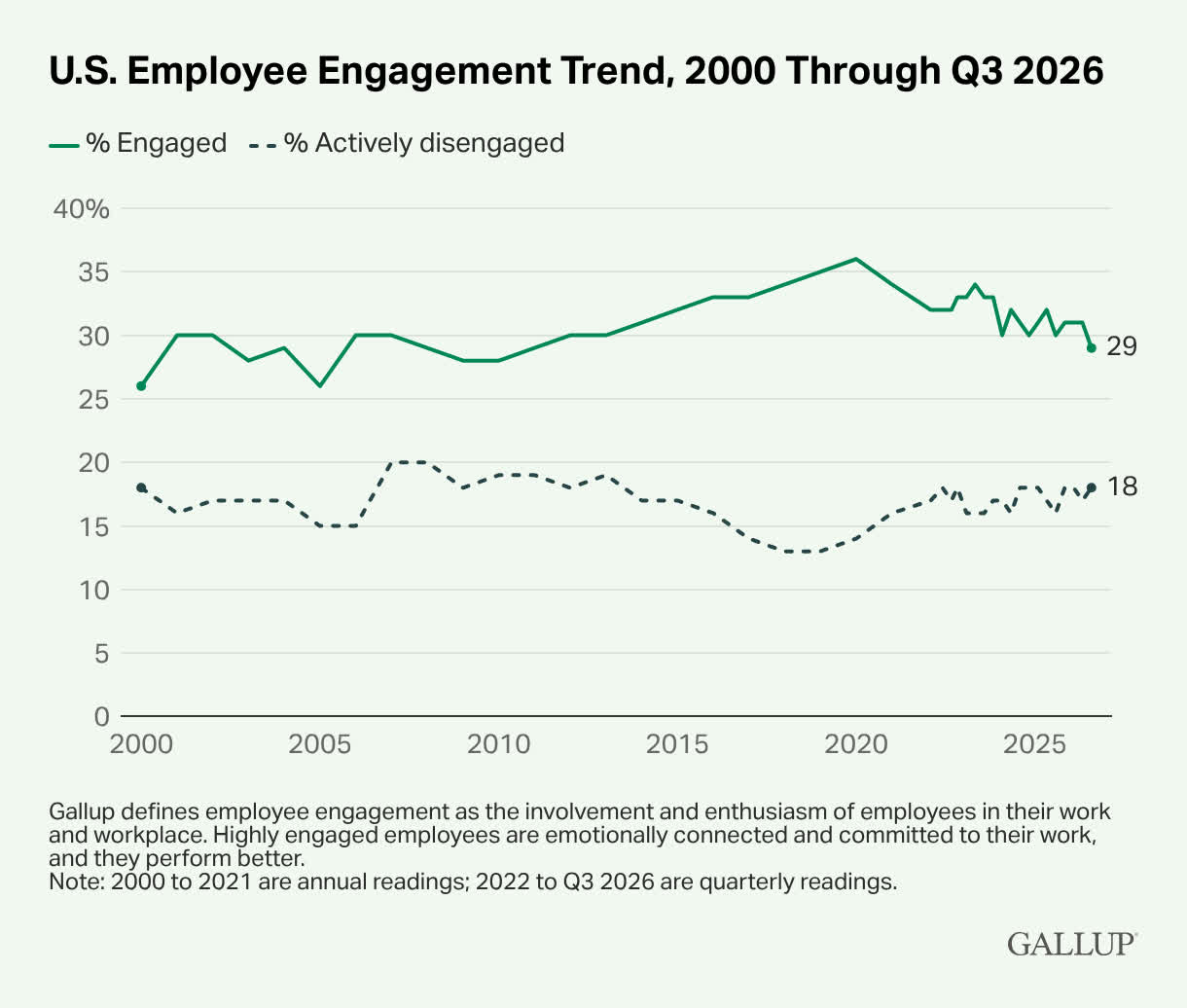
The numbers behind that shift are not minor. Fewer than one-third of employees in the United States say they remain positively engaged, while a growing group describes itself as being in an actively disengaged state. In plain terms, more people are not only feeling less enthusiastic; they are mentally stepping back from the daily reality of their roles.
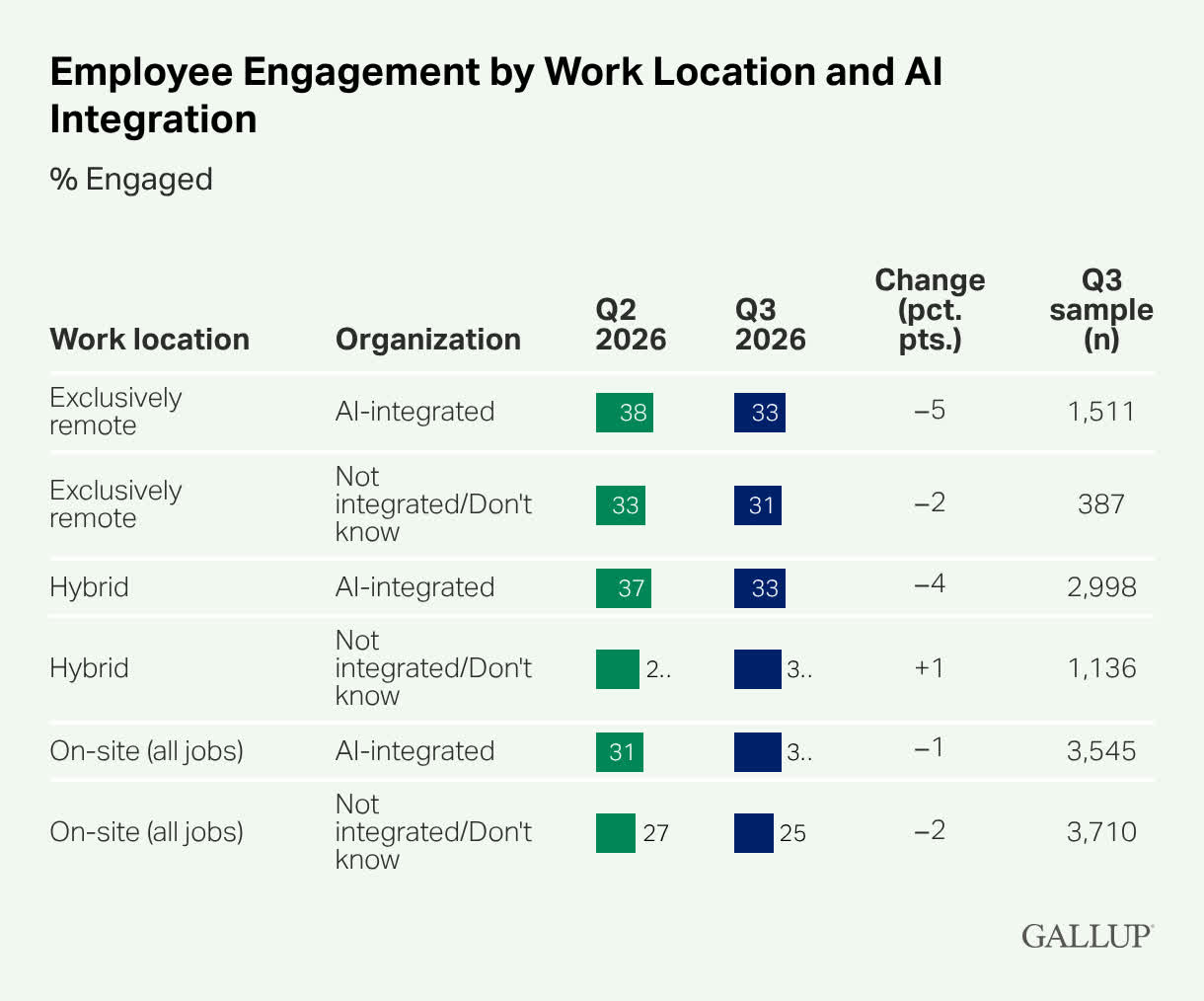
Artificial intelligence is now one of the clearest emotional triggers in this story. As companies across industries speed up the use of AI tools, some workers worry that automation will redraw job boundaries and weaken long-term employability. The survey logic is straightforward: employees who view AI mainly as a productivity aid tend to carry less workplace insecurity than those who see it as a possible threat, and their engagement levels also appear lower.
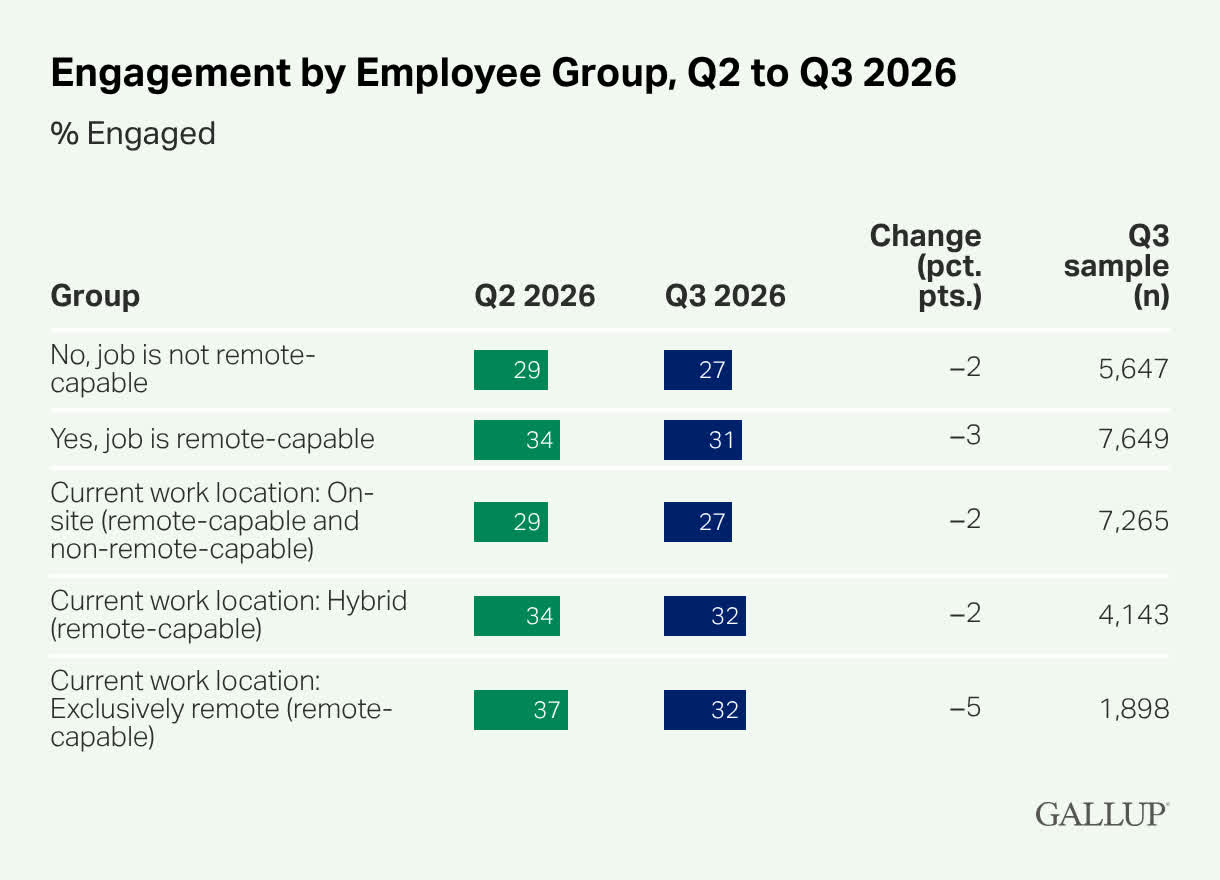
Remote work adds another layer of complexity. Flexibility is still valued by many employees because it can support a healthier relationship between job duties and personal life. Yet return-to-office decisions continue to stir frustration among people who feel they lost control over a working model that suited them. The source points to a broader pattern: workers with more autonomy and flexibility generally report higher satisfaction, while those forced into abrupt changes are more likely to develop negative feelings.
Trust is the third area drawing attention. The report describes a widening gap between management and employees, with many workers saying their organizations are not putting enough genuine attention on wellbeing. Surveillance, repeated performance checks and rising workload can make employees feel monitored rather than supported. The same source also ties engagement to visible career paths and appreciation: when people do not see a future inside the company, or do not feel their contribution is valued, commitment usually weakens.
Age adds another divide. Younger workers tend to ask for more from employers, including development opportunities, flexible arrangements and a culture that matches their expectations. Older or more senior employees are described as more focused on job stability and on the possible role changes that AI could bring. This does not make one group right or wrong; it shows that the same technology and policy shift can feel very different depending on career stage.
Analysts see the current moment as a turning point. Employers want to use artificial intelligence to raise efficiency, but they also face declining motivation and the risk of losing talent if change is managed poorly. Keeping staff involved while introducing new tools is becoming a management responsibility, not just a workplace slogan.
The findings also widen the definition of what drives engagement. Compensation remains important, but the report places job security, management style, workplace culture, remote-office policy and AI adoption alongside pay as forces shaping labor market behavior in the United States. That means future workforce trends may be influenced less by salary alone and more by how work is organized, monitored, supported and modernized.
What This Means for General Readers
For everyday readers, the value of this survey is not simply the headline that engagement is falling. It is the way several pressures connect: a worker may like the technology itself but dislike being pressured to adapt without support; a worker may value job flexibility but feel anxious about unclear expectations; a worker may accept performance tracking but question whether it comes with recognition and growth.
That combination explains why the topic sits squarely in general technology news rather than in a narrow internal HR discussion. Remote work policies, AI tools and management surveillance are now mainstream experiences, and they influence not only productivity but also whether people stay, stay quiet or quietly disengage.
A useful way to read the trend is to separate three channels: emotional response to change, practical response to flexibility, and institutional response to trust. A workplace can introduce a powerful tool and still see morale drop if employees feel the tool is arriving without enough role clarity. A workplace can improve efficiency through monitoring and still weaken engagement if monitoring is not balanced by support. In each case, the factual anchor is not a single new technology, but the way workers experience the speed and fairness of the change around them.
Key Signals to Watch
- Engagement in the United States is described as continuing to decline, with fewer than one-third of employees remaining positively engaged.
- The share of workers feeling actively disengaged is rising, showing a wider emotional gap between people and their jobs.
- AI is being framed as both a productivity opportunity and a source of job anxiety.
- Remote-work flexibility remains popular, but mandatory return-to-office moves can create resentment when choices feel removed.
- Trust between employees and management is weakening when monitoring and workload are not matched by wellbeing, recognition and career visibility.
- Age differences matter: younger workers focus more on development, flexibility and culture, while senior employees focus more on stability and AI-related role changes.
- The report frames workplace engagement as a broad signal for labor-market direction, not a one-off satisfaction metric.
Common Misconceptions
- Misconception: lower engagement is only about salary. The report says the drivers extend beyond compensation to include job security, management style, workplace culture, remote-office policy and AI adoption.
- Misconception: remote work is simply good or simply bad. The source shows both effects: flexibility can support work-life balance, while forced changes to established arrangements can fuel dissatisfaction.
- Misconception: AI concerns are purely technical. The survey ties AI anxiety to perceived threat to job structure and long-term employability, which affects workplace mood and engagement.
- Misconception: trust gaps are abstract. The report connects them to concrete experiences such as over-monitoring, frequent performance checks, rising pressure, limited growth and feeling undervalued.
- Misconception: younger workers are the only ones affected by technology change. The article describes senior employees as more concerned about stability and possible role changes, which means AI affects multiple career stages.
FAQ
| Question | Answer |
|---|---|
| What is the survey saying about employee engagement? | It reports a continuing decline in engagement among employees in the United States, with fewer than one-third still positively engaged. |
| Why is AI appearing in workplace discussion? | Because companies are adopting AI tools faster, and some employees worry automation may reshape roles and weaken long-term job security. |
| Why does remote office policy matter? | Flexibility is widely valued, but changing arrangements can affect satisfaction and trust, especially when workers feel their autonomy has been reduced. |
| Is pay still the main factor? | No. The article says engagement is influenced by several forces alongside compensation, including job security, management style, culture, remote-work rules and AI use. |
| Do younger and older workers react the same way? | No. The survey points to different priorities: younger employees emphasize development, flexibility and culture, while senior employees are more focused on stability and possible AI-driven job changes. |
| What is the biggest takeaway? | Workplace engagement is becoming a mixed technology and management issue, not just a compensation issue. |
| Does the report say every worker is equally affected by AI? | No. It distinguishes between people who see AI as a productivity aid and people who feel anxiety about automation, with the anxious group showing lower engagement. |
Action Advice
The survey does not give readers new factual data beyond what is already described, but it does suggest useful questions to ask when interpreting workplace changes.
- Separate tool adoption from job uncertainty. If AI is introduced, look for whether it is presented as support or as a replacement pressure.
- Check how flexibility is being changed. The source suggests autonomy matters; sudden office-return rules may affect sentiment even when productivity is not the issue.
- Watch trust indicators. Monitoring and assessments may be less accepted when employees perceive too little wellbeing support, recognition or career visibility.
- Consider generational expectations. Different groups may respond differently to the same policy because stability, development and flexibility carry different weights.
- Read future implications carefully. Since the report links engagement to culture, management, remote work and AI, workplace trends may be shaped by how organizations combine those areas rather than pay alone.
By the end of the reporting window, the clearest message is that the United States workplace is being pulled by several changes at once. Engagement is not falling for one reason; it is falling because technology, trust, flexibility and career visibility are being redefined together. For MyTechDailyNews readers, that makes this story a useful warning sign: the next phase of general workplace technology will be judged not only by efficiency gains, but by whether people feel able to remain engaged.