
AI's Power Bill: What U.S. Data Center Growth Means for 2030 Emissions
By Sarah Chen · MyTechDailyNews (Tech Daily)
Most people size up the AI boom in chips, dollars and headline model launches. The Sierra Club analysis invites a different yardstick: tons of carbon dioxide. On that scale, the electricity appetite of new data centers may be big enough to push U.S. power-sector emissions back toward levels the country spent 15 years climbing away from — right around 2030.
The numbers, at a glance
| What the analysis projects | Figure | Why it matters |
|---|---|---|
| U.S. power-sector carbon dioxide in 2030 | about 2.1 billion tons | Roughly 42% above the 2025 level |
| Reduction progress at risk | about 15 years | Cuts delivered since the 2010s could be largely offset |
| Off-grid, behind-the-meter generation serving data centers | more than 460 million tons a year | Comparable to Mexico's total national emissions over one year; the comparison covers those off-grid generation units, not all data center activity |
| Grid-connected data center projects | about 154 million tons of extra emissions | Close to a 10% increase on top of the baseline |
What is actually pulling demand upward
The pressure is not coming from one single product category. It is the combined weight of several AI workloads landing on the grid at the same time, while supply-side buildout runs on a slower clock.
- Training runs: large language models require sustained, high-density compute over months.
- Inference services: every query answered by an assistant or search feature draws power, and usage is now daily and mainstream.
- Cloud AI adoption: businesses moving workloads to AI-enabled cloud services multiply the number of facilities running flat out.
- Supply lag: clean energy additions and grid expansion have not been matching this pace, which is where the emissions gap opens.
Behind-the-meter: the generation that skips the utility ledger
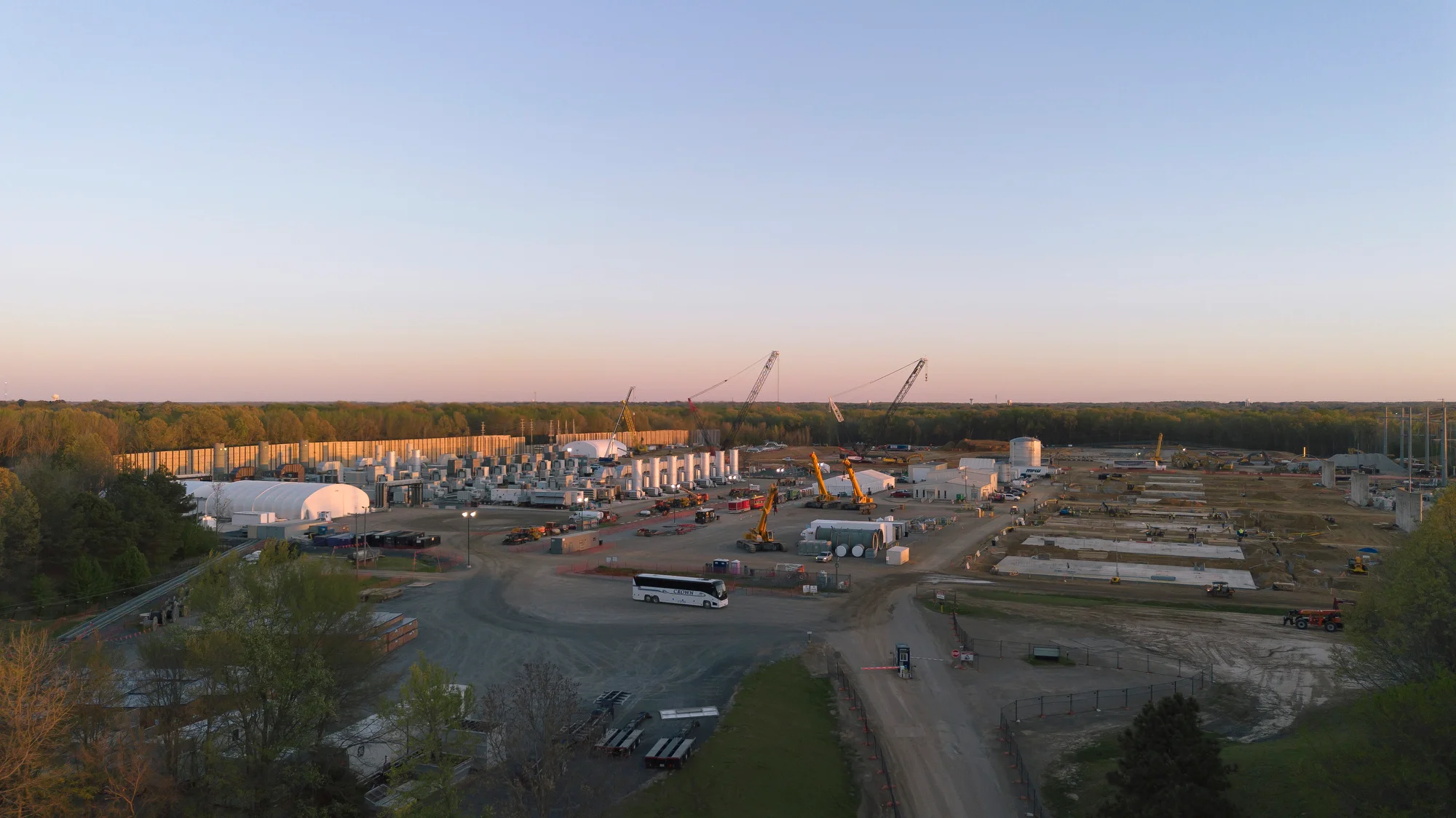
Some technology companies cannot get a grid connection slot in time, so they stop waiting. Instead, they build their own power plants and wire them straight to the data center. In industry shorthand this is called behind-the-meter generation, and the Sierra Club analysis says most of it runs on natural gas and other fossil fuels.
A useful everyday analogy: picture a store that needs a new electrical service but is told the utility hookup will take years, so it parks a big private generator in the lot. The lights come on, the receipt goes to a different book, and the exhaust never shows up in the municipal power report.
By 2030, according to the report's projection, off-grid generating equipment built or contracted by data center developers could emit more than 460 million tons of carbon dioxide each year. That single line item is close to Mexico's national emissions for one year. Important caveat, straight from the analysis: that comparison is about the off-grid generation facilities, not the full emissions footprint of all data center activity.
The interconnection queue is the real trigger
Slow grid-access processes are a major reason builders go private. Many large projects wait years for approval to connect, while AI development cycles move far faster than traditional energy infrastructure construction. To hit launch dates, developers install quick-to-deploy systems such as natural gas turbines directly at the site.
Plugging into the public grid is no free pass
Even setting behind-the-meter supply aside, data centers that connect to the public grid still push emissions growth higher. The analysis puts their added load at roughly 154 million tons of carbon dioxide by 2030, around 10% above the baseline. In plain terms: whether a facility draws power from the utility or from its own gas turbines, it tightens the squeeze on U.S. climate targets.
Where the curve could bend
Industry observers describe the AI expansion as exposing several bottlenecks at once in U.S. energy infrastructure. Supercomputing clusters and very large data centers keep breaking ground, and the central policy question for the next few years is how to satisfy that compute demand without derailing the clean energy transition.
The analysis identifies three main levers:
- Get more renewable energy projects actually built.
- Shorten the wait for grid interconnection.
- Attach stricter new-energy requirements to large new loads.
Checklist: what to watch next
- Publication of the underlying projection details, including which emission categories are counted.
- Whether behind-the-meter capacity is later folded into public grid reporting.
- Interconnection queue timelines announced by grid operators.
- Fuel choice for new on-site generation at AI campuses.
- Legislative or regulatory responses tied to large new power demands.
- Corporate disclosures on how data center growth is powered.
Common misconceptions
| Misconception | What the analysis actually says |
|---|---|
| All data center pollution shows up in utility emissions reports. | Behind-the-meter generation generally sits outside public grid statistics. |
| Off-grid power is a rounding error. | It is projected to exceed 460 million tons a year by 2030. |
| The Mexico comparison covers everything a data center emits. | It refers to the off-grid generation facilities built or contracted by developers, not total data center activity. |
| Grid connection keeps emissions neutral. | Grid-connected projects still add about 154 million tons, roughly 10% over baseline. |
| Growth in AI and climate progress can coexist automatically. | The mismatch is about pace: clean energy and grid buildout have not kept up with AI deployment. |
FAQ
Which years does the 42% increase compare?
The projection runs from 2025 to 2030, with U.S. power-sector carbon dioxide reaching about 2.1 billion tons in 2030.
Who produced this analysis?
The Sierra Club, a U.S. environmental organization.
What does "behind-the-meter" mean in everyday language?
It means electricity generated on the customer's own side of the connection rather than bought through the public grid — power the utility never bills for and, in most cases, never reports as part of grid emissions.
Does this mean AI growth is heading to a stop?
No. The analysis frames the issue around timing and rules: how fast renewable projects are built, how long grid access takes, and what conditions apply to new large power consumers.
Why use Mexico as a reference point?
To make scale intuitive. The projected annual output of off-grid data center generation is close to the country's emissions over one year — again, a comparison limited to those generation facilities.
Action advice for readers and teams
- Read carbon claims with a grid question attached: is the facility drawing utility power or behind-the-meter generation?
- Treat energy sourcing as a vendor criterion: alongside price, latency and model quality, note what a cloud or AI provider discloses about how its capacity is powered.
- Build permitting time into roadmaps: teams planning compute-heavy launches should factor in multi-year grid queues rather than assuming immediate connection.
- Follow the policy conversation: interconnection reform and new requirements for large loads are the levers most likely to change the 2030 outcome.
- Keep the 15-year context in view: the debate is not whether AI is useful, but whether energy planning can move as fast as the industry deploying it.
The takeaway for everyday readers is not that AI tools are going away. It is that the compute behind them has a physical address, a meter and a place in line. Whether 2030 ends up as the year the United States resumed cutting power-sector emissions, or the year it handed back 15 years of progress, will be decided in permitting offices and power plant orders — far from the product launch spotlight.
Have a tip or spotted an error? Reach the MyTechDailyNews newsroom at hello@techdaily.com.