
MyTechDailyNews General Tech Alert: Tyler Shultz Warns That AI Enthusiasm Could Give Another Theranos-Style Fraud a Place to Hide
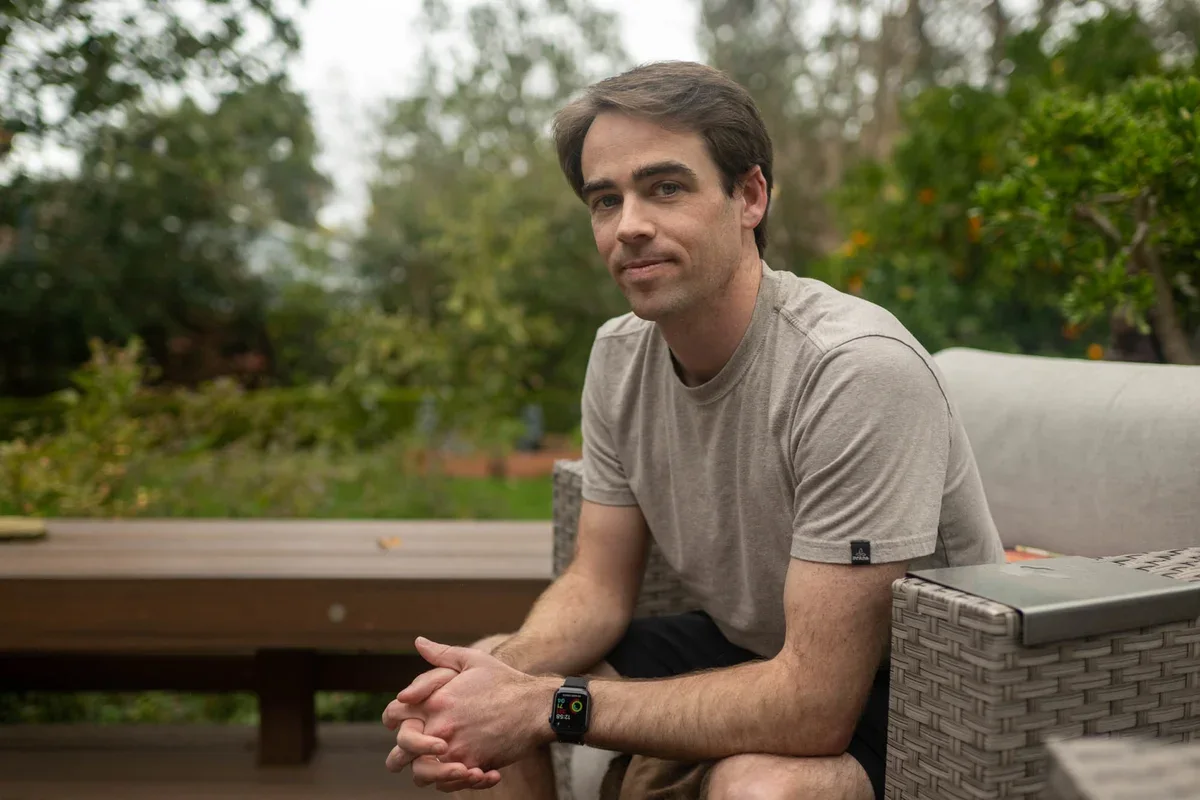
For people who follow everyday technology, the most important signal may be coming from a familiar place: a former insider warning that investors may again be buying stories faster than they can test the proof. Tyler Shultz, who helped expose the Theranos case in the United States, recently cautioned that the current wave of AI excitement can make it difficult for outsiders to determine whether a company has genuinely useful technology or only a convincing pitch.
In an interview with The San Francisco Standard, Shultz said that AI products can be especially hard to evaluate because much of the work happens inside opaque model systems. To a user or investor, a product may seem to contain a distinctive technical core when it may actually be a thin application layer placed on top of ChatGPT or another existing model. “If you want to fool people, I think this is a good opportunity to fool people,” he said.
Shultz’s warning carries weight because of his own history. He met Elizabeth Holmes while both were connected to Stanford University, later joined Theranos, and became involved in uncovering the company’s misleading claims about blood-testing technology.
At the height of the hype, Holmes promoted the idea that a small amount of blood could support many types of testing through a Theranos device. That promise helped attract hundreds of millions of dollars from investors, turned Holmes into a celebrated Silicon Valley figure and led some observers to describe her as a female Steve Jobs. The technical promises did not hold up, and the company was ultimately exposed as fraudulent.
Now, Shultz argues, the broader environment has not simply remained similar; it may have become more favorable to misleading claims. He suggested that AI makes verification harder, while public attention to evidence and accuracy has weakened. When investors can be persuaded by demonstrations, brand language and confident executives, a company can raise capital without giving outside readers a reliable way to see the machinery behind the promise.
The conversation also touched on Holmes herself, who has recently returned to public attention after Nathan Fielder’s film “You Can See Everything” appeared. Some audiences reacted with sympathy. Shultz said he disagrees with that reframing. In his view, Holmes is a skilled manipulator who has paid close attention to her public image. He noted that, even while Holmes was serving a prison sentence, she reached the cover of People magazine and appeared in a widely discussed film. He also claimed that Holmes has been involved in the new blood-testing startup founded by her partner, Billy Evans.
“I think the only reason we are talking about Elizabeth Holmes now is because she wants us to talk about her,” Shultz said.
His larger point is not that every AI startup is dishonest. It is that the current market may lack the habits needed to separate real breakthroughs from thin wrappers, marketing theater or exaggerated roadmaps. Technical complexity and fast-moving investment can blur the line, making it easy for a product to be described as more original, more autonomous or more accurate than it is.
That is where the Theranos comparison becomes useful for a general audience. The lesson is not merely about one company or one founder. It is about a pattern: a dramatic story, a difficult-to-verify technology, a charismatic public image and a funding environment that rewards speed over proof. In such a pattern, the people most likely to be misled are often those without the access, expertise or time to ask difficult questions.
Why AI claims can be especially hard to judge
AI can produce fluent text, analyze images, write code and simulate knowledgeable conversation, but visible output does not always reveal the underlying capability. A model may perform well in a demonstration because of curated examples, prompt engineering, a large data set or integration with an existing system. The result can be impressive without being proprietary.
For ordinary users, the practical risk is not only financial loss. A consumer may choose a service based on promised intelligence, privacy or reliability, then discover that the product cannot deliver consistently. For investors and business buyers, the risk is paying for a narrative rather than for verified technical strength.
Checklist: questions to ask before trusting an AI product
- Can the company demonstrate performance with independent data, not only staged examples?
- What is actually built in-house, and what is relying on ChatGPT or another existing model?
- Are failure rates, limitations and safety cases described in plain language?
- Can customers test the product in a realistic workflow before committing money?
- Do technical leaders discuss evidence clearly, or do they rely mostly on vision and media presence?
- Has a neutral party reviewed the claims, rather than a promotional video alone?
Common misconceptions about the Theranos parallel
- The comparison does not mean every AI company is like Theranos.
- It means hype can reduce scrutiny when proof is hard to see.
- Media recognition is not technical validation; a cover story or viral film does not prove a product works.
- A polished interface can hide a simple wrapper, and a wrapper can still be marketed as innovation.
FAQ
Who is Tyler Shultz?
Tyler Shultz is a whistleblower associated with the Theranos case in the United States. He worked at the company and helped expose misleading claims around its blood-testing technology.
Why does he connect AI investment with Theranos?
Because both situations involve technologies that are difficult for outsiders to verify. In AI, a product may look advanced while depending on existing systems such as ChatGPT, making it hard to judge whether the company has real unique capability.
What does this mean for regular users?
It means users should look beyond labels such as “AI-powered” and test whether a product solves a real task with consistent, documented behavior. The safest assumption is that novelty claims need independent evidence.
Action advice: how to respond without overreacting
Do not dismiss all AI products, but slow down before making financial decisions. Treat impressive demos as questions to investigate. Ask for verifiable use cases, published performance details and clear statements about what the system cannot do. If a company avoids technical transparency, relies on celebrity narrative or pressures buyers to act quickly, regard those signs as warnings.
The broader takeaway from Tyler Shultz’s recent comments is simple: enthusiasm is not a substitute for evidence. AI can be genuinely useful, and many builders may act in good faith. Still, a market shaped by hard-to-audit models and rapid funding can create room for another Theranos-like fraud. Readers should enjoy the technology while keeping one practical question in mind: can this claim actually be tested?