
MyTechDailyNews Playbook: How to Read TrendForce's iPhone Duo 29.8% Foldable Forecast Before You Buy
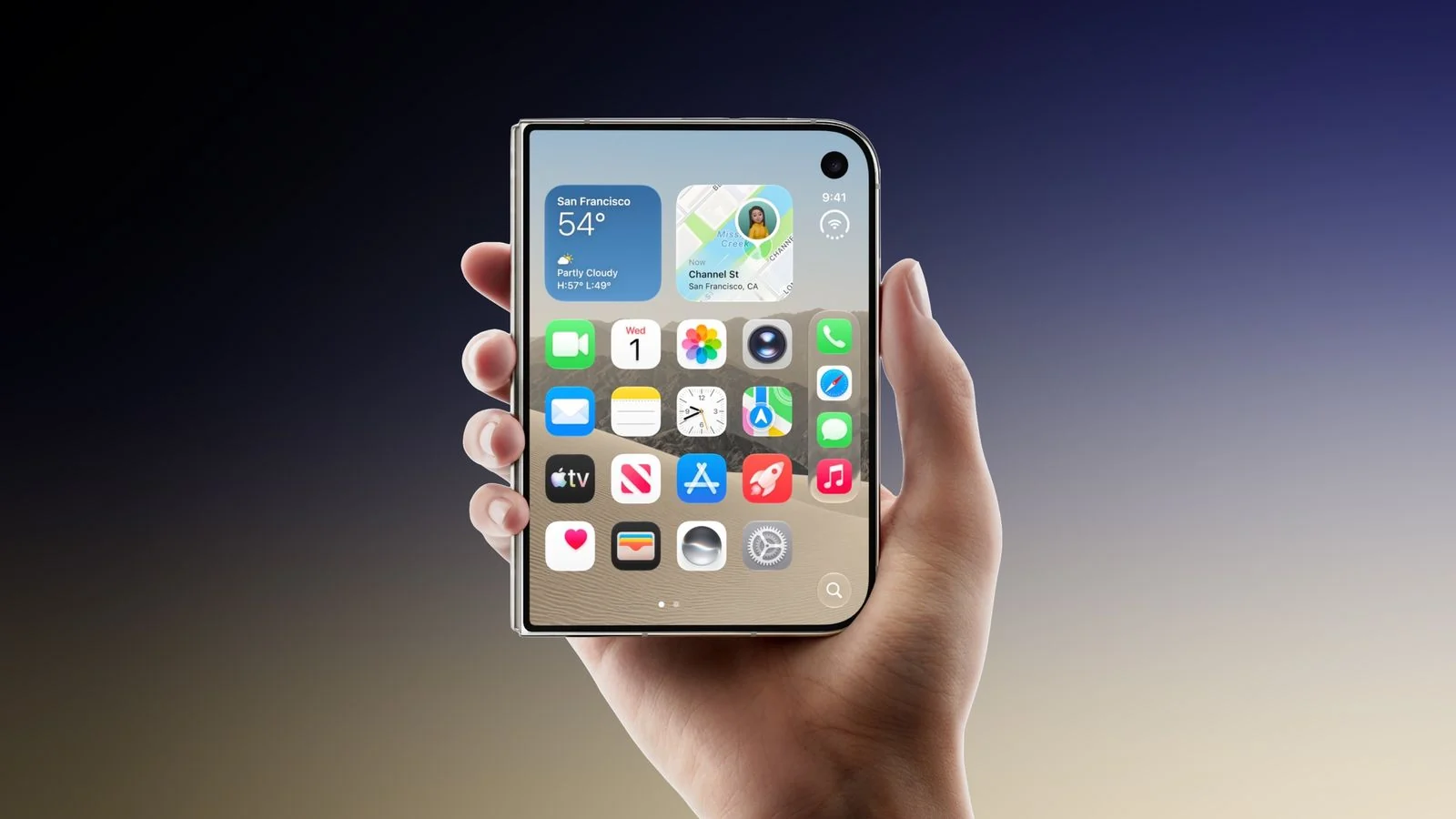
A forecast is only worth reading if it can turn into a date on your calendar and a number in your budget. TrendForce's latest foldable smartphone study does exactly that for ordinary shoppers: the research house expects Apple's first folding phone, iPhone Duo, to take 29.8% of global foldable shipments in 2027 - close to 30% of a niche that Samsung and Huawei had shared between them for years. Here is the same story rebuilt as a practical guide: the numbers, the hidden hardware trade-offs, the checklist before you order, and the mistakes that make a premium purchase feel like a regret.
Step 1. Line up the six numbers that matter
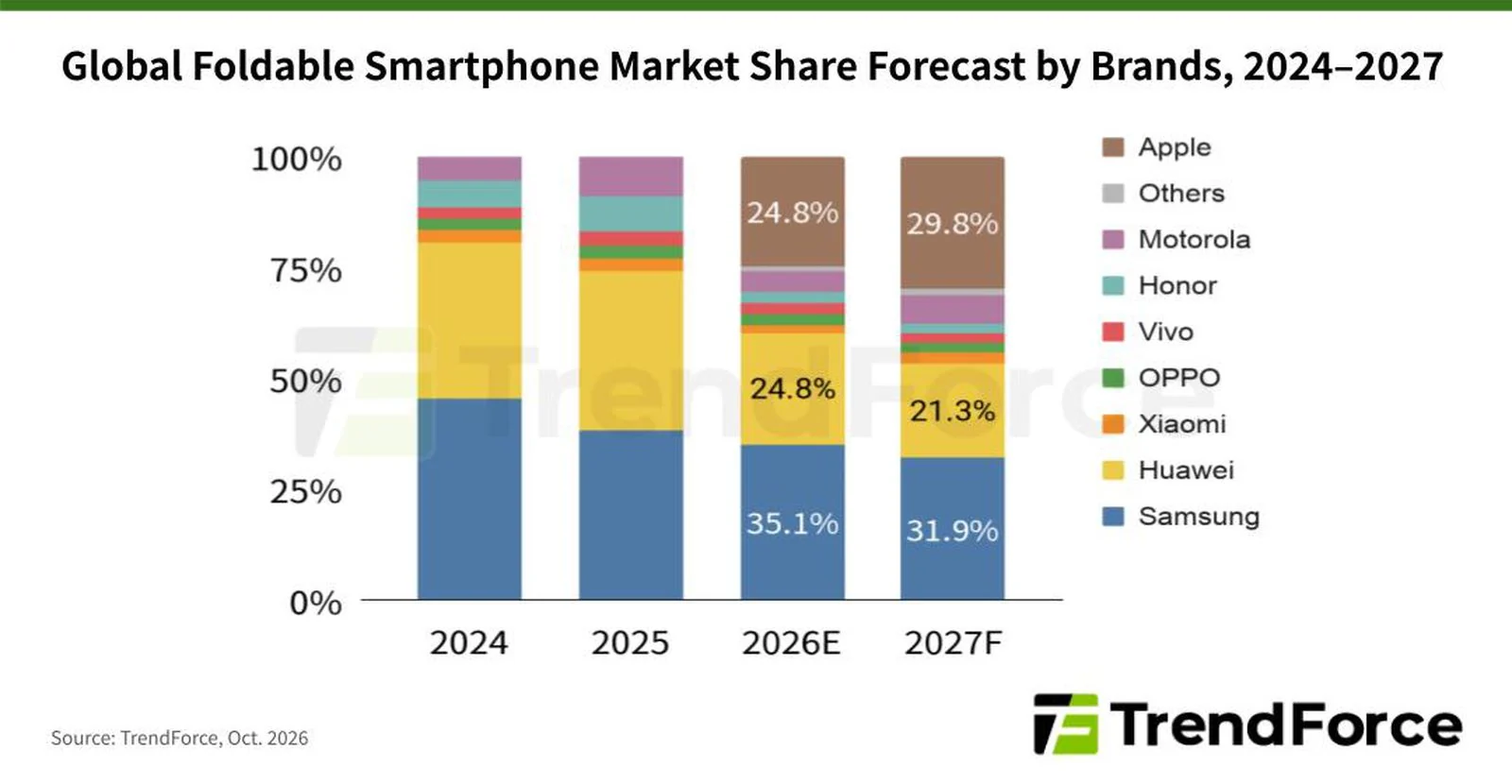
TrendForce splits the story into one flat year and one loud year. In 2026, global foldable shipments are projected to inch forward by just 0.5%, and some Android makers' foldable volumes may shrink by more than 20% year on year. Apple's arrival is what the firm believes reopens the growth curve, pushing the category to 23.5 million units in 2027.
| What TrendForce tracks | 2026 | 2027 | Why a reader should care |
|---|---|---|---|
| iPhone Duo shipments | around 5 million units by the end of 2026 | volume grows again on a wider lineup | First-year scarcity sets delivery dates and trade-in offers |
| Apple foldable share | 24.8% | 29.8% (nearly 30%) | One device reaches the leader's neighbourhood in two model years |
| Global foldable market | growth of only 0.5% | 23.5 million units, up 16.3% | The whole segment, not just Apple, accelerates |
| Samsung | 35.1% - first | 31.9% - still first | Losing the headline number is not the same as shrinking |
| Huawei | 24.8% | 21.3% - third | Regional strength meets a global software competitor |
| Some Android foldable lines | down more than 20% | recovery depends on new launches | Discounts on last year's folding models may arrive earlier |
The ranking line is the most quoted part of the study: in 2027 Samsung holds first place with 31.9%, Apple moves quickly up to second with 29.8%, and Huawei settles at third on 21.3%. Read those percentages slowly, because they are relative, not absolute. Rough arithmetic from TrendForce's own numbers is eye-opening: around 5 million units at a 24.8% share points to a global foldable pool of about 20 million devices in 2026, so Samsung's 35.1% is roughly 7 million phones. In 2027, 31.9% of 23.5 million units is about 7.5 million. Samsung can therefore grow its folding business in real units while surrendering share to Apple - and Huawei's drop from 24.8% to 21.3% largely reflects a bigger pie rather than empty shelves.
Step 2. Understand what Apple is actually being credited with
The study does not attribute iPhone Duo's rise to a hinge alone. In TrendForce's reading, Apple's biggest advantage is the deep integration of its own chips, its operating system and its developer ecosystem, backed by steady app adaptation and improving hardware reliability. Analysts quoted around the report argue the next battleground shifts from physical form to software ecosystems, multi-window collaboration and AI-driven experiences.
A simple analogy: foldable phones used to be judged like a car door that opens the widest. Now they are judged like an office layout - how many genuinely useful windows fit on the opened panel, and whether your apps agree to share that space. That is why the competitive centre of gravity moves toward productivity, multitasking and software polish rather than novelty shapes.
Two details explain the shift better than any slogan. First, TrendForce's earlier supply-chain coverage of the device describes a book-style design pairing a 7.6-inch inner display with a 5.4-inch outer display, a ten-layer ultrathin OLED stack finished with a nano-texture surface to tame reflections and the look of the crease, and a Grade 5 titanium frame and hinge cover, at about 5.2 mm open, 11.3 mm folded and roughly 254 g. The same notes list the trade-offs made to hit that thinness: no dedicated periscope telephoto, with a 48 MP main camera covering a 2x optical-quality zoom, and side-mounted Touch ID instead of Face ID, plus software work such as Split View side-by-side apps, continuity between inner and outer panels, and posture-aware interaction - as summarised by electronics-industry outlet 21IC.
Second, TrendForce's late-October follow-up (trendforce.cn press centre) keeps buyers honest: low crease visibility is a design win, not a physics exemption. An OLED fold zone is a stack of cover layer, adhesive, display and encapsulation, and each layer endures different tensile, compressive and shearing stress every time you bend it. Structural reliability of the fold area and the fit between hardware and software are named as the two things to watch - exactly the items a spec sheet hides.
Step 3. Find out which buyer you are
- You want a second screen, not a second phone: a book-style foldable is the cleanest substitute for a tablet you would otherwise carry, and the 2027 forecast suggests the app support for that use case keeps improving.
- You are already on a Samsung folding device: there is no urgency to switch. Share moving from 35.1% to 31.9% usually means your current brand fights back with prices, offers and a new generation.
- You use a Huawei folding phone in a regional ecosystem: the projected fall to 21.3% is a reminder to weigh app adaptation and cloud services, not only hardware specs.
- You are an Android user eyeing a first foldable: compare the repair network and parts availability in your city before comparing displays.
- You are price-sensitive: with some Android foldable lines down more than 20%, older folding models are the most likely place to find real discounts while Apple's first year stays tight.
Step 4. Run this checklist before you order
- Write down the three tasks a bigger screen would actually save time on - marking up documents side by side, video calls with notes open, browsing while drafting. If you cannot list three, you are buying novelty.
- Test adaptation on a demo unit: open your five most-used apps half-folded and watch whether they resize, letterbox or lose toolbars. Google's official adaptive-apps guidance for foldables (developer.android.com) describes the hinge-aware layouts and screen-continuity behaviour a well-built app should show, which makes this a practical pass-or-fail test.
- Ask how long the inner protective film is covered, and who replaces it. On many folding phones that film is a consumable, not an accessory.
- Price protection before checkout, not after damage. Foldable repair jobs average around $500, versus roughly $150 to $250 for a conventional screen swap, according to a 2026 foldable repair cost review by Stop2Fix; independent US shops publish inner-display work in the $450 to $650 range (ifixpros.com). Check whether your warranty or protection plan covers the inner panel and the hinge.
- Check biometrics against your routines. If the device uses a side-mounted Touch ID instead of Face ID, verify that your banking, wallet and two-factor apps behave the way you expect.
- Confirm the return window in days, then use it: read at an angle under a lamp to judge the crease, and test the hinge at every posture you plan to use.
- Lock in a trade-in quote for your current phone before supply improves, because exchange value typically softens once delivery dates normalise.
- Save the multitasking features you were promised in writing - screenshots of Split View or app pairing behaviour are far easier to defend in a support dispute than memory.
Step 5. Budget for the supply curve, not just the price tag
Demand signals were strong enough to change how the phone reaches customers. Apple has publicly described interest in the product as "abnormally strong", and within a short time after pre-orders opened, delivery dates slipped in multiple markets. Tight supply is not a footnote: it shapes resale prices, carrier bundles and how long a demo unit stays available in stores.
Other research houses read the same launch differently, which is useful context. IDC's analysts, cited by Reuters, put Apple at about 44% of foldable market value in its first year - revenue share running ahead of unit share, precisely because the device sits at the premium end. Treat volume forecasts like TrendForce's 29.8% for 2027 as the baseline for what lands in buyers' hands, and value forecasts as evidence of where the profit pool moves.
Common misconceptions worth dropping
- "Foldables are mainstream now." Even 23.5 million units in 2027 is a small slice of all phones sold worldwide. Omdia, for instance, frames the category as doubling toward 36 million units only by 2028. Faster growth on a niche base is not a new default.
- "Samsung is losing." Its share eases from 35.1% to 31.9% while the market expands by 16.3% - which can mean more devices shipped, not fewer.
- "Apple won on hardware." TrendForce's advantage list starts with chip, operating system and developer ecosystem integration, then app adaptation and reliability.
- "A faint crease means no crease risk." The fold zone is still layered material under repeated stress, and structural reliability is a named watch item.
- "One forecast is a promise." A 29.8% share, reaching close to 30% within two years on the strength of a single folding model, is a projection that depends on supply, software support and competitors' responses.
FAQ: the questions readers ask us most
Does the 29.8% figure apply to all iPhones?
No. It is Apple's projected share of global foldable smartphone shipments in 2027, not of the smartphone market overall.
Should I wait for a second generation?
Buying in year one means scarcity and the firmest prices; waiting usually buys reliability lessons, wider app adaptation and better trade-in terms. If your reason for owning a foldable is daily productivity, waiting a cycle is a rational choice. If you want the shape itself, the first model is the one that carries the ecosystem's attention.
What has to hold for the forecast to come true?
Three things: component supply that keeps delivery dates from drifting, app adaptation that keeps improving on the opened display, and competitors responding with hardware rather than only price cuts.
Will foldables get cheaper?
Category growth from 0.5% in 2026 to 16.3% in 2027 gives brands more room to spread costs, but the premium tier tends to stay premium. The clearer savings path for shoppers is the previous generation of Android folding models.
What fails first on a folding phone?
Plan around the fold: the inner film, the panel beneath it and the hinge mechanism are the three items most likely to need service, which is why repair cover and return windows matter more than on a slab phone.
Five actions for the next 90 days
- Set one decision date. If you are shopping for a foldable, pick a review month and treat TrendForce's 2027 figures as checkpoints, not verdicts.
- Test your own apps for multitasking, then delete the assumption that a larger screen automatically means more work done.
- Quote two protection plans and one repair job in your city so the total cost of ownership is visible before checkout.
- Track shipment revisions and delivery estimates for two consecutive quarters; if iPhone Duo's path toward 24.8% in 2026 and 29.8% the following year holds, secondary-market pricing and carrier bundles will move first.
- If you already own a foldable, log your fold count for a month - hinge wear is a habit question, and a case that clears the spine plus gentle one-handed handling are the cheapest insurance available.
Bottom line for MyTechDailyNews readers: the interesting part of TrendForce's study is not that Apple might hold nearly 30% of folding phones by 2027, but that a single product can reset what a foldable is judged on - software, reliability and the total cost of owning a hinge. If you are weighing a purchase this year, use the checklist above before the delivery calendar makes the decision for you. This guide was written by Sarah Chen for MyTechDailyNews; send story tips and repair-cost experiences to hello@techdaily.com.