
Toyota’s Robotics Bet: A Car Giant Enters the Humanoid Factory Race
Toyota is trying to turn its factory scale into a robotics advantage, and the question is whether a company built around cars can become a leader in humanoids, automated plants and manufacturing software.
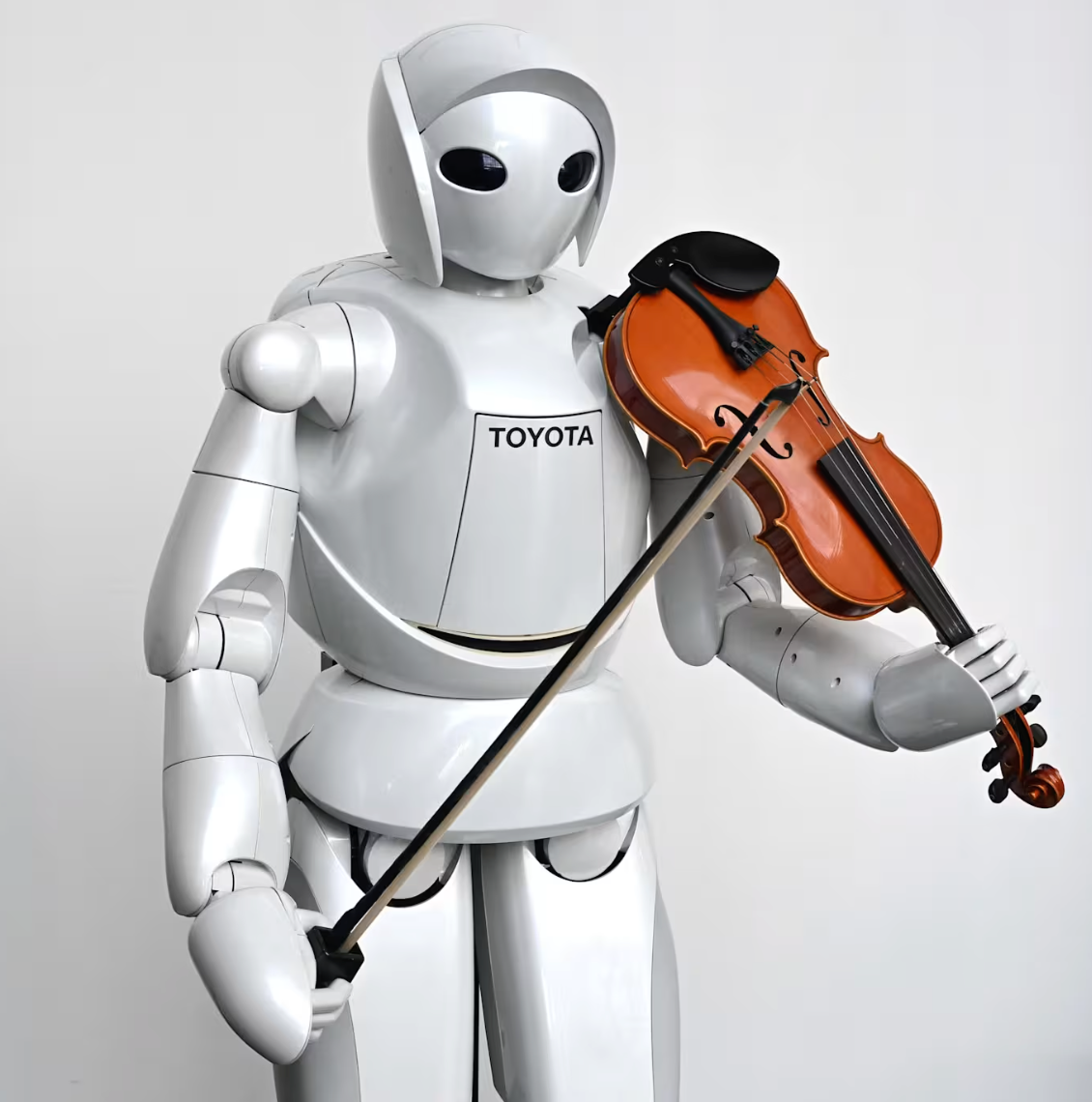
Image: a humanoid robot developed by Toyota.
What the company is planning
The Financial Times has reported that Toyota is aiming for a top position in the global robotics industry. The plan described is large: an investment of $6.4 billion each year, the deployment of 400,000 robots, and a push to automate factories. At the same time, a dedicated robotics team is to be formed under the leadership of the chief production officer.
The move is not only about making cars. Toyota is also looking for growth outside its traditional automotive business, while responding to pressure from Chinese competitors. The company is said to be applying about 20 years of robotics research experience to the commercialization of intelligent robots.
That puts it in contact with competitors such as Tesla, XPeng Motors and Hyundai Motor. It also puts the company in front of investors, who are paying more attention to what Toyota says about robots.
What investors and analysts say
Carl Vine, an investor at M&G, said: “I believe Toyota could become the world’s largest humanoid robot company, but they need to go for it.” He added: “Whoever controls the software layer controls global manufacturing. Toyota is developing its own large behavior model … and, because its business is huge, it has enormous amounts of data inside the company. These are key elements.”
Goldman Sachs analysts are also watching. Their estimate is that, if Toyota can convert its technological strength and mass-production experience into a robotics market position, it may take 3% to 8% of the global humanoid robot market by 2035. In volume terms, they suggest Toyota could sell 190,000 to 540,000 humanoid robots.
Tesla CEO Elon Musk has previously framed his company’s humanoid robot, Optimus, as Tesla’s “most important product ever”. Tesla has set a long-term ambition of 1 million units of annual production. The current position described is that production has begun, but it has not yet entered large-scale mass production.
The earlier Japanese robotics story
Japan spent much of the first decade and the second decade of this century being associated with visible humanoid progress. Honda introduced Asimo, and SoftBank released Pepper. For years, the country was almost treated as a symbol of robotics.
That narrative has changed. The rise of AI, and viral videos showing Chinese humanoid robots dancing and practicing kung fu, have led more observers to conclude that Japan has fallen behind the United States and China.
Toyota as a latecomer
Within that broader shift, Toyota is now presented as a latecomer to a high-visibility robotics race. Yet the competition is not only about spectacle. Rival automakers are also turning to robotics as a way to reduce car manufacturing costs and find new income sources.
People close to the company say Toyota CEO Kenta Kon, after taking the top job, increased the publicity around the company’s robotics ambitions. The reason given is that Toyota has realized it must try harder to compete with China in factory production lines and technology.
The company has a near-term stage for this strategy: it may introduce robotics technology when it opens a new car assembly plant near Nagoya in the early 2030s. The report describes that plant as Toyota’s first new assembly plant in Japan since 2012.
A former Toyota executive summarized the urgency by saying production leaders had become too focused on conventional methods: “People responsible for production hardly consider using new technology to build cars anymore. The production system is now one of the keys to competing with China. Robots are an important means for Toyota to respond to manufacturing competition from China.”
Checklist: the facts to keep in view
- Source point: The Financial Times says Toyota is aiming for a giant position in global robotics.
- Factory automation: 400,000 robots and $6.4 billion annual investment are central to the plan.
- Organizational signal: A special robotics team is to be formed under the chief production officer.
- Competitive field: Tesla, XPeng Motors and Hyundai Motor are named as rivals in intelligent robots.
- Investor view: Carl Vine of M&G says Toyota could become the largest humanoid robot company if it acts boldly.
- Market estimate: Goldman Sachs suggests 3% to 8% share by 2035, or 190,000 to 540,000 humanoids.
- Tesla reference: Elon Musk positions Optimus as Tesla’s “most important product ever,” with 1 million annual units as a long-term goal.
- Historical context: Honda Asimo and SoftBank Pepper helped shape Japan’s earlier robotics image.
- Current pressure: AI and Chinese humanoid demonstrations have changed perceptions, putting Japan behind the United States and China in some accounts.
- Leadership and timing: Kenta Kon is pushing the robotics story; a Nagoya plant in the early 2030s is the near-term test.
Common misconceptions
| Common reading | What the master reporting actually supports |
|---|---|
| Toyota is simply making a consumer robot toy. | The reported plan is industrial: production-line automation, 400,000 robots, a special team, and competition with major robotics and car companies. |
| Humanoid robots are already in mass production everywhere. | Tesla’s Optimus has begun production, but the material states it has not yet entered large-scale mass production. |
| Japan has no robotics history, so the shift is sudden. | The history includes Honda’s Asimo and SoftBank’s Pepper; the newer issue is AI, software and Chinese competition. |
| Toyota’s robotics message is only marketing. | It also has a concrete factory target: using robotics when a new assembly plant near Nagoya opens in the early 2030s. |
Frequently asked questions
Why is Toyota raising robotics now?
Because it faces two pressures at once: the need to modernize its own production system and the need to grow beyond cars while competing with China. The report frames robots as both a factory tool and a future market.
Does 400,000 robots mean 400,000 humanoids?
No. The 400,000 robots figure is tied to factory automation. The humanoid market estimate from Goldman Sachs uses different numbers: 190,000 to 540,000 humanoid robots.
Is Toyota ahead of Tesla?
Not simply. Tesla’s Optimus has started production but not large-scale mass production; Toyota is described as a latecomer in the public humanoid race, yet it has scale, data and factory experience that some investors see as advantages.
What would show the strategy is working?
Look for evidence that the special robotics team becomes operational, that the annual $6.4 billion investment is reflected in factory upgrades, and that the early-2030s Nagoya plant actually incorporates the robotics technology.
Action advice for general readers
- Do not judge the story by viral robot demos alone; follow factory deployment milestones.
- Watch whether Toyota can convert internal production data into software behavior models, as investors emphasized.
- Compare announcements against the Goldman Sachs 2035 range, because it gives a concrete market-share benchmark.
- Pay attention to the China competition theme, since the report makes production lines and cost reduction central to the robotics push.
The broader takeaway is that robotics has stopped being a side project for a car giant and has become a way of re-explaining the company’s future. Toyota’s advantage may lie in manufacturing scale, long-standing research, factory data and a potential first deployment inside a new plant. Its challenge is also clear: Tesla, XPeng Motors, Hyundai Motor and Chinese competitors are already moving, and the market will remember the person who controls software, production lines and reliable mass deployment. If the Nagoya factory, the special team and the 400,000-robot plan become measurable progress, the robotics race will look less like a demo and more like the next industrial contest among carmakers.