
Tesla Semi Fire on Interstate 880: MyTechDailyNews General Breakdown for Everyday EV Readers
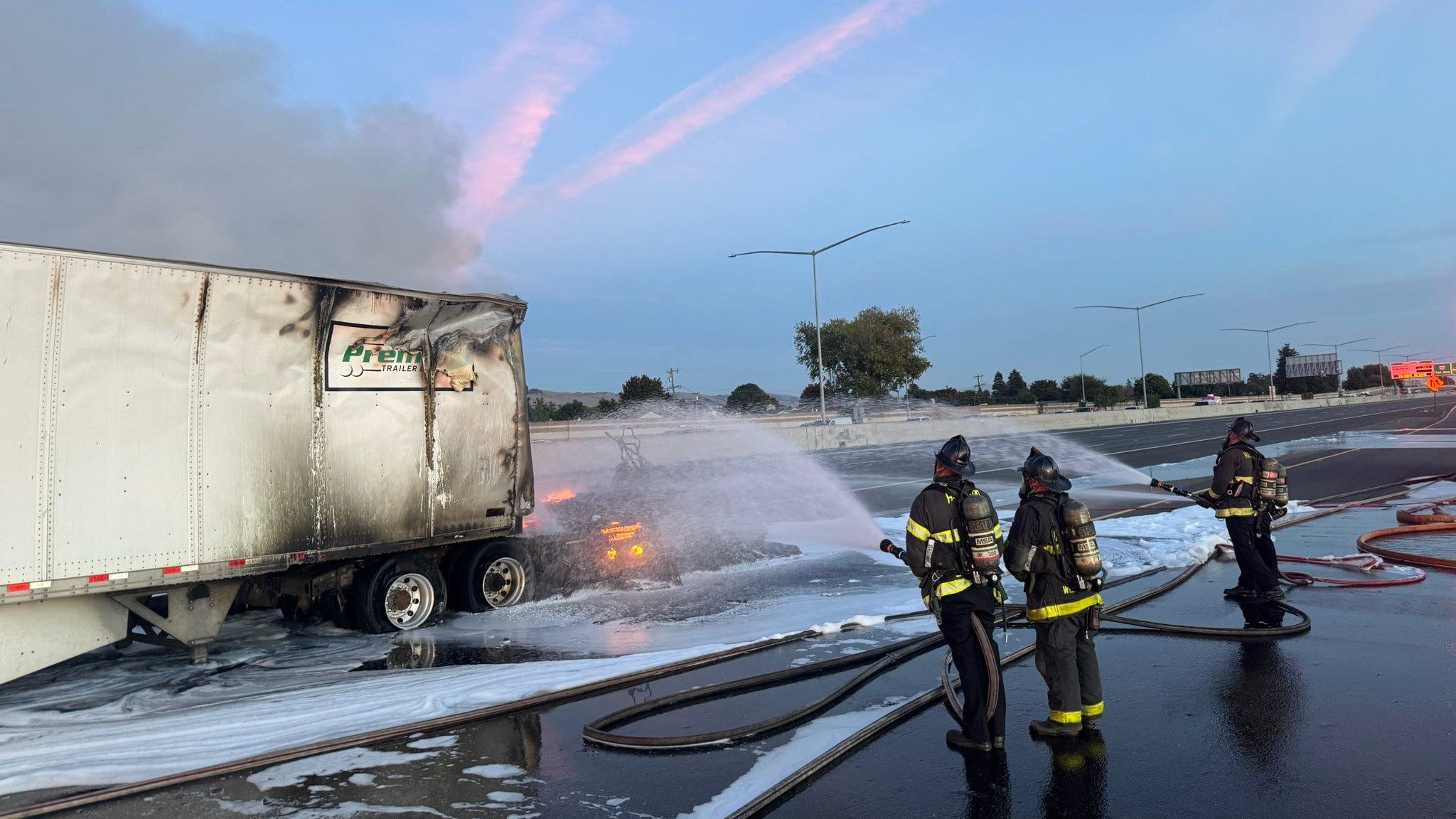
For general readers, the practical lesson from the Hayward incident is how a single vehicle event can affect a major corridor: CHP Hayward responded to a Tesla Semi fire on Interstate 880 near Route 92 during Tuesday evening, and the southbound roadway remained closed for 10 hours, although the driver suffered no injury.
The scene also puts a broader question on the table. A Class 8 electric truck caught fire while in traffic without another vehicle being involved, and Tesla customers and fleet operators will want a clearer answer about cause, battery behavior and highway response than a 10-hour closure alone provides.
Timeline from the first traffic alert to reopening
At around 5:35 p.m. PT, the fire affected southbound I-880 close to Route 92. CHP Hayward shut the highway in both directions because of the potential risk of hazardous chemical smoke, then released scene photos and an alert dated October 28, 2026.
Police reports described the truck as a Tesla semi-truck. The driver told officers that the vehicle ignited and that the reason was unknown. No additional vehicles were part of the event. Northbound traffic was restored Tuesday night, while the southbound shutdown continued. The agency's first estimate was that the battery might burn for 15 to 18 hours, but crews cleared all lanes by around 3:30 a.m. Wednesday.
Photos from CHP showed firefighters applying foam around the destroyed tractor. Behind it, the front of a Premier Trailer Leasing trailer was scorched. The operating company of the truck was not named, Tesla lacks a press office and offered no comment, and investigators were still seeking the cause.
Why this is the second California interstate closure tied to the Semi
The Hayward event is not isolated. In August 2024, a Tesla-operated Semi burned on I-80 near Emigrant Gap while traveling from Livermore to Tesla’s facility in Sparks, Nevada. No crash was reported at the time, but the NTSB later determined that the truck left the roadway on a curve, struck a delineator post and a tree, and its battery ignited after impact. Firefighters used about 50,000 gallons of water, and lanes remained closed for up to 15 hours.
Tuesday’s fire is different because no collision was part of the known sequence. The investigation therefore moves toward the vehicle itself: the battery pack, the high-voltage system, the drive units, or a more routine tire or brake fire that spread.
Commercial timing and fleet exposure
Volume production of the Semi in Nevada began this year after nearly a decade of delays. The order book also expanded: in May, WattEV ordered 370 Semis, mainly for drayage at the Port of Oakland, a few miles up I-880 from Tuesday’s fire. In September, Tesla was named lead supplier on a 2,500-truck ZET SCALE order.
| Question | August 2024 I-80 incident | October 2026 I-880 incident |
|---|---|---|
| Vehicle | Tesla-operated Semi | Tesla Semi |
| Location | I-80 near Emigrant Gap | Interstate 880 in Hayward, California |
| Impact | Left roadway and struck objects before battery ignition | No collision reported |
| Closure | up to 15 hours | 10 hours |
| Response notes | about 50,000 gallons of water | initial estimate of 15 to 18 hours |
| Investigation | NTSB | cause under investigation |
What the fire data say and what they do not say
Electrek highlighted a useful context point: the incident may be used as an anti-EV talking point, but truck fires are common. NFPA data show US fire departments handled an average of 15,462 large-truck fires per year between 2018 and 2022. That is about 42 a day in a diesel-dominated fleet. Mechanical failure contributed to 44% of those fires, and only about 2% were linked to a collision.
The pattern also appears in smaller vehicles. NFPA and DOT data place the US average at one vehicle fire for every 17 million miles traveled, with combustion vehicles forming the vast majority. Tesla claims one fire per 140 million miles for its own vehicles. That figure comes from Tesla, but independent data, including previously cited government figures, point in the same direction: gas vehicles catch fire more often than EVs.
That background does not erase the Semi concern. Diesel fires occur across millions of trucks. Tesla does not disclose Semi deliveries, but PepsiCo, its launch customer, had up to about 86 trucks in 2024, and volume production began only a few months ago. In a fleet that small, one no-crash fire is a significant data point. It is also the second Semi fire to close a California interstate in about two years.
For now, the cause matters more than the headline. If a tire, brake or trailer fire spread to the tractor, it is a normal trucking problem. If the pack entered thermal runaway on its own, Tesla must determine why before tens of thousands of these trucks are on roads, and fire departments need a better response than allowing a loaded truck to burn on a freeway for half the night.
Common misconceptions
- Myth: A fire means electric trucks are inherently less safe. Factual context: NFPA and DOT data show vehicle fires are more common in the overall fleet, and only about 2% of the large-truck fires in the cited period were linked to a collision.
- Myth: A single Tesla Semi fire proves nothing because Tesla has a huge fleet. Factual context: Semi deliveries are not disclosed, but PepsiCo had up to about 86 trucks in 2024, and volume production began only a few months ago, so the denominator is small.
- Myth: The previous California interstate closure was identical. Factual context: The August 2024 event involved an impact before battery ignition, while Tuesday’s event was reported without a crash, shifting attention to the truck's systems and possible non-battery ignition paths.
FAQ for general readers
Did a crash start the I-880 fire?
Police said the driver reported that the truck ignited and the reason was unknown. No additional vehicles were involved, so the known timeline does not include a crash.
Why did the highway remain closed for 10 hours?
CHP Hayward cited the potential risk of hazardous chemical smoke. The agency initially estimated the battery might burn for 15 to 18 hours, but the scene was cleared by around 3:30 a.m. Wednesday.
Does Tesla have a pattern to answer?
It is the second Semi fire to close a California interstate in about two years. The earlier NTSB review examined a Tesla-operated Semi on I-80 near Emigrant Gap; the current investigation has not identified a cause.
Should general EV buyers change their view immediately?
The responsible reading is to wait for the cause. Large-fleet fire statistics show combustion vehicles catch fire more often overall, but a no-crash fire in a small emerging Semi fleet is still a material question for Tesla, customers and response agencies.
Checklist for buyers, operators and concerned readers
- Track whether the NTSB opens an investigation into the Hayward fire, since the NTSB examined the earlier interstate shutdown.
- Ask suppliers to clarify how tire, brake, trailer or high-voltage-system faults could spread to the tractor.
- Compare Tesla's fire-mileage claim with fleet size; a small Semi fleet means one incident is more noticeable than it would be across millions of trucks.
- Pay attention to disclosure: Tesla does not currently make Semi delivery volumes public, and PepsiCo's about 86 trucks offer only one reference point.
- Watch for Tesla findings, because tens of thousands of Class 8 electric trucks could eventually operate in dense corridors such as the route near the Port of Oakland.
Action advice: what to do with this information now
For daily tech readers, the useful action is not to turn one fire into a sweeping verdict. Wait for the cause, then assess whether the issue is a routine trucking ignition path or a battery or high-voltage problem that requires changes in design, maintenance or emergency response. For fleet decision-makers, ask whether suppliers will publish findings and whether highway agencies have a clearer protocol for extinguishing and cooling a loaded electric tractor.
Cost of ownership also remains part of the broader EV story. Home solar can push fuel expenses for an EV toward nearly zero. Electricity rates rose almost 10% last year and are expected to keep climbing, so solar can protect against higher costs. Lease and PPA options can provide zero upfront cost and immediate savings. EnergySage is described as a free service with hundreds of pre-vetted installers competing for your business, which can save 20 to 30% compared with going it alone, and it notes no sales calls until you pick an installer.