
MyTechDailyNews General: Optimus May First Charge Robotaxi Vehicles While CyberCab Line Details Emerge
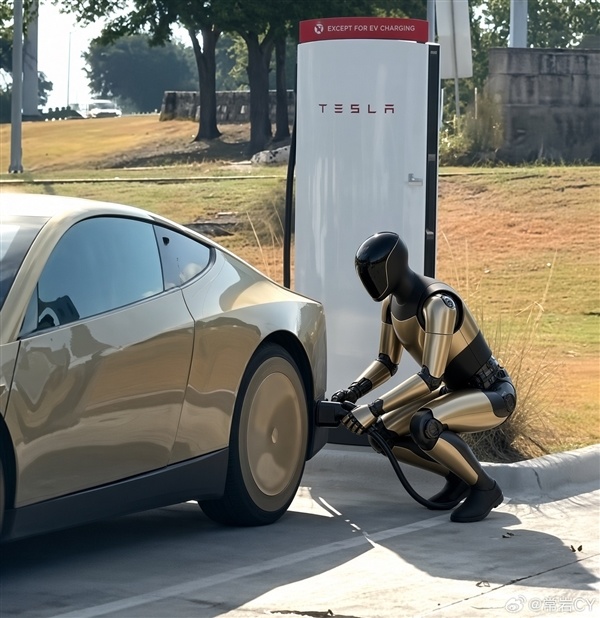
A humanoid robot's first practical assignment may not be a factory or a warehouse; it may be a charging bay. In a recently published discussion on Munro Live, Tesla engineering vice presidents Lars Moravy and Eric Earley described Optimus as learning to plug charging guns into Robotaxi vehicles. Their comments suggest that charging the fleet is expected to come first in the near term, before other possible duties are expanded.
The main takeaways for everyday readers
- Optimus is currently being trained for Robotaxi charging, making the task a likely entry point for Tesla's humanoid robot program.
- The robot uses a separate battery module of about 2.5 kWh, but the battery is not treated as the machine's main cost item.
- Moravy said the robot may provide vehicle maintenance services and may also enter delivery, framing charging as a starting point rather than a final job description.
- CyberCab production was described in new detail: 25 fully automated workstations, automation close to 80%, and use of the unboxed process.
- CyberCab is said to have a 500,000-mile design life, while skipping paint and the paint shop may save hundreds of millions of dollars.
- Its 4680 cells are grouped into independently potted modules, and the pack has a steel enclosure while leaving space for cheaper lithium iron phosphate cells later.
- The car is front-wheel drive with an 11:1 gear ratio, and a new inverter will be used on Model 3 and Model Y this year.
Why Optimus starts with Robotaxi charging
The interview linked Optimus to a larger operational problem. If Tesla wants Robotaxi fleets to run continuously, vehicles need to be recharged between trips. A robot that can handle plug-in work could reduce the need for human staff at depots. That practical need may explain why charging appears as the first task. The statement from Moravy expanded the idea beyond that single chore: he said Optimus may provide vehicle maintenance services and may also enter delivery.
The bigger picture includes more vehicles. Moravy said, “Think about CyberCab, Optimus, and Robovan; the iron triangle combination of these three will be incredible, and the Tesla Semi can also be added for long-distance transport.” The point is not that every component is ready, but that charging and servicing fit naturally into a connected fleet plan.
What was said about CyberCab production
CyberCab's final assembly line was described as unusually small compared with a conventional electric car line. The total assembly stage has only 25 fully automated workstations. By the figures given in the interview, that is only one-fifth to one-tenth of a Model Y production line, with automation close to 80%. The unboxed process is also applied, reducing the floor space needed for each vehicle by about 50%.
| Disclosed item | Figure or detail | Reader context |
|---|---|---|
| Final assembly stations | 25 fully automated workstations | Much smaller than a typical car assembly line |
| Automation level | Close to 80% | Less routine manual labor in the described process |
| Line scale versus Model Y | One-fifth to one-tenth | Used to show how different CyberCab manufacturing may be |
| Footprint from unboxed process | About 50% less | Can change factory layout and cost structure |
| Design life | 500,000 miles | A long-life target for fleet use |
| Paint omission | Saves hundreds of millions of dollars | Color and finish are simplified in the disclosed plan |
| Battery module format | 4680 cells in separately potted modules | A faulty module can be replaced without swapping the entire pack |
| Drive setup | Front-wheel drive, 11:1 ratio | Matches a lower top-speed service use case |
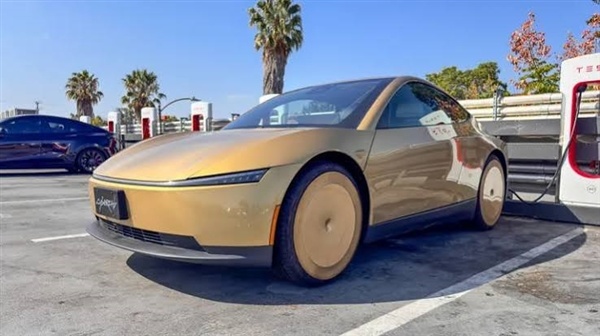
Another cost change comes from eliminating paint. Because CyberCab is described as not being coated with conventional paint and the paint shop being removed, Tesla saves hundreds of millions of dollars in the production system. The same discussion said the vehicle design life reaches 500,000 miles, which is relevant if the car is intended to operate frequently in a Robotaxi role.
Common misconceptions
- Misconception: Optimus is being built only as a charging robot. What was said: Charging is the likely near-term task, but maintenance and delivery were mentioned as possible next areas.
- Misconception: CyberCab has a larger, more complex line than current cars. What was said: It was described as having only 25 fully automated workstations, much less than a Model Y line.
- Misconception: Skipping paint only changes appearance. What was said: Removing the paint shop was tied to hundreds of millions of dollars in savings.
- Misconception: A failed battery means the whole pack must be thrown away. What was said: The 4680 cells are in independent potted modules, so a module can be replaced rather than the full pack.
- Misconception: The line is running because Robotaxi demand already exceeds it. What was said: Currently, production cadence is faster than Robotaxi fleet expansion, so the line is not running every day.
Questions a general tech reader may have
Why would a robot need to charge a car?
Robotaxi service is more useful when vehicles can return, recharge, and go out again with minimal downtime. If Optimus can plug in cars, it may help automate depot routines and reduce human labor around charging stations.
What does the battery module detail mean for owners or operators?
For fleet operations, modular replacement can reduce repair complexity and time. Moravy said, “We found that the actual number of batteries needed was smaller than originally predicted,” which points to lower energy capacity or packing requirements than first assumed.
Why front-wheel drive and an 11:1 ratio?
The explanation given is that CyberCab does not need a very high top speed, so a simple setup with an 11:1 ratio fits the service profile.
How does this affect future Tesla models?
A new inverter mentioned in the conversation will also be used on Model 3 and Model Y this year, making CyberCab production details relevant beyond one vehicle.
Action advice before reading more headlines
- Separate what has been demonstrated from what is scheduled: Optimus charging is described as a near-term learning task, not necessarily a widely deployed service yet.
- Watch fleet economics, not just robot demos: charging time, downtime, maintenance cost, and module replacement are the details that could matter most.
- Check CyberCab production figures as design targets until broader data appears, especially line uptime, total cost, and real-world mileage.
- Treat the paint-free, unboxed, and steel-enclosure choices as cost and workflow decisions; they affect repair, appearance, logistics, and pricing.
- For general tech readers, compare Optimus and CyberCab as pieces of one operations plan: vehicles, robots, vans, and semi trucks all need shared infrastructure.
For now, the clearest signal from the Munro Live conversation is that Tesla is connecting Optimus's earliest practical role to Robotaxi charging, while also giving a more detailed view of CyberCab manufacturing. Those disclosures do not prove the whole system will scale smoothly, but they outline the priorities: simpler lines, modular batteries, fleet-ready durability, and robots doing repetitive service tasks before broader duties arrive.