
MyTechDailyNews General Guide: Terafab vs TSMC Control in the Texas Chip Deal
The Terafab story has stopped being a headline about one billionaire wanting his own chip factory. It is now a live comparison of two ways to build the AI hardware stack: keep operations tightly held by the companies that use the chips, or let the most experienced foundry run the hard part. As supply-chain reports cited by DigiTimes suggest that Elon Musk may be revisiting his position, the question for readers, investors and developers is no longer simply whether Tesla and SpaceX can get silicon made. It is who will control the fab, the yield curve, the tool orders, and the packaging lines that turn wafers into usable compute.
From “Musk runs it” to “who actually runs the fab?”
The original framing was simple: Tesla and SpaceX would build and operate Terafab, while TSMC might be no more than a tenant in part of the campus. In early October, Musk confirmed that discussions with TSMC were under way. On October 15, TSMC Chairman and CEO C.C. Wei said teams had visited Texas and capacity cooperation was being discussed, but added a line that changed the comparison: if TSMC participates, the fab must be operated by TSMC. Reporting from South China Morning Post says TSMC has confirmed talks but insisted on operational control (https://www.scmp.com/tech/big-tech/article/3371010/tsmc-confirms-talks-elon-musk-over-texas-terafab-insists-operational-control). Later supply-chain reports cited by DigiTimes point to a softer posture on Musk’s side, with TSMC potentially taking a major responsibility for both construction and operation.
The practical difference is that “rent space” and “operate the plant” are not the same deal. Renting gives Musk the building; operating gives TSMC the process recipes, shift discipline, maintenance routines, quality gates, and day-to-day authority over tools that often decide whether a new fab is a science project or a revenue engine. That is why equity, investment split and technology cooperation are now part of the same conversation instead of separate line items.
Three operating models, compared
If the Terafab negotiation is read as a product decision rather than a corporate headline, three models stand out. Each trades speed against risk in a different way.
| Model | What it looks like | Best-case advantage | Main risk |
|---|---|---|---|
| Self-operated Terafab | Tesla and SpaceX own and run the campus; outside partners are limited to tools, materials or leased space. | Maximum autonomy for Optimus robot, Cybercab and SpaceX computing priorities. | Hard to build yield, procurement and packaging muscle from scratch. |
| TSMC-operated core fab | TSMC builds and runs advanced logic, packaging and test operations while Musk’s companies fund or co-invest. | Faster access to proven process control and AI-adjacent packaging expertise. | Governance becomes complex: who gets capacity, at what price, and on what schedule? |
| Hybrid campus | Some blocks are Musk-run research or special-process lines; other blocks are TSMC-managed production. | A middle path that preserves internal experimentation while borrowing scale. | Boundary disputes can create delays, duplicated teams and unclear accountability. |
The hybrid option may be the most likely landing zone if both sides want the benefits of control without the full cost. The self-operated model is the strongest fit for Musk’s long-standing desire to avoid external constraints, but the latest reporting suggests that constraint is now being priced in, not ignored. The TSMC-operated core-fab model is the most direct way to shorten the learning curve, but it makes Terafab less of a private chip island and more of a shared industrial campus.
Why the packaging question matters as much as the fab question
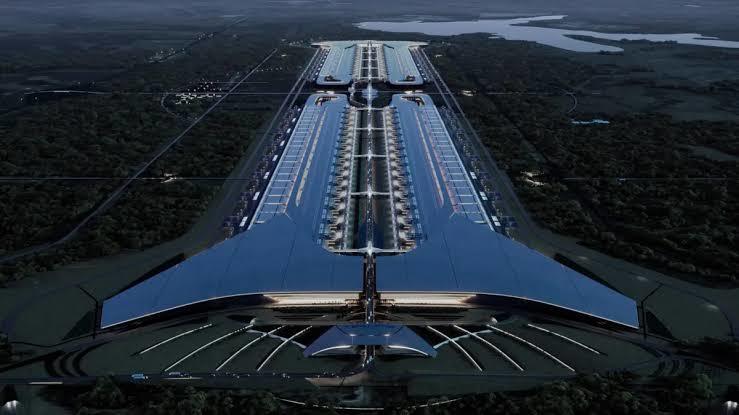
Terafab is not only about etching wafers. The plan is to concentrate advanced logic chips, memory chips, packaging and testing in one campus. That design matters because AI hardware is no longer capped only by wafer starts; advanced packaging can be the choke point. A CNBC report says Nvidia has reserved the majority of TSMC’s most advanced packaging capacity, making that step a possible bottleneck for other AI chip buyers (https://www.cnbc.com/2026/04/08/tsmc-nvidia-advanced-packaging-intel.html). If Terafab can bundle packaging and test close to the logic fab, it may shorten one of the longest waits in today’s AI supply chain. If it cannot, a “big factory” may still produce fewer usable systems than its floor area suggests.
The Texas numbers are huge, but the U.S. fab lesson is slower
Terafab is planned by SpaceX and Tesla in Grimes County, Texas, United States. The project’s ambition is not small: more than 100 million square feet of manufacturing space, with an initial investment of about US$16.8 billion from SpaceX and Tesla. The demand case is also large: SpaceX has said Tesla and SpaceX’s future chip needs are expected to be more than 1 terawatt of compute capacity, and the chips are expected to support businesses including Optimus robot, Cybercab and SpaceX’s planned space data centers.
The comparison, however, should include what TSMC’s own U.S. buildout has already shown. Focus Taiwan reported that TSMC’s first Arizona fab entered mass production in the fourth quarter of 2024, a second fab has been completed, and the project still faces water and skilled-labor challenges (https://focustaiwan.tw/business/202605110023). That does not mean Terafab will encounter the same problems. It does mean that even the most capable foundry in the world treats overseas semiconductor construction as a multi-year operating exercise, not a one-time capital event.
For readers, that is a useful sanity check against headlines. A fab campus is not only architecture. It is tool deliveries, qualified technicians, gas and water permits, maintenance cycles, supplier coordination and years of yield learning. A company can buy the land; it cannot buy an operating culture instantly.
The schedule is the most fragile part of the story
Tesla has already started a research wafer fab this April at the northern campus of Tesla’s Texas Gigafactory, described as a forerunner to Terafab. Musk has said the team aims to complete its first test chip by May or June 2027, and is targeting scaled production in the third or fourth quarter of 2028. He has also admitted that this timetable is “very aggressive”, with procurement challenges for lithography equipment and other semiconductor manufacturing tools.
The schedule comparison makes the negotiation more understandable. If Musk keeps full operational control, he protects decision speed but takes on more execution risk. If TSMC operates the core process lines, the project may benefit from proven ramp methods, but the cooperation terms must answer harder questions: which process nodes are included, who owns the data, who controls capacity during shortages, and how quickly disputes are resolved. Intel’s earlier participation adds another possible layer to the answer, though its specific role has not been disclosed.
Checklist: what to watch next
For anyone evaluating whether this is a real shift or another Musk headline, follow these signals rather than broad statements:
- Equity and investment split: reports have not settled ownership, so a final capital table will reveal whether Terafab remains a Musk-led venture or becomes co-owned infrastructure.
- Operational title: the party named as fab operator matters more than the party that provides the loudest statement. Construction responsibility is useful, but daily operation controls process quality.
- Packaging scope: if logic, memory, packaging and test remain on one campus, the project may attack the AI bottleneck directly; if packaging is outsourced, the advantage narrows.
- Tooling milestones: orders for lithography and other manufacturing equipment are where “very aggressive” schedules either become credible or break.
- Intel’s role: a partner that has publicly joined the conversation can reshape who handles process, tools, packaging or U.S. government-facing supply-chain coordination.
FAQ: the questions readers are asking
Q: Has Musk agreed to let TSMC operate Terafab?
A: Not as a settled deal. The reporting suggests a change in negotiating posture, with TSMC’s construction and operational role potentially becoming larger, but equity and division of labor are unresolved.
Q: Does this mean Tesla and SpaceX no longer need TSMC?
A: No. Even a Terafab campus aimed at internal demand would still need equipment suppliers, process partners, packaging capacity and years of qualification. The project is better read as risk reduction than instant independence.
Q: Why is advanced packaging so important?
A: Because AI chips often depend on combining logic dies, memory and interconnects into a finished package. If packaging is scarce, a wafer fab alone may not produce enough usable accelerator modules or robot computing units.
Q: What changes for consumers?
A: Probably not immediately. A new U.S. chip campus could eventually support Optimus robot, Cybercab and SpaceX computing products, but the meaningful consumer impact begins only after test chips, manufacturing yield and supply chains mature.
Common misconceptions
- Misconception 1: A confirmed talk is a confirmed factory. The master reporting makes clear that ownership and operation are still open.
- Misconception 2: If TSMC joins, Musk loses autonomy. TSMC may provide the operating engine while Musk’s companies still define product demand, funding and campus priorities.
- Misconception 3: A Terafab chip replaces the entire global chip supply chain. The plan targets specific internal demand, while the industry still relies on lithography, memory, EDA, packaging and material suppliers.
- Misconception 4: More square footage equals more AI compute. Usable compute depends on yield, packaging, software integration and tool availability, not just building area.
Action guide: how to judge the deal without hype
For tech readers, product operators and market analysts, the best response is not to ask whether Terafab is “real” or not. Ask which comparison is moving:
- Track control, not captions. If a later official filing or corporate statement names TSMC as operator, the model has changed from Musk-owned fab to foundry-managed production.
- Follow the test chip first. A test chip milestone is easier to verify than a broad campus promise. It also reveals whether equipment procurement and process integration are on track.
- Map the product chain. Optimus robot, Cybercab and SpaceX computing products may be the first users, but their timelines will be set by fab ramp, not by marketing enthusiasm.
- Watch U.S. labor and tooling. Arizona’s experience shows that workforce, water and equipment supply are not footnotes; they are part of the project.
- Assume partnership, not rivalry. A Terafab with TSMC involved is more likely to be a hybrid industrial deal than a simple win for either side.
The real story is a trade-off: Musk wants the speed and certainty that come from owning the chip future of his companies, while the reports around TSMC suggest the cheapest path to certainty may be to let a seasoned operator control the hard, boring parts. If the next negotiation turns into a hybrid campus, Terafab will still look like a Musk venture, but its industrial soul may include foundry discipline. If it remains self-operated, the project will be more autonomous, more fragile and far easier to judge when the first test chip finally appears.