
MyTechDailyNews General: Can TCL CSOT's Guangzhou 8.6th-Generation Printing OLED Line Change Panel Prices by 2027?
By Sarah Chen | MyTechDailyNews General
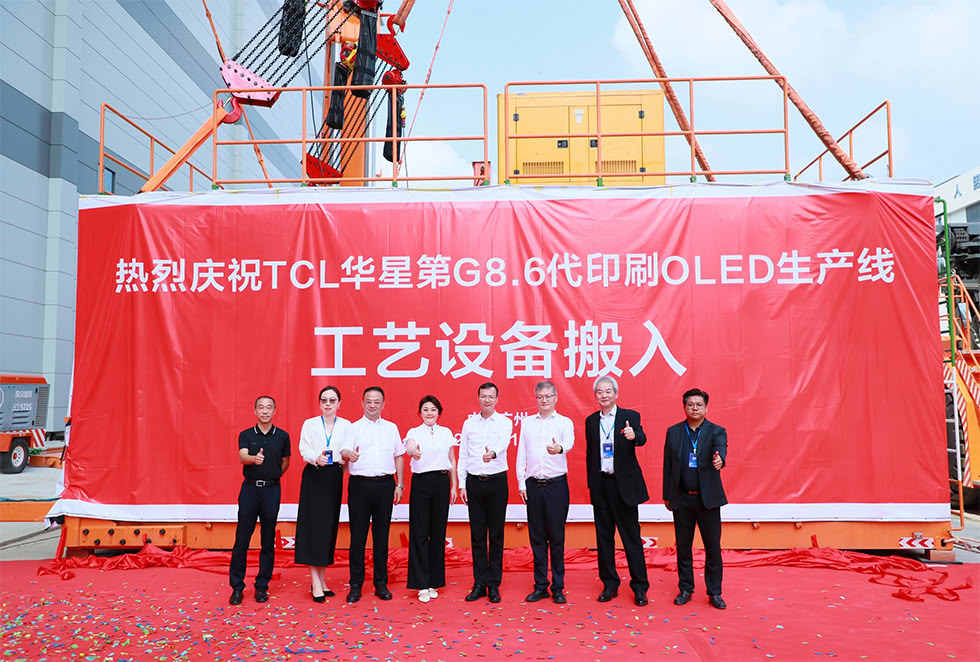
Short answer: TCL CSOT's Guangzhou 8.6th-generation printing OLED line moved into equipment installation after its October 31 ceremony. It is budgeted at about RMB 29.5 billion (USD 4.42 billion), began in September 2025, finished the main factory shell in 226 days, and targets Q4 2027 production. If yield and cost improve, it could make OLED laptops, tablets and monitors more affordable; otherwise buyers may wait longer.
What happened to the t8 project?
Conclusion first: the t8 milestone is a stage change, not a market launch. The project has completed the civil-construction phase and entered equipment installation, power-system joint commissioning and process validation. That means the factory can now receive and align the core printing, deposition and inspection tools needed for later production tests.
The line is sized for mid- and large-format displays. Its planned capacity is about 22500 glass substrates per month. Each substrate is 2290 mm × 2620 mm, a format suited to panels used in tablets, laptops and monitors. TCL CSOT has also pointed to flexible and foldable displays as possible extensions of the same printing technology, though the initial product focus is flat, mid-size screens.
Why does printing OLED matter for everyday devices?
Printing OLED uses an inkjet-style process that deposits organic light-emitting material into the exact pixels required on a glass substrate. Traditional OLED panels usually rely on vacuum thermal evaporation, where materials pass through a high-temperature vacuum process and are deposited with physical masks. In theory, printed OLED wastes less material, supports larger substrates more flexibly and can lower panel cost if the process is stable enough.
The change is less about a new screen color than about manufacturing economics. A panel maker that can turn a larger sheet of glass into usable laptop or monitor OLED panels at higher yield may be able to price devices more competitively. The key test is whether the Guangzhou 8.6th-generation production line can match mature vacuum-OLED processes in throughput, defect rate and material use.
How did TCL CSOT reach this point?
TCL CSOT says the company has spent 13 years developing printing OLED technology. The development path began with tiny proof-of-concept work, described as starting from one drop of ink and experimental machines, before moving to pilot-scale manufacturing. The Wuhan T12 5.5th-generation line is presented as the first line to bring printing OLED to mass-production scale. The Guangzhou 8.6th-generation production line is the next step, bringing the technology closer to larger IT display formats.
“The t8 equipment move-in marks the project entering the final sprint before mass production,” said Cao Weiran, general manager of the TCL CSOT Printing OLED Center, according to the company's project update.
What is the realistic timeline for buyers?
The published schedule is tight but not immediate. The project started in September 2025 and completed the main factory structure in 226 days; after October 31 equipment move-in, the team still has to install production equipment, test power systems and validate process recipes before Q4 2027 mass production. For readers, that means any t8-sourced panels are more likely to appear in products launched after the line passes qualification, not in every display sold in 2026.
Market demand may still create the opening. Omdia's October 2026 forecast projects global OLED monitor panel shipments to grow 79% in 2026 to 6.1 million units, according to the analyst firm. That does not mean t8 supplies those panels now, but it shows why another 8.6th-generation line matters: the industry is looking for capacity beyond premium TV OLED and small smartphone OLED.
Could printed OLED make laptops, tablets and monitors cheaper?
Short answer: potentially, but only if the line reaches stable yield and cost parity. Printing OLED has a cost-side story because higher material utilization can reduce waste. A larger G8.6-style substrate can also improve panel-cutting efficiency for laptops, tablets and monitors, where vacuum-OLED capacity has historically been tighter and more expensive than LCD.
The uncertainty is quality and manufacturing scale. Inkjet printing must place microscopic pixel materials accurately across huge glass sheets, then survive drying, encapsulation and long-term reliability testing. Until the Guangzhou line produces qualified panels at volume, buyers should treat printed OLED as an emerging option rather than a guaranteed lower-cost default.
Frequently asked questions
Is the Guangzhou t8 line the first printing OLED factory?
No. It is described as the first 8.6th-generation printing OLED line targeting scaled production for TCL CSOT's roadmap, while the company points to the Wuhan T12 5.5th-generation line as the earlier first mass-production printing OLED line.
When should I wait for products made with this line?
The most practical window is after Q4 2027, when mass production is targeted, with device launches depending on panel qualification and laptop, tablet or monitor maker integration.
Does equipment move-in mean mass production has started?
No. Move-in is the beginning of installation and commissioning. A panel factory still needs process validation, yield learning, customer qualification and ramp before selling volume panels.
What does 22500 substrates per month actually mean?
It is a glass-input capacity metric, not a finished-panel count. One 2290 mm × 2620 mm sheet may be cut into several panels, depending on the product size and yield.
Is printing OLED automatically better than existing OLED?
Not automatically. It can improve material use and scale economics, but vacuum-evaporated OLED remains mature, so the winner depends on brightness, lifetime, defect density and actual cost per panel.
Common misconceptions to avoid
- “Printed” means simple or low quality. The printing step controls where emissive materials go; the hard part is maintaining uniform pixels, reliability and yield.
- “Factory built” means products are ready. The t8 line now needs equipment installation, power-system joint commissioning and process validation before production.
- “More capacity equals cheaper screens.” Price falls only if yield and competition translate capacity into usable, qualified supply.
- “OLED is one technology.” Vacuum OLED and printing OLED are different manufacturing routes, and panels can vary widely by generation and supplier.
Action advice for readers
- For general consumers: buy today's OLED or LCD based on current price, brightness and repairability; do not delay a needed device just because a printing OLED line targets Q4 2027.
- For laptop and monitor shoppers in 2027-2028: look for product pages that specify panel generation, size and whether OLED is vacuum-evaporated or printed; early t8 panels may first appear in higher-visibility IT displays.
- For product managers: monitor TCL CSOT's qualification updates, because the difference between equipment move-in and stable mass production is the point where supply, cost and quality become predictable.