
MyTechDailyNews General Coverage: Synology NAS Ransomware Alert — Outdated DSM, Public Access Risks, and Offline Backup Steps
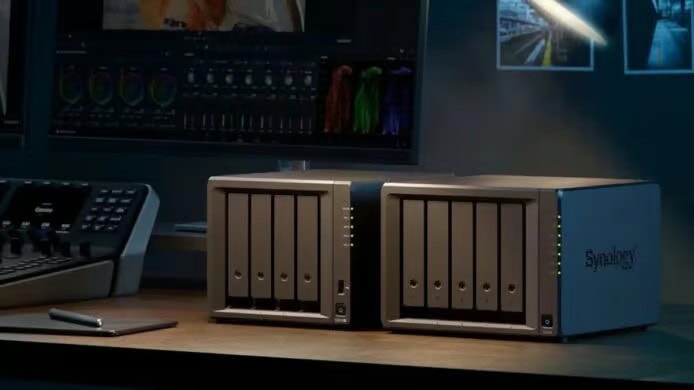
For general tech readers following MyTechDailyNews, the latest Synology NAS ransomware story is less about one mysterious attack tool and more about everyday maintenance gaps. Community discussions show that some owners have already moved to the latest DSM, while more are still running older DSM versions and leaving their devices reachable on the public internet. Synology security team has reviewed the incidents and says attackers are exploiting a security flaw that Synology already patched in December 2024.
What Synology and the 360 team Report
Synology’s latest notice says attacks are underway against outdated DSM systems. The goal is to encrypt data stored on the device and extort victims. The company recommends checking each system against Synology-SA-24:20. That advisory covers multiple flaws, with the most serious listed as CVE-2024-10441, a remote code execution issue rated 9.8. Synology explains that the weakness involves output encoding in the DSM plugin service, which can let a remote attacker run arbitrary code.
The 360 team, specifically its 360 anti-ransomware team, has recently handled multiple ransomware incidents involving Synology NAS devices. The 360 team points to a different patched issue: CVE-2026-13639/13684, fixed in September. These flaws are recorded in Synology-SA-26:13, and the corresponding new version release date is September 18, 2026.
Why Both Accounts Lead to the Same Fix
Whether the active exploit is tied to the December 2024 advisory or the September issue reported by the 360 anti-ransomware team, the user-side action does not change: update DSM to the latest available release. The report also states that there is currently no evidence of a zero-day in DSM, meaning a vulnerability that remains unpatched while already being exploited. Updating should therefore protect against the known paths being discussed, but strong passwords and multi-factor authentication are still needed.
Version Check: Minimum DSM Releases to Confirm
| DSM branch | Fix requirement |
|---|---|
| DSM 7.4 branch | Upgrade to 7.4-90075 or higher |
| DSM 7.3 branch | Upgrade to 7.3.2-86009-4 or higher |
| DSM 7.2.2 branch | Upgrade to 7.2.2-72806-9 or higher |
| DSM 7.2.1 branch | Upgrade to 7.2.1-69057.12 or higher |
| DSM 6.x series | No fixed version is available; upgrade to a still-supported version |
Action Checklist for Everyday Synology Owners
Below is MyTechDailyNews’ plain-language summary of the BlueDot security recommendations. The wording is adapted for general readers, while the technical checks remain unchanged.
Unofficial “Black Synology” Installations
- Confirm whether the developer providing the DSM image has released a new adapted version.
- If an adapted version exists, upgrade immediately to close the vulnerability.
- If no adapted version exists, disconnect the NAS from public internet access.
- Do not use QC or DDNS to expose the NAS to the public internet.
- Do not open SSH port 22.
Official “White Synology” Users
- Make sure DSM automatic updating is enabled.
- Enable both automatic update and automatic installation so new releases are applied as soon as Synology publishes them.
- Avoid unnecessary public internet exposure; do not use QC or DDNS mapping unless needed.
- If remote access is required, use strong user passwords and MFA multi-factor authentication.
- Where possible, combine remote access with WireGuard or another encrypted networking tool.
Offline Backup: The Last Safety Net
Ransomware risk is not limited to Synology. Any NAS, including devices from other brands, can be targeted, so important data should not live only on the NAS.
- Back up critical folders to cloud storage or an offline directory on a regular schedule.
- Use tools such as Cloud Sync to connect major cloud drives and automatically sync important directories.
- Before relying on a cloud target, verify that it has ransomware protection or version recovery.
- OneDrive is named as an example of a cloud service with such protection and recovery features.
Common Misconceptions
- “If I have not been attacked, public internet exposure is fine.” The reports focus on older DSM versions and devices left reachable from the public internet; exposure is treated as risk, not proof of safety.
- “Updating DSM is optional because the fix is small.” The advisory describes a remote code execution flaw with a 9.8 score, so the version check should be treated as urgent.
- “Any cloud copy is a backup.” A useful backup needs ransomware protection or version recovery, which is why services such as OneDrive are mentioned.
FAQ: What General Readers Should Ask First
Which version should I check?
Check your DSM branch against the table above. If you are on DSM 7.4, DSM 7.3, DSM 7.2.2, or DSM 7.2.1, confirm that you have at least the listed build. If you are on the DSM 6.x series, no fixed version is available, so move to a still-supported release.
Do the December 2024 and September reports contradict each other?
Synology security team describes a flaw patched in December 2024, while the 360 anti-ransomware team points to CVE-2026-13639/13684 fixed in September. For users, the shared lesson is to update, because both discussions assume known issues have been patched.
Is there proof of a zero-day attack?
The article states that there is no evidence of a DSM zero-day, meaning a vulnerability that is being exploited before Synology publishes a patch.
Should I turn off remote access now?
If you run an older DSM version or an unofficial setup without an adapted update, the checklist says to remove public exposure, including QC or DDNS mapping, and not to leave SSH port 22 open.
Can cloud sync replace offline backup?
Not by itself. Cloud Sync can help replicate important folders, but the cloud service should also provide anti-ransomware protection or version recovery; OneDrive is cited as having such features.
Final Takeaway
For MyTechDailyNews readers, the most useful version of this story is simple: the risk is concentrated in outdated DSM environments and always-on public access. Confirm the required DSM build, remove unnecessary internet exposure, and keep a restorable offline or cloud copy that can survive encryption. If those three controls are in place, the practical response to both the Synology and 360 team warnings is already covered.