
MyTechDailyNews General: weekly Starship Launches, FAA Hurdles and SpaceX's 2027 Reusability Test
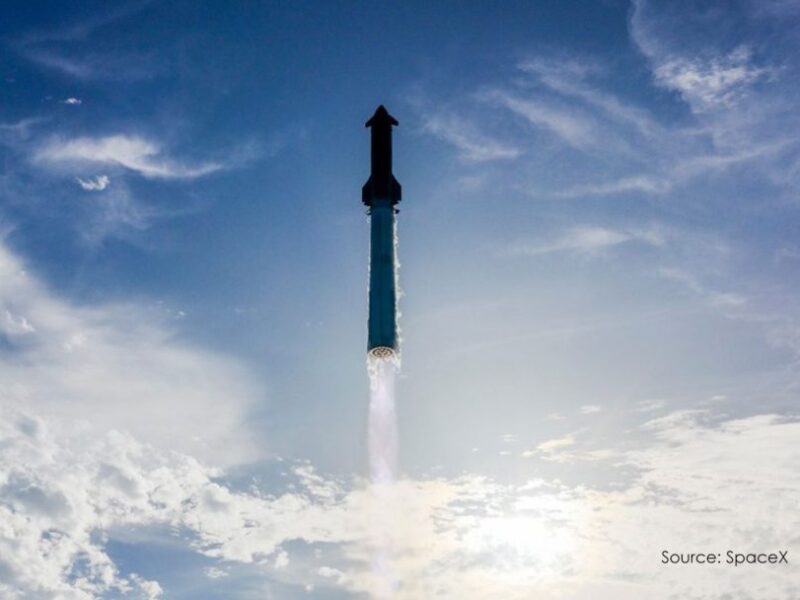
For readers following general technology news, SpaceX's latest schedule turns a familiar question into a practical one: can Starship move from milestone demonstrations to a weekly launch operation in the first half of 2027, then grow faster in the second half of the year? Elon Musk gave the outline on 20 October during the company's third-quarter earnings call. He framed rapid and complete vehicle reusability as the core requirement, making the plan a test of repeatability rather than a single launch headline.
The target follows the 14th Starship flight on 28 September. That test put Starship into orbit and deployed 26 Starlink V3 satellites, but engine problems shortened the mission. SpaceX's flight report recorded controlled ocean splashdowns for both the Super Heavy booster and the upper stage, rather than recovery for reuse, which is why the next steps matter.
What Flight 15 will try to prove next
For the 15th flight, provisionally scheduled for November 2026, SpaceX will attempt to bring both stages back to Starbase in southern Texas. Mechanical arms on the launch towers are intended to catch the Super Heavy booster and the Starship upper stage. Elon Musk placed the likelihood of success above 50%, while acknowledging that the first attempt might fail.
Gwynne Shotwell, SpaceX's president and chief operating officer, said the company expects the US Federal Aviation Administration, or FAA, to authorise both tower catches for Flight 15. The upper stage's route creates an additional regulatory issue because it passes over northern Mexico before approaching Starbase. Even a double catch would not, by itself, show that the vehicles can be refurbished and flown again within a short turnaround period.
Launch frequency depends on rules, not only rockets
SpaceX's proposed weekly Starship launches would also depend on FAA approval to expand operations at Starbase beyond the currently assessed maximum of 25 launches annually. The proposal is structured in two phases. The first would allow as many as 100 launches and 200 landings each year. The second would raise the requested ceilings to 456 launches and 912 landings. Those numbers are requested operating limits, not authorised launch frequencies. Public consultation meetings are scheduled for November.
The cadence is tied to SpaceX's own constellation plans, including next-generation Starlink communications satellites and spacecraft for its planned Starmind orbital data-centre network. Shotwell said the company expects to begin launching Starlink Mobile V2 and Starmind satellites in 2027. She also outlined plans to refly a Starship upper stage early in 2027, a step that points toward lower inspection and refurbishment requirements between flights.
Propellant transfer and the Moon program link
An orbital propellant-transfer demonstration is also planned for early in 2027. The test would transfer cryogenic propellants between Starship vehicles, providing engineering data on transfer efficiency, thermal management and propellant losses in orbit. This matters because NASA's planned lunar missions require Starship's Human Landing System variant to be refuelled in Earth orbit before travelling to the Moon.
As previously reported by eeNews Europe in coverage of NASA's Moon-base plans, the Starship lander remains a critical element of the agency's lunar programme. The company's schedule therefore depends on several developments progressing together: reliable recovery of both stages, successful upper-stage reuse, improved launch infrastructure and regulatory authorisation. The company has completed 14 integrated Starship flight tests, but has yet to demonstrate the repeatable operations needed to maintain the proposed launch frequency.
Checklist: five milestones that reveal progress
- Recovery of both stages at Starbase in southern Texas.
- A successful upper-stage catch attempt during the 15th flight.
- Refly of a Starship upper stage early in 2027.
- FAA action on the expansion request beyond 25 annual launches.
- Orbital propellant transfer tied to NASA's Human Landing System needs.
FAQ: what the plan does and does not say
Is weekly Starship launch in 2027 already guaranteed? No. It is a target described by Elon Musk after the third-quarter earnings call, while the FAA is still reviewing the proposal.
Does the 28 September flight prove full reuse? No. The 14th flight deployed 26 Starlink V3 satellites and ended with controlled ocean splashdowns for Super Heavy and the upper stage, not recovery for reuse.
Are 456 launches and 912 landings the new limit? No. They are the requested second-phase figures in the proposal for Starbase; public consultation meetings are scheduled for November.
Common misconceptions
- Seeing a 50% estimate as a completed operational result: it applies to one catch attempt, not the entire weekly cadence.
- Confusing requested limits with approved limits: 25, 100, 200, 456 and 912 are context for regulatory review, not a flight schedule already in force.
- Assuming orbital propellant transfer is unrelated to Starlink and Starmind: the weekly cadence is tied to those satellite deployments, while transfer is key to NASA's Moon plan.
Action suggestions for technology watchers
- Follow the evidence chain: catch attempts, upper-stage refly, propellant-transfer tests and FAA consultation milestones.
- Separate marketing numbers from regulatory numbers: 100, 200, 456 and 912 landings are requested ceilings, while 25 is the currently assessed maximum.
- Connect launch cadence to services: Starlink Mobile V2 and Starmind satellites are the operational context for the proposed weekly Starship launches.
- Watch for reuse turnaround proof, not only recovery proof, because rapid and complete vehicle reusability is the principal requirement.
For a general audience, the story is not simply whether SpaceX can fly often. It is whether recovery, refly, propellant management and regulatory approval all line up. Until that happens, the first half of 2027 target remains a roadmap for a weekly Starship operation, not a proven launch cadence.