
Beyond AI Storage: Why the US$45 billion Solidigm NAND Plan Depends on Dalian Permits
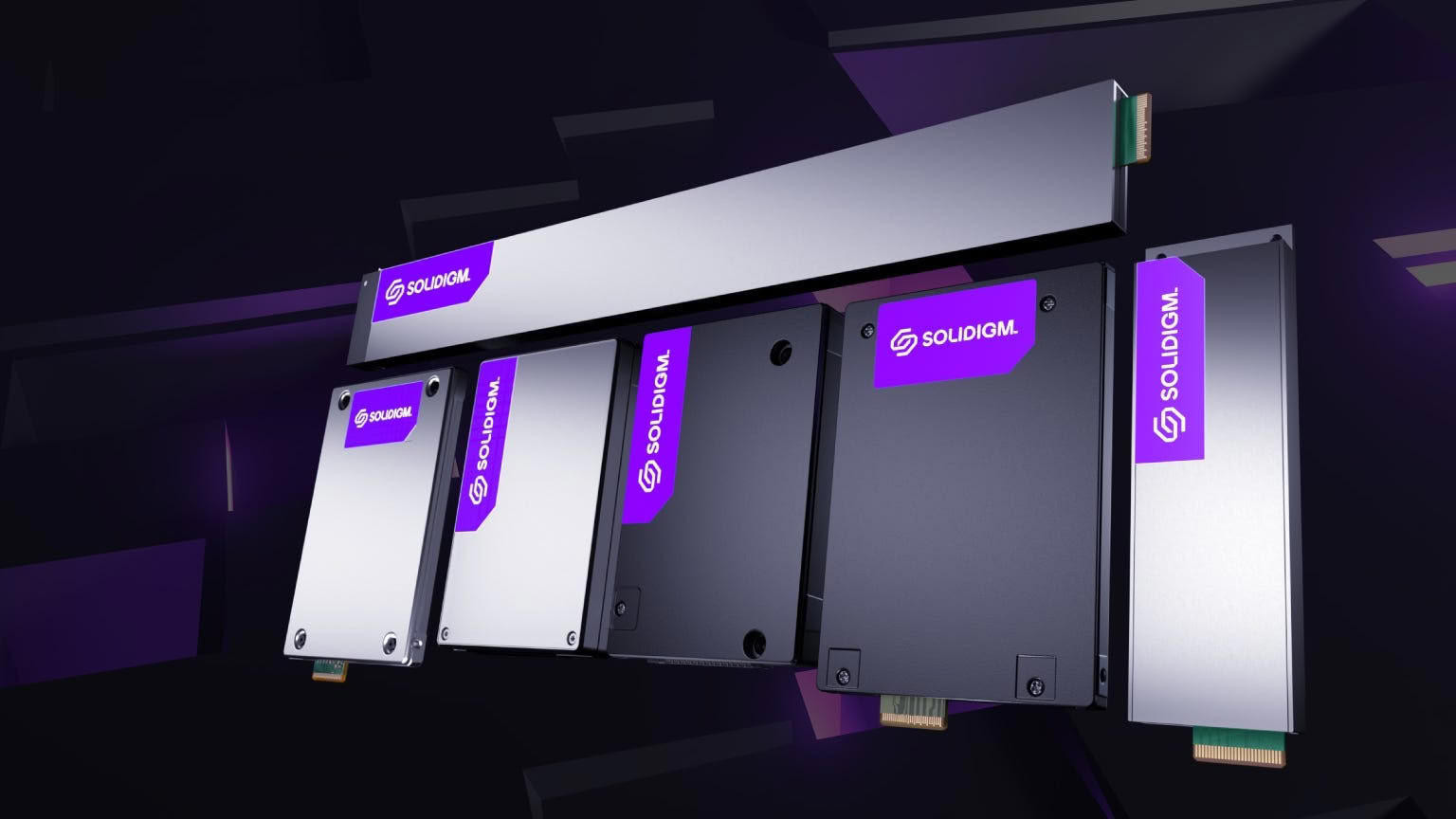
When a memory maker discusses a US$45 billion plant, the natural headline is scale. But the Solidigm story is better read as a permission puzzle: one proposed investment in the United States is tied to two linked issues involving its Dalian factory in China, namely whether equipment can be moved there now and whether that upgraded output can support a later U.S. buildout.
For general tech readers, the practical question is not whether NAND flash factories look impressive in a press release. It is how export rules, AI data-center demand and manufacturing economics can change the availability and cost of storage products over the next several years.
The core proposal, in plain English
Solidigm is reported to be discussing a major new NAND flash manufacturing base in the United States. The figure currently circulating is $45 billion, while longer-term possibilities could be much larger. The company has told the U.S. Department of Commerce that the eventual total investment could reach $100 billion, and that upstate New York is one location under consideration. The earliest possible start of construction is 2027. All of this remains at the negotiation and assessment stage rather than a signed project.
Why Dalian is not a footnote
The Dalian plant is central because it sits inside SK Hynix's NAND business. The site began as part of Intel's NAND flash business before SK Hynix acquired that business and folded it into its storage operations. Solidigm mainly sells enterprise SSDs, which are used heavily in data centers and enterprise storage rather than only in consumer laptops or phones.
Because AI infrastructure is expanding, storage demand is rising. That creates a simple but difficult trade-off: the company may need more NAND output and upgraded facilities, while the U.S. government may want more semiconductor manufacturing built inside the United States. Those two pressures are being discussed at the same time.
The export-control change that matters
U.S. government restrictions on semiconductor equipment exports to China are the key variable. In 2025, the United States withdrew previously validated end-user style exemptions for some China-based plants of SK Hynix and Samsung Electronics. After that change, companies need to apply for licenses year by year to send relevant equipment into Chinese factories.
The official posture has been described as allowing equipment needed to keep existing factories running, while applying tighter scrutiny to tools that expand capacity or raise technology levels. That distinction can turn a routine factory upgrade into a policy decision in Washington.
Mod B: the space that may decide the timing
Mod B is the specific area of Dalian that matters in this negotiation. It was completed in 2023, but the weak memory-chip market at the time left some space without a full equipment set. Solidigm reportedly wants to add more manufacturing tools there to increase NAND output.
Why would that help the U.S. plan? If Washington approves the tool transfers, the added production could generate revenue that helps fund construction in the United States and gives SK Hynix a bridge for future U.S. expansion.
How this connects to everyday technology
NAND flash is the core storage medium inside SSDs. When its supply is tight, it affects cloud services, AI systems, data centers and ultimately the price and availability of technology products. Samsung Electronics, SK Hynix and Micron are major memory makers, and they are adjusting capacity toward higher-margin data-center-oriented products as AI demand grows.
A practical way to think about it is that AI needs more than compute chips; it also needs large, fast and reliable data plumbing. NAND factories are part of that plumbing, so policy and trade decisions can shape the pace of AI infrastructure as much as chip design does.
Why SK Hynix might want a U.S. plant anyway
A U.S. NAND plant would add capacity and reduce dependence on a single production base in Dalian. It would also help manage future trade-policy risk. But the costs are not trivial: building semiconductor plants in the United States can be more expensive than in existing bases such as South Korea, and fab construction cycles are long. That makes long-term return uncertain even if demand is strong.
The financing angle changed
Previously, SK Hynix considered an initial public offering for Solidigm to raise capital. Recently, however, that IPO and pre-IPO financing evaluation was paused, with capital-market conditions and stock performance cited as reasons. Despite that pause, SK Hynix has still said Solidigm needs new production facilities to meet rising AI storage demand, and that the company will continue to evaluate investment size, timing and funding sources.
Common misconceptions to avoid
- Misconception 1: The $45 billion figure means the plant is already approved. It is not. It is part of an ongoing negotiation and evaluation.
- Misconception 2: The U.S. plant plan is separate from Dalian. The two are linked in reporting, because upgraded Dalian output could support the financial case for U.S. expansion.
- Misconception 3: Only consumer SSDs are affected. Solidigm's enterprise SSD products are tied to data centers, cloud storage and AI infrastructure.
- Misconception 4: Export licences are a small legal detail. They can decide whether equipment can be added, how quickly output can rise, and whether the overall investment plan becomes viable.
Status at a glance
| Item | Current situation | What to watch next |
|---|---|---|
| U.S. NAND plant | Discussed as one major investment concept, with possible long-term scope up to $100 billion | Whether site, budget and construction timing are confirmed |
| Dalian Mod B area | Completed in 2023 but not fully equipped; upgrade is part of talks | Whether the U.S. government permits equipment exports to China |
| 2025 licence regime | Annual applications are needed after exemption changes for SK Hynix and Samsung Electronics | Whether expansion tools receive stricter or looser review |
| 2027 construction window | Earliest possible start mentioned in reports | Whether financing, site choice and approvals align |
FAQ
Is Solidigm building a $45 billion NAND factory now?
No. The reports describe an investment plan under discussion. The $45 billion figure should be treated as part of a negotiation, not as a committed construction project.
What is the single most important non-financial issue?
It is the U.S.-China export-permission question for tools destined for Dalian. Without approvals for equipment that supports expansion or upgrades, the company's ability to raise output and fund future plans becomes harder to predict.
Why does Washington matter here?
Washington sets the export-control rules for semiconductor equipment headed to China, and those rules can influence whether Dalian can upgrade and whether a U.S. plant becomes more attractive.
Checklist: five signals that will show whether this is real
- Official confirmation that a U.S. site has moved from considered to approved.
- A board-level funding decision, not only a statement of possible long-term investment.
- Export licences or public policy signals that allow tools to be sent to Dalian.
- Evidence that Mod B can move from empty space to installed production equipment.
- A refreshed financing path after the pause in IPO and pre-IPO evaluation.
Action suggestions
For ordinary tech readers, the most useful action is to watch primary company statements, government licensing news and memory-market data rather than repeating dollar figures as settled facts. For product, cloud, AI infrastructure or procurement teams, the practical takeaway is simpler: NAND supply, AI storage demand and U.S.-China equipment rules are now connected. When evaluating storage roadmaps, add three checks to the planning process: supplier concentration, policy risk, and the time required to bring new capacity online.
In the end, this is not only a story about one company and one proposed factory. It is a test of how AI storage demand, U.S. industrial policy and export controls shape each other. If the permit path to Dalian opens, the plan may move from conversation to construction; if it does not, the $45 billion idea may remain a strategic option instead of a project. Either outcome will matter for the wider AI infrastructure race.