
Siemens and Swinburne University of Technology Take Their Grid Lab Global: What the New Alliance Means for Asia, and Why Malaysia Goes First
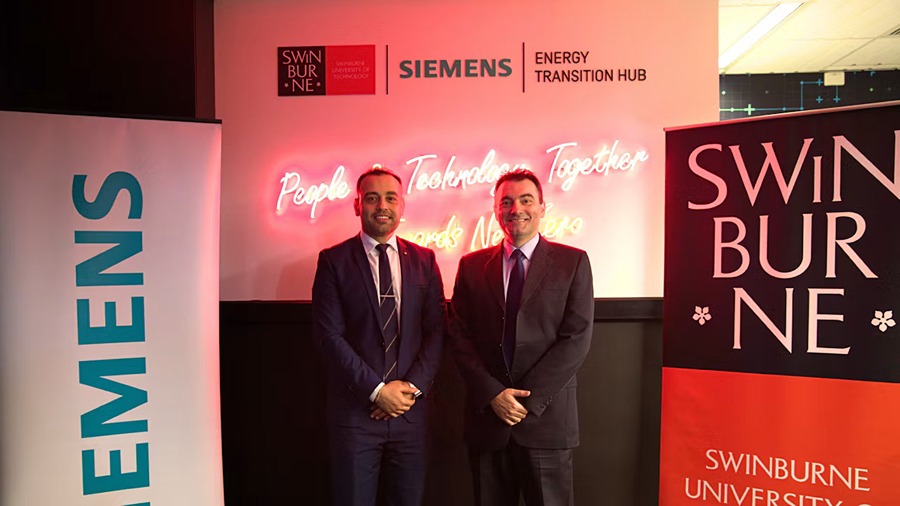
Here is the short version, before the press-release language: Siemens and Swinburne University of Technology are turning an AU$5.2 million energy laboratory in Melbourne into a network. The Siemens Swinburne International Energy Transition Alliance for Industry Training and Innovation is planned to open its first overseas node in Malaysia by the end of 2026, then extend training and research on power systems across Asia. The Melbourne Hub stays the brain; the nodes are its arms.
That is the part worth reading twice. The story is not a new building. It is a copy-paste strategy for the shortage the industry discusses quietly: not enough people who actually know how to run a modern grid.
By Cleo Howard · MyTechDailyNews General
What was actually announced?
Answer first: a delivery network, not a campus spree.
- The vehicle: the Siemens Swinburne International Energy Transition Alliance for Industry Training and Innovation, formed by Siemens and Swinburne University of Technology on top of the existing Siemens Swinburne Energy Transition Hub.
- The first milestone: a node in Malaysia planned for the end of 2026, described as the initial stage of a wider network across Asia.
- The product: specialised training, advanced Siemens technology and practical expertise covering modern power systems, renewable energy integration and the energy transition.
- The track record behind it: the Hub launched in 2023, and since then hundreds of energy students, teachers and experts from Australia and elsewhere have trained through the partnership.
Why does this matter more than a typical partnership note?
Because it targets the one bottleneck that extra hardware cannot solve: people.
The International Energy Agency's World Energy Employment research reported that, of more than 400 energy firms it surveyed in 2025, around 60% said they faced hiring difficulties because of skills and labour shortages, with highly specialised fields such as grid operation flagged as especially thin. Meanwhile the physical build-out is accelerating. In its Southeast Asia Energy Outlook 2026, published on 26 March 2026, the IEA states that investment in grids and storage "needs to ramp up, from USD 13 billion today to USD 50 billion in 2050 to meet announced pledges", and notes that regional electricity demand is growing roughly twice as fast as overall energy use, partly because data centres are adding new load in several countries. We followed the same squeeze from the compute side in our own piece on AI data center energy and microgrid strategies.
So the arithmetic is simple: capital and steel are already scheduled, but the analysts, protection engineers and control-room operators who keep those networks stable are not. A training network is one of the cheaper ways to manufacture them.
Why is Malaysia the first node?
Conclusion: Malaysia is the place where an existing campus and an already-funded grid upgrade overlap.
- The university is already there. Swinburne University of Technology has operated a branch campus in Kuching, in the Malaysian state of Sarawak, since 2000 — a local academic footprint that predates the Melbourne Hub by more than two decades. Siemens' own published case material on the relationship points to that dual-campus setup, in Melbourne and Malaysia, as part of the collaboration.
- The grid spending is already committed. Malaysian utility Tenaga Nasional Berhad has put roughly RM43 billion (about US$10.8 billion) of network investment behind its 2025-2027 regulatory period, most of it aimed at reinforcing and modernising the national grid.
- The policy target is already set. Malaysia's National Energy Transition Roadmap aims for a 70% renewable capacity share by 2050, according to Ember's analysis of the country's power mix — which means more inverter-based generation to model, protect and keep stable.
Read as analysis rather than official statement: the same logic should govern later nodes. Look for a country with a local partner institution already teaching engineering and a utility mid-way through a grid programme, and you have probably guessed the next stop.
How will the nodes actually work?
Answer: designed and coordinated in Australia, delivered locally.
The Alliance deliberately does not reconstruct the physical Melbourne Hub country by country. International nodes act as extensions of it — programmes coordinated through the Australian facility and delivered together with local partner institutions, on the same combination of assets: Siemens digital energy technology plus Swinburne’s research, teaching and technical expertise. Students, academia and industry keep access, and the Hub continues to run research, commercialisation and training side by side rather than as separate businesses.
| Dimension | Melbourne Hub | First international node (Malaysia) |
|---|---|---|
| Status | Launched in 2023, AU$5.2 million invested | Planned for the end of 2026; opening stage of the wider Asia network |
| Format | A physical future-grid laboratory on campus | An extension of the Hub, not a rebuilt copy |
| Delivery | Siemens technology with Swinburne teaching and research | Coordinated from Australia, run with local institutions |
| Who uses it | Students, teaching staff, academia and industry | Energy industry professionals, plus local students and partners |
| Proven volume | hundreds trained since 2023 | Not yet disclosed |
What are the executives saying?
Peter Halliday, managing director of Siemens Australia and New Zealand, framed the move abroad as proof that industry and academia can cooperate to take Australian energy expertise to the world.
Jose Moreira, head of the Grid Software business for Siemens in Asia Pacific, said the initiative carries enormous potential. Two things stand out to me in that wording. First, the job title is the tell: grid software — state estimation, stability studies, protection coordination — is precisely the layer where trained operators are scarcest. Second, the training line existed before the Alliance: public posts from Moreira around November 2024 describe industry training sessions already being run inside the Hub, which suggests the Alliance is a scaling decision rather than a start-up one.
Who should pay attention, and what to do about it
- Engineering students in Asia: treat short courses attached to an operating laboratory as a résumé differentiator; ask your department whether it has partner access to the Hub programme before you pay for a generic online certificate.
- Working power-systems engineers: the scarce skill is not renewables in isolation but integration — connecting variable generation to a network that still has to hold frequency. That is the stated curriculum here.
- Utility and OEM talent leads: budget for training the way you budget for transformers. The IEA's 60% hiring-difficulty figure is a procurement risk, not an HR footnote.
- Product and market teams: watch whether node curricula start naming specific Siemens tools. Where a syllabus goes, procurement tends to follow.
- Anyone tracking AI infrastructure: data-centre load is the newest reason grids in Southeast Asia need more engineers. More on that link in our AI data center energy and microgrid strategies report.
Common misconceptions about the Alliance
- "It is another signing ceremony." The Hub has been running since 2023 and has already trained hundreds of students, teachers and experts; the Alliance formalises what was already in operation.
- "Malaysia gets a clone of the Melbourne Hub." No — the stated model is a network of extensions coordinated through Australia.
- "This is climate policy." It touches decarbonisation, but the near-term driver is workforce capability and grid reliability.
- "Siemens and Swinburne only do energy." The same Siemens footprint in the region shows up in other infrastructure deals, including the metro signalling memorandums we covered in our SUMW 2026 rail case study.
FAQ: what readers keep asking
When does the Malaysia node open? It is planned for the end of 2026 and marks the first stage of the network across Asia, not the finished map.
Is this a replacement for the Hub? No. The AU$5.2 million Hub remains the coordinating facility, and the nodes are positioned as extensions of it.
What does "industry training" mean in practice? Specialised courses on modern power systems, renewable integration and the transition, delivered to professionals who already work in energy, alongside the Hub's access for students and academics.
How much has been invested? The public figure is the AU$5.2 million behind the Hub; the Alliance's own investment total has not been disclosed in the announcement.
Where do I verify the details? Further information is available at siemens.com, and the Alliance, Hub and Malaysia plan all trace back to the same Siemens and Swinburne pages listed below.
What to watch next
Three things. Whether the nodes award recognised credentials or stay as short-course venues — that decides if they change hiring. Whether the Malaysia intake can produce job-ready grid operators faster than RM43 billion of new hardware gets energised. And whether the next node announcement names a country that fits the campus-plus-grid-budget pattern. The open question I keep turning over: if a training network is the answer to a 60% hiring-difficulty problem, is the real export here Australian expertise — or simply a template for how fast an industry can teach itself?
Sources and further reading
- Siemens newsroom, "Siemens and Swinburne expand energy collaboration" — the Alliance announcement: https://news.siemens.com/en-us/siemens-swinburne-expand-energy-collaboration/
- Siemens newsroom, "Siemens Swinburne Energy Transition Hub launches", 30 October 2023: https://news.siemens.com/en-us/siemens-swinburne-energy-transition-hub-launches/
- Swinburne University of Technology, "$5.2M green energy research hub coming to Swinburne", 16 February 2023: https://www.swinburne.edu.au/news/2023/02/5m-green-energy-research-hub-coming-to-swinburne/
- IEA, Southeast Asia Energy Outlook 2026, executive summary (26 March 2026): https://www.iea.org/reports/southeast-asia-energy-outlook-2026/executive-summary
- IEA, World Energy Employment 2025 (survey of 400+ energy firms, around 60% reporting skills-related hiring difficulties): https://iea.blob.core.windows.net/assets/e5b9e908-26fe-4228-8978-e4ee36c555ed/WorldEnergyEmployment2025.pdf
- Ember, "Solar and grid flexibility critical for Malaysia's future electricity" (NETR 70% renewable capacity target): https://ember-energy.org/latest-insights/solar-and-grid-flexibility-critical-for-malaysia/
- Tenaga Nasional Berhad, Budget 2027 industry statement citing RM43 billion grid investment 2025-2027: https://www.tnb.com.my/assets/press_releases/20261010_26_bi.pdf
- Siemens case study on Swinburne's Melbourne and Malaysia campuses and apprenticeship pathway: https://resources.sw.siemens.com/en-US/case-study-swinburne-university/
- More partner detail at siemens.com.