
Refund Successful, Wallet Empty: MyTechDailyNews Lines Up Three Smart-Locker Deposit Models and Picks the One Worth Using
By Sarah Chen — MyTechDailyNews, published by Tech Daily
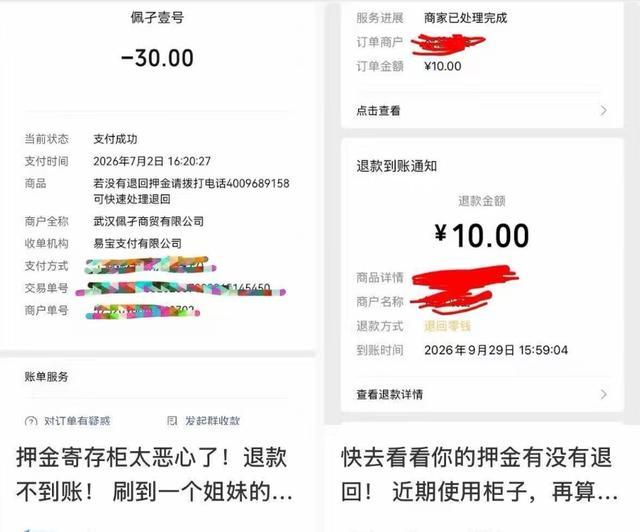
A phone screen flashes "Refund Successful" while you are still zipping up your backpack, and you walk away feeling tidy about the transaction. Days later, scrolling old order receipts, you notice that nothing ever landed. That gap — between a status label inside an app and real money moving back to your account — is the one thing worth understanding about shared luggage lockers at the moment, and it is the axis on which we compared the three deposit models now competing for your suitcase in China's stations, malls and attractions.
The price curve moved before the service did
In the early days, leaving a bag behind was a low-margin convenience: a coin, a paper stub, a shelf behind a counter. Right now the same cabinet is a hot asset that capital is chasing. Banks of lockers installed at railway stations, inside metro concourses and at the gates of scenic areas bill by the hour at a few yuan per hour, and a few hours is usually enough to hit a 30 yuan daily ceiling. Staffed luggage counters, by contrast, generally ran at 10 or 15 yuan a day. The premium is not subtle.
| Comparison point | Smart shared locker (hourly) | Staffed counter / shop storage |
|---|---|---|
| Typical charge | A few yuan per hour, capped at 30 yuan per day | 10 or 15 yuan per day |
| How you pay | QR scan, mini-program, deposit pre-authorised or prepaid | Cash or scan at the desk, paper stub or photo receipt |
| Where you find it | Railway stations, metro, scenic areas, museums, gyms | Convenience stores, hotels, dedicated luggage shops near transit |
| Failure mode | Deposit parked in an app balance and quietly forgotten | Queue at peak hours, opening hours limit pickup |
| Best for | A two-hour layover, one small bag, you can watch the refund live | All-day or multi-day storage, bulky suitcases, group trips |
Yet once the service price jumped, part of the industry did not upgrade the service. Instead, it kept the smoke-and-mirrors in the deposit step: nudge the user to forget, then keep the money.
Three deposit architectures, scored side by side
| Model | Where the money goes | Evidence from recent testing / reporting | Risk for you |
|---|---|---|---|
| A. Auto-refund to the original payment channel | Unused portion flows straight back to the card or wallet you paid with | A reporter's test published by Phoenix Net in late October 2026 found lockers in a metro station near the Hubei Provincial Museum taking a 35 yuan prepayment, charging 4 yuan per hour with a 35 yuan daily cap; a short drop-off cost 4 yuan and the remaining 31 yuan returned to the paying account with no manual step at all | Lowest — the option to look for first |
| B. Balance-withdrawal model | "Refund successful" only moves the deposit into the operator's mini-program balance; you must find the withdrawal button and request a payout | Sohu's investigation on 2 November 2026 found high-commission orders gated behind very high withdrawal thresholds, on the assumption that users will not bother or will forget; several well-known locker brands have been reported using the same structure | High — the classic leak |
| C. Credit-based, no-deposit model | No deposit is charged; a trust score or a token authorisation stands in its place | People's Tribune noted that some platforms already offer credit-based deposit waivers and instant refunds, while some localities have moved deposits into prepaid-fund supervision; in the same Phoenix Net test, shared bikes could be used deposit-free via an Alipay credit channel, while an e-bike required a 0.1 yuan credit fee that was parked in a mini-program wallet and needed a manual withdrawal | Lowest upfront, but read the fine print: even a token amount can be routed to a balance |
Scored on one metric only — how hard your money has to be chased — A and C win, and B loses by design. The tell is not technical. It is business-model arithmetic.
The float, the kickback and the ten-yuan blind spot
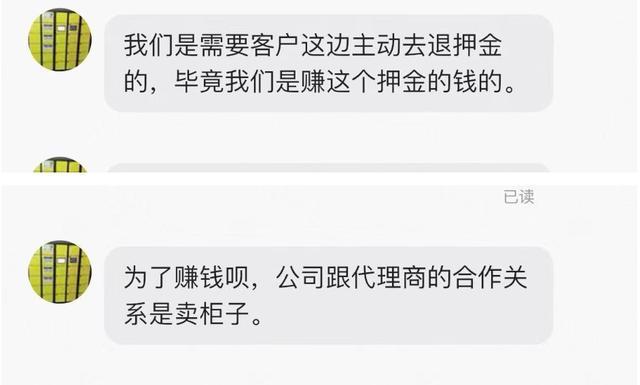
Facing complaints, locker operators have stopped pretending. One said plainly: "We make our money on the deposits." That is not a bug report, it is a mission statement. Every abandoned deposit becomes free cash sitting with the merchant, and the amounts are small enough to disarm attention: coverage by the Guangming Daily commentary column put the disputed sums at roughly 10 to 50 yuan per transaction. In a report published by Toutiao on 2 November 2026, a service provider estimated that eight out of ten users never come back for the money — mostly because they forget, partly because it is easier to shrug and say "forget it" than to chase a few yuan.
There is a second revenue layer most travellers never see. Sohu's reporter investigation described a kickback structure in which each scan hands a commission to the shop hosting the cabinet, which turns the locker into lead-generation equipment for the venue as well as a cash float for the platform. Coverage collected by Sina Weibo added that some operators run high-commission orders with punitive withdrawal floors. Once you see the incentive, the "refund" screen stops looking like a UI mistake.
Why the mini-program is the operator's escape hatch
The sharpest trick is structural, not visual. Some operators register multiple independent mini-programs whose funds do not pool. Once complaints concentrate on one of them, that shell is simply dropped and a fresh one takes its place, so the case never lands on a real company. Layered on top is the mislabelled confirmation screen, which makes the whole thing look like a clerical hiccup rather than a deliberate move to black — that is, outright pocket — a user's deposit.
Anatomy of a dishonest confirmation screen
- Status lie: "Refund Successful" describes an internal ledger flag, not a settlement. No money has left the operator until you withdraw it.
- Reversed default: the deposit is charged in one tap; getting it back takes a search through menus, and a conspicuous notice that you must apply manually is usually nowhere to be found.
- Volume over value: individually trivial amounts make enforcement irrational for the user, which is precisely what the model is priced on.
- Free-storage hook: a "free" cabinet that only requires a deposit is the most common entry point described in the landmine-avoidance warning posts that circulate on social platforms.
What the rulebook actually says
- A deposit is a performance guarantee. Ownership of the money stays with the consumer; the operator holds it temporarily and has no right to unilaterally reroute the refund or bolt on a withdrawal hurdle.
- Article 21 of the E-Commerce Law requires that anyone collecting a deposit disclose the refund method and procedure, forbids unreasonable conditions on refunds, and requires timely return once conditions are met (full text on the Ministry of Commerce site).
- Article 78 of the same law sets the penalty: order to correct within a deadline, a fine of 50,000 to 200,000 yuan, and 200,000 to 500,000 yuan in serious cases — reproduced in the China Consumers Association commentary on the law's consumer-protection highlights and in market-regulator risk checklists published by local administrations.
- The SAMR — the State Administration for Market Regulation — has repeatedly stressed in its shared-economy supervision guidance that forcing a deposit into a platform balance and adding withdrawal obstacles without the consumer's explicit consent is an unfair standard term, which can be held void in law.
- The Measures for the Supervision and Administration of Online Transactions require operators to flag materially relevant terms in a conspicuous way and bar clauses that limit a consumer's right to complain, report or sue.
So the pattern is not a grey zone. Rerouting deposits into a mini-program balance to farm forgetfulness crosses a legal line that was drawn on purpose.
Scenario pick: which cabinet you should actually use
| Your situation | Pick | Why |
|---|---|---|
| Two-hour transfer at a station, one backpack | Hourly locker that shows the refund going back to your payment account | You can verify settlement before you leave the concourse |
| All-day at a museum or a scenic area, family with bulky bags | Staffed counter at 10 or 15 yuan a day | Caps the cost, and the receipt is a human, not a menu tree |
| Multi-day city hop | Store-based luggage network with free cancellation before the drop-off date | Per-day rates are usually lower than a repeated hourly cap |
| Laptop, camera or cash in the bag | Staffed storage with ID hand-off; skip unattended cabinets | Insurance and identity checks exist; most mini-programs ban valuables outright |
| Older relative or first-time app user travelling alone | Anything with a staffed counter or credit-based deposit waiver | Manual-withdrawal flows assume digital literacy the operator then profits from |
| You only ever have a "free storage, deposit only" option | Use it, but screenshot the deposit rule and set a same-evening reminder | The trap works on delay, not on technology |
Common misconceptions
- "The refund message means the money is on its way." It does not. Without a visible credit in your payment account, nothing has been refunded.
- "It is only ten yuan, not worth the trouble." Multiply that by the thousands of forgotten deposits a day and you have exactly the business an operator described.
- "The venue is responsible, so the venue will refund me." Front-desk staff routinely say the app is not theirs; the counterparty in your payment record is the mini-program operator.
- "A cabinet inside a public transport hub must be public service." Lockers placed in public space and public settings ride on captive traffic and hold local monopoly power, but the transaction is a private commercial one — which is why the terms must be fair.
FAQ
Is a locker deposit legal at all?
Yes. What is not legal is hiding the refund route, adding a mandatory manual withdrawal, or refusing timely return once conditions are met.
Why do operators insist the deposit prevents squatting?
Partly true: a deposit discourages long occupation and damage. But a deterrence tool that pays the operator when you forget has stopped being a guarantee and become a revenue line.
The app says refund successful but my balance is empty. What is the first move?
Open the transaction details inside the mini-program and check whether the amount sits in an internal wallet. If it does, withdraw it immediately and screenshot both the refund status and the wallet balance.
Can I get money back if the mini-program has vanished?
File with 12315 and with your payment channel, quoting the merchant name printed on the payment record. This is the exact scenario where regulators are urged to look past a stack of mini-program shells.
Does a credit-based deposit waiver mean zero risk?
It removes the cash float, but read the charge rules. Some trust-score setups still park a token authorisation fee in a wallet that needs a manual withdrawal.
Action list: five checks before you leave the locker area
- Before scanning, read the deposit clause: does it say refunds return to the original payment method, or to an app balance?
- Prefer credit-based deposit waivers or auto-refund cabinets when both are on the wall.
- Photograph the notice board, the price table and the mini-program name next to your payment record.
- After picking up your bag, open your payment account and confirm the credit — do not trust the on-screen label.
- If the money is parked in a balance, withdraw it that day; if a threshold blocks you, escalate via 12315 or the in-app complaint channel of your payment platform.
The bottom line
Convenience priced as a premium is a legitimate deal. Convenience rigged so that your own money must be clawed back from you is a different product altogether, and one that no amount of "refund successful" copy can launder. Nowadays, the honest version is easy to recognise: deposit returned along the way it came, without your memory being the condition.
Spotted a locker that keeps your deposit, or a mini-program that has quietly changed its refund path? Send the location, the operator name and a screenshot to our editorial desk at hello@techdaily.com. Tech Daily's MyTechDailyNews desk will keep testing public-space hardware against the standard of one simple question: does the convenience actually come back to you.