
RTX PRO 5500 at $17,999 vs RTX PRO 6000 at $16,000: Why the Smaller Card Costs More, and Which One to Buy
By Sarah Chen, Tech Daily · Questions or corrections: hello@techdaily.com
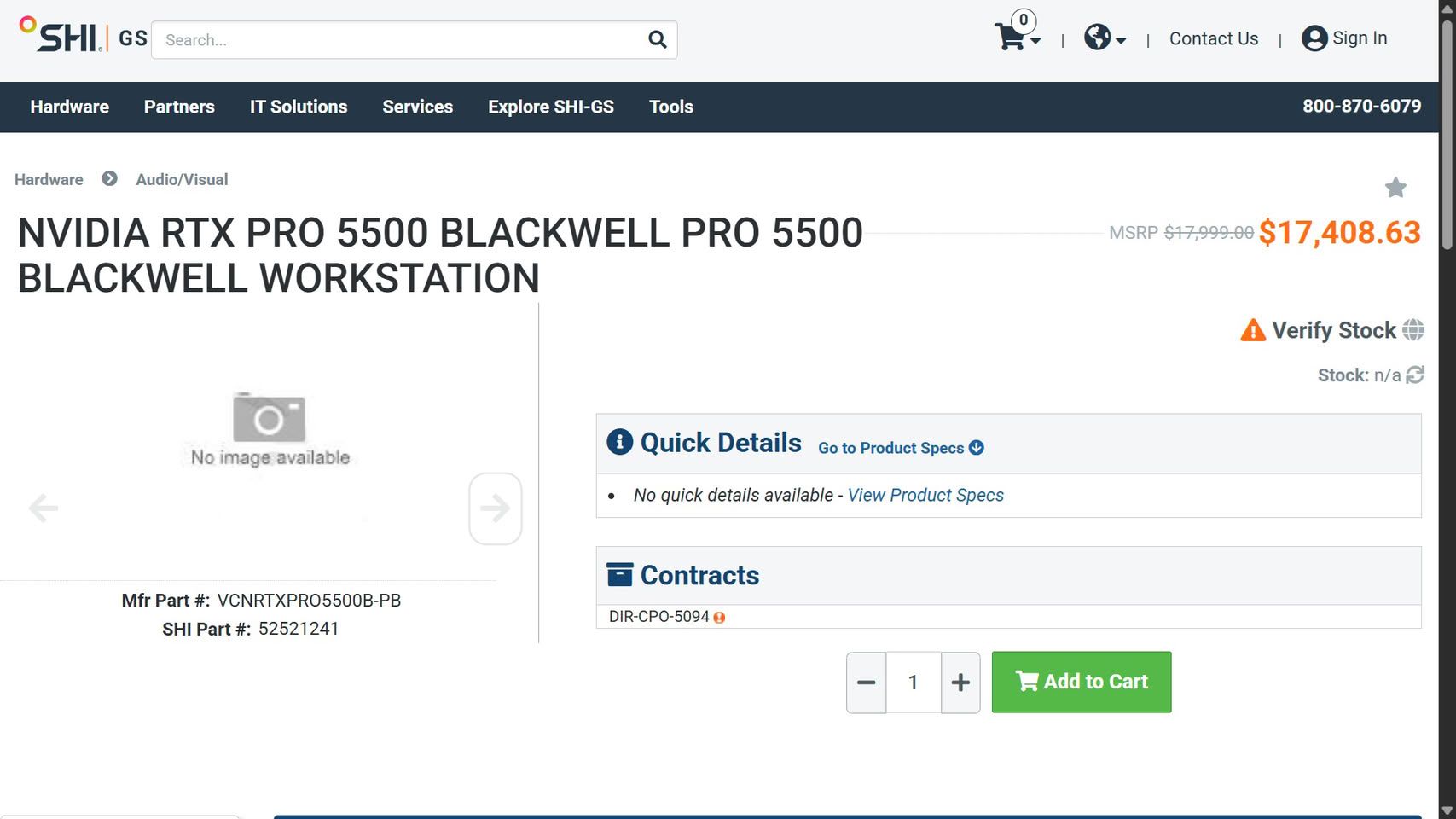
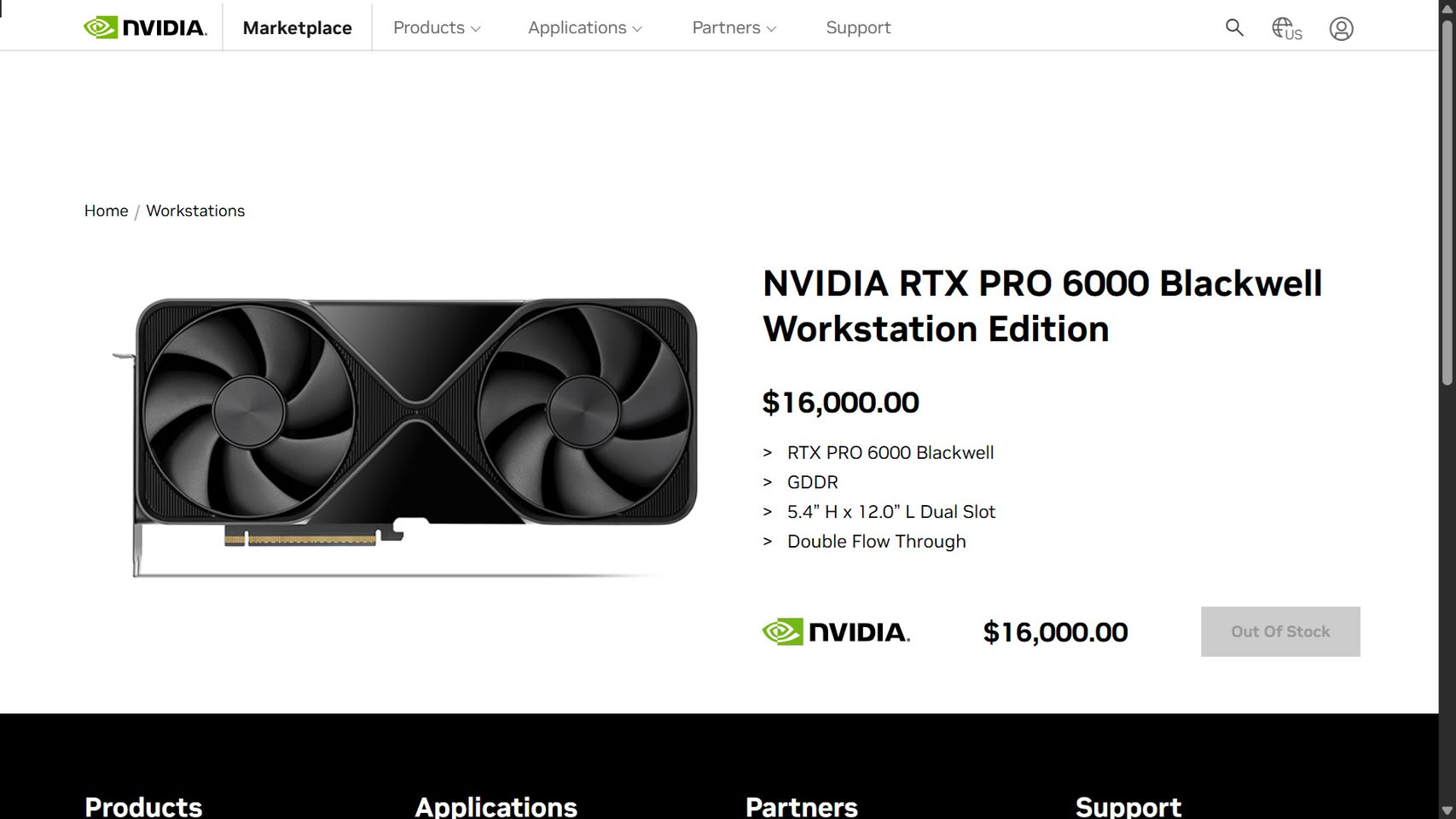
Here is the direct answer: the RTX PRO 5500 is not being sold as a better card than the RTX PRO 6000, it is being sold as the card people can actually get. A US reseller, SHI, lists the PNY-built RTX PRO 5500 Blackwell Workstation Edition at a suggested $17,999, with a discount of about 3.3% taking the working price to $17,408.63 — roughly $1,409 above the $16,000 tag that NVIDIA's US official online store puts on the flagship RTX PRO 6000 Blackwell Workstation Edition. The inversion is a supply, order-book and export-control story, not a silicon story.
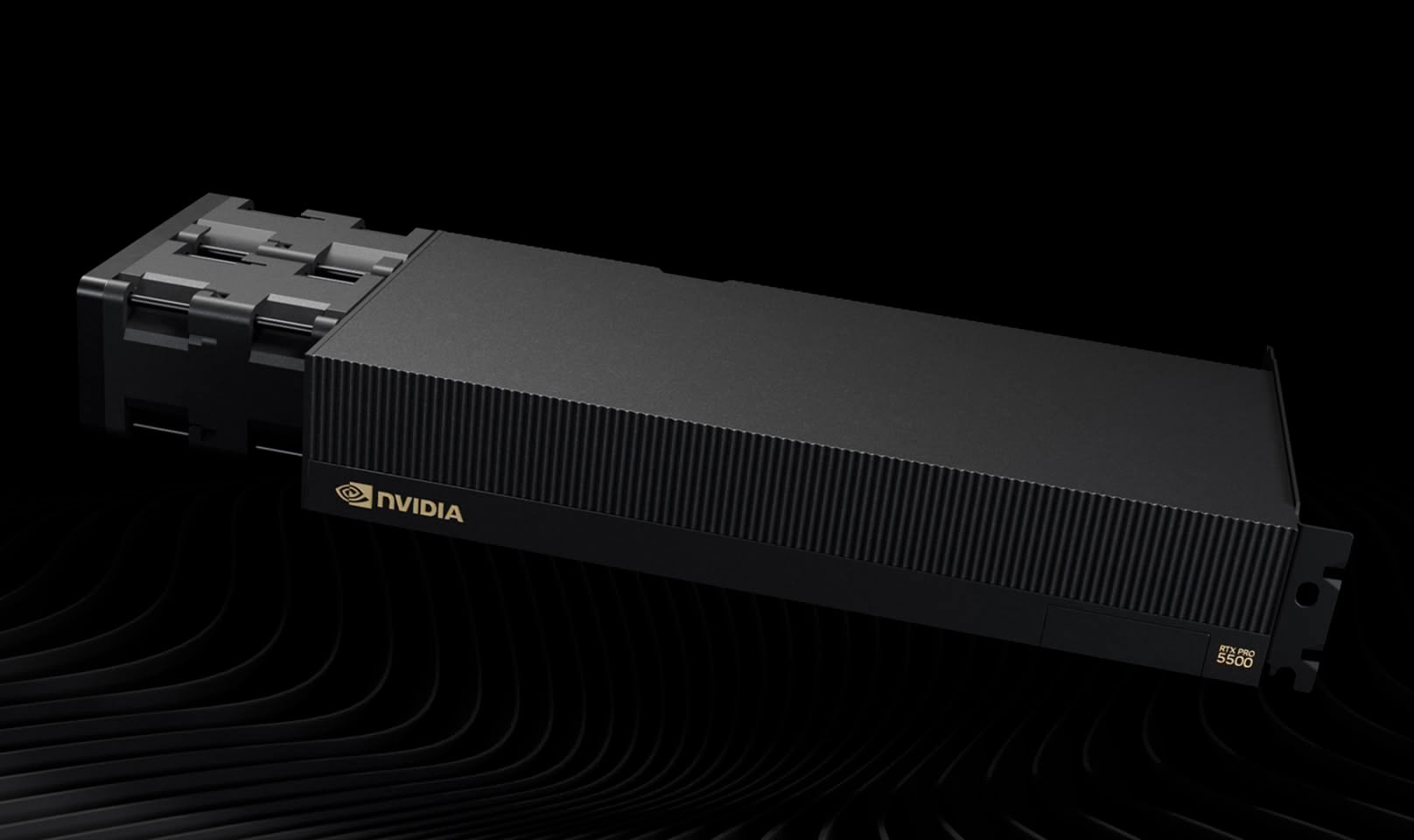
What exactly is being offered for $17,999?
The specific product is a PNY-manufactured board, part number VCNRTXPRO5500B-PB, listed on the reseller page as a Blackwell-generation workstation GPU with 84GB of memory. TechPowerUp, which spotted the listing on 6 November 2026, records it under SHI's government-solutions storefront with the $17,999 sticker and the $17,408.63 discounted figure.
The conclusion readers should hold on to: this is a reseller's suggested price, not an NVIDIA price list. NVIDIA has the RTX PRO 5500 in its product catalogue and on its official product page, but the model's pricing was not published by NVIDIA, and the listing status on the official page had been marked as forthcoming. A single reseller number is therefore a snapshot of channel conditions, not a market-wide rate.
How do the two cards compare on paper?
Read straight, the spec sheet makes the price relationship look wrong. The RTX PRO 5500 sits below the flagship on every headline figure.
| Attribute | RTX PRO 5500 Blackwell Workstation Edition | RTX PRO 6000 Blackwell Workstation Edition |
|---|---|---|
| Architecture | Blackwell | Blackwell |
| CUDA cores | 21760 (21,760, GB202-based) | 24064 (24,064) |
| Memory | 84GB GDDR7 with ECC | 96GB GDDR7 with ECC |
| Memory bus | 416bit | Not stated in the same source set |
| Memory bandwidth | 1398GB/s | 1792GB/s |
| Maximum board power | 600W | Higher-tier flagship board design |
| Observed price signal | $17,999 list / $17,408.63 discounted (reseller) | $16,000 (NVIDIA US official online store) |
Two smaller cards are worth flagging for anyone planning a build. The 5500 uses 28 GDDR7 memory chips to reach its 84GB capacity, and PNY's published specification describes a full-height, full-length dual-slot board — so power delivery, chassis clearance and workstation cooling become real constraints at 600W. NVIDIA's own page also lists fifth-generation Tensor Cores and second-generation Transformer Engine support on this model, which is the practical reason inference workloads, not gaming frame rates, sit at the centre of the demand story.
An honesty note on sourcing: the 21,760 CUDA-core figure and the 416bit bus width circulate from PNY's specification sheet rather than from a full NVIDIA datasheet page, and at least one outlet has questioned the bus figure. The bandwidth and capacity numbers are consistent across NVIDIA, PNY and independent database listings.
Why does the lower-spec card carry the higher price?
Three forces stack up, and only one of them is about the product itself.
1. Order concentration. Reuters previously reported that Chinese technology companies including ByteDance, Alibaba and Tencent had ordered more than 3 million RTX PRO 5500 units, at a per-card price of about $11,400. Later reporting put aggregate Chinese orders at more than 6 million units. Against that, NVIDIA's expected output for the card in 2027 is around 3 million units. If those demand and capacity figures hold, the imbalance is structural, not a one-quarter blip.
2. Regulatory funnel. With NVIDIA's B300 class products subject to China export restrictions and H200 shipments requiring case-by-case review, the RTX PRO 5500 has become one of the few high-performance NVIDIA GPUs that can still move in volume. Buyers who need an 84GB-class device are not comparing it to the flagship on merit; they are choosing between "this card now" and "no card at all".
3. Component inflation. A card carrying 28 GDDR7 chips is exposed to a memory market that has repriced violently. Gartner estimated in February 2026 that combined DRAM and SSD prices would surge by about 130% by the end of 2026, lifting PC prices by roughly 17%, and its analysts have attributed the squeeze to undersupply across both mainstream and legacy DRAM. Memory makers have been reallocating capacity toward AI customers. That inflates build cost and lead time at the same moment demand spikes.
Where does the price come down? Channel math beats card math
The clearest evidence that scarcity, not capability, is setting the price is how buyers have been routing around it. In late October 2026, the RTX PRO 6000 Blackwell was being quoted at $16,499.99 as a standalone retail card, while a Dell Pro Max Tower T2 workstation configured with that same 96GB GPU came to about $12,331.80 after a 10% coupon (around $13,395.42 with tax) — the machine cost less than the part inside it. Buyers deliberately fitted entry-level CPUs and 8GB of system memory to extract the GPU from an OEM channel protected by long-term supply agreements, as reported by Phoenix Net's technology desk and other outlets.
For the RTX PRO 5500 the same logic applies, with a caveat: because the card is the constrained model, workstation-system configurations may not be widely open yet. The transferable lesson is that in this market, which channel you buy from moves the price more than which SKU you choose.
Decision matrix: which buyer should take which card?
| Your situation | Reasonable pick | Why |
|---|---|---|
| Local LLM or agent inference limited by model size, single workstation | RTX PRO 5500, if it is obtainable | 84GB GDDR7 with ECC on one board lets a model that will not fit on 32GB consumer cards load entirely in VRAM; capacity, not bandwidth, is your bottleneck |
| Token throughput matters more than model size | RTX PRO 6000 | 24064 CUDA cores and 1792GB/s versus 21760 cores at 1398GB/s — roughly a fifth more bandwidth on paper, at the lower official price |
| CAD, BIM, simulation, 3D and media rendering on certified drivers | Either; buy the one you can get with a firm delivery date | Both are Blackwell workstation cards with ECC memory and professional drivers; downtime from waiting outweighs the spec delta |
| Small team or lab on a fixed budget | Wait, or buy one card plus expand later | A $17,408.63 reseller quote is a scarcity price; ask for OEM-system alternatives before committing |
| Procurement through government or enterprise resellers | Whatever your contract path delivers first | The SHI-type listing shows how far suggested retail can drift from official store pricing |
Five common misconceptions
- "$17,999 is the RTX PRO 5500's official price." It is a reseller's suggested retail figure with a discount attached; NVIDIA has not published an MSRP for the model.
- "Higher price means higher performance." The card has 2304 fewer CUDA cores, 12GB less memory and about 22% less memory bandwidth than the flagship it now outprices.
- "84GB is a performance upgrade over 96GB." Memory capacity and memory speed are different levers; on bandwidth the 5500 is the slower card at 1398GB/s.
- "It is still available, so it is easy to buy." Availability under export rules and delivery dates are separate questions — reported orders exceed the capacity NVIDIA is expected to have in 2027.
- "A GPU solves the whole build." 600W maximum power, a dual-slot full-height full-length board and 28 GDDR7 chips on one card mean PSU, airflow and chassis checks come before the order form.
Frequently asked questions
Is the RTX PRO 5500 cheaper than the RTX PRO 6000 anywhere?
Not in the listings currently visible: the reseller price for the 5500 is $17,408.63 after discount, while NVIDIA's US official online store prices the RTX PRO 6000 Blackwell Workstation Edition at $16,000. The difference of about $1,409 is a channel and supply artefact.
Why do the Chinese order numbers matter to a buyer outside China?
Because production capacity is shared. If aggregate Chinese orders run above 6 million units and NVIDIA's 2027 output is nearer 3 million units, resellers everywhere face backorders, and resellers with scarce stock set the price.
Will the price fall?
Treat this as analysis, not a forecast: the gap should narrow as NVIDIA's suggested pricing appears publicly, OEM channel stock widens and GDDR7 supply eases. Gartner, however, expects memory-driven cost pressure to persist well into the 2026 cycle, so an early return to launch-style pricing looks unlikely.
Should I buy a workstation system instead of the bare card?
Ask for both quotes. The documented Dell example for the flagship showed a complete tower selling for about $4,000 less than the standalone card at retail, so OEM bundles are frequently the better value path even when the card itself looks expensive.
Is this card relevant to ordinary consumers?
Only indirectly. It is a professional workstation GPU, and the same AI demand plus memory cost inflation that push its price up also feed into consumer hardware, where Gartner expects PCs to cost about 17% more by the end of 2026.
Action checklist before you commit money
- Get two quotes in writing — bare card and full workstation configuration — from the same vendor on the same day.
- Ask for the delivery window, not just the price, and record the SKU (for this card: VCNRTXPRO5500B-PB for the PNY version).
- Check whether the quoted number is a reseller suggestion or a manufacturer MSRP; a discount percentage on the page is not a price guarantee.
- Validate your power, cooling and chassis: 600W maximum board power in a dual-slot full-height full-length form factor.
- Match the card to the actual bottleneck — model capacity (VRAM size) versus serving throughput (bandwidth at 1398GB/s or 1792GB/s).
- Keep a contingency line for memory-driven cost moves, and re-check the NVIDIA catalogue page for official pricing before signing.
Bottom line
The interesting fact here is not that one card costs $1,409 more than another. It is that a professional GPU's price can now be set by how easily it can be obtained, with compute specs demoted to a footnote. For buyers, the practical shift is simple: treat lead time, channel and compliance route as first-class specification items, and compare quotes across channels before you accept a sticker price.
Sources and further reading
- NVIDIA — RTX PRO 5500 Workstation GPU product page: https://www.nvidia.com/en-us/products/workstations/professional-desktop-gpus/rtx-pro-5500/
- TechPowerUp — "NVIDIA RTX PRO 5500 Listing Spotted at USD 17,999, More Than the Flagship RTX PRO 6000" (6 November 2026): https://www.techpowerup.com/354527/nvidia-rtx-pro-5500-listing-spotted-at-usd-17-999-more-than-the-flagship-rtx-pro-6000
- TechPowerUp — RTX PRO 5500 Blackwell Workstation database entry (416bit interface, 84GB GDDR7): https://www.techpowerup.com/gpu-specs/rtx-pro-5500-blackwell-workstation.c4449
- PNY — NVIDIA RTX PRO 5500 Blackwell specifications (board dimensions, ECC GDDR7): https://www.pny.com/en-tw/nvidia-rtx-pro-5500-blackwell
- Gartner Newsroom — surging memory costs and 2026 PC/smartphone shipment outlook: https://www.gartner.com/en/newsroom/press-releases/2026-02-26-gartner-says-surging-memory-costs-will-reduce-global-pc-and-smartphone-shipments-in-2026
- Network World — Samsung and industry analysts on the 2026 memory shortage: https://www.networkworld.com/article/4113772/samsung-warns-of-memory-shortages-driving-industry-wide-price-surge-in-2026.html
- Phoenix Net technology desk — RTX PRO 6000 retail premium versus Dell workstation bundle pricing (29-30 October 2026): http://culture.ifeng.com/c/8xdbmwld0aM
- Reuters — reporting on Chinese orders for the RTX PRO 5500 (as cited in the master report)
Reporting by Sarah Chen, Tech Daily. Editorial contact for this publication: hello@techdaily.com.