
Amazon RTX 5090 Used Card Complaint: Missing GB202 Core and GDDR7 Memory
A used hardware purchase that began with confidence in Amazon's official used channel has turned into a widely shared cautionary case for MyTechDailyNews General readers. According to the person who posted the complaint, he had previously bought second-hand products on Amazon and felt that an official used route offered more protection than buying from an unknown third-party seller. Based on that expectation, he ordered an RTX 5090. The inspection that followed, however, led him to suspect that the most important internal parts were no longer inside the card.
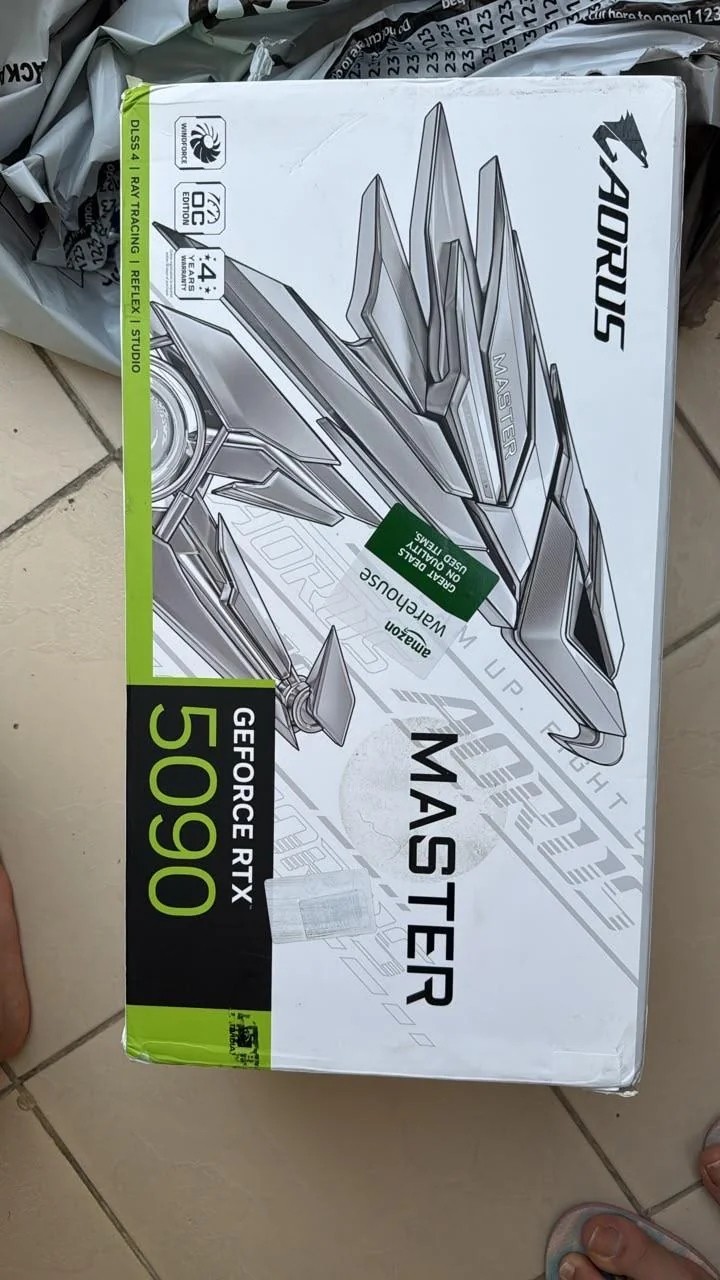
What was reported before and after delivery
The buyer says the shipping box arrived with minor surface wear. Because the item was listed as used, he did not treat that as strong evidence of a problem on its own. After opening the package, the accessories appeared normal, and nothing obviously alarming stood out at first glance.
The situation changed when he took the graphics card out. He reported that a small connector near the power interface had become loose, and several fan connectors on the back of the card were not seated. In his view, those signs suggested the card may have been opened earlier, and the missing internal core raised a more serious concern: that the highest-value chip may have been removed and the card reassembled.
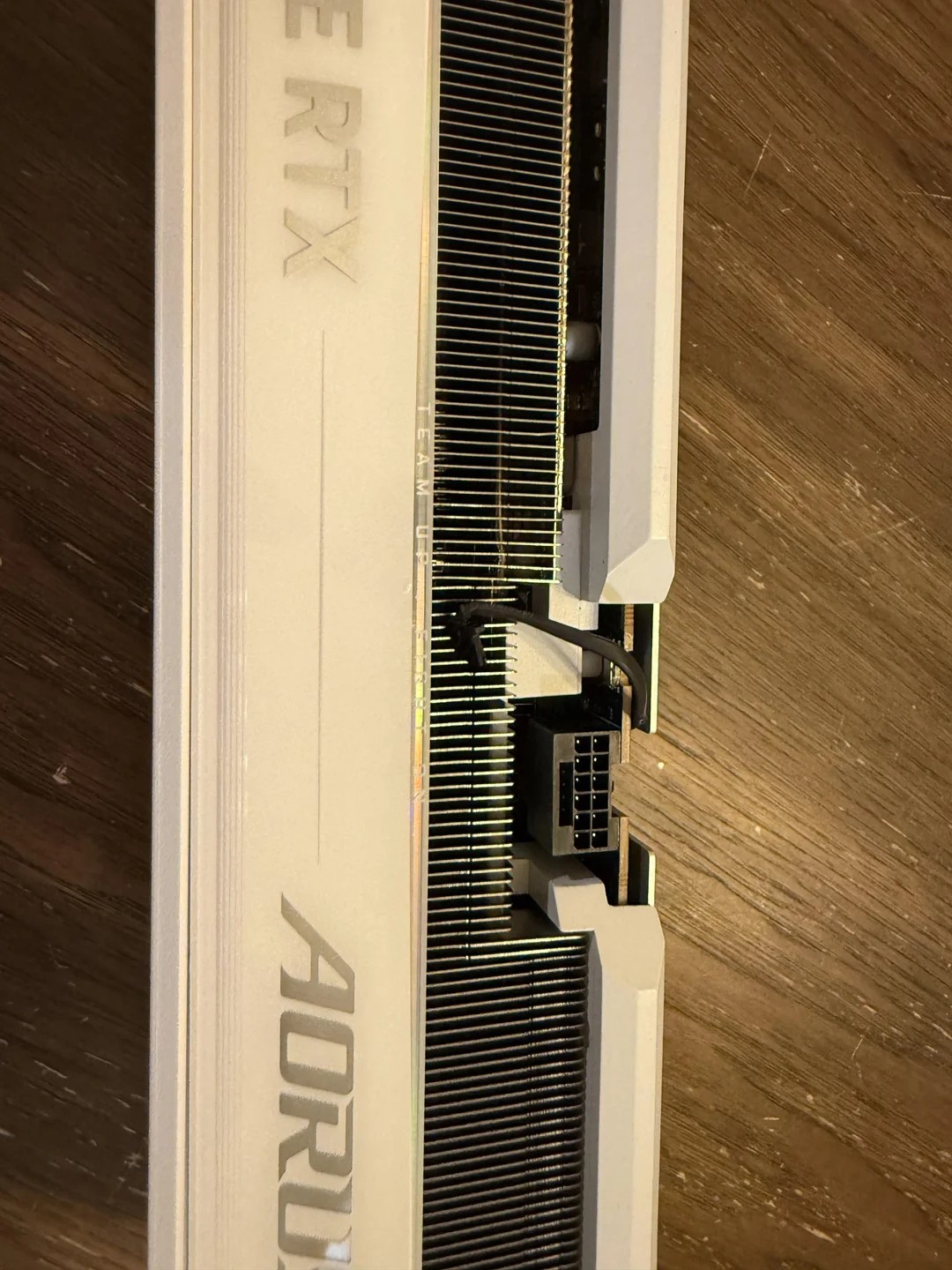
Why a teardown made the concern sharper
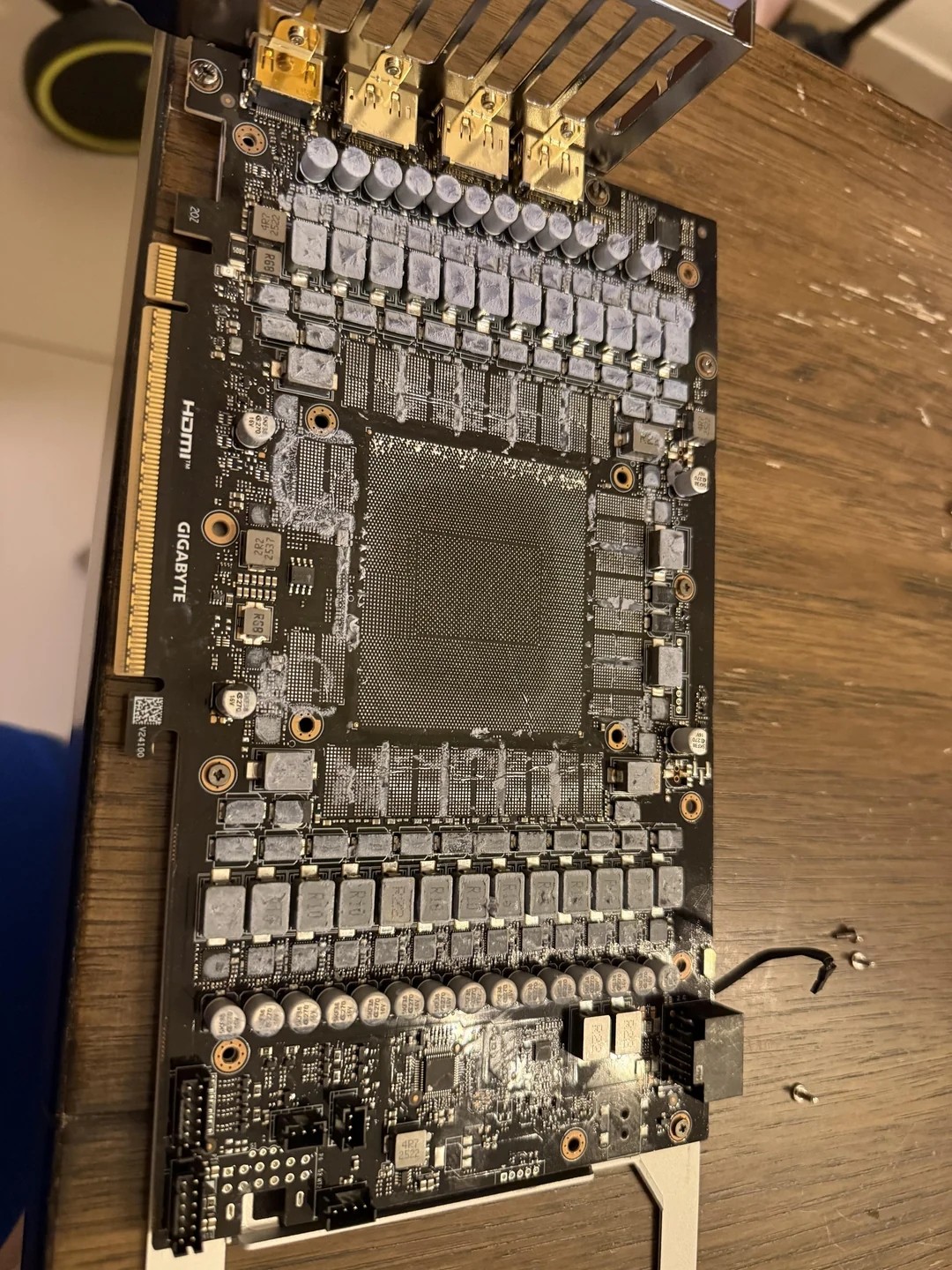
To check his suspicion, the buyer carried out a closer inspection. He says the screws holding the cooling assembly were unusually loose, which indicated prior disassembly rather than a factory-only process. He also observed thermal material residue around the cooler, while the GPU core chip was gone.
The complaint describes a pattern often discussed in English as a core-removal scam: someone obtains a new RTX 5090, disassembles it, removes the GB202 core and the GDDR7 memory modules using specialized equipment, then puts the empty PCB and cooling parts back together and returns the card. The buyer suggests this pattern may fit the card he received, although his observation and the platform's final verification outcome were not the same thing.
What the buyer thought about platform checks
The buyer argues that many inspection staff are not hardware specialists and may rely on external appearance before an item is relisted. He also says he had submitted a return request, but had not received a clear refund answer at the time of posting. That leaves the case in an uncomfortable middle zone: the customer has a visible concern, the product has already entered the resale flow, and the final remedy remains unresolved.
Why this story matters for everyday tech buyers
For most readers, the practical lesson is not that every used component is dangerous. It is that the value of a used electronic product can depend heavily on parts that are not obvious from the box, the accessories, or a quick visual check. A graphics card may still look like a graphics card after a core removal, just as a refrigerator may still look like a refrigerator without its compressor. The visible shell does not always prove the working heart is present.
It also highlights a common tension in technology commerce: trusted brand names reduce some risk, but they do not eliminate the need for careful receipt, inspection, and documentation. For general users, the goal is to create a clear record before anything is returned, so that any later claim is easier to explain.
Quick checklist: what to look for when a used card arrives
- Compare the packing condition with the listing description, but avoid assuming normal wear means normal internals.
- Check external connectors, especially power connectors and fan headers, for looseness or incomplete seating.
- Look for screws that seem stripped, uneven, or less tight than factory expectations.
- Note thermal paste residue that could suggest prior opening or reassembly.
- If the item is high value and the issue appears internal, consider whether opening it may affect warranty, return, or inspection options.
- Keep photos, videos, and listing screenshots in case a seller or platform needs evidence.
Common misconceptions
| Misconception | Why it can be misleading |
|---|---|
| An official used channel guarantees that every internal part is unchanged. | The report says the buyer trusted Amazon's official used channel, but his concern still required inspection and raised questions about platform verification. |
| If accessories and packaging look acceptable, the product is fine. | A missing GB202 core or removed GDDR7 memory would not be visible from packaging alone. |
| Only unfamiliar sellers can cause problems. | The complaint concerns a mainstream retail environment; the issue is not limited to one seller type. |
| A refund request means the case is automatically settled. | The buyer reported no clear refund answer at the time of posting, so the status remained unresolved. |
FAQ
Is the complaint proof that the RTX 5090 was definitely swapped?
No. The text presents the buyer's observations and his interpretation. He suspected that the GB202 core and GDDR7 memory had been removed, but the report describes his view rather than a final confirmed verdict.
Why are the GB202 core and GDDR7 memory so important?
The complaint says the core chip is the most valuable part. In a graphics card, the GPU core and memory are central to functionality and resale value; without them, the remaining board cannot work as the advertised product.
What did the buyer think failed in the resale process?
He suggested that platform checks may focus too much on appearance and that inspectors may not know enough about hardware internals to notice a missing core before relisting.
What should a reader do before accepting a used high-value item?
Document the item from the outside, note any obvious connector or screw issues, preserve the packaging and listing details, and use the platform's official return or claim process if a concern appears.
Action advice for general users
- Buy from familiar channels, but still inspect on arrival.
- Photograph packaging and product condition before changing the item's state.
- Report loose connectors, disconnected fan headers, loose screws, or unusual thermal residue to the seller or platform promptly.
- Ask for a written status update when a return or refund is pending.
- Do not assume a trusted retail brand removes all need for evidence.
Bottom line
The case turns a routine second-hand electronics purchase into a reminder about invisible risk. Amazon's official used channel, an RTX 5090, and a buyer who expected reliability ended up in a dispute over whether the GB202 core and GDDR7 memory had been removed. For general tech readers, the value of the story is practical: trust can reduce uncertainty, but arrival checks, documentation, and official return paths remain the best first defenses.