
RTX 5080 24GB Wait-or-Buy Guide: NVIDIA Design-Kit Gap and January 2027 Risk
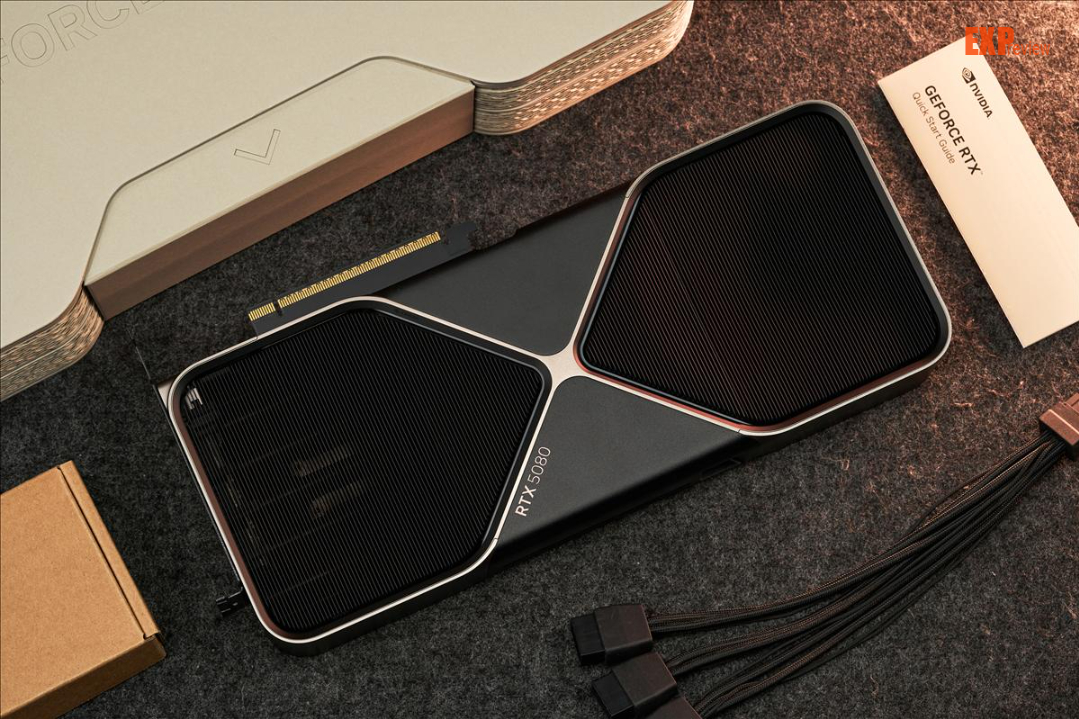
A graphics-card upgrade decision becomes much easier when you separate confirmed product facts from supply-chain chatter. The latest flashpoint in the GeForce RTX 50 series centers on whether NVIDIA can deliver a 24GB RTX 5080 variant as soon as next January, a date often discussed alongside January 2027, and what buyers should do while waiting for a firmer launch window. If you are planning a gaming PC, a local AI workstation, or a small rendering room, the practical answer is not simply "wait." It is to check memory demand, power capacity, cooling headroom, and how much uncertainty a missing design package can create for board partners.
What the report is really saying
High-end availability within GeForce RTX 50 series has been tight, with RTX 5090 series and RTX 5080 models frequently described as scarce. The transition plan circulating in channel reports is that GB202, the GPU used in RTX 5090 series, will move away from consumer flagship gaming and be reserved for RTX Pro series workstation graphics cards. At the same time, NVIDIA is expected to replace current RTX 5080 with RTX 5080 24GB, positioned as a new high-end gaming card at a higher price than existing RTX 5080.
Benchlife reports the schedule gap: despite broad awareness of the replacement direction, NVIDIA has not yet provided design data to partners. That matters because partner board layouts, cooling choices, component procurement, and validation normally need a baseline before a retail launch can be promised. According to the FPS Review, board partners are worried about launching the product by January because the design kits have not arrived, and shortages across memory and other components are adding pressure. In this reporting, a January 2027 retail appearance looks difficult, and first quarter of 2027 is the more plausible window. There are also reports that October was the original timing expectation for materials to move, yet the handoff did not happen.
Spec sheet: what changes and why it matters
Leaked specifications describe the RTX 5080 24GB as a higher-frequency version built around GB203-450, with GDDR7 memory capacity lifted to 24GB through 3GB modules. The practical impact is not only more VRAM, but also higher power draw and a wider memory bandwidth target, which changes the kind of PC that can absorb the card without thermal or electrical compromises.
| Spec item | Change |
| Memory module | 24Gb (3GB) GDDR7 |
| GPU | GB203-450 |
| Memory speed | 30Gbps to 32Gbps |
| Memory bandwidth | 960GB/s to 1024GB/s |
| Total board power | 360W to 415W |
For reference, TechPowerUp's GPU database lists the current RTX 5080 at 360W total graphics power, while MSI's power-supply guidance says an RTX 5080 gaming system generally starts at 850W and that 1000W gives more headroom for a high-performance CPU, overclocking, or liquid-cooling hardware. A jump to 415W does not make a 415W card impossible on an existing build, but it does make an underpowered or aging 750W supply a riskier pairing. It also raises the value of case airflow, because more heat inside a dense 3-fan cooler can show up as clock instability during long AI, ray-tracing, or 4K sessions.
Wait, buy now, or build for uncertainty? A practical decision guide
Because RTX 5080 24GB is still a rumor-backed transition plan rather than a confirmed retail date, the best move is to decide what your system needs this month, not what it might need if a product arrives later. Use the checklist below to make that call.
- Buy now if your current GPU is failing, if you are building for a fixed deadline, or if your target workload fits 16GB memory and you already have a quality 850W or 1000W power supply.
- Wait if you are running large local language models, 4K texture packs, heavy video editing, or long render jobs where 24GB would materially reduce out-of-memory errors and repeated asset loading.
- Reassess if you find an unusually good price today and your cooling is already strong; a higher-priced card with uncertain timing may erase the savings.
- Delay a power-supply purchase if your PSU is below the 850W guideline mentioned by MSI, because the 415W board-power target suggests more electrical headroom is useful.
- Monitor official NVIDIA GeForce pages and partner newsrooms rather than social-media leaks; PCMag reported that NVIDIA had removed RTX 5080 listings from its online store amid constrained supply, which suggests a product transition may be underway but does not confirm a January 2027 launch.
- Check CES 2027, which the official CES website lists for January 6-9, as a plausible announcement stage only if the design material issue is solved.
Five questions to ask before clicking buy
- Does my workload actually need 24GB, or only faster bandwidth? A larger frame buffer helps with model size, 8K texture work, and long timelines, while bandwidth helps frame-rate consistency.
- Can my case physically handle a higher-power RTX 5080 card? More board power often means larger coolers, longer cards, and stronger intake needs.
- Is my power supply rated for transient spikes, not just average wattage? A supply may survive a 415W card on paper but fail during sudden load steps.
- Am I chasing a date or a product? next January and January 2027 are planning anchors; the actual launch still depends on board-partner readiness.
- Will a used or older GPU upgrade bridge the gap? If your present system is merely slow, a modest cooler replacement, BIOS update, or driver rollback may restore enough value to wait.
Common misconceptions to avoid
- A 24GB card automatically means a 24GB performance card. Memory capacity helps solve workload limits, but core frequency, GB203-450 behavior, 30Gbps versus 32Gbps speed, and 960GB/s versus 1024GB/s bandwidth shape day-to-day responsiveness.
- A CES stage guarantees a retail launch. CES 2027 can showcase a product, but design materials, memory availability, and factory testing still decide when shelves fill.
- Higher price automatically means higher value. RTX 5080 24GB may cost more, but the better question is whether it removes a specific bottleneck in your work or play.
- GB202 disappearing from gaming means NVIDIA is exiting high-end GPUs. The reported plan points toward a segmentation shift toward RTX Pro series workstation graphics cards, not the end of GeForce RTX 50 series.
- Every 750W PSU is safe for a 415W GPU. It can be, but only if the rest of the system is low-power, the supply is recent, and the card's power connector cabling is done properly.
FAQ
Can RTX 5080 24GB arrive next January?
It is possible but not assured. Benchlife and board-partner reporting say design materials had not been provided as of the latest checks, which makes a tight retail timetable harder. The safer planning assumption is that first quarter of 2027 is more likely than January 2027, while October has already passed without the handoff expected by some channel reports.
Is the RTX 5080 24GB replacing the RTX 5080?
Reports say yes. The stated direction is for NVIDIA to use RTX 5080 24GB to replace current RTX 5080, while GB202 in RTX 5090 series shifts toward RTX Pro series workstation graphics cards.
Do I need 24GB for gaming?
Not always. For many 1080p and 1440p games, existing high-end GeForce RTX 50 series cards already have enough video memory. 24GB becomes more attractive for 4K with very large mods, AI-assisted creation tools, 3D scenes, and professional content workloads.
What power supply should I plan for?
Use the 360W figure as today's baseline and the 415W figure as the upgrade signal. An 850W system supply is a practical starting point for RTX 5080 class builds based on MSI guidance; 1000W is more comfortable if you add a power-hungry CPU or keep storage, fans, and RGB hardware busy. If your supply is older, check the manufacturer warranty and ATX version before assuming it can absorb a higher-power card.
Action plan: what to do in the next four weeks
For a clear launch window, the missing piece is not more speculation about 24GB versus 16GB; it is a verified partner readiness signal. Until Benchlife and other channel sources confirm that design information has reached board partners, buyers should treat RTX 5080 24GB as a likely first quarter of 2027 planning target, with next January and January 2027 retained as watch dates rather than purchase triggers.
MyTechDailyNews recommendation: if your build is urgent, lock in a current GPU with a quality 850W or 1000W supply. If your system already has cooling and electrical headroom, waiting may make sense, but only if you genuinely need 24GB and can absorb the risk that a CES reveal does not equal immediate retail stock. The practical takeaway is to build for the workload you have, verify the power supply before the card arrives, and let partner handoff news—not a calendar month—decide when to buy.