
MyTechDailyNews General: Reusing Server Memory to Ease AI Infrastructure Bottlenecks
When AI systems are discussed in the media, the conversation often begins with accelerators, racks, cooling, or campus size. On MyTechDailyNews, we look at a less visible but increasingly decisive layer: the memory that lets those systems actually run. The practical question for operators is no longer only whether GPUs can be purchased, but whether enough memory can be installed, priced, and scheduled. That shift matters beyond specialist labs because AI services increasingly depend on the same production pipelines that consumer devices, software platforms, and business applications already use.
One widely reported estimate from the Center for Strategic and International Studies says that data centers will consume 50% to 70% of all memory chips produced this year. In the U.S., supply still depends on a limited number of manufacturers, and new factories to expand output can take years. Those two facts create a familiar pattern for readers of General: a high-profile technology race can be slowed by a quiet supply constraint.
Because memory appears in every server, a shortage can touch more than one product category at once. When conventional dynamic random access memory, or DRAM, becomes scarce, AI platforms feel the squeeze. When prices rise, budget owners see the squeeze. When lead times extend, deployment teams see the squeeze. The result is not simply "not enough chips"; it is a chain of decisions about capacity, cost, reuse, and timing.
What Is Really Limiting AI Buildouts?
For a broad audience, the most important takeaway is that AI infrastructure is a system, not a single component. High-bandwidth memory, HBM, sits next to the accelerator and provides very high bandwidth; an HBM stack can deliver over 1 terabyte per second. Conventional DRAM is cheaper and slower; a DDR4 module tops out at 25.6 gigabytes per second. If one layer is missing, the whole machine may not ship, even when other parts are ready.
Why Reuse Has Become a First-Class Strategy
The article’s central idea is that operators can keep projects moving by recovering usable memory from servers that are being retired, refreshed, or reconfigured. This is not a brand-new trick, but it becomes a design priority when new supply is limited. When organizations make reuse a design requirement, three advantages emerge. The first three benefits are capacity, HBM conservation, and a more modular refresh model.
Advantage One: Adding Capacity Before New Supply Arrives
Existing fleets often contain memory that was installed during earlier upgrade cycles. Instead of discarding it, teams can redeploy it through Compute Express Link, CXL, memory expansion devices. CXL is an open interconnect standard built on PCIe. Rather than relying only on the CPU’s native memory channels, expansion devices attach memory over PCIe. This creates a newer-server path that can borrow capacity from older memory generations.
A single expansion controller can host a dozen reclaimed modules and more than one terabyte of memory. Some controllers also add in-line compression, which nearly doubles usable capacity. The practical meaning is simple: one module that is already in the building can reduce the need to buy a new module from a constrained market.
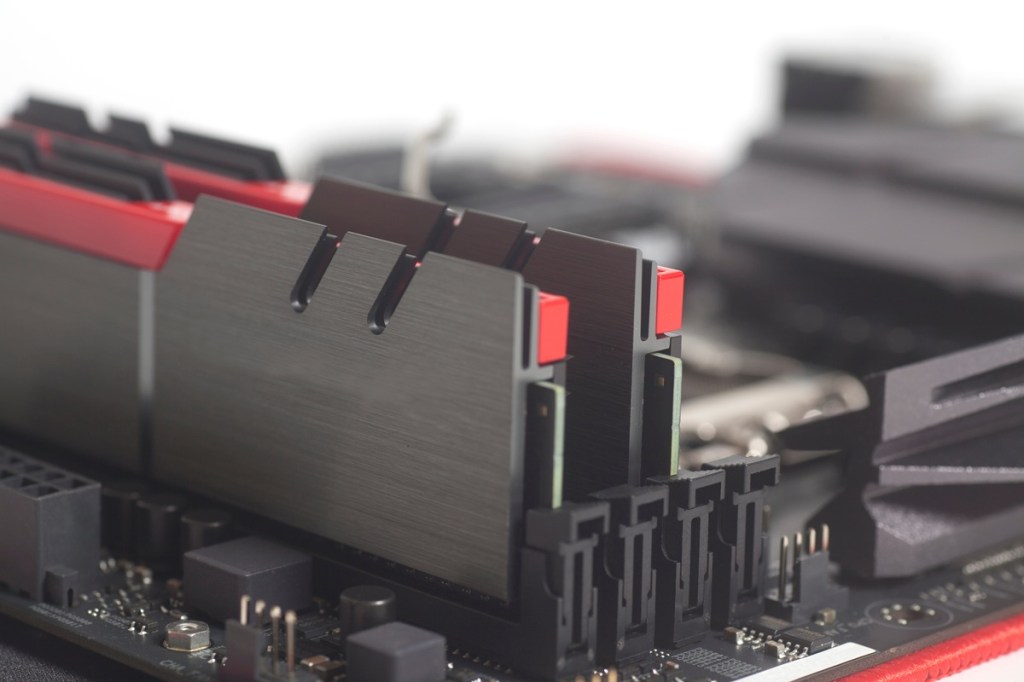 Reusing memory in new AI systems supports adding capacity before new fabs are ready, extending scarce HBM supply, and ending the full-system refresh cycle (Source: Adobe Stock).
Advantage Two: Stretching Scarce HBM Across More Workloads
Within the data center, HBM is often the most constrained memory type. Its vertically stacked design is more expensive and slower to manufacture than conventional memory. For systems or GPUs designed to use HBM, there is no substitute. That scarcity makes each HBM-equipped accelerator valuable enough to warrant careful placement.
A useful way to think about it is to match memory speed to workload sensitivity. Services such as caching, data preprocessing, and retrieval may not need the fastest memory tier. Those services can run on reclaimed memory, preserving HBM for latency-sensitive training and real-time inference. Matching system sizes to workloads also helps prevent expensive components from being overprovisioned across large server fleets.
CXL can introduce another layer of expanded and pooled memory while maintaining data coherence across the hierarchy. Older modules fit naturally in that layer. The trade-off is that compared with directly attached DRAM, CXL-attached memory introduces some latency. Operators must test configurations against real workloads before committing. Qualifying older modules on new platforms in advance means capacity is available when procurement becomes tight.
Advantage Three: Reducing Whole-System Replacement
Servers contain subsystems that improve at different rates. In many refresh cycles, a whole machine is retired even though only one part has become obsolete. Modular, disaggregated designs allow GPUs, CPUs, and memory chips to be replaced on separate schedules. A well-designed server can support several component generations, so memory already in the fleet can remain in service while accelerators are updated.
Separating memory from every accelerator upgrade reduces the amount of new memory operators must buy at shortage prices or wait for because of long lead times. It also lowers electronic waste and Scope 3 emissions linked to manufacturing and sourcing new components, supporting sustainability goals that many operators have set.
Common Misconceptions About AI Memory Supply
Even without deep specialist knowledge, readers should be aware of misconceptions. Misconception one: the issue is only about HBM. The source says HBM is the most constrained memory type, but conventional DRAM is also affected because every server uses it. Misconception two: reuse is simply unplugging a module and installing it anywhere. CXL attached memory adds latency, and older modules must be qualified on new platforms through testing against real workloads. Misconception three: adding memory expansion means buying a complete new server. The article describes expansion devices that can use older memory in newer systems and avoid one-off adapter projects when platforms support open interconnect standards and reserve layout space.
FAQ: General Questions Readers Often Ask
Q: Why does memory matter so much for AI? A: Memory is not optional glue; it is part of the compute path. HBM and DRAM store data the system needs close to the processors. If a machine lacks required memory, GPUs, server enclosures, and data center capacity may be ready but cannot be deployed.
Q: Is the shortage a temporary news cycle? A: The Center for Strategic and International Studies estimate shows a large share of memory chip production being absorbed by data centers. New factories can take years to expand output, so supply cannot adjust quickly. Memory supply will eventually catch up with demand, but until then reuse and design choices matter.
Q: What is CXL in plain language? A: CXL, or Compute Express Link, is an open interconnect standard built on PCIe. For capacity planning, it lets memory attach through an expansion path rather than only through the processor’s native channels, creating a place for older modules to contribute to newer systems.
Q: Does compression solve everything? A: No. It can nearly double usable capacity when a controller supports in-line compression, but validation and workload testing still decide whether the configuration is appropriate.
Q: What does this mean for everyday technology users? A: It means AI service growth can depend on components that are less visible to consumers. When supply is tight, operators may prioritize latency-sensitive services, adjust rollout schedules, or use more efficient memory layering. That is the kind of General-column issue readers should follow beyond headlines about model size.
Action Checklist for Teams Planning the Next AI Refresh
- Treat memory as a scheduling dependency, not a footnote in the bill of materials.
- Design platforms with memory compatibility from the beginning, including support for open interconnect standards and reserved layout space for expansion devices.
- Qualify older modules on new platforms in advance, before procurement becomes tight.
- Test CXL-attached configurations against real workloads because latency differs from directly attached DRAM.
- Match system sizes to workloads to prevent expensive HBM-equipped machines from being overprovisioned.
- Move refresh decisions toward modular subsystem replacement rather than whole-system retirement.
- Track electronic waste and Scope 3 emissions as part of reuse decisions, especially when sustainability goals are already set.
Conclusion: Keep Building by Reusing What Already Exists
The conclusion for a broad audience is straightforward: AI infrastructure does not stop at the model layer. It is a supply-chain system in which one constrained part can hold back a large project. If operators plan for reuse, they spend less on total infrastructure when supply chains are least forgiving, and they gain more control over timelines, because fewer deployments depend on one allocation from one supplier.
Until memory supply catches up with demand, hardware reusability should be treated as a primary engineering priority. For MyTechDailyNews General readers, the story is not merely about a niche component; it is about how practical constraints shape what services become available, how fast, and at what cost.