
Hands-On Checklist: Inside the Humble Tech Book Bundle: Raspberry Pi Cyberdecks, Retro Games, and More Before 1 December
A Raspberry Pi 5 has been sitting on my desk for weeks, and the pile of maker PDFs next to it keeps growing. Short answer first: the bundle is a 15-book library of 15 e-books, five new books included, priced from £4 ($5) between 10 November and 1 December at 7pm GMT (11am PT), and £19 ($25) unlocks the full shelf. Below is my hands-on read — which tier to take, how to actually finish a build with these files, and where the collection disappoints.
What is in the 15-book library?
Conclusion up front: treat this as a build-and-make shelf, not a programming course. The titles lean toward physical projects — portable machines, emulation boxes, sensor rigs — with the occasional reference manual for absolute beginners. The named highlights are Guide to Cyberdecks 2027, Guide to Retro Gaming, Raspberry Pi Official Annual 2027, Raspberry Pi Book of Making 2027, AI Projects with Raspberry Pi and the Official Raspberry Pi Beginner’s Guide, rounded out by earlier-year Raspberry Pi Press titles.
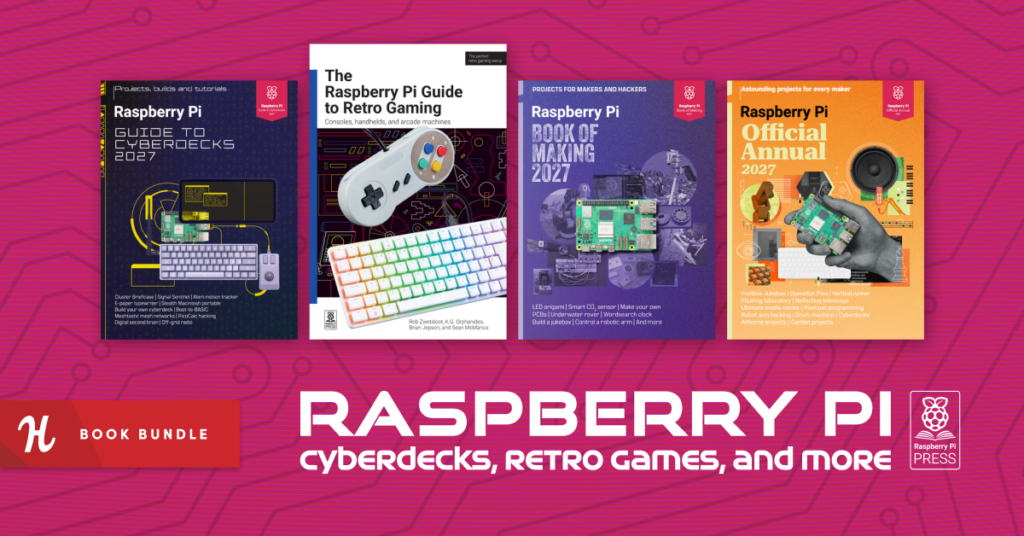
| Book | Best for | Practical note from my reading |
|---|---|---|
| Raspberry Pi Guide to Cyberdecks 2027 | Portable, keyboard-first builds with a cyberpunk aesthetic | Bundle-only until its estimated official publication in early 2027 |
| Raspberry Pi Guide to Retro Gaming | Turning one device into a multi-era games box | Useful even if you only want a living-room console |
| Raspberry Pi Official Annual 2027 | Overview of the current hardware line-up | 200 pages; doubles as a buying guide |
| Raspberry Pi Book of Making 2027 | Weekend projects mixing craft and code | Best read on a tablet, not a phone |
| AI Projects with Raspberry Pi | Vision and on-device inference work | Some chapters assume accelerator hardware |
| Official Raspberry Pi Beginner’s Guide | First-time users, children, classrooms | The safe starting point if the rest looks intimidating |
How do the pay-what-you-want tiers work?
Three numbers decide everything here. The entry tier is £4 ($5); the full-shelf tier is £19 ($25) or more, which unlocks all 15 titles; and the nominal combined value quoted for the set runs to £255 ($341). Every purchase supports the Raspberry Pi Foundation, which describes itself as an independent, global charity aiming to let all young people realise their potential through computing and AI (raspberrypi.org).
- Open the Humble Bundle listing before 1 December at 7pm GMT (11am PT) — the window closes and the exclusive titles disappear with it.
- Choose your price. If you want the complete library, type £19 ($25) rather than clicking a preset tile.
- Check the allocation screen. Humble states plainly that "you can even choose how your money is divided - between the creators, charity, Humble Partners, and Humble Bundle" (humblebundle.com/about), and the default split is not always the maximally generous one.
- Download both PDF and ePub copies of anything you care about; the files are DRM-free, so they live on your own hardware afterwards.
- Read on whatever you already have: computers, e-readers, iPads and smartphones all handle these formats.
One comparison worth putting on the table: the £19 ($25) shelf costs less than a slice of the hardware it documents. Raspberry Pi sells the Raspberry Pi 500+ all-in-one keyboard computer at $200, with the Desktop Kit at $220 (raspberrypi.com news, September 2025). Books are the cheap part of this hobby.
Which titles are worth the download?
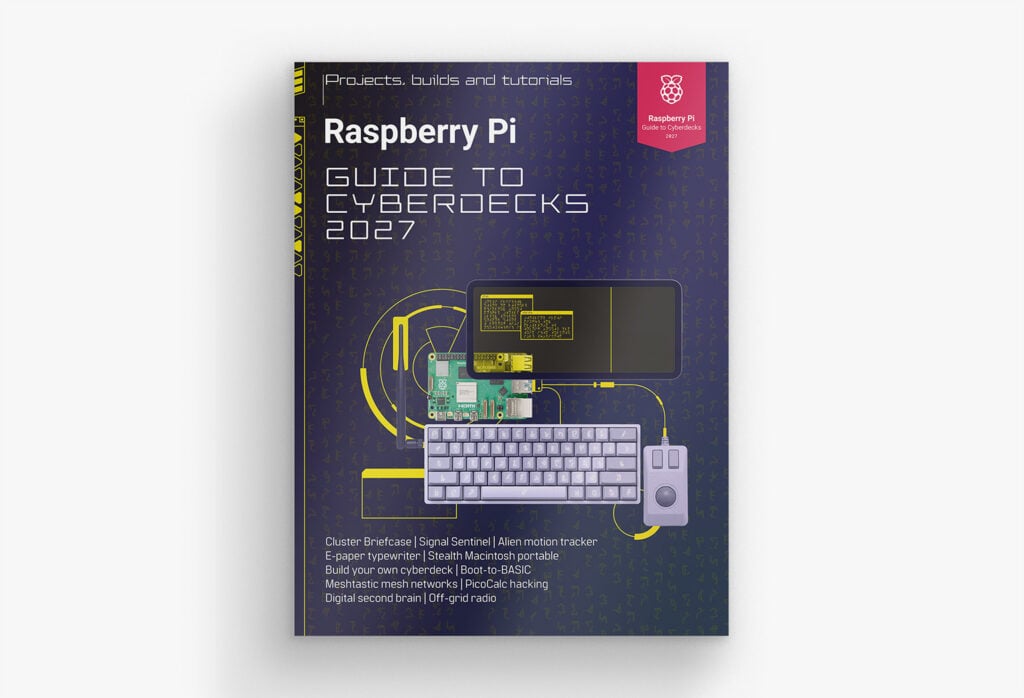
Raspberry Pi Guide to Cyberdecks 2027
This one is a Humble Bundle exclusive, and it is the reason the listing exists. Cyberdecks are portable, hackable, deliberately low-tech machines born from the cyberpunk universe — high-tech gadgetry married to dystopian styling. The build brief is simple: a small screen, ideally a real keyboard, and a chassis that looks like a laptop reimagined by retrofuturism. Homemade versions are everywhere right now, and Raspberry Pi sits at the centre of most of them. The book tours notable builds and then walks you through making your own; until the estimated official publication date in early 2027, this bundle is the only way to obtain it.
Raspberry Pi Guide to Retro Gaming
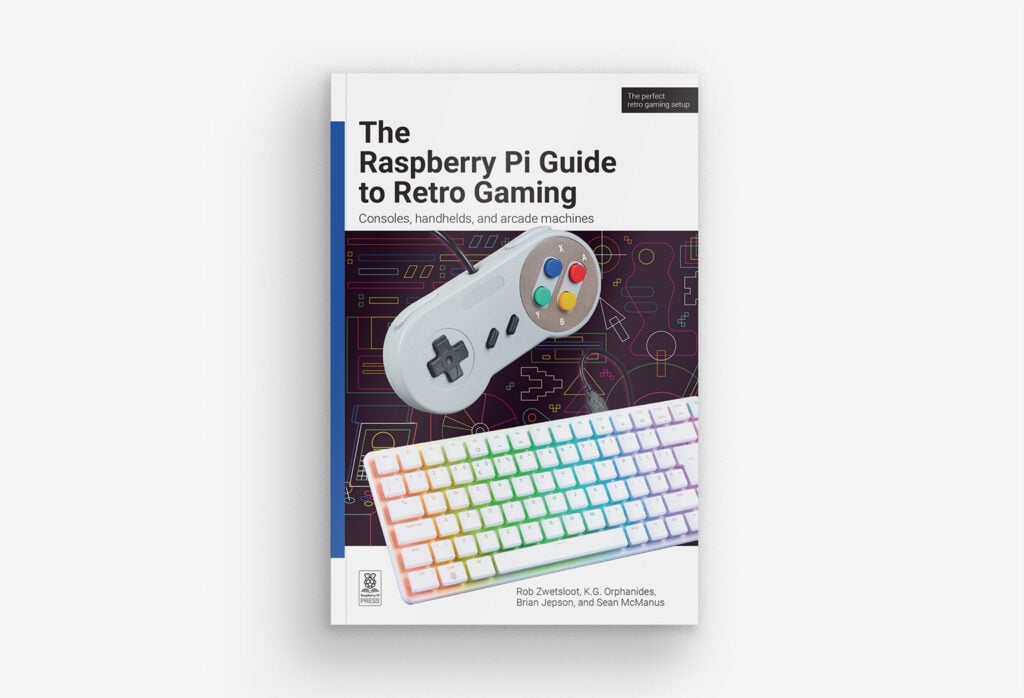
If your aim is comfort rather than soldering, start here. A Raspberry Pi makes a tidy home retro setup, and enthusiasts keep choosing it because everything can run on one device instead of the roomful of consoles and computers we owned in the 80s and 90s. The chapters cover playing old favourites, building a pocket handheld for gaming on the move, and going all the way to a full-size arcade cabinet. My honest note: the setup chapters move fast, so budget an evening for controller pairing and display scaling rather than fifteen minutes.
Raspberry Pi Official Annual 2027
This is the reference volume of the set. It gathers tutorials, project showcases, guides and product reviews from the pages of Raspberry Pi Official Magazine, in 200 pages covering Raspberry Pi 500+, Raspberry Pi 5, Raspberry Pi Pico, Raspberry Pi Zero 2 and more. Whether you are new to Raspberry Pi or simply widening your maker horizon, it works as a "what should I build next" browser. I keep it open on a tablet while shopping parts, because it is the fastest way to match a board to a project.

Raspberry Pi Book of Making 2027
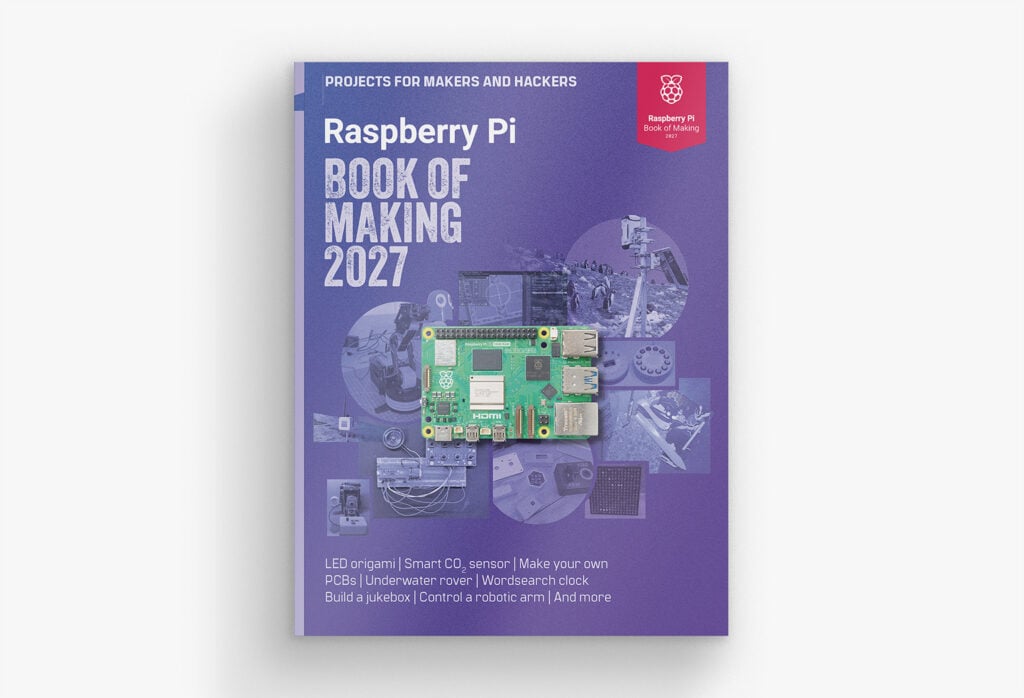
The premise of Book of Making 2027 is that technology is not only something you buy; it is something you can build. Readers 3D-print moulds for personalised soap, drive a robot arm, stitch sensors and reactive LEDs into an old quilt, or aim at an underwater rover, a wordsearch clock, a digital jukebox. Modern making asks you to think digitally and physically at the same time — so fire up the 3D printer, the soldering iron or the Raspberry Pi and start.
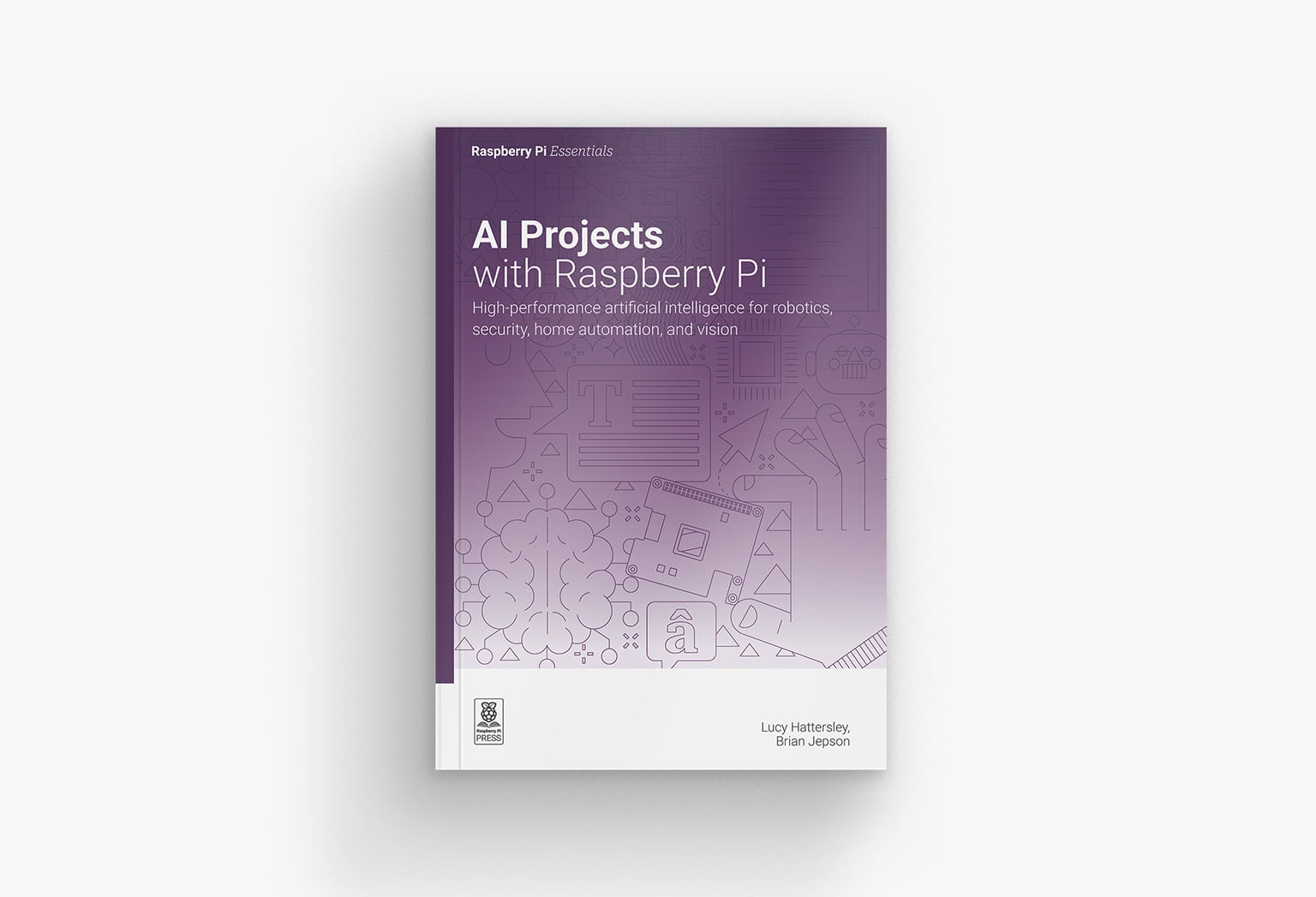
AI Projects with Raspberry Pi
Pairing this hardware with artificial intelligence changes how a project interacts with the world: computer-vision models turn your surroundings into a playground, environmental shifts can be predicted and reacted to, and people engage with the build more naturally. AI Projects with Raspberry Pi explains running models on the CPU alone and on the Raspberry Pi AI HAT+ and AI HAT+ 2 neural network accelerators, with and without extra hardware. Practical budgeting note from the official store: the AI HAT+ has sold from $70 in 13 TOPS and 26 TOPS variants (raspberrypi.com/products/ai-hat), while the AI HAT+ 2 arrived in January 2026 at $130 with a Hailo-10H accelerator and 8GB of dedicated RAM for on-device generative models. Reading the book first is the cheaper way to find out whether you need either board.
How do I turn downloads into a finished build?
My five-step routine for any project book in this shelf:
- Pick one build before reading anything else, otherwise the 15-book library becomes procrastination with a warranty.
- List parts from the book's bill of materials and check them against what you already own — boards, power supply, storage, one switch, one display.
- Flash and test the operating system first, and only then cut, print or drill anything.
- Work in checkpoints: boot, input, display, case. When a build fails, you know which stage to revisit.
- Photograph the finished device and write down the two things you would change — that note is worth more than the build itself.
Common misconceptions I want to correct
- "£4 ($5) buys the books." It buys the lower tier; the complete shelf of 15 titles needs £19 ($25) or more.
- "These are paper books." This is an e-book bundle in PDF and ePub — no print copies ship.
- "Buying the bundle buys me a computer." No hardware is included; several guides assume you already own a board.
- "DRM-free means anything goes." You may read and move your own copies freely; the copyright in the text still sits with the publisher, and game content for a retro build is your responsibility to source legitimately.
- "I can browse it later." Listings expire, and the exclusive cyberdeck title is only obtainable here until its estimated official publication in early 2027 — download, don't bookmark.
Where the collection falls short
Being blunt: image-heavy layouts are awkward in PDF on a small phone screen, so keep ePub files for commuting and open the PDF at the workbench. Some chapters skim the operating-system setup that a first-time user genuinely struggles with, which is why the Official Raspberry Pi Beginner’s Guide matters in this set. And while the mix spans Raspberry Pi 500+ down to Raspberry Pi Zero 2 and Raspberry Pi Pico, there is no single volume that teaches electronics from zero — expect to look up sensor wiring as you go. That is analysis of the shelf as a learning path, not a claim about any individual title's quality.
FAQ
How long is the bundle available?
The run is from 10 November to 1 December at 7pm GMT (11am PT). Files you have already bought stay yours after that date.
Is £4 ($5) worth it, or should I pay £19 ($25)?
Pay £19 ($25) if you intend to build more than one project. Against the £255 ($341) aggregate value of the set, the full tier is the only option that makes the "everything" argument; pay £4 ($5) only if the cyberdeck book alone is what you came for.
What do I get in the five new books beyond the named ones?
The listing includes five new books published this year alongside earlier titles, with Guide to Cyberdecks 2027 as the exclusive; check the Humble Bundle page for full descriptions and previews of all 15 titles.
Can my kids use these without me?
The beginner guide and the annual are the friendliest starting points, but any soldering, power-tool or mains-adjacent step should be supervised.
Should you buy it?
Yes — with conditions. If you already own a board and have one unfinished idea in a drawer, £19 ($25) for the complete 15-book library is the least expensive way to get that project out of the drawer: cheaper than a keyboard computer, cheaper than one wrong sensor order. If you have never touched a Raspberry Pi, still buy it, but start with the Official Raspberry Pi Beginner’s Guide and one afternoon of work. If you were hoping for hardware, a printed shelf or deep electronics theory, this is not that purchase — skip it. Before the window closes on 1 December at 7pm GMT (11am PT), download both formats, pick one build, and put the parts list on the desk.
For detailed descriptions and previews of every included title, the Humble Bundle listing is the primary stop; you can also browse the wider catalogue on the Raspberry Pi Official Magazine website, where back issues of the magazine can be downloaded.
Sources
- Raspberry Pi Press and Humble Bundle bundle listing: https://www.humblebundle.com/books/microcontroller-classics-and-more-make-books
- About Humble, pay-what-you-want and charity allocation: https://www.humblebundle.com/about
- Raspberry Pi 500+ launch pricing: https://www.raspberrypi.com/news/the-ultimate-all-in-one-pc-raspberry-pi-500-plus-on-sale-now-at-200/
- AI HAT+ pricing and TOPS options: https://www.raspberrypi.com/products/ai-hat/
- AI HAT+ 2 introduction, January 2026: https://www.raspberrypi.com/news/introducing-the-raspberry-pi-ai-hat-plus-2-generative-ai-on-raspberry-pi-5/
- Raspberry Pi Foundation mission statement: https://www.raspberrypi.org/
Reviewed for MyTechDailyNews General by Hugo Phillips, Tech Daily — questions and build photos welcome at hello@techdaily.com.