
MyTechDailyNews General: A Cambridge Office Net Zero Check-In on Raspberry Pi Ltd's Solar, EV and Gas Plans
This MyTechDailyNews General update examines how Raspberry Pi Ltd has reported progress on its net zero roadmap in Cambridge. The story is useful not because it adds another environmental slogan, but because it shows a sequence of visible operations choices: rooftop generation, carport expansion, charging for staff, measurement of base load, and staged removal of gas. It also shows the limits of one-off upgrades, which makes the update readable for people outside facilities engineering.
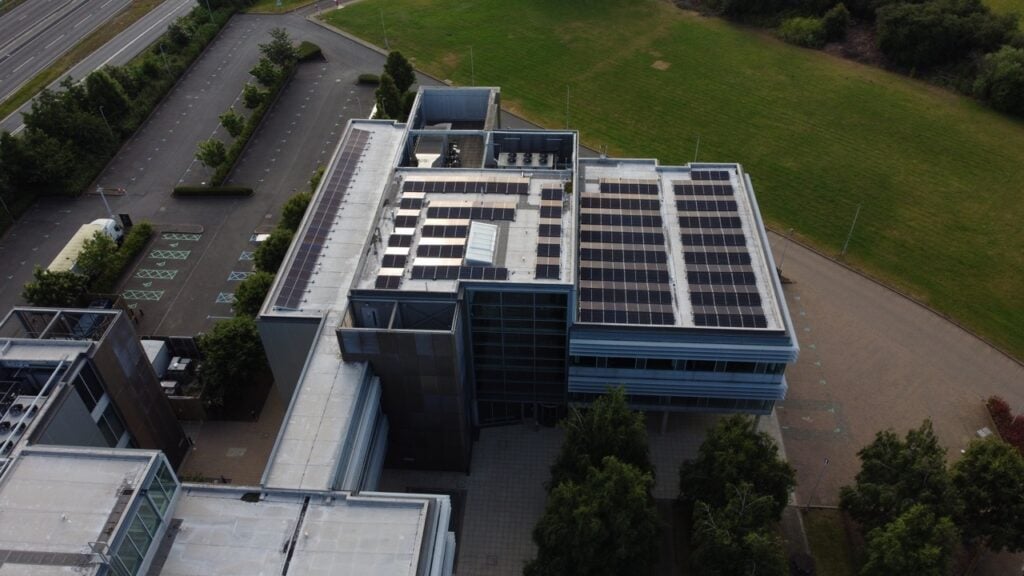 The 85.5kW rooftop array at Pi Towers is one visible marker of the 2025 plan and the four ambitions set in it.
The four ambitions behind the plan
In a 2025 outline, Raspberry Pi Ltd set four ambitions for its Cambridge estate: add solar PV capacity while reducing electricity consumption, introduce and encourage EV transport for staff, turn off the gas, and reduce electrical base load. The updated report revisits each of those commitments with operational numbers rather than broad claims.
Solar capacity: what the first array already produced
The first installed solar PV array in Cambridge went live in June 2024. The company reports 85.5kW of capacity and states that the panels produced 192,000kWh over 26 months. Based on that performance, the report says a full return on investment is expected around 2.7 years. Those figures make the investment easier to understand for readers who care about timing and visible payback, not just emissions language.
The next change is larger: a 219kW solar carport is being added, and the combined system will reach 304kW across the site. Raspberry Pi Ltd says that amount is enough to cover 63% of predicted summer electricity demand. The expansion is supported by Stanhope, the agent managing the landlord's side of the office environment.
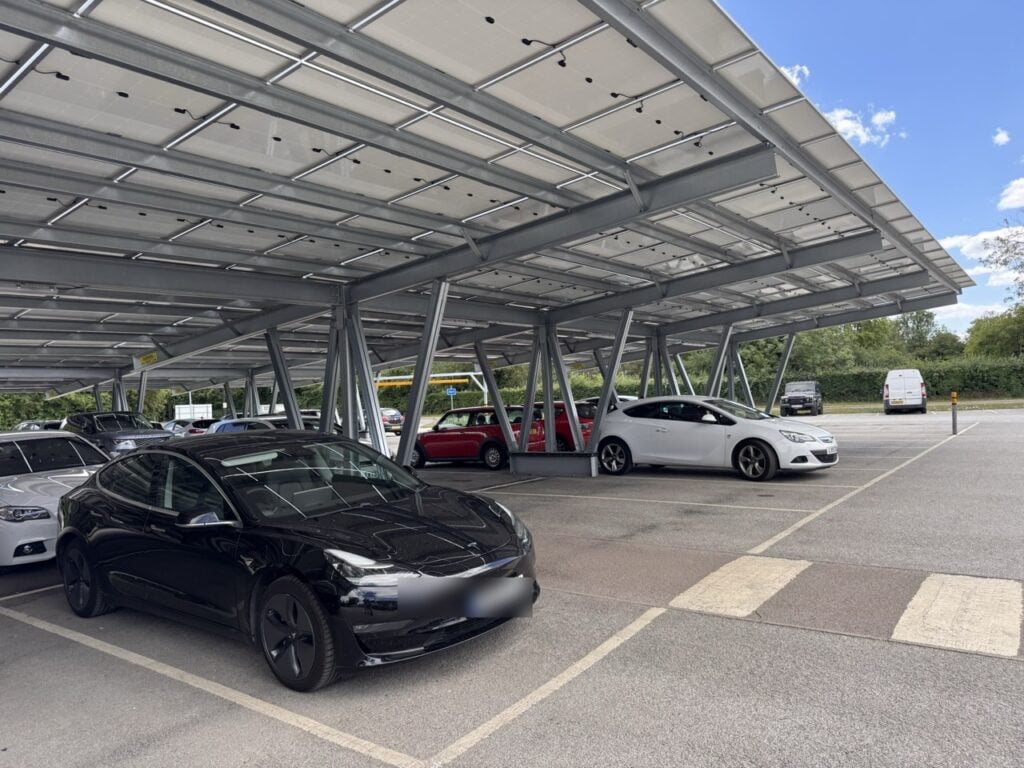 The proposed 219kW solar carport provides covered parking while generating energy, and its inclusion lifts the combined array to 304kW.
The report then answers a question a reader may have: But what about the shortfall? It says the company partnered with Granular Energy, an emerging provider, to procure 100% renewable energy, with enhanced certificate traceability intended to address the remaining Scope 2 emissions.
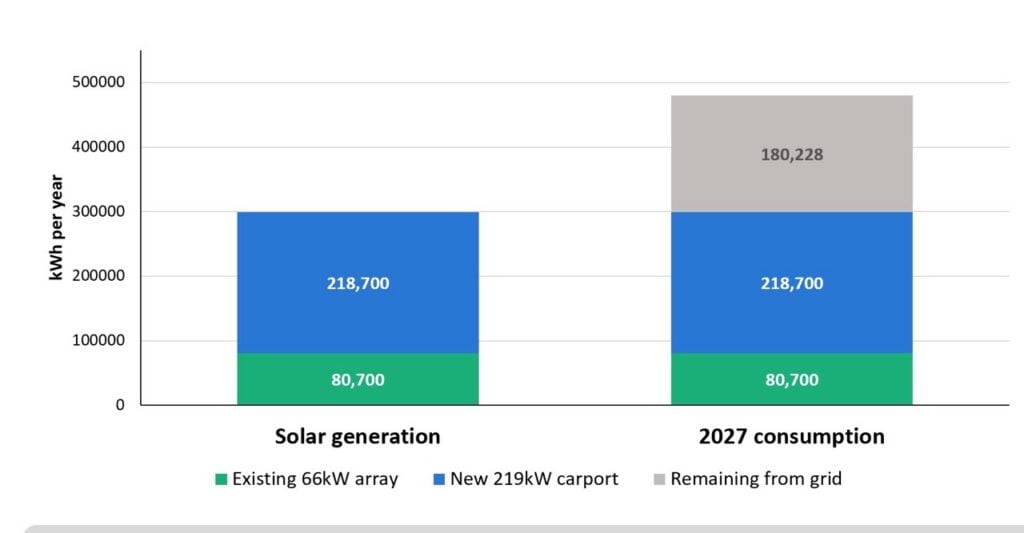 The solar chart compares generation with 2027 predicted consumption and shows how the combined 304kW array covers 63% of summer demand.
EV charging: from a small parking sample to staff uptake
Transport progress is also reported in simple numbers. In August 2024, 24 Easee chargers were installed, and a salary-sacrifice EV scheme was introduced later. The earlier update counted 11 EVs in the car park. The new update says nearly 60 passes have been issued to staff, and 20 cars were charging at the time of writing. A second bank of 24 chargers is planned as uptake grows. The point for everyday readers is that charging hardware and staff incentives need to move together; one without the other can leave capacity unused or queues forming.
Base load: why switching things on can still be expensive
The report notes that electrifying a building does not automatically reduce base load. This is the point many non-specialists miss: new electric equipment can be cleaner than gas equipment, but it still consumes power. To understand that consumption, Raspberry Pi Ltd used Raspberry Pi 4 and 5, open source Home Assistant software, and Emporia clamping technology to monitor circuits and main supplies. That allowed the team to build detailed snapshots of energy use.
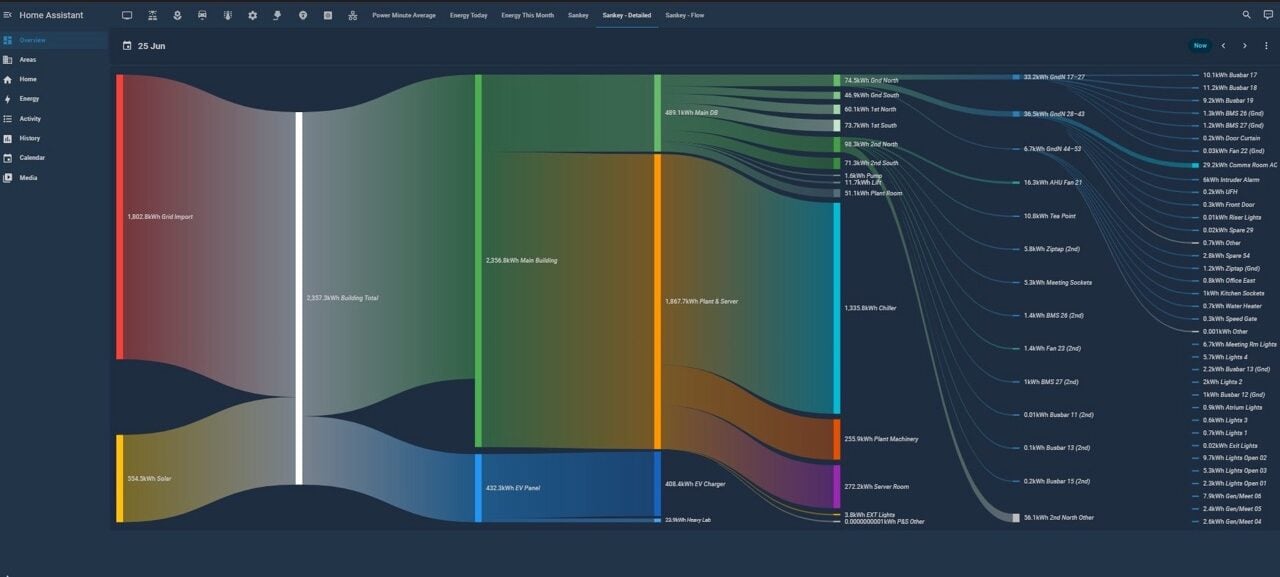 A Home Assistant energy view is used here as a practical example of how circuit-level data can be turned into an understandable live flow picture.
Some easy improvements followed, such as switching off unneeded lighting circuits and automating equipment. The broader conclusion was less simple: a busy office needs power to deliver comfort, computing and daily work. The more valuable lesson was that successful control depends on getting data, analysing it, and gaining better control.
The company also shares a maintenance story. In early 2026, its Trend 963 BMS interface failed. It was 17 years old and proprietary, and a like-for-like replacement would have cost six figures. Instead, the building engineering team adopted a system from Contemporary Controls called BASview and BASpi, using BACnet and Raspberry Pi hardware. The report says this lower-cost path delivered weather compensation, CO₂-based ventilation control, solar integration and finer visibility of temperature, air quality and energy data.
| Path | Reported cost |
|---|---|
| Like-for-like replacement of the old BMS | ~£150,000 |
| Raspberry Pi based solution | £7,800 |
Gas: the first fully gas-free months are a milestone, not the finish line
The clearest operational milestone is dated: on 25 June 2026, Raspberry Pi Ltd stopped using gas entirely at Pi Towers. The two Potterton boilers were switched off. A heat pump that became operational in late 2025 has taken over domestic hot water and is expected to support some underfloor heating demand.
- 25 June 2026: gas use stopped at the Cambridge office.
- July and August 2026: the first fully gas-free months on record.
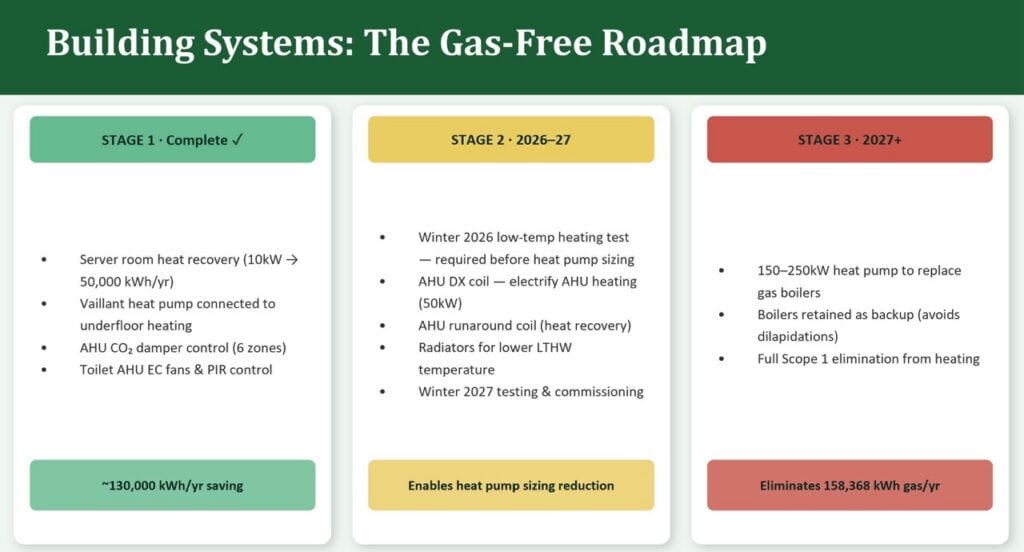 The roadmap image frames stage 1 as complete, stage 2 as in progress, and stage 3 as the 2027 target.
The company is candid that seasonal heating still matters. As temperatures fall, the boilers may need to be used again rather than removed immediately. Rather than discard working plant, the stated preference is to adapt, reduce demand, and turn off gas entirely all year round in a later stage.
Several smaller interventions are grouped as a demand-reduction phase. Heat recovery from air-conditioning condensers in the server room is directed into the building in winter through a condenser under the atrium staircase. Toilet and shower extractor fans were upgraded to operate more efficiently on presence detection, so they run only when someone is present. Floor-level AHU ventilation damper controls were added to reduce strain on both the chiller and the boilers. Together, these changes are said to save around 130,000kWh a year.
What remains before the net zero label can be applied to the whole year
The next stage involves three new pieces of equipment: a new AHU DX coil to electrify the heating of incoming fresh air, a bypass damper to recover and recycle already treated air, and heat pumps to replace the boilers. For annual office heating, the report anticipates needing 150–250kW of heat output to meet approximately 300,000kWh of demand.
Separate electric-only spaces are also mentioned: a new warehouse will be completely electric, and the Raspberry Pi Store in the Grand Arcade, Cambridge, is also fully electric. Raspberry Pi Ltd still frames 2027 as the target for net zero, while acknowledging that progress and remaining work coexist.
Quick checklist: what a general reader can take away
- Look for a sequence of practical measures rather than one headline technology.
- Treat solar capacity, generation, and payback as separate questions.
- Remember that EV charging needs both hardware and adoption programmes.
- Use measurement before assuming electric equipment is automatically efficient.
- Plan gas removal as staged work, including heating demand and equipment reuse.
Common misconceptions in office decarbonisation stories
- Net zero is not simply a product purchase, because the Cambridge update presents it as an operating plan.
- Solar panels do not solve all electricity demand, since the combined 304kW array covers 63% of predicted summer demand.
- Electrification does not automatically lower energy use, because base-load analysis was needed.
- A failed old system should not automatically be replaced in the same style, as shown by the BMS comparison.
- Gas off in summer does not mean gas off forever, because July and August 2026 are milestones while winter heating remains next.
Frequently asked questions
Why does the update mention 2027 if some milestones already happened?
Because 2027 is described as the target for the remaining heating and gas stage. The completed solar, charging, monitoring and seasonal gas-free period are steps toward that annual target.
Does the 85.5kW array alone explain the progress?
No. The 85.5kW array produced 192,000kWh over 26 months and supports a full return on investment around 2.7 years, but the 219kW carport lifts the site total to 304kW and 63% of predicted summer demand.
What is the practical reason for monitoring circuits with Raspberry Pi 4 and 5, Home Assistant and Emporia?
It gives circuit-level visibility. That visibility supports automated lighting, equipment control, and later BMS choices without requiring readers to understand every technical implementation.
Why does the article include both £7,800 and ~£150,000?
The figures compare a like-for-like BMS replacement with the Raspberry Pi based control option. They are used as evidence that an existing proprietary system failure can become an opportunity to change approach.
What does fully electric mean in the store and warehouse examples?
In the article, it refers to the Raspberry Pi Store in the Grand Arcade, Cambridge, and a new warehouse being planned without gas use. It does not claim that every part of the Cambridge headquarters is finished.
Action suggestions for technology teams and everyday readers
- Start with the four ambitions as a simple planning frame: generation, transport, gas removal, and base-load reduction.
- Ask what data you already collect. In the Cambridge story, monitoring every kWh was the precondition for smarter control.
- Compare replacement options by outcome, not age alone. A 17 years old system failure triggered a different path, not a simple repeat.
- Check seasonal effects. Gas off on 25 June 2026 and the first gas-free months in July and August 2026 show that weather changes the answer.
- Look at staff behaviour as well as installed equipment. 24 chargers, nearly 60 passes, and 20 charging cars show adoption matters.
The bigger tech-news takeaway
For MyTechDailyNews readers, the value of this Cambridge update is not that a single device or software name makes a difference. It is that a technology office can make its energy story more understandable by linking hardware, monitoring, building controls, charging access, and staged equipment replacement. If 2027 stays as the target, the next public report will need to show how three remaining heating changes and new electric buildings fit together.
Author: Sarah Chen, Tech Daily, MyTechDailyNews. For questions about this General report, contact hello@techdaily.com.