
Raspberry Pi Price Increase Buying Guide: What the $385 Raspberry Pi 5 Means for You
If a Raspberry Pi project has been on your to-do list, the first question is no longer only whether you want Raspberry Pi 5 or Raspberry Pi 4. It is whether the project needs enough memory to absorb a new round of price pressure. This MyTechDailyNews guide breaks down the latest UK-based Raspberry Pi price increase, the products affected, the practical questions buyers should ask, and the safest way to decide whether to upgrade, downshift, wait, or avoid the most expensive configuration.
The change in plain terms
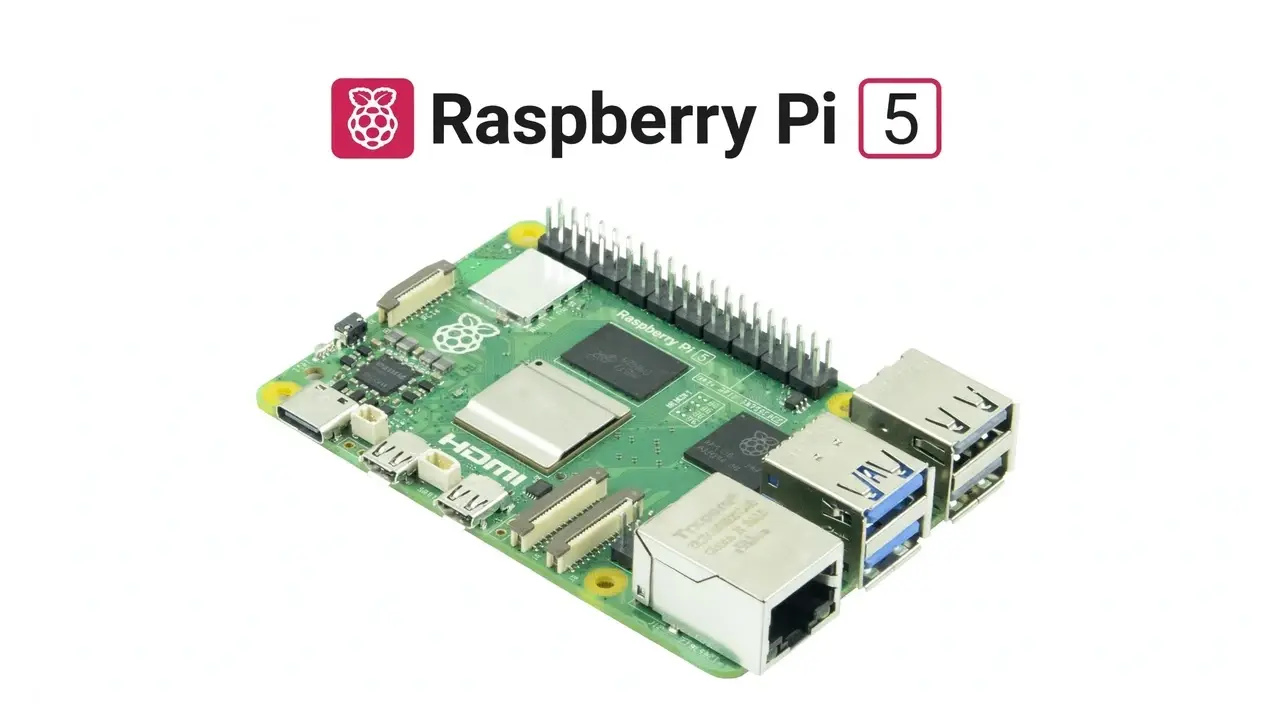
Raspberry Pi says it has raised selected high-memory product prices after continued increases in memory costs. The flagship example is the 16GB Raspberry Pi 5: the price rises by $80, bringing the board to $385. The 16GB Raspberry Pi Compute Module 5, commonly called Compute Module 5, also goes up by $40. The adjustment is narrow enough to matter: not every product becomes more expensive. The Raspberry Pi 500+ desktop computer, one of the company's important consumer-facing launches in recent years, stays at its existing price.
For everyday readers, the practical meaning is simple. The biggest price jump is concentrated on large-memory boards, so the most important purchase question is not whether Raspberry Pi hardware is “cheap,” but whether the build truly needs the 16GB capacity configuration.
How the price history led here
This move is part of a sequence that has played out within the past year. Last month, Raspberry Pi increased the price of the 2GB version of Raspberry Pi 5 and the 2GB version of Raspberry Pi 4. Earlier rounds occurred in December 2025 and February 2026, both tied to rising memory costs. The pattern suggests that the current issue is not a one-off supply error, but a recurring cost pass-through that depends on memory size and component scarcity.
Why memory costs squeeze Raspberry Pi prices
The company frames the problem as a memory-market squeeze. AI infrastructure expansion has increased demand for advanced memory, while high-bandwidth memory absorbs manufacturing resources that once supported ordinary DRAM. For Raspberry Pi, the pressure is sharper on 16GB capacity products because the specific DRAM chips for that configuration have little practical substitute. In other words, the board's design cannot simply switch to another component when memory prices jump.
Broader market reporting points to the same mechanism. IEEE Spectrum's coverage of the DRAM shortage at spectrum.ieee.org/dram-shortage describes AI demand for HBM as a force that can push memory prices upward and affect hardware categories beyond laptops and desktops. That wider context explains why Raspberry Pi can appear to move in small, targeted price steps instead of one sweeping catalogue change.
A decision checklist before checkout
- Start from the workload, not the largest number: a 16GB Raspberry Pi 5 is useful when memory is the bottleneck, but many lightweight tasks still run comfortably on a smaller variant. If a 2GB version or older board meets the job, paying the $385 price for extra headroom may be unnecessary.
- Check whether you are buying a Raspberry Pi or a premium-resale item: the company warns that scarcity has produced speculative pricing, including listings that do not match advertised memory sizes. The safest purchase route is the official Approved Reseller programme, announced by Raspberry Pi at raspberrypi.com/news/approved-reseller, which is designed to keep authentic stock at standard prices rather than at scalper premiums.
- Compare the desktop route: if your use case is a compact home computer rather than a single-board project, the unchanged Raspberry Pi 500+ may be more predictable than a 16GB board. If your use case is embedded hardware, note the Compute Module 5 change instead of assuming Raspberry Pi 5 pricing is the only reference.
Common pitfalls that make the price jump feel worse
- Assuming all Raspberry Pi hardware is now expensive: the company specifically keeps Raspberry Pi 500+ at its old price.
- Buying more RAM than needed: the $80 increase falls hardest on 16GB capacity models, so overprovisioning becomes an expensive habit.
- Ignoring channel risk: a low-price marketplace listing may not be genuine, may not carry the memory size promised, or may be sold above official pricing under scarcity conditions.
FAQ: the questions buyers are asking now
Is the $385 Raspberry Pi 5 the new normal for all Pi boards?
No. The increase is focused on selected high-memory models, especially 16GB Raspberry Pi 5 and Compute Module 5 variants, rather than the entire catalogue.
Should I buy now or wait?
Raspberry Pi still describes the memory crisis as phase-related and has not ruled out future price reductions. Still, the market context is uncertain: AI data centre demand, HBM capacity shifts, and inflation in hardware inputs can keep pressure on DRAM longer than a casual buyer might expect.
Does the price change mean Raspberry Pi is no longer a value product?
Not necessarily. The company's guidance points toward a simpler answer: choose according to real need. The value proposition may shift from absolute low price to predictable buying through official channels and selecting the right memory size.
Action advice for three buyer types
| Buyer | Practical move | Why it works |
|---|---|---|
| Hobbyist builder | Choose a lower-memory model unless the project needs large browser tabs, media servers, or development workloads. | It avoids paying for 16GB capacity that may never be used. |
| Small office or education lab | Standardise on Raspberry Pi 500+ if the goal is a simple desktop experience with predictable budgeting. | The product is not part of the latest high-memory price hike. |
| Embedded product team | Recheck the bill of materials now that Compute Module 5 pricing has moved by $40 on 16GB variants. | It keeps prototype and production estimates closer to real component cost. |
The most useful takeaway from this price increase is not that one board costs $385 now. It is that memory configuration has become a financial decision, not a background spec sheet detail. For readers who want to stay in control, the practical path is straightforward: confirm the workload, compare the actual price across memory variants, use official channels, and treat a 16GB model as a deliberate choice rather than a default upgrade.