
Raspberry Pi 5 Now $385 in the UK: A Step-by-Step Guide to Picking the Right RAM (and Paying Less)
A UK single-board computer that once stood for cheap, experimental computing has crossed a symbolic line: the 16GB Raspberry Pi 5 now costs $385 after an $80 increase announced recently by co-founder and chief executive Eben Upton. Short answer for buyers: skip 16GB unless a named application truly needs it, because memory on these boards is soldered and the tier you pick is permanent.
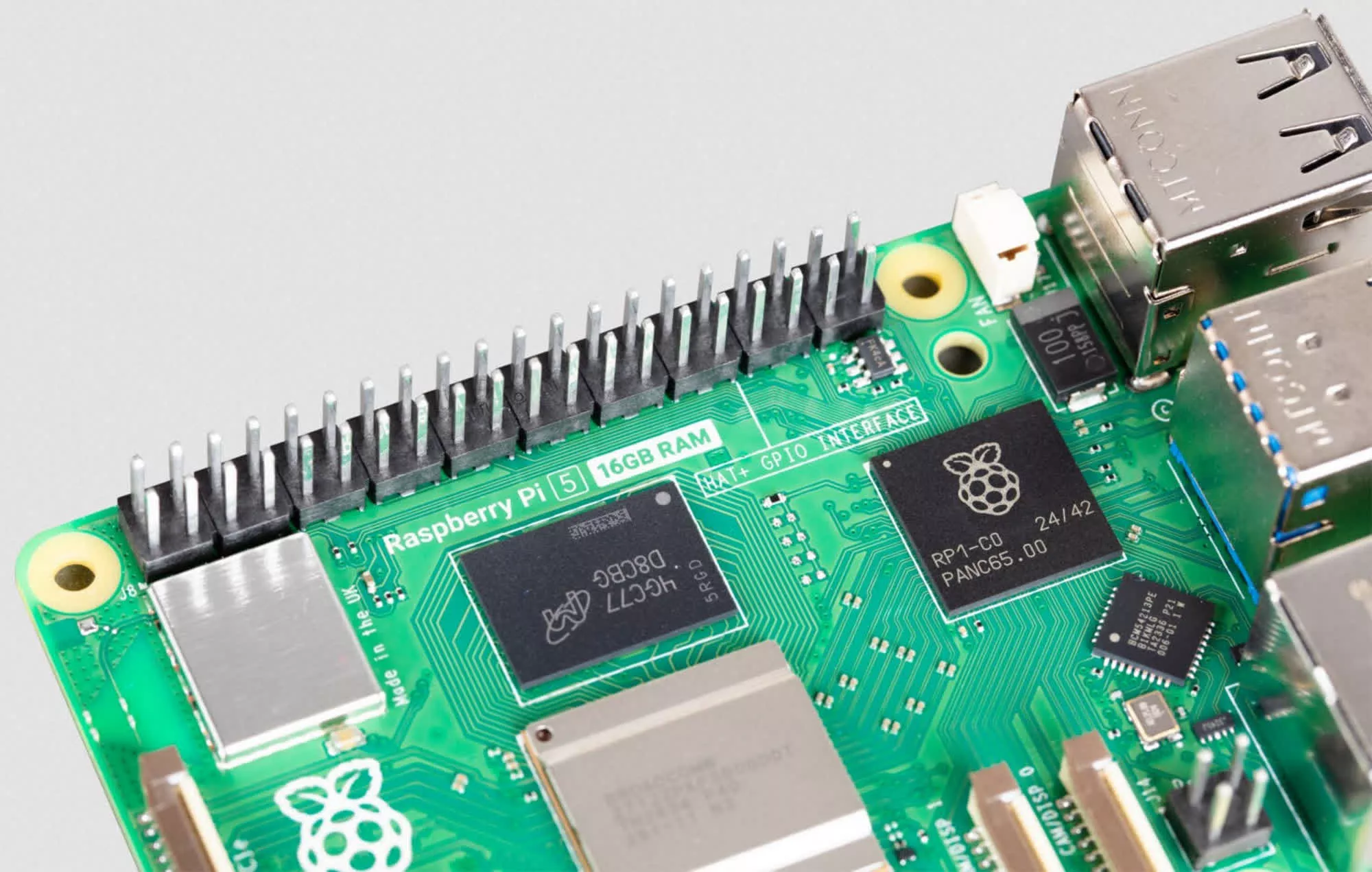
What actually changed on the price list?
Conclusion first: only the 16GB variants moved, and the movement is large. The company's low-cost reputation, built on the $35 computer idea, is now being repriced by a component most buyers never think about.
| Product | Reference price | Change | Result |
|---|---|---|---|
| Raspberry Pi 5, 16GB | $120 at launch in 2025 | +$80 | $385 |
| Compute Module 5, 16GB | previous list price | +$40 | raised in the same round |
| Raspberry Pi 500+ (16GB all-in-one) | original price | no change | held steady |
- The 8GB Raspberry Pi 5 first shipped in 2023 at $80, so the 16GB option arrived as a 2025 expansion rather than a replacement.
- Measured against that $120 launch price, the 16GB model has now risen by more than twice the original figure, making it one of the most expensive products the platform has ever sold.
- At $385 the board alone costs more than many complete small mini PCs, which is why the repricing feels different from an ordinary component fluctuation.
- Over the past one year this is the latest in a series of adjustments rather than a one-off event.
Why is memory to blame and not the board?
The explanation given is a supply problem, not a strategy pivot. Upton described the increase as unavoidable: the company still lacks an alternative supply source for 16GB DRAM chips, and shortages of other key components are squeezing the whole IT industry. Faced with three options — absorb the cost, cut specifications, or raise prices — it adjusted only the models where memory dominates the bill of materials.
The upstream numbers support that story. The market research firm TrendForce forecast conventional DRAM contract prices rising 13–18% quarter on quarter for the third quarter of 2026 (note published 3 July 2026), then a further 10–15% for the fourth quarter (note published 30 September 2026), with AI server demand absorbing factory capacity first. Cost therefore travels down the chain: wafers and chips, then modules, then finished devices such as single-board computers. Raspberry Pi is a small buyer in a market reshaped by data-centre demand, so it feels the change with a lag instead of dodging it.
Has the low-cost promise gone?
Partly, and this is worth stating plainly. Raspberry Pi built its audience of DIY hobbyists, developers and classrooms on openness and affordability, with the $35 computer as the founding pitch. That path is under pressure as supply chains tighten: high-capacity configurations are where the squeeze bites hardest, while entry-level and mid-tier boards remain the platform's value proposition. Treat the current lineup as a menu rather than a ladder where the top rung is always the right purchase.
Five steps before you spend $385
- Name the workload, not the wish list. Write down the heaviest thing the board will run: a language model, a container stack, a desktop session, or a sensor logger.
- Measure real peak usage. On an existing board, watch memory high-water marks over a normal working day before buying anything bigger.
- Buy headroom, not a flagship. Pick the smallest tier that leaves you comfortable margin at peak; if a lower tier fits, the saved money usually buys better storage, cooling or a display.
- Purchase through an authorised reseller at the published price, and avoid premium listings from unrelated marketplace sellers during a shortage.
- Check the unit on arrival: packaging integrity, correct capacity reported by the operating system, and a stress run before you dismantle a project around it.
Which memory tier suits which project?
| Project type | Realistic tier | Reasoning |
|---|---|---|
| Sensor logging, home automation, ad blocking, print server | 1GB to 2GB, or a microcontroller board | Headless services idle for long stretches; the CPU matters more than capacity |
| Retro gaming, kiosk, classroom desktop, media player | 4GB | Comfortable for a graphical session with a browser or emulator |
| Self-hosted services, several containers, light office work | 8GB | The default for most hobbyist multitasking; the 8GB model launched at $80 in 2023 and still covers typical stacks |
| Local AI inference, many simultaneous containers, virtualisation, code compilation | 16GB | Capacity-limited workloads where the premium is genuinely attached to memory |
A useful external benchmark: when the 16GB model first appeared, hardware writer Jeff Geerling argued on his blog (jeffgeerling.com, January 2025) that the board's audience was narrow, since most hobbyist workloads fit inside 8GB and the extra memory mainly matters for larger local language models or a lot of concurrent services. That judgement has become more valuable now, not less, because the gap in price between 8GB and the 16GB tier has widened sharply.
Common mistakes to avoid
- Buying 16GB for future-proofing. Soldered memory cannot be upgraded later, but a workload you never deploy does not need capacity sitting idle.
- Assuming a bigger number is always faster. Bottlenecks on these boards are usually storage speed, cooling or software configuration.
- Accepting any listed price as the market price. The official figure is the one to check before paying a premium.
- Chasing suspiciously cheap modules. Analysts note that recycled and reworked memory parts are spreading as prices stay high: TrendForce reported on 6 November 2026 that reballed memory had reached roughly 3–4% of the smartphone market in 2026 and could hit 7–9% in 2027. Cheap, unverified supply is a quality risk, not a bargain.
- Discarding an older generation board that still works. Reusing previous hardware is one of the cost controls the company itself recommends.
- Upgrading silicon instead of software. Optimising memory use is cheaper than buying memory.
How to cut cost without buying less RAM
- Run headless. Use the Lite image and manage the board over the network; a desktop environment is the single largest memory consumer on most builds.
- Trim services. Disable Bluetooth, printing, audio and telemetry daemons you never touch.
- Use compressed swap. zram-style compressed memory pools reduce out-of-memory crashes on 2GB and 4GB units.
- Prune containers. Replace heavyweight all-in-one stacks with single-purpose images, and pin memory limits per container so one runaway service cannot stall the box.
- Split the job. Move simple input-output tasks to a microcontroller-class board and keep the single-board computer for logic and storage.
- Ask for help publicly. Engineers and community members answer optimisation questions on the Raspberry Pi official forums, which is often faster and cheaper than a purchase.
What to watch next
The company frames the shortage as cyclical and says it may reduce prices again once memory chips return to normal cost and supply stabilises, so this round reads as a temporary response rather than a permanent pricing policy. Three signals are worth tracking: whether further 16GB products are repriced in the same way, whether the held price on Raspberry Pi 500+ survives the next quarter, and which direction contract memory prices move in the next TrendForce update. Our analysis — not an official promise — is that a rollback will arrive as a published announcement, and that mid-tier boards will stay the sensible entry point for most readers in the meantime.
FAQ: what everyday readers are asking
Is the Raspberry Pi still worth buying in 2026?
Yes, for learning, tinkering and self-hosting on lower and mid memory tiers. The $35 computer era is over for high-capacity models, but smaller configurations remain far cheaper than a laptop or mini PC.
Why did only the 16GB versions go up?
Because 16GB DRAM has no alternative supplier for the company, and memory makes up an outsized share of those models' cost. Lower-capacity variants can still be sourced, so they were left alone, and Raspberry Pi 500+ in 16GB kept its original price.
Should I upgrade my 8GB board to 16GB?
Only if a specific application is failing for lack of memory. If the current board runs your stack without swapping heavily, an upgrade is spending money on capacity you cannot use.
How much more did the Compute Module 5 get?
The 16GB Compute Module 5 variants rose by $40 in the same announcement, which matters most to companies building custom devices around the module.
Will prices come back down?
The company says the strain should ease and has not ruled out reversing the increases. No timing was given, so budget as if $385 is the price for now and treat a fall as upside.
Written by Sarah Chen for MyTechDailyNews (Tech Daily). Have a tip or a correction for our team? Reach us at hello@techdaily.com.
Sources
- Raspberry Pi official news post on 16GB price rises: https://www.raspberrypi.com/news/price-rises-for-some-16gb-raspberry-pi-products/
- TrendForce memory contract price forecast, 4Q26 (30 September 2026): https://www.trendforce.com/presscenter/news/20260930-13258.html
- TrendForce memory contract price forecast, 3Q26 (3 July 2026): https://www.trendforce.com/presscenter/news/20260703-13134.html
- TrendForce on reballed memory adoption (6 November 2026): https://www.trendforce.com/presscenter/news/20261106-13297.html
- Jeff Geerling on the 16GB model's practical audience: https://www.jeffgeerling.com/blog/2025/who-would-buy-raspberry-pi-120/