
MyTechDailyNews Playbook: What the Sam Altman–Elon Musk RAM Fight Means for Your Next Memory Upgrade
A short clip from a podcast has turned an unglamorous stick of DDR5 into the loudest object on the tech internet this month. The bare outline: OpenAI chief executive Sam Altman suggested that memory parked inside ordinary desktops would be put to better work in the cloud, and Elon Musk answered that people are entitled to keep it. Underneath the shouting sits a decision every reader faces this year — in a market where RAM prices keep climbing, how much memory should you personally own, and where should it live?
By Sarah Chen · Tech Daily
The argument, reduced to six facts
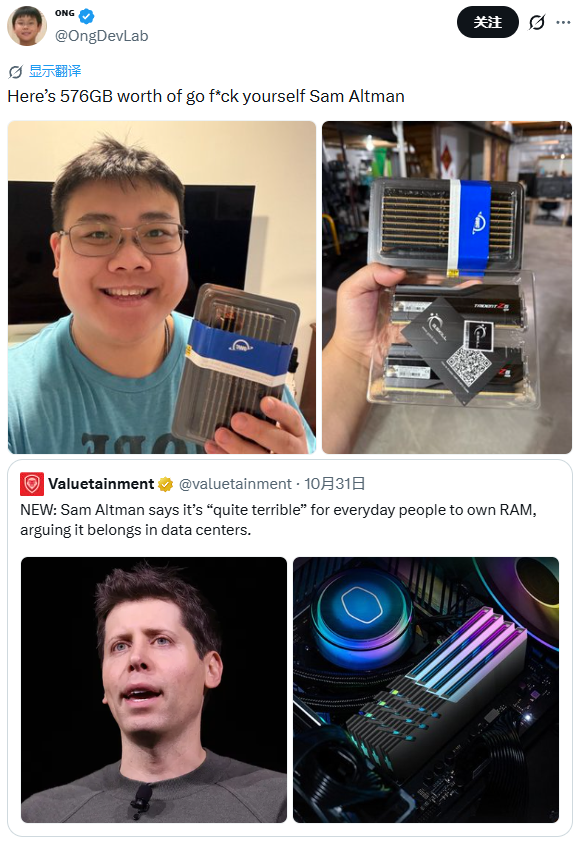
- In an interview with the YouTube channel Cheeky Pint, Sam Altman said that almost everyone keeps a lot of DRAM in their own computer, yet it is actually in use only about 5% of the time — and he called that arrangement "terrible".
- His conclusion was allocation, not technology: when supply is extremely tight, memory should be gathered where utilisation can be pushed to the maximum, meaning cloud data centres.
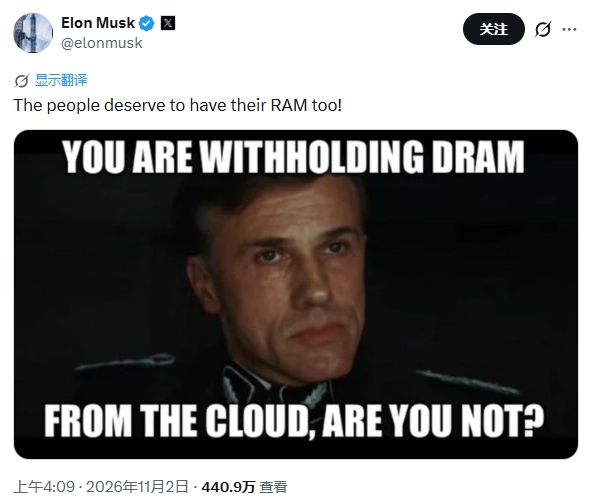
- Elon Musk jumped into the debate publicly on social media with a one-line answer: "People should also own their own memory."
- Players and PC enthusiasts heard something else entirely — a proposal to take control of hardware they had already paid for — and responded with meme images and AI-generated parody videos. The quarrel moved from utilisation rates to ownership, cloud services, and who decides how scarce resources get distributed.
- The timing mattered. AI demand is tightening memory supply and lifting hardware prices across graphics cards, consoles and PC components, and Sony, Microsoft and Nintendo have all raised console prices.
- And the cloud side is not innocent either: Musk's own Grok Bot has throttled usage because its running cost relative to revenue is "unsustainable", pushing heavier users into quotas earlier than they expected.

Why the "about 5%" line landed so badly
Altman's figure is a rough estimate of how much of the day a module is actively touched, not a measurement of any individual machine. It also treats memory as if it were a fungible block of storage. In practice, RAM is closer to desk space than to a warehouse: the operating system deliberately fills that desk with files it expects you to need next, so a nearly full memory bar on Windows or macOS often signals a fast machine, not an idle one. Empty RAM has to be re-fetched from slower storage, which is exactly the work a preloaded cache avoids.
The second reason is industrial. Capacity that fabs shift toward AI-oriented products is capacity that stops flowing to desktop modules, and commenters noted that the shortage consumers feel at the checkout is a by-product of that reallocation, not evidence that their PCs are wasteful. Coverage of the games hardware market, for example, has described how memory prices climbed as AI demand absorbed supply, squeezing the parts budgets of consumer devices.
The numbers behind the anger
Two threads of market data explain why a podcast remark became a personal issue for PC owners: memory is being bid up, and the people paying for it are the same people being told their usage is inefficient.
| Market signal (2026) | What it changes for ordinary buyers |
|---|---|
| Conventional DRAM contract prices projected to rise 10–15% quarter-on-quarter in Q4 2026, with NAND up 15–20% (TrendForce press note, 30 September 2026) | Waiting rarely rewards you on a new build or a game console; budgets should carry a memory premium |
| DRAM contract prices rose 13–18% QoQ in Q3 2026 and NAND 10–15%, with the surge only beginning to cool as consumers hit an affordability limit (Tom's Hardware report on the memory price cycle) | The pressure is easing from a very high level — treat "prices are falling" headlines with caution |
| DRAM and NAND combined are estimated to make up 47% of cloud providers' total capital spending in 2026 (TrendForce, 25 August 2026) | Buyers are competing for the same wafers as hyperscale data centres, which is the real substance of Altman's argument |
| Memory can account for roughly a fifth of a base console's parts cost, and further DRAM and NAND increases were forecast for the year ahead (Game Developer analysis of the memory price surge) | It explains why Sony, Microsoft and Nintendo raised console prices rather than absorbing the cost |
Read together, these figures reframe the exchange. Altman was describing a genuine scarcity; his critics were reacting to the implication that individual ownership is the cause of it. Consoles and component prices are rising because supply chains repriced, and that is a reason to shop carefully rather than a reason to give up hardware you own.
A practical playbook: five steps before you touch your wallet
- Audit first. On Windows, open Task Manager (Ctrl+Shift+Esc), go to the Performance tab and read Memory: note "In use", "Committed" and "Hardware reserved", and check how many slots are populated. On macOS, Activity Monitor's Memory tab shows a Memory Pressure graph, which is more useful than a raw percentage. Do this on a normal working day with your usual apps open, not right after a reboot.
- Find the real bottleneck. If Memory Pressure is green or usage sits below roughly 70%, another stick will not make the machine faster. Games and video exports are usually limited by the GPU or CPU first, and long load times point at storage.
- Split your workload between local and cloud. Keep memory in your own box for anything private, offline, repetitive or latency-sensitive — code editors, design files, local model files you reuse daily. Rent capacity for bursty jobs: a one-off transcription, a long video render, a model experiment you will abandon next week.
- Buy defensively. Match modules as a kit rather than mixing sticks, confirm your motherboard's supported speed and the laptop's ceiling before ordering, and consider a prebuilt system or an older DDR4 platform, because manufacturers buy memory at contract prices that are far below what retail now asks.
- Reclaim before you upgrade. Trim startup apps, close dormant browser tabs, enable memory compression, cap the RAM you allow for virtual machines, and clear the page-heavy app that keeps itself running in the background. Several gigabytes often come back for free.
Pre-purchase checklist
- Current capacity, free slots and maximum supported memory for your exact model
- DDR4 or DDR5 — the two are not interchangeable, and mixing generations is impossible
- A matched dual-channel kit rather than two single modules
- Laptop RAM soldered to the board? Check before you assume an upgrade exists
- Support for XMP or EXPO profiles in your BIOS, so the new speed is actually used
- A price ceiling: a common rule of thumb is to keep memory below roughly a tenth of the total build budget
- One documented reason for the purchase — a specific app or file size, not a general feeling of slowness
Four misconceptions worth dropping
- "Idle memory is wasted memory." Operating systems fill RAM on purpose so that the next task is instant. Low activity does not mean the silicon is doing nothing.
- "More RAM always equals more speed." Capacity removes a ceiling; it does not add horsepower once you are under it.
- "Desktop modules could be shipped to a data centre." Server and AI memory are different product lines with different specifications; the shortage is a manufacturing allocation problem, not a hoarding problem.
- "The cloud is automatically cheaper." Subscription costs compound, and quota limits are the industry's standard answer to expensive inference — Grok Bot restricting use because costs were "unsustainable" is a reminder that rented memory still has to be paid for, every month.
Local or cloud: a quick comparison
| Dimension | Memory in your own PC | Memory in the cloud |
|---|---|---|
| Cost shape | One high upfront price, no further bill | Low entry, recurring subscription or usage fees |
| Utilisation | Often below the cloud's average, but tuned to your schedule | Shared across thousands of jobs, so peak efficiency is higher |
| Privacy | Files never leave the machine | Depends on the provider's terms and region |
| Control | Yours — including after the service shuts down | Subject to quotas, price changes and availability |
| Best fit | Daily creative work, coding, offline travel, local AI experiments | Burst renders, occasional heavy jobs, multi-user projects |
For anyone who genuinely wants to run a model locally rather than send files to a service, vendors' own guidance is a useful anchor: 16GB of DDR5 is described as a realistic starting point for local AI experiments, with 32GB making larger quantised text models practical. That is a meaningful upgrade path, but it is also the price tier where most readers should pause and ask whether the workload is regular enough to justify it.
FAQ
Is Altman's "about 5%" claim wrong?
It is a rough description of activity, not of usefulness. Measured as time in active use, a desktop's memory does sit idle much of the day; measured as work delivered, that idle state is the operating system preloading your next task. The number is not the point — the assumption that ownership is inefficient is.
Should I upgrade RAM now or wait?
Upgrade now only for a named task you cannot complete today. Contract pricing for DRAM and NAND was still rising through the second half of 2026, so patience is not a reliable saving, but a purchase made to feel safer usually is.
Does this change what I should buy for gaming?
Not the capacity target — 16GB remains adequate for most current games and 32GB suits streaming or heavy modding. It does change the priority of your money: with graphics cards, consoles and memory all repricing, buy the component that removes your actual bottleneck first.
Why did console makers raise prices at the same time?
Because their memory and storage costs moved with the same AI-driven market. Sony, Microsoft and Nintendo all adjusted console pricing as parts costs climbed, which is why the argument felt so pointed to players.
Does keeping my own RAM make the shortage worse?
The public disagreement turned on exactly this question. Musk's answer was blunt: "People should also own their own memory." The shortage is created by how fabs allocate capacity, and no consumer decision about a memory stick resolves it.
What to do this week
Start with ten minutes of measurement rather than a purchase. Look at your own memory usage on a normal day, write down the single task that genuinely feels blocked, and decide whether the fix is capacity in your machine or a rented hour elsewhere. If the answer is capacity, buy a matched kit with a confirmed reason; if it is rental, set a monthly ceiling and check the quotas before you commit. The ownership argument between Sam Altman and Elon Musk will keep running in feeds for weeks — but the number of gigabytes on your invoice is still your call.
Have a hardware question raised by the memory shortage? Write to Tech Daily's editorial desk at hello@techdaily.com and we may cover it in a follow-up guide on MyTechDailyNews.