
MyTechDailyNews General Brief: Optivolt's $32M Round Brings Power Balancer Electronics Into Solar Modules
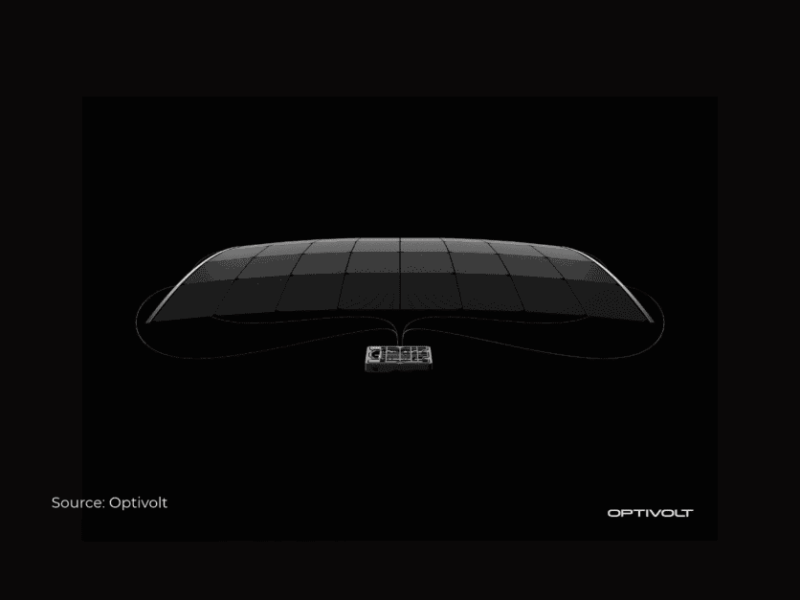
Solar panels are usually described by cell efficiency, but a panel that works in the lab can still underperform when a leaf, a shadow, or uneven aging affects part of its surface. That is the practical gap Optivolt is trying to address. The company, which is based in San Francisco, wants to manage electricity at the place where it is generated: inside the module.
Optivolt says it has secured $32M in Series A funding, reported in the announcement as $32 million, to scale its Power Balancer technology. The idea is not to make sunlight more plentiful, but to recover more of the electricity that cells already generate when conditions are imperfect.
For readers who followed the eeNews Europe version of this story, the design question shifts from adding a separate optimizer after the fact to asking whether the panel itself can become an active power-management device.
How the Module-Level Problem Appears
Most photovoltaic modules group cells into circuits. When one cell is shaded or dirty, the circuit can be held back by the weakest section. Bypass diodes are the traditional safeguard, but they can remove entire portions of a module from active generation.
Power Balancer electronics are intended to replace those conventional bypass diodes and do more than simply protect the circuit. The company describes the module as actively redistributing energy among cell groups as operating conditions change. The same design includes monitoring and rapid shutdown functions.
Optivolt says that, in some system configurations, this integration may remove the need for separate module-level optimizers, microinverters, and rapid-shutdown devices. That claim depends on the layout and local requirements, but it points to a simpler architecture if the hardware inside the panel does the job.
Reliability and the Efficiency Claim
Putting electronics inside a solar panel creates a durability problem. The components must survive heat cycles, humidity, outdoor exposure, and long service lives while minimizing their own energy losses. Optivolt says it brought engineers with satellite power system experience to work on thermal management and long-term reliability.
The company reports 99.4% conversion efficiency for the Power Balancer under typical operating conditions. For a general reader, the number matters because power-management hardware must not consume too much of the energy it is meant to recover.
What the Sixfold Claim Covers
Optivolt says panels equipped with its technology generated up to six times more power than panels using external optimizers in internal tests under defined shading scenarios.
The Sixfold result is a bounded comparison, not a universal rating. It is described as evidence for how mismatch correction close to the source can change output when a module is partially impaired. It does not promise that every installed panel will see a similar jump.
For a solar owner, the difference is important: a controlled shading test can show where a technology helps, but the final value depends on the roof, the array, local weather, and the rest of the system.
Background and Certification Details
Optivolt says it has spent nine years developing the technology. It reports holding 19 issued patents, with another 27 applications pending, and obtaining UL certifications for its integrated electronics, enclosure, rapid shutdown, and module safety.
"Solar became cheap enough to compete. I founded Optivolt to make it intelligent enough to power the world," said Rohit Kalyanpur, founder and CEO of Optivolt.
Funding, Manufacturing, and Deployment
The round was led by VXI Capital, with participation from RA Capital, Valo Ventures, and Atlas Innovate. The company states that total funding now stands at $42 million.
More than 20,000 panels incorporating the Power Balancer have already shipped. Optivolt plans to use the new investment to expand manufacturing and to serve applications that range from residential rooftops to utility-scale installations.
It is also targeting large solar projects intended to supply electricity to AI data centers, where power availability and reliability have become central to infrastructure planning.
The investor list includes Paul Nahi, formerly of Enphase, and Tom Werner, formerly of SunPower. Their previous roles connect the announcement to the broader industry history of module-level power electronics.
Quick Checklist
| Question | What the announcement states |
|---|---|
| What was raised? | Optivolt secured $32M, also described as $32 million, in Series A funding. |
| Where is the company based? | San Francisco. |
| What does Power Balancer do? | It places active power electronics inside solar panels to redistribute energy among cell groups, replacing conventional bypass diodes and adding monitoring and rapid shutdown. |
| What is the claimed efficiency? | 99.4% conversion efficiency under typical operating conditions. |
| What is the shading-test result? | up to six times more power than panels using external optimizers in internal tests under defined shading scenarios; the company presents the Sixfold figure as a bounded test result. |
| How much total funding? | $42 million. |
| How many panels have shipped? | More than 20,000 panels incorporating the technology. |
| Who led the round? | VXI Capital, with RA Capital, Valo Ventures, and Atlas Innovate. |
| What certifications and IP are mentioned? | nine years of development, 19 issued patents, 27 applications pending, and UL certifications for safety-related components and functions. |
Common Misconceptions
- Misconception: The Sixfold number means all panels produce six times more energy. Reality: The figure comes from internal tests under defined shading scenarios and is not presented as typical performance in every condition.
- Misconception: Module-integrated electronics automatically remove every external device. Reality: Optivolt says the need for separate optimizers, microinverters, and rapid-shutdown devices can be removed in some system configurations, not necessarily all configurations.
- Misconception: 99.4% conversion efficiency is a new solar-cell efficiency. Reality: The announcement presents it as conversion efficiency for the Power Balancer under typical operating conditions.
- Misconception: A funding round proves that manufacturing scale-up is complete. Reality: The $32M round is described as funding to expand manufacturing and broaden applications, with more than 20,000 panels shipped as evidence of progress, not final maturity.
- Misconception: This is only a component story for engineers. Reality: The architecture affects installation cost, system design, and how output is managed when shading, dirt, or degradation occurs.
FAQ for General Readers
Why would electronics be inside the panel?
Because shading and contamination are local problems. A shadow on one part of a module can affect a circuit. Optivolt's answer is to manage power near the mismatch, rather than adding a separate device at the back of a panel.
Does this change the solar cell itself?
No. The announcement focuses on the electronics around the cell groups. The company’s broader argument is that improving the cell is only part of the equation; recovering more electricity already generated is another.
Is rapid shutdown a safety issue?
It is described as a function included with the integrated electronics and covered by UL certifications. For general readers, that matters because panel-mounted safety functions are part of the system architecture, though final decisions depend on local requirements.
Who are the investors and why do their backgrounds matter?
The round was led by VXI Capital, with participation from RA Capital, Valo Ventures, and Atlas Innovate. Investors also include Paul Nahi, formerly of Enphase, and Tom Werner, formerly of SunPower. The announcement links Optivolt to a longer industry conversation about module-level electronics.
Action Advice
- When comparing solar bids, ask whether the proposal uses external optimizers, microinverters, or integrated panel electronics, and request the relevant product and certification details.
- For shaded roofs, request test conditions behind performance claims, especially whether numbers come from defined shading scenarios rather than annual averages.
- Confirm rapid shutdown and safety requirements with the installer for the specific jurisdiction and system design.
- Treat the funding milestone, total raised, patents, and shipment figures as signals of progress, while evaluating real project performance through site-specific design and warranty terms.
The more general takeaway is that solar hardware is being evaluated less as a passive glass-and-silicon surface and more as an active power product. Optivolt's $32M funding puts module-level electronics in the conversation; the practical test will be whether the company can turn internal efficiency, shading recovery, safety functions, and manufacturing scale into reliable field value across homes, utility projects, and AI-data-center power plans.