
OpenAI Weighs Google TPU Deals to Spread AI Compute Risk
A newly reported plan for OpenAI to buy AI chips from Google reads less like a sudden supplier switch and more like an attempt to keep several compute pathways open. Details of the proposed transaction remain unconfirmed, and both sides declined to comment, but the direction is already clear: the ChatGPT maker is looking beyond a single source of AI power.
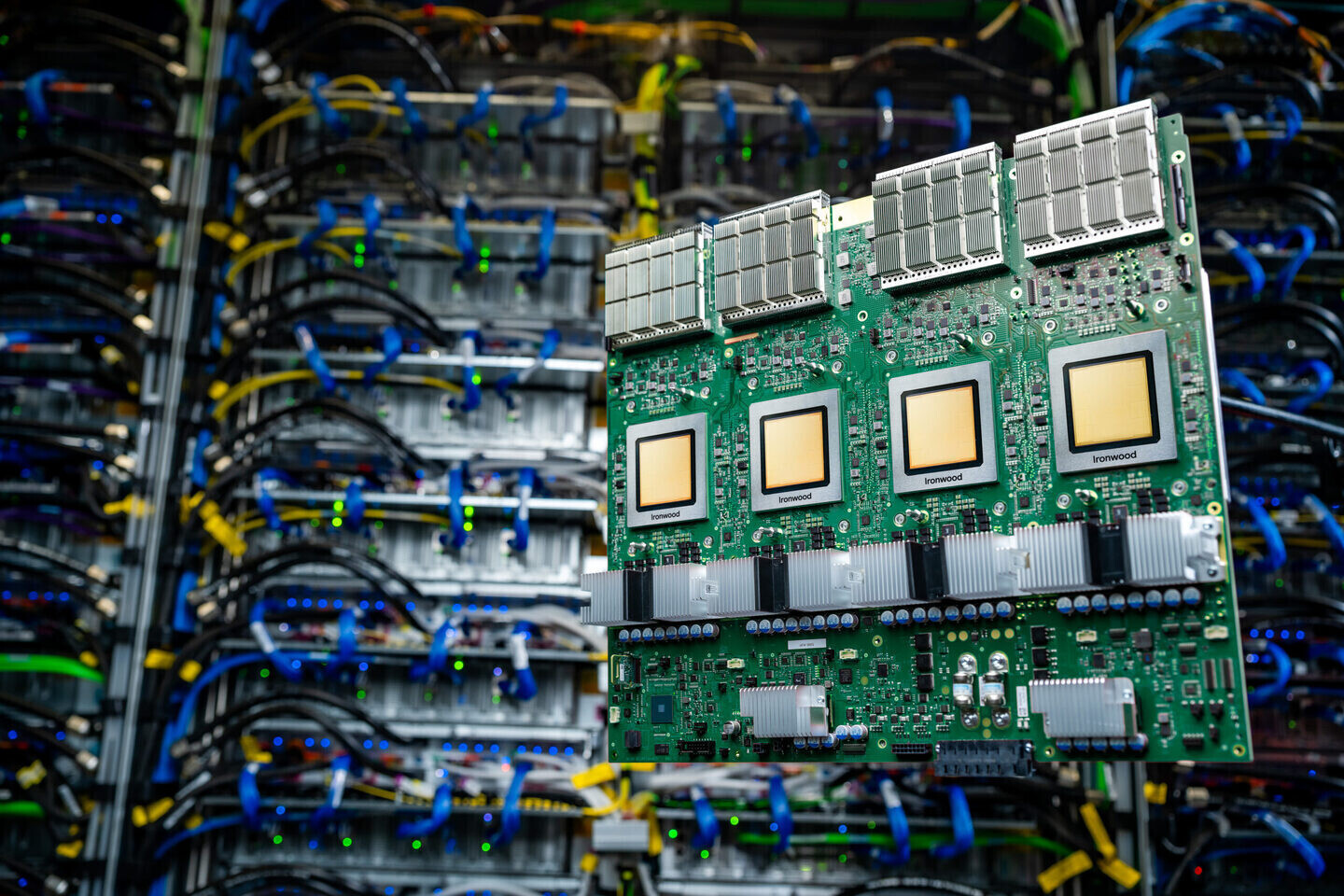
As companies search for lower-cost options that fit the running conditions of AI models, Google's Tensor Processing Unit, known as TPU, is drawing more attention as an alternative to NVIDIA's market-leading AI chips. Google has already begun selling TPUs directly to some customers this year.
Three compute routes are now visible
The reported TPU purchase would sit alongside OpenAI's previously announced plan to bring an in-house chip online later this year to support its AI models. That places the company inside the broader in-house chip wave, as more firms try to reduce their dependence on one supplier and challenge NVIDIA's dominance in AI compute.
OpenAI's internal chip effort is not standing alone. The Jalapeno project, jointly built by OpenAI and Broadcom, reportedly received help from Google veterans. Richard Ho, who leads OpenAI's internal chip team, had previously worked on Google TPU development. Google started TPU work more than a decade ago to speed up its web search engine and improve efficiency; those chips later proved valuable for AI tasks and, in recent years, became a serious alternative to NVIDIA GPUs.
The NVIDIA relationship has not disappeared
For a long time, OpenAI and NVIDIA have been closely tied. From training the initial GPT model to the global spread of ChatGPT, OpenAI's core model evolution has relied on tens of thousands of NVIDIA GPU clusters. NVIDIA chief executive Jensen Huang personally delivered the world's first DGX AI supercomputer to OpenAI, and OpenAI's rise helped push NVIDIA to the top of global market capitalization.
In August this year, Jensen Huang said OpenAI had committed to large-scale deployment of NVIDIA AI infrastructure by 2030, with existing and planned installations totaling about 12 gigawatts and the possibility of expanding to about 16 gigawatts.
That commitment has not stopped OpenAI from pursuing supply-chain diversification. Inference costs keep rising, compute gaps can require millions of chips, and relying too heavily on one supplier brings weaker negotiating power and supply-interruption risk.
Oracle adds a cloud channel for TPU access
The reported Google TPU deal would deepen OpenAI's link with Alphabet-owned Google, even though the two groups compete directly in AI products and search. The same diversification logic is already visible in cloud infrastructure. Oracle Corporation announced this Tuesday that it will offer compute based on Alphabet-owned Google TPU chips on Oracle Cloud Infrastructure for the first time.
Mahesh Thiagarajan, president of Oracle Cloud Infrastructure, said different AI workloads have different compute needs, so customers should be able to pick the infrastructure with the right performance, throughput and economics for each job. Google executive Amin Vahdat made the broader point in the Oracle announcement: "The next generation of artificial intelligence will require diverse computing power."
Checklist: what everyday readers should watch
- Treat the Google TPU purchase as a reported plan until final terms are disclosed or officially confirmed.
- Watch whether OpenAI uses Google TPU, in-house silicon and NVIDIA GPU capacity in parallel rather than as a replacement chain.
- Remember that Oracle's TPU cloud offer shows buyers outside Google's direct sales channel may gain access to the same compute category.
Common misconceptions to avoid
| Misconception | What the reported facts suggest |
|---|---|
| OpenAI is leaving NVIDIA behind. | The report describes diversification, not exit. OpenAI's long-standing NVIDIA dependence and the 2030 infrastructure plan remain part of the picture. |
| TPUs are only a search-engine chip from the past. | TPUs began more than a decade ago for search efficiency, but in recent years they have become an alternative for AI workloads. |
| Diversifying compute means every chip choice is finished. | Terms with Google are not disclosed, and both sides declined to comment. The story is still about strategy, not a settled product switch. |
FAQ
What is Google TPU?
TPU stands for Tensor Processing Unit, Google's AI chip category. It was first built to accelerate search workloads and later became an option for AI training and inference, increasingly viewed as an alternative to NVIDIA GPUs.
Why would OpenAI consider Google chips?
OpenAI faces rising inference costs, huge chip gaps that can require millions of units, and the risks of relying too much on one supplier. Google TPU offers another path while the company also works on its own silicon.
Has a deal been signed?
No final terms have been disclosed. The information comes from people familiar with the plan, and both OpenAI and Google declined to comment.
Does this compete with the Oracle TPU news?
They point to the same trend. Oracle Corporation's move to provide Google TPU-based compute on Oracle Cloud Infrastructure shows that AI buyers are looking for more than one source of performance, throughput and economics. Amin Vahdat framed that need simply: "The next generation of artificial intelligence will require diverse computing power."
Action advice
- Follow official disclosures before drawing conclusions about the size, duration or exclusivity of any OpenAI and Google TPU deal.
- Compare announcements around in-house chips, cloud-based TPU access and NVIDIA GPU capacity as parts of one compute-diversification story.
- If you follow AI products closely, track how these choices affect cost, availability and model deployment rather than treating the news as a simple brand victory.
For general tech readers, the larger lesson is that frontier AI is no longer a single-supplier market. OpenAI, Google, NVIDIA, Broadcom and Oracle are all now part of a wider contest over who can supply enough compute without making one company responsible for the entire stack.