
OpenAI's Hidden Conference Room Recorder: A Practical Playbook for Your Own Meeting Rooms
By Sarah Chen — MyTechDailyNews / Tech Daily
Picture your company's last security review. It almost certainly covered laptops, cloud logins and shared documents. It probably did not cover a roll of toilet paper. That single, slightly ridiculous detail is what makes the OpenAI episode worth five minutes of your working week: Reuters reported on November 4 that the AI lab disclosed this October that a hidden recording device had been placed inside an executive conference room, and that several former employees reacted to the news with the same shrug — they were not surprised. In this MyTechDailyNews General feature we skip the spy-movie framing and do the useful job instead: a step-by-step reset you can run in 30 days, the assumptions that quietly leave rooms exposed, and plain answers to the questions readers sent our newsdesk.
The case file, in order
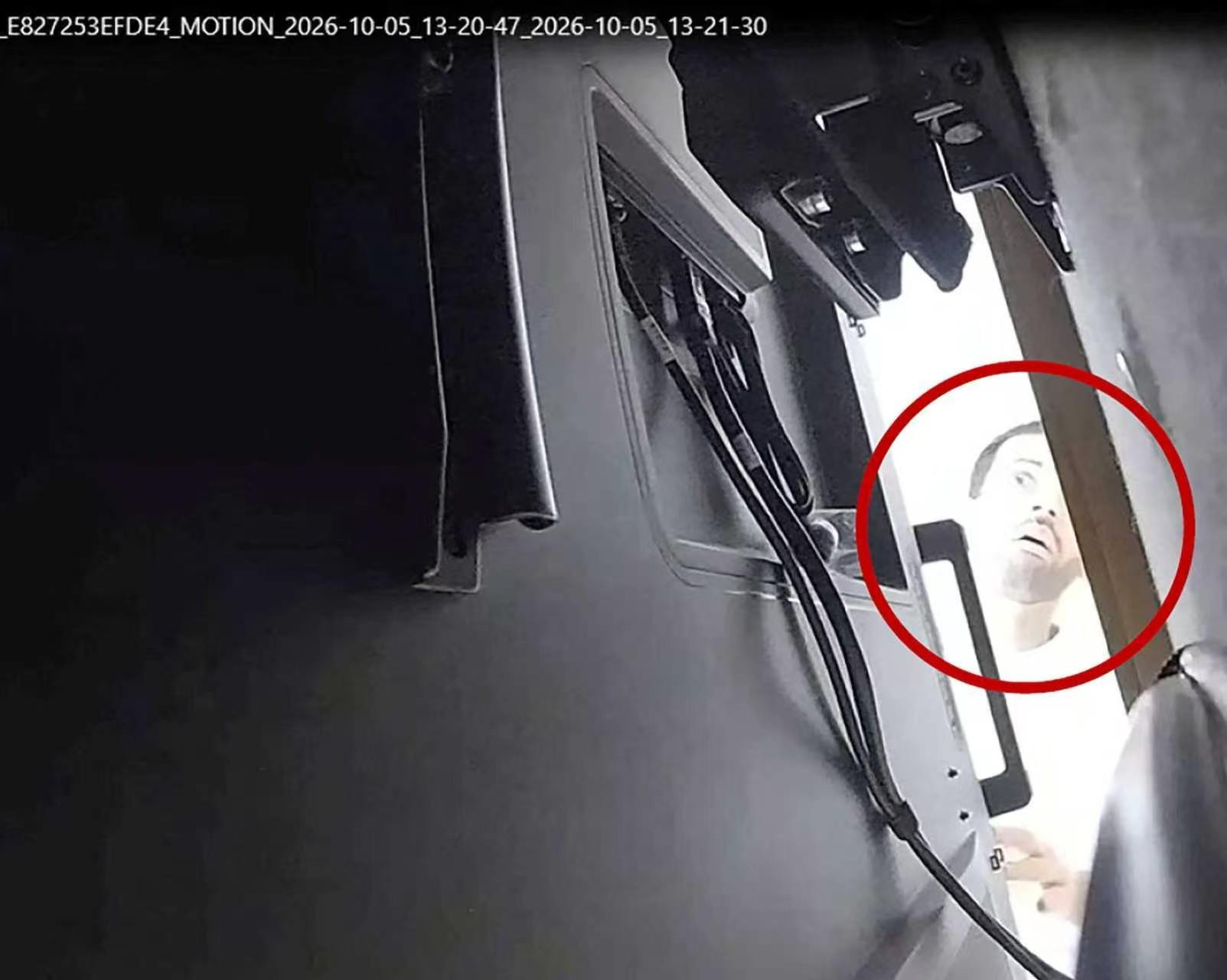
- October 13. The U.S. Department of Justice said Abdulrahman Alfozan, a 35-year-old Saudi national from Saudi Arabia working as an OpenAI engineer, had been arrested by U.S. federal law enforcement officers and charged with installing a concealed recording device in an executive meeting room. The unit was stuffed inside a roll of toilet paper so nobody would notice it.
- This October. OpenAI revealed the find publicly on X, describing a "sophisticated recording device" hidden inside one of its offices and saying it had used its own models to make sense of the device — an AI-assisted triage step that simply did not exist in anyone's checklist a couple of years ago.
- November 4. Reuters reported that five people with knowledge of the matter described long-standing internal worry: some staff had flagged OpenAI's security practices internally even before the company launched ChatGPT in late 2022, and had carried those concerns to senior executives and the board. After those conversations, several employees concluded that leadership was more intent on keeping pace with Google and Anthropic than on security itself.
- This August. Two people with knowledge said Thibault Sottiaux, the senior executive who oversees product development, took on an internal initiative to harden OpenAI's own systems, and pulled one-quarter of the company's production engineers off feature work to improve security infrastructure.
The same accounts describe a mindset problem rather than a gadget problem. Employees considered the controls loose enough that outsiders — including foreign governments — could relatively easily obtain the company's sensitive technical information; anyone inside OpenAI who could reach the code could also see the underlying technical detail behind many projects. Since ChatGPT arrived in late 2022, artificial intelligence has become a strategic asset for the United States, and that shift puts American companies under pressure to keep their technology out of the hands of foreign competitors. Layering on more protection, though, risks slowing the pace of AI work and may complicate the large-scale IPO plans of OpenAI and Anthropic — listings that would put them among the most valuable companies on earth.
"They cannot sacrifice development speed for the sake of safety. For them, pushing the technology forward quickly matters more than making it secure; even when the adversary they have to guard against is the most powerful state competitor, they still put speed ahead of safety," wrote Will DePue, a former researcher who resigned from OpenAI this April, in a post on X. In his telling, leaders in AI simply will not trade pace for protection in a competition this fierce.
Elana Widmann, an OpenAI spokesperson, answered questions about those complaints by saying the company is one of the most targeted institutions in the world, and that it therefore invests heavily in security programmes against insiders, cybercriminals and state actors alike. "Protecting our technology, our data and our people is a responsibility we take very seriously, and it is work of national importance. Our recent actions show that this security machinery is working: identifying risks and responding decisively. As the technology and the threats keep evolving, we will continue to strengthen our defenses," Elana Widmann said.
Three details that carry the real lessons
1. The charge is interception, not espionage
The U.S. Department of Justice press release describes a charge for using, or trying to use, an electronic, mechanical or other device to intercept oral communications, carrying a maximum penalty of five years in prison, a $250,000 fine and three years of supervised release; press coverage notes the suspect was not charged with corporate espionage or trade-secret theft. For a security team, the practical takeaway is that you do not need a foreign-agent storyline to treat an anomaly as serious — the recording itself is the offence.
2. The bug lived in assumed-clean inventory
Tissue boxes, plants, welcome gifts, desk sets and cleaning trolleys are almost never in an asset register. Everything in that room except the consumables gets an inventory tag. That asymmetry is how a recorder survives a quarter of meetings.
3. Unattended objects and unusual questions are detection cues
The complaint from the U.S. Attorney's Office for the Northern District of California states that on or about October 5 a bag was left unattended in a different room inside an OpenAI building, and reporting at the time said investigators later found another similar recorder in it. Coverage of the same filing also described chatbot prompts that asked how to build, hide and remotely reach an audio device — a reminder that reconnaissance now looks like ordinary curiosity typed into a public assistant.
A 30-day meeting room reset: seven steps
- Build a physical baseline. Photograph and log every fixture in each high-stakes room — camera, speaker bars, set-top boxes, routers, wall plates, lamps, "decor". Anything not on the list gets treated as a finding.
- Audit power and data ports. A recorder needs either a battery or a port. Walk the room and map every USB socket, adapter and cable run behind furniture; disable or cage ports that have no business being powered.
- Define sweep triggers, not just sweep dates. Run checks before board, investor, legal, acquisition and roadmap sessions, and after any cleaning, maintenance, vendor visit or desk move. Federal guidance on insider risk — CISA's insider threat mitigation guide, refreshed in 2026 — argues for exactly this blend of physical controls, personnel awareness and information-centric protection rather than a single tool.
- Escort and time-box everyone who is not staff. Contractors, caterers and "the guy from AV" get an escort and a signed log, and their work window is recorded.
- Shrink the room. Limit attendee lists, keep phones outside for the most sensitive sessions, and write the rule down so it is a policy rather than one awkward person's habit.
- Make the concern channel cheap. Publish one route for reporting a suspicion, guarantee anonymity, and set a response deadline. The OpenAI story is, in large part, a story about concerns that existed before late 2022 and still needed a federal arrest to become an internal programme.
- Rehearse triage. If you find something: do not dismantle it, photograph it in place, note who was in the room, preserve access and visitor logs, keep a chain of custody, and hand it to law enforcement. Copy the OpenAI pattern in spirit — understand the device first, then decide what it means.
Who owns what: a handover table
| Zone | What you actually check | Owner | Cadence |
|---|---|---|---|
| Room fixtures | Cameras, speakers, TVs, network gear, wall plates, lamps | Facilities + IT | Quarterly physical audit |
| Consumables and gifts | Tissue boxes, desk sets, plants, conference swag, catering trolleys | Office management | Every restock |
| Ports and power | USB sockets, chargers, adapters, hidden cable runs | IT | Continuous monitoring plus annual walk |
| Access trail | Badge logs, visitor register, escort records | Security | Per event, monthly review |
| Concern intake | Anonymous reports, escalation response times | People + Legal | Continuous, quarterly board report |
Five misconceptions that let a recorder win
- "Our risk is digital, not analogue." A microphone in a tissue roll bypasses your entire stack. The Verizon 2026 Data Breach Investigations Report put the human element in 62% of breaches, and flagged unauthorised "shadow AI" use as the third most common non-malicious insider action in data-loss cases — hybrid risk is the default, not the exception.
- "Only frontier labs with state-level value get targeted." OpenAI's own framing is that it is one of the most targeted institutions in the world; the smaller version of that logic is that competitors, litigants and job-hopping insiders are enough motivation for a meeting room.
- "A discovered device means the security programme failed." Detection is a control. Elana Widmann's point — that recent actions show the machinery identifying risk and responding decisively — is the defensible position; silence across four quarters is not.
- "Broad code access is just engineering convenience." Five people described a company where anyone who could reach the code could see many projects' inner workings. Convenience boundaries are still boundaries.
- "Safety versus speed is philosophy." It is a staffing line item. Moving one-quarter of production engineers into security infrastructure this August is what a real decision looks like.
If you are the employee who sees the gap
The unglamorous craft is making a concern stick. Write it down once, in the language of cost and deadline rather than doom; ask a named decision-maker to accept the risk in writing; use an anonymous channel if the direct route is closed; and if nothing moves, take it to the audit committee or board, because the OpenAI accounts make clear that staff raised worries with senior leadership and the board long before anything changed. Document your own trail before you resign — Will DePue, who left this April, went public on X precisely because internal escalation had not produced a fix. And when a company finally acts, note what it actually did: Thibault Sottiaux taking ownership and one-quarter of the production engineers being reassigned is a template you can ask your own leadership to match in miniature.
Quick answers
What was found at OpenAI, and when?
An executive meeting room held a hidden recording device, disclosed this October and charged publicly by the U.S. Department of Justice on October 13; Reuters reported on November 4 that former employees considered the finding entirely foreseeable.
Who is accused, and what does he face?
Abdulrahman Alfozan, a Saudi national aged 35, an OpenAI engineer, arrested by U.S. federal law enforcement officers. According to the U.S. Department of Justice, a conviction carries up to five years in prison, a $250,000 fine and three years of supervised release.
Does this mean OpenAI's models were hacked or leaked?
Nothing in the reporting says so. Statements carried when the case broke indicated there was no sign that the individual had improperly accessed internal systems or models — the exposure in this case is what was said in a room, not what was trained in a data centre.
Why were ex-staff unsurprised?
Because, according to five people with knowledge, concerns about weak security practices were voiced inside the company before ChatGPT launched in late 2022, and reached senior leadership and the board, while rivals Google and Anthropic set the pace management was chasing.
What changed inside the company after this October?
Two people said Thibault Sottiaux, who supervises product development, now leads an internal push to secure OpenAI's own systems, and that this August one-quarter of production engineers were reassigned to security infrastructure.
Does any of this matter if I just use AI products?
Yes, indirectly. Confidential roadmap conversations shape which features ship, what partners get access to, and when models move. Extra protection can also slow delivery, and complicate the IPO ambitions of OpenAI and Anthropic — the same labs whose products sit on your phone.
What is the one thing to do on Monday morning?
Walk your most sensitive meeting room and write down what is in it. If nobody can produce that list, start there; a $30 inventory spreadsheet beats a federal investigation.
Bottom line
Strip away the theatre and the OpenAI case is a management story: a fast-growing technical org, unusually open internals, worried employees, and a physical-world gap nobody had priced. The fix is not exotic — baselines, port audits, escort rules, cheap reporting channels and rehearsed triage. Run the checklist before the headline finds you.
Spotted a gap in your own office, or have a tip or correction for this piece? Reach the Tech Daily editorial team at hello@techdaily.com.