
GPT-6.1 Terra Costs Half of Sol — Here's Why Users Still Call It Middle-of-the-Road | MyTechDailyNews
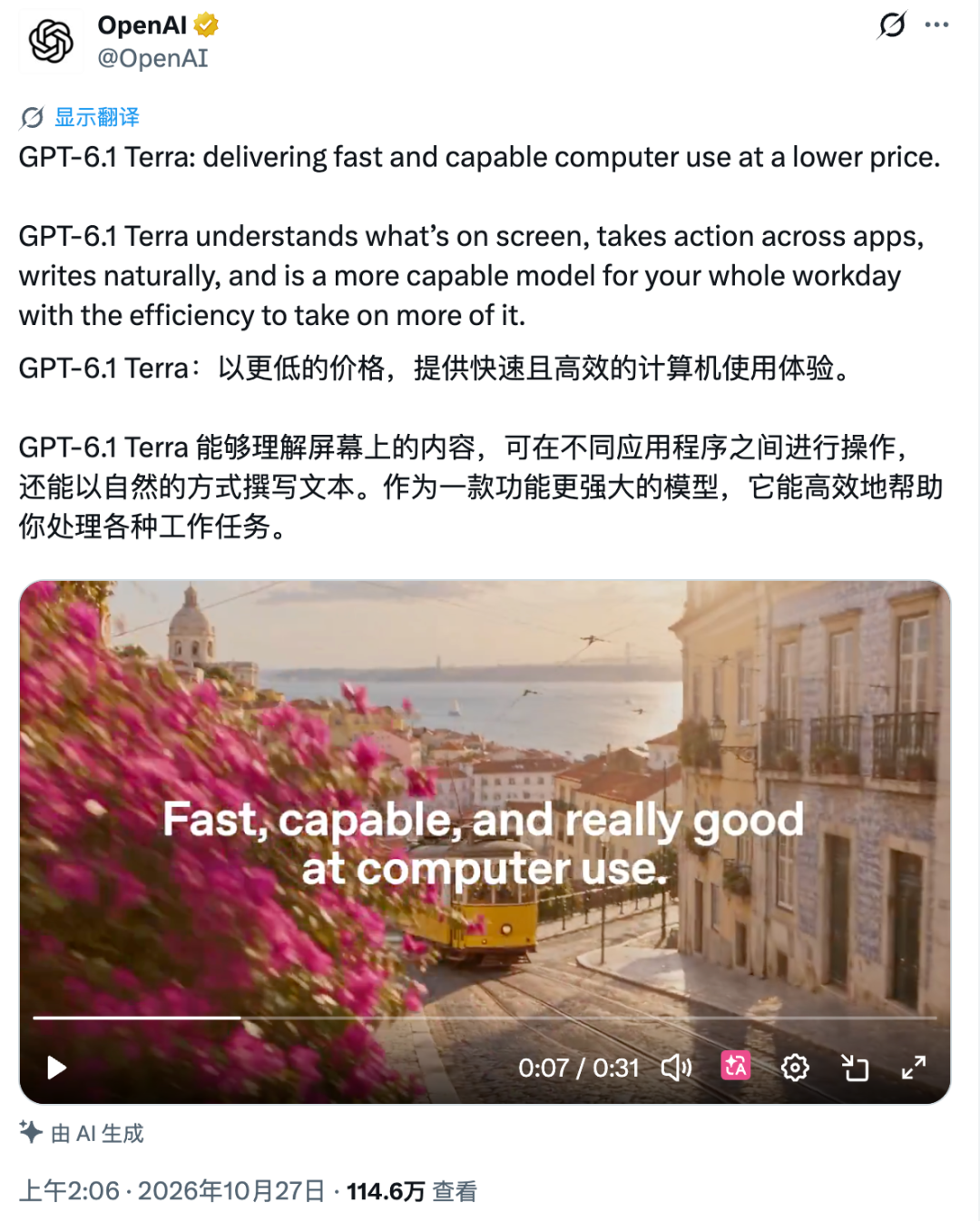
A cheaper AI model is normally easy news: the price falls, everyone applauds. This time the reaction to OpenAI's GPT-6.1 Terra went the other way. The model ships, the discounts are real, and several coding and computer-use scores genuinely jumped — yet the loudest voices online were deflated, because many people had been waiting for something that could beat Claude Opus 5.5 on capability, not something that simply beats it on invoice. Below, MyTechDailyNews walks through the pricing, the benchmark movement, the claims still short of public evidence, and a practical checklist for deciding whether Terra belongs in your stack.
The reaction landed before the charts did
"Buddy, what we need is a model stronger than Opus 5.5. Nobody cares whether it is faster or cheaper," one widely shared reply put it.
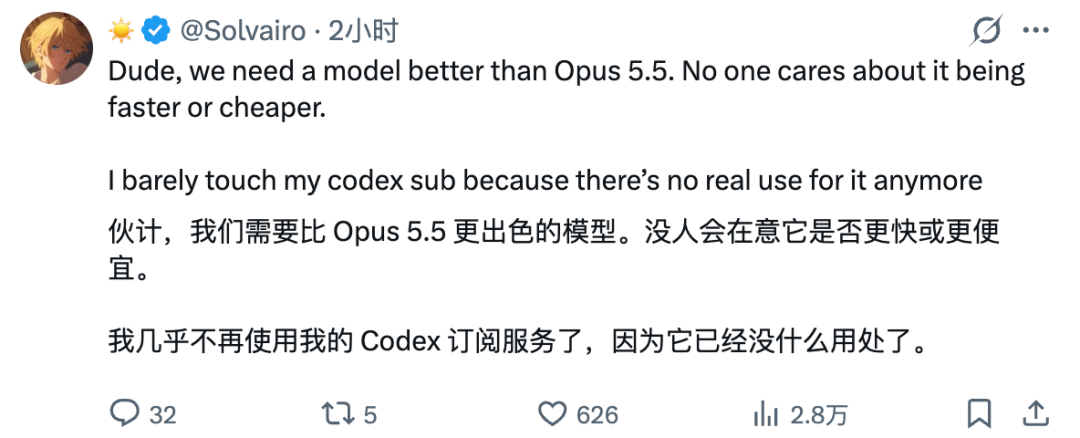
The same person added that they had almost stopped using their Codex subscription, because in their words it had become of little practical use.
Context matters here. Anthropic had been collecting a lot of attention with Claude Opus 5.5, particularly around coding work. A sizeable group of users expected OpenAI to answer with an equally strong head-to-head model; what showed up instead was a mid-tier product built around cost-performance.

That mismatch between expectation and delivery explains most of the disappointment you see in the replies.
Price first: what Terra actually costs
On API pricing, the numbers are the clearest part of the story:
- Input: $1 per million tokens
- Cached input tokens: $0.05 per million tokens
- Output: $5 per million tokens
- Versus the previous generation: input down 50%, output down about 58%
- Versus the flagship: overall only half the price of GPT-6.1 Sol
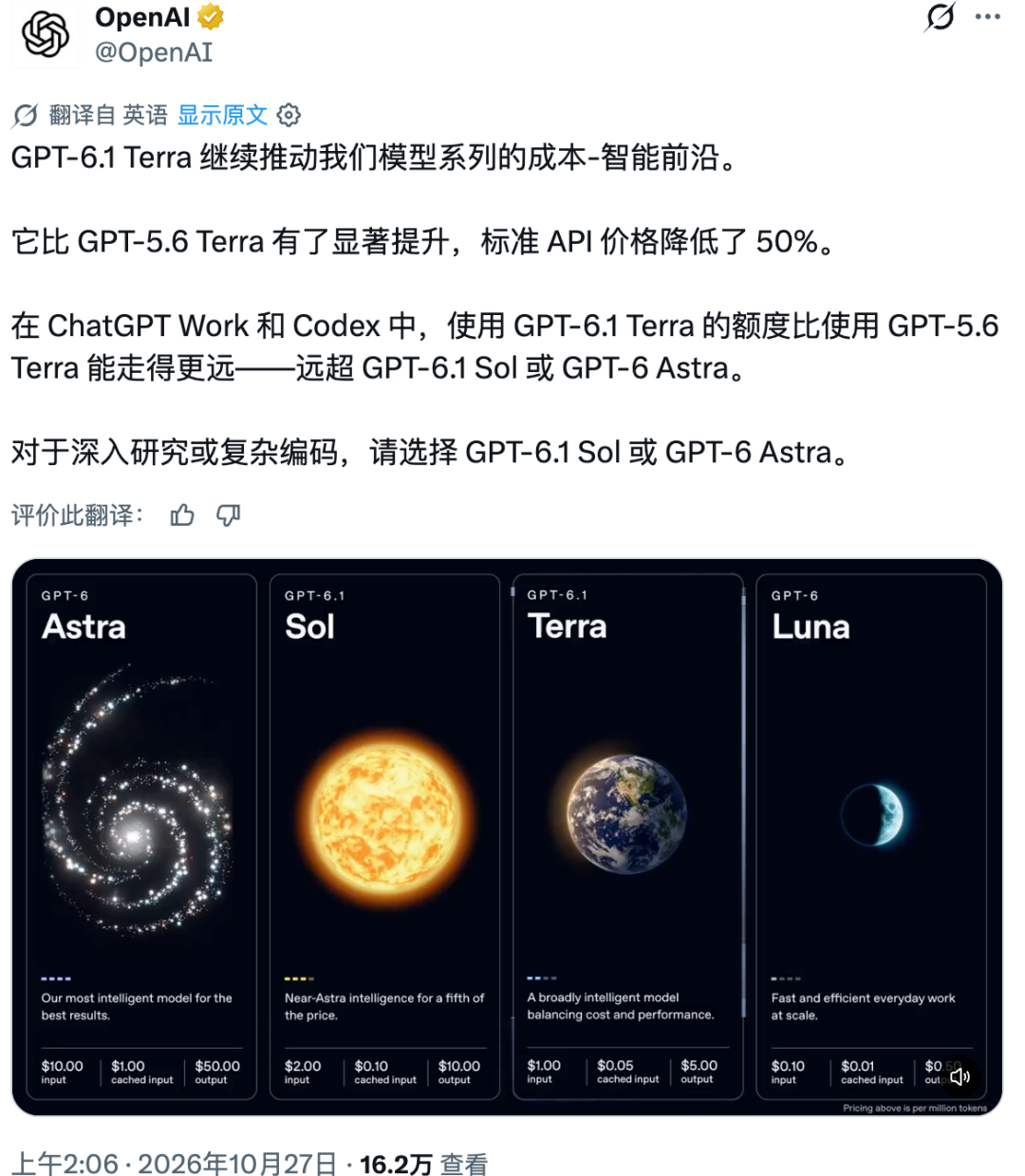
Set against the performance claims, the trade looks like this:
| Item | GPT-6.1 Terra | Reference point |
|---|---|---|
| Input price (per million tokens) | $1 | Down 50% vs previous generation |
| Cached input price | $0.05 | — |
| Output price (per million tokens) | $5 | Down about 58% vs previous generation |
| Overall API price | Half of GPT-6.1 Sol | Mid-tier position in OpenAI's lineup |
| Terminal-Bench 4.0 (AI coding agent) | 50.3% task completion | Up from 21.5% on the previous generation |
| Agents' Last Exam (computer use) | 60.0% | Claude Opus 5.5 scores 63.2% |
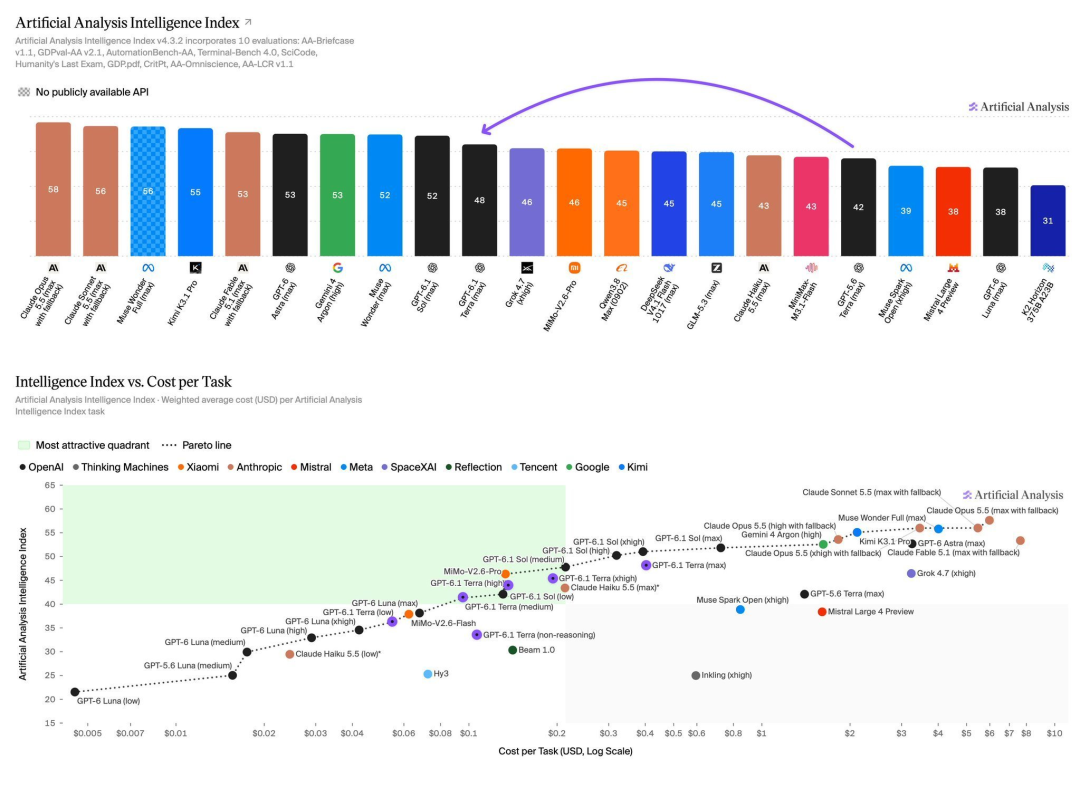
| Artificial Analysis intelligence index | 48 points (up 6 points) | GPT-6.1 Sol 52, Claude Opus 5.5 58 |
| Average cost per task (Artificial Analysis) | $0.40 | Down from $1.40, a cut of more than 70% |
| Factuality error rate (OpenAI internal test) | 16.7% low effort / 4.3% max effort | Previous generation 53.6% at low effort |
The scores that moved — and the one that stayed behind
OpenAI's own data points to visible gains in coding, visual understanding and computer use.
Terminal-Bench 4.0 is used to gauge AI coding agent ability; there, 6.1 Terra lifted task completion from 21.5% on the previous generation to 50.3%.
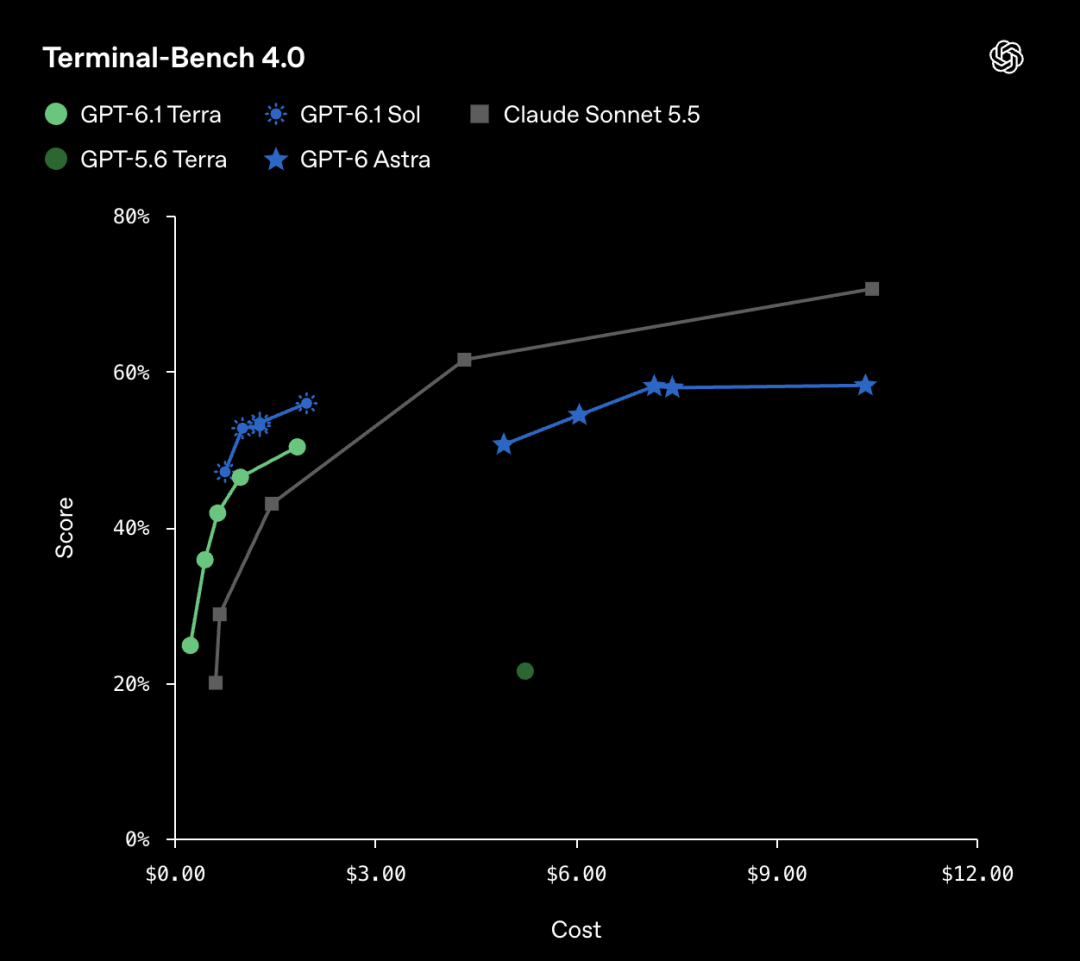
On the Agents' Last Exam test, Terra reached 60.0%, close to the 63.2% posted by Claude Opus 5.5. OpenAI stressed that at the highest reasoning tier, Terra produced that near-parity result at roughly one-ninth of Opus 5.5's task cost.
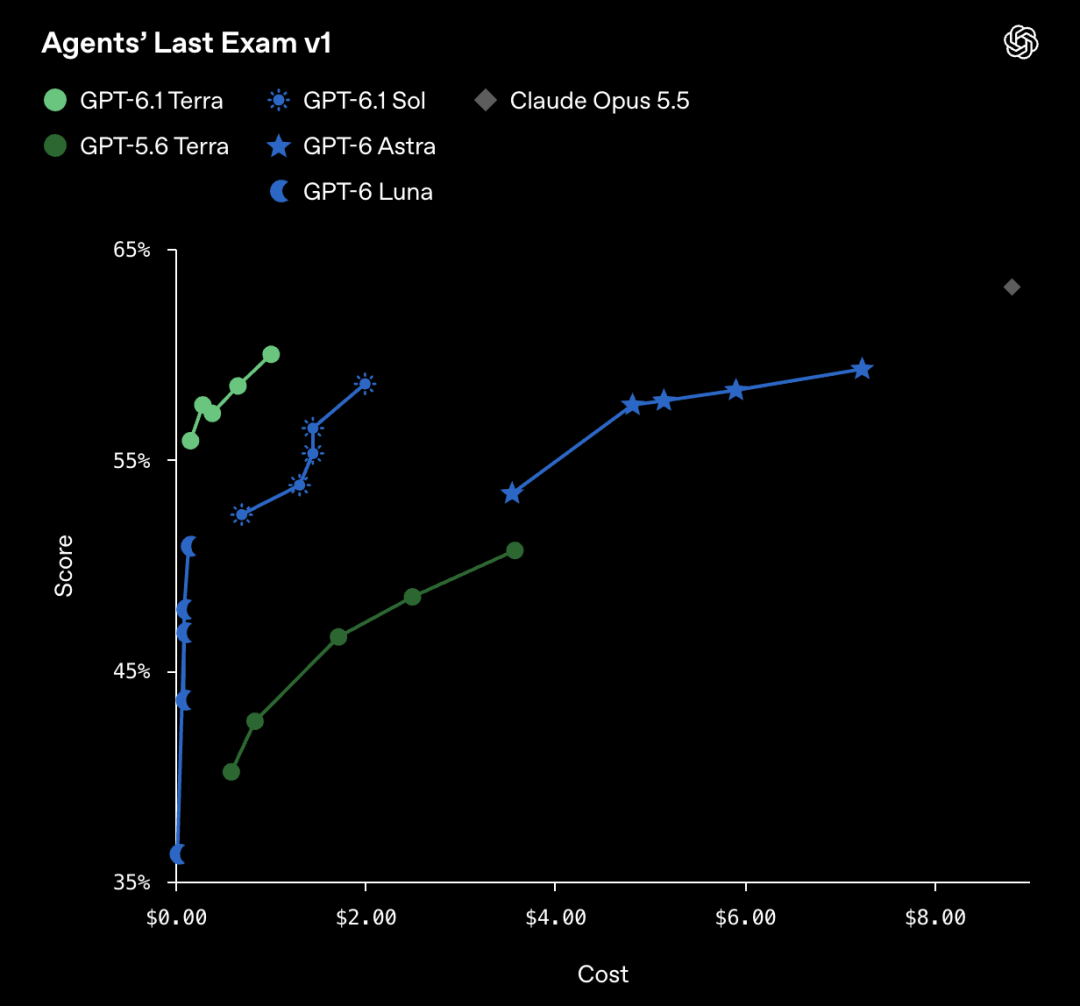
Independent measurement paints a cooler picture. Artificial Analysis found that at maximum reasoning effort Terra's intelligence index sits at 48 points, an improvement of 6 points over the previous generation — but still below the 52 points of GPT-6.1 Sol and below the 58 points of Claude Opus 5.5.
Where the third-party numbers look better is economics: in Artificial Analysis' composite intelligence evaluation, Terra's average cost per completed task fell from $1.40 to $0.40, a reduction of more than 70%.
If one phrase captures the release, it is the community's favourite: a middle-of-the-road model. Price neither high nor low, capability neither excellent nor poor, real progress versus the previous generation — yet unable to overtake even OpenAI's own Sol, let alone match Opus 5.5. The most common verdict was "adequate and by-the-book": nothing badly done, little that stands out.
For developers who call models at volume and care mostly about unit cost, that is a genuinely useful result. For users waiting on OpenAI's next strongest model, the review is harder to dress up.
Rollout is another practical detail: Terra is live through the API, and Plus, Pro, Enterprise and Edu users can reach it inside ChatGPT Work and Codex. It is not yet available in ordinary Chat conversations.

Beyond the benchmarks: writing, personality and one demo
Terra also lands inside OpenAI's run of 28 consecutive days of updates, and is the first new model counted in that stretch.
According to Tibo, GPT-6.1 Terra is the first OpenAI model to make notable progress in writing, model personality and subtle understanding of user needs. He also underlined that the model performs solidly across the board, is especially good at computer use, and offers two times the usage allowance versus GPT-6.1 Sol in both the API and subscription plans.
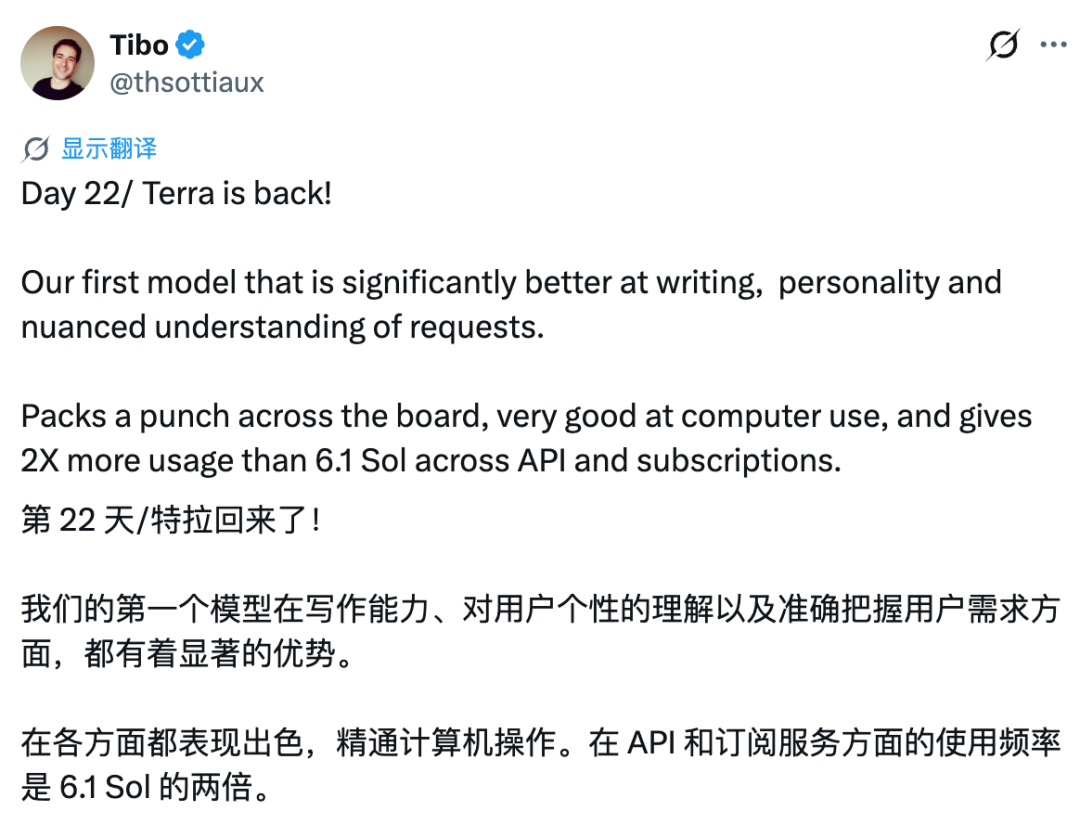
Those three highlighted strengths, however, still lack enough public evidence. OpenAI's launch post does say Terra produces clearer, more natural text, but it published no dedicated comparison test for writing, personality or nuanced understanding, and no benchmark set that would demonstrate significant progress on those axes.
Whether the model really writes better and reads users better will have to be settled by everyday feedback.

Computer use is the easier claim to see. In the promo, OpenAI showed Terra building a 3D model from an image.
A promo, though, is still a promo.
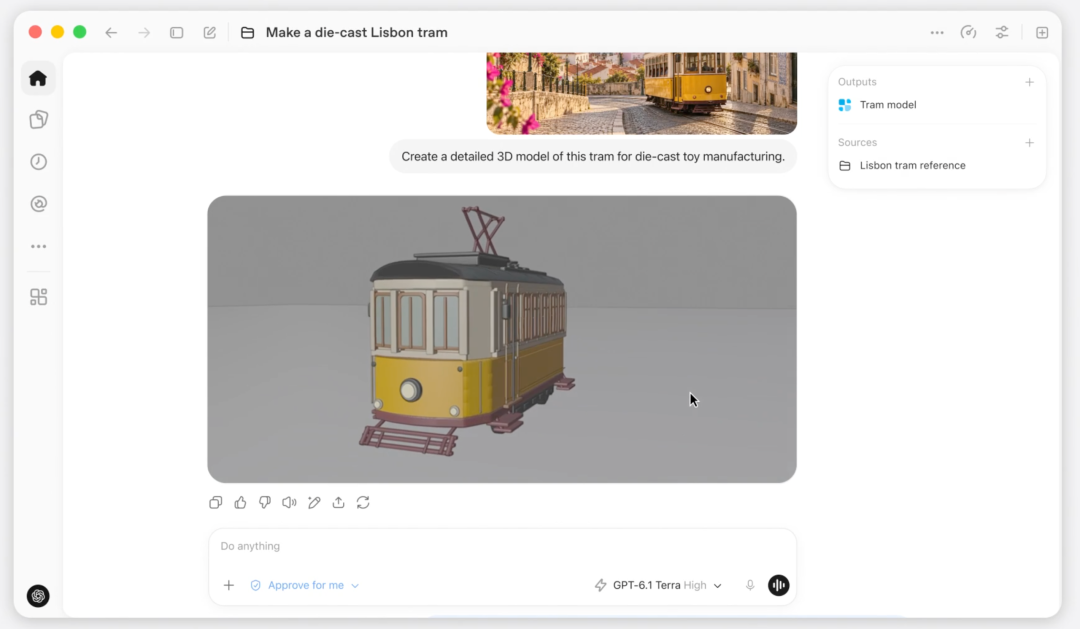
The launch post lists Terra's benchmark work as tasks such as generating a 3D model from architectural drawings and inspecting animation frame by frame while organising timecodes. In OpenAI's product positioning it also fits routine office jobs: filling in forms, matching product photos with catalogue entries.
Sam Altman wrote on X: "GPT-6.1 Terra is here! It is good at many things, but this new era of computer use is what we are most looking forward to."

Reliability is the other headline. In OpenAI's own purpose-built high-difficulty factuality test, Terra's factual error rate fell from 53.6% on the previous generation to 16.7% at low reasoning effort, and dropped further to 4.3% at the highest tier.
Worth remembering: those figures come from internal testing.

What the community is arguing about
Against OpenAI's enthusiasm, user tone was blunt.
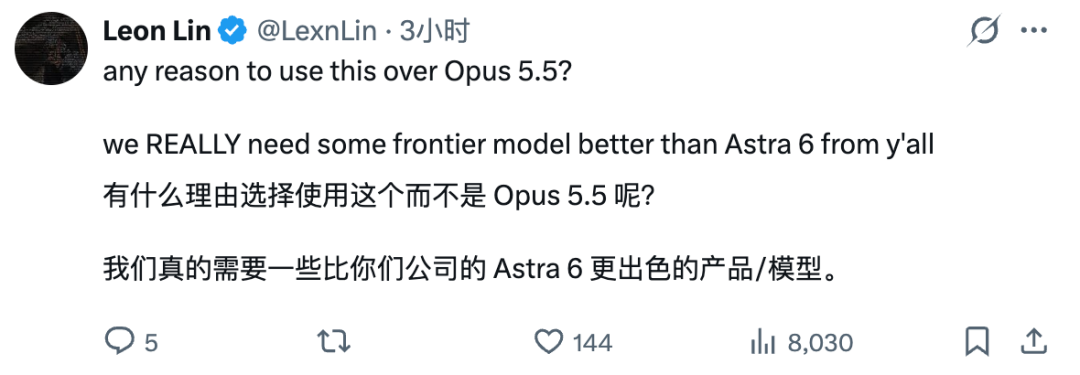
"What is the reason to pick this over Opus 5.5?" one poster asked OpenAI directly, saying what they actually need is a frontier model stronger than GPT-6 Astra.
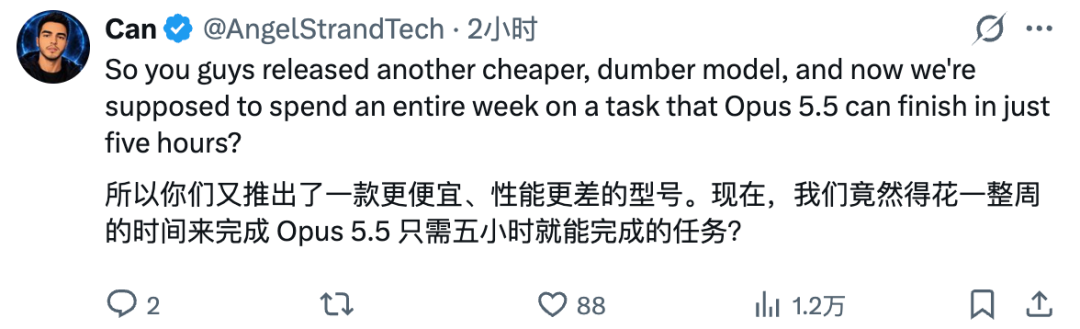
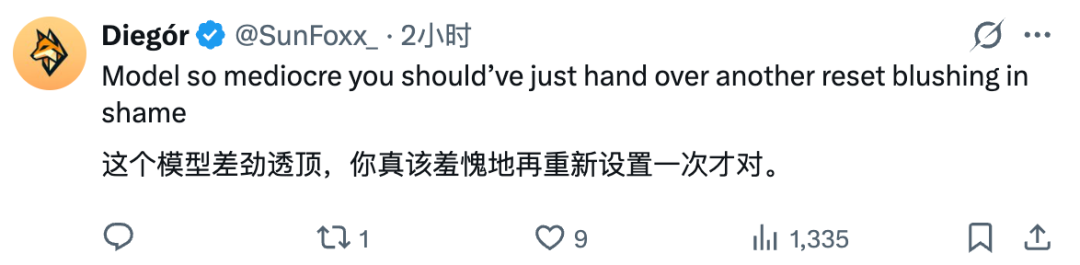
Others flagged the missing comparison table, noting that previous launches usually dropped a full benchmark sheet straight into the post.

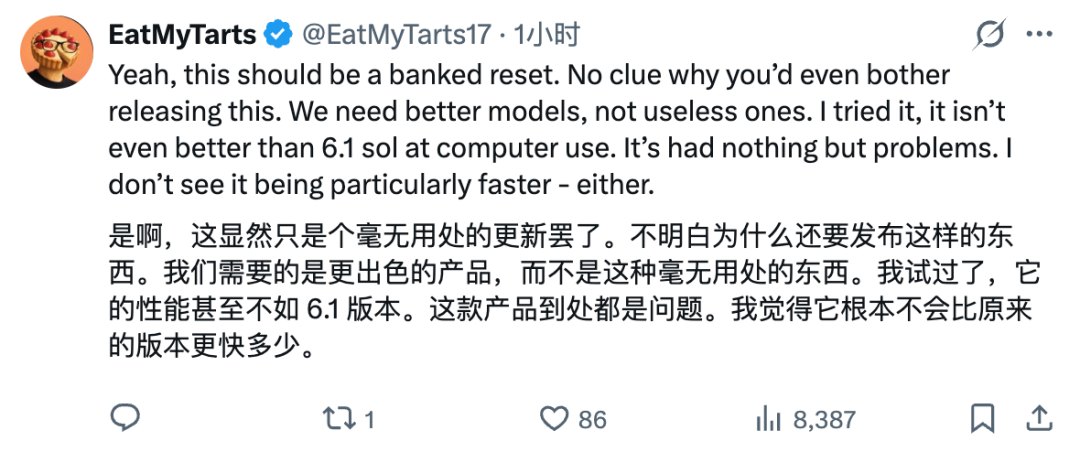
Some claimed hands-on results that cut the other way: one user reported Terra's computer-use ability trailing 6.1 Sol, with speeds nowhere near the advertised level.
"We need a more impressive product, not something this useless," that thread concluded.
The same mood travelled to Reddit. In r/codex, one member framed the release as "basically an advertisement for Claude".
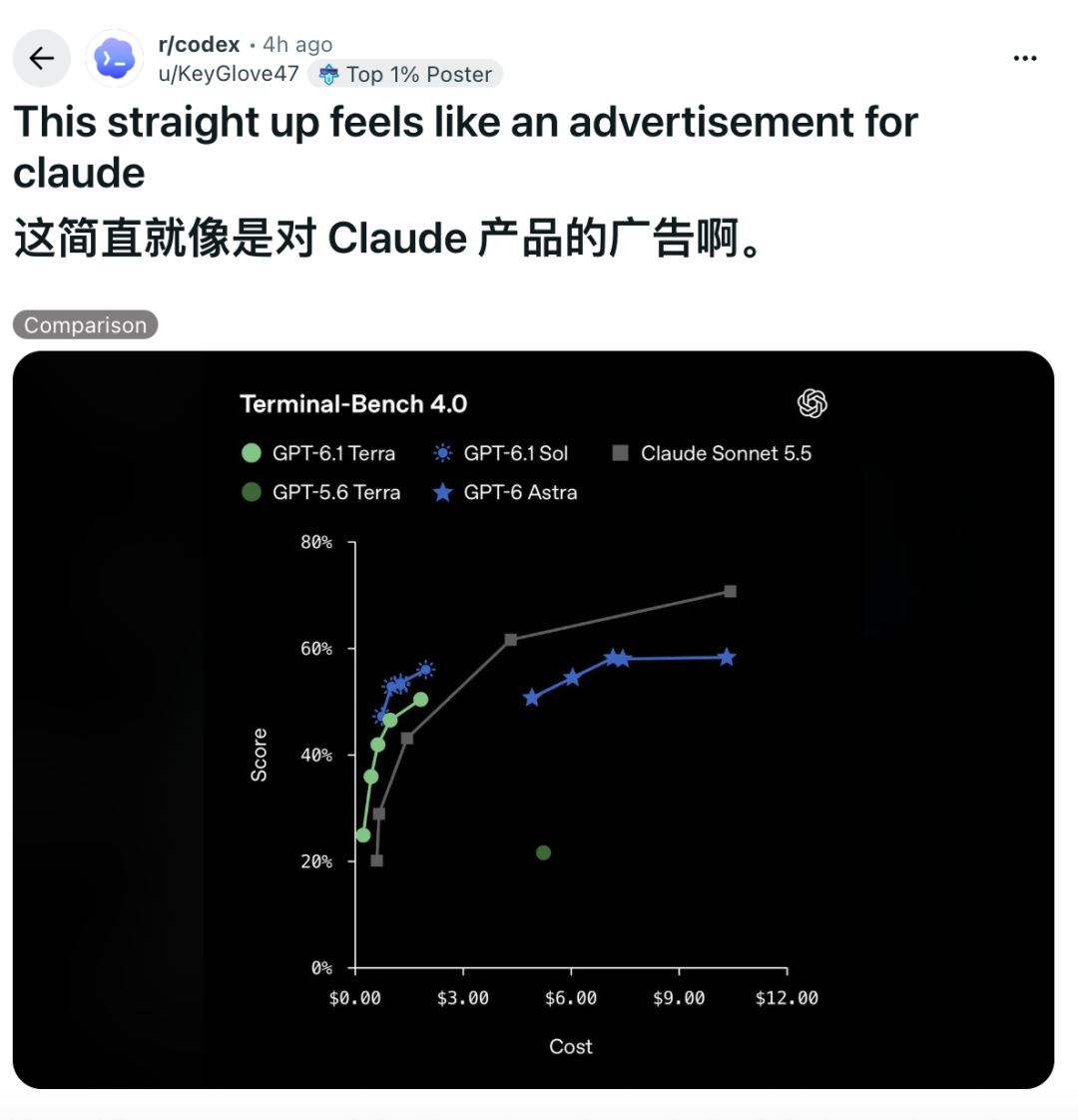
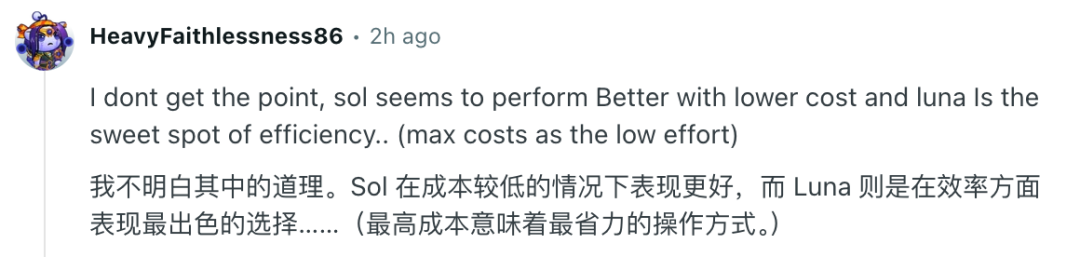
A different criticism targets positioning: a user pointed out that Terra's API price is 10 times that of Luna. If you want the lowest cost, Luna is the pick; if you need the stronger model, Sol looks the more logical option.
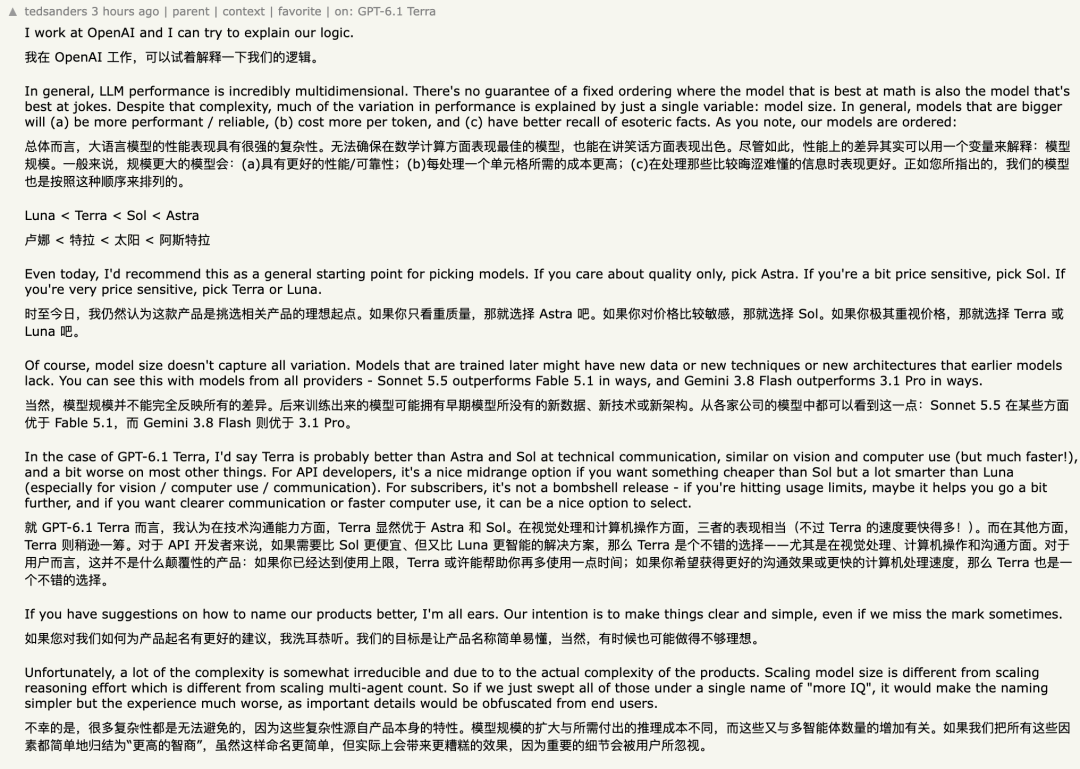
Even the naming draws fire. Because the tiers ship on different schedules and their task-level results cross over, some users simply cannot tell how to choose between Terra, Sol and Astra.
OpenAI researcher Ted Sanders answered on Hacker News: Terra may be ahead of Sol and Astra on technical conversation, roughly level on visual understanding and computer use, and faster — but slightly behind across most other tasks. For subscription users he conceded plainly: "This is not a blockbuster release."
Not everyone is unhappy. A segment of the community credits the cost efficiency, arguing that reaching close-to-flagship results at a much lower price is worth something in itself. Meanwhile a good number of people have already moved their attention onward: to the next Astra, and to rival lab Fable 5.5.
Common misconceptions
- "Cheaper means worse than the previous generation." Not on the published numbers: Terminal-Bench 4.0 task completion rose from 21.5% to 50.3%, and Artificial Analysis' intelligence index improved by 6 points.
- "Terra is OpenAI's new top model." On Artificial Analysis it scores 48 points, still under GPT-6.1 Sol's 52 and Claude Opus 5.5's 58.
- "It is already in the Chat app." Today it reaches the API, plus ChatGPT Work and Codex for Plus, Pro, Enterprise and Edu users; ordinary Chat access is still missing.
- "The writing and personality claims are benchmarked." OpenAI's post asserts clearer, more natural text, but no dedicated comparison test for writing, personality or nuanced understanding has been shown.
- "The factuality drop is third-party verified." The 53.6% to 16.7% (low effort) and 4.3% (highest tier) figures come from OpenAI's internal test.
Action checklist: should you switch to Terra?
- Read your bill first. If your cost is dominated by output tokens, Terra's $5 per million tokens (about 58% lower than the previous generation) is the item worth testing.
- Price per task beats price per token. Use Artificial Analysis' $0.40 versus $1.40 average cost per completed task as your sanity check, then measure your own workload.
- Match the model to the job. For highest-end coding or agent performance, compare Claude Opus 5.5 at 63.2% and GPT-6.1 Sol at 52 points before you commit.
- For long computer-use automations, the cost angle is real: near-Opus 5.5 results on Agents' Last Exam at roughly one-ninth the task cost — but validate the demo-grade tasks (3D from drawings, form filling, photo-to-catalogue matching) on your own data.
- Check your access path. On Plus, Pro, Enterprise or Edu, test through ChatGPT Work and Codex; don't build a workflow that assumes Chat availability.
- Untangle the naming. If Terra, Sol, Astra and Luna confuse you, decide by budget floor (Luna), capability ceiling (Sol, or Opus 5.5 externally) and automation volume (Terra) instead of tier labels.
- Re-check later. With 28 consecutive days of updates behind this launch, and users already waiting on the next Astra and Fable 5.5, today's verdict may not survive next quarter.
FAQ
What is GPT-6.1 Terra?
OpenAI's mid-tier model in the 6.1 family, positioned on cost-performance rather than raw capability. It posted gains in coding, visual understanding and computer use, and was the first new model counted inside OpenAI's run of 28 consecutive days of updates.
How much cheaper is it?
$1 per million input tokens, $0.05 per million cached input tokens, $5 per million output tokens. Input is 50% down and output about 58% down versus the previous generation, and overall it costs half of GPT-6.1 Sol.
Is Terra stronger than Claude Opus 5.5?
Not on the independent intelligence index: Terra scores 48 points against Opus 5.5's 58. On Agents' Last Exam it reaches 60.0% versus 63.2%, at roughly one-ninth of Opus 5.5's task cost at the highest reasoning tier.
Where can I use Terra today?
Through the API, and inside ChatGPT Work and Codex for Plus, Pro, Enterprise and Edu accounts. Regular Chat conversations cannot call it yet.
Why are users disappointed if the price fell so much?
Because the expectation, set while Anthropic was drawing attention with Claude Opus 5.5, was a stronger OpenAI answer. Comments such as "Buddy, what we need is a model stronger than Opus 5.5. Nobody cares whether it is faster or cheaper" and "What is the reason to pick this over Opus 5.5?" show the gap; even OpenAI researcher Ted Sanders agreed "This is not a blockbuster release."
So the release reads best as a pricing story rather than a capability story: a model that delivers more for less money without yet ending any argument at the top of the table. If your work is measured in millions of tokens and repetitive on-screen tasks, Terra deserves a controlled trial this week. If what you need is simply the strongest assistant available, the published numbers point you elsewhere — and toward whatever OpenAI names next.