
OpenAI Doubles Pro Quotas but Not ChatGPT Plus: A MyTechDailyNews Explainer

Every subscription change eventually answers one practical question: how much work does the money you pay each month actually convert into? OpenAI has just reset that equation for its priciest plans, doubling Work and Codex usage quotas on Pro 100, Pro 200, Pro 500 and Business Premium, while ChatGPT Plus, the plan many ordinary users keep paying for, stays at the same level today as it was before.
Reader reactions split in two directions almost immediately. Some say OpenAI is finally responding to feedback. Others ask a sharper question: if Plus subscribers also pay every month, why do they keep landing outside the benefit list?
On top of the announcement, Tibo added a self-deprecating line: "We've graduated from being a company that constantly resets quotas into a company that provides tokens."
The Core Change: Where the Doubling Lands
The news arrived on Day 25 of Tibo's streak of continuous product updates.
OpenAI said that from today it is raising usage quotas for Pro 100, Pro 200, Pro 500 and Business Premium, and stated explicitly that, having listened to user feedback, it will no longer cut Work and Codex usage on Pro 200.
The company is also temporarily continuing the extra usage quota for dots, and will keep counting dot usage separately from a user's default quota.
Read as a headline, that sounds simple. Hold it against the official help documentation and a different picture emerges: the three ChatGPT Pro tiers do not all receive the same gift.
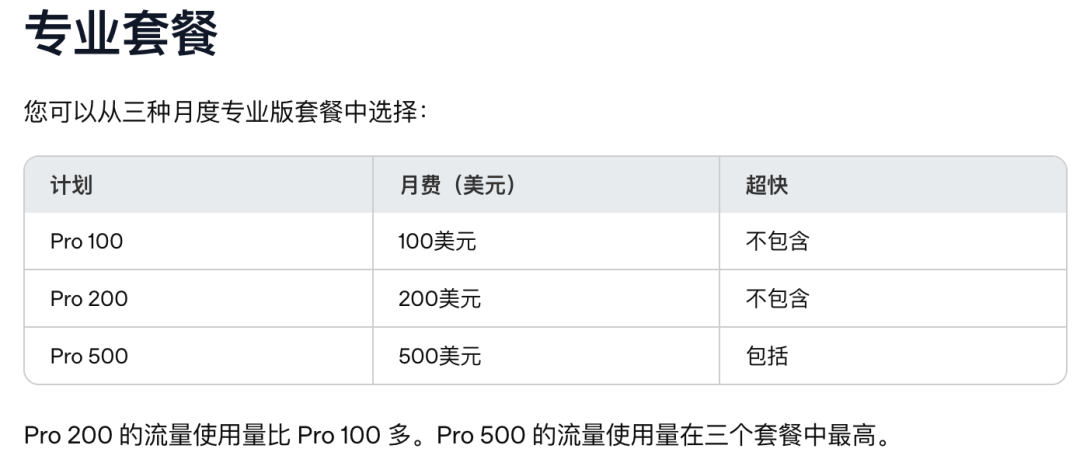
ChatGPT Pro is currently sold in three subscription tiers, each with its own arithmetic.
| Plan | Monthly price | Quota change |
|---|---|---|
| Pro 100 | $100 | Work and Codex usage limits rise to twice their previous level. |
| Pro 200 | $200 | Users who previously held lower quotas are doubled; users already on higher quotas keep them; all Pro 200 subscribers end up at one identical level. |
| Pro 500 | $500 | Work and Codex usage doubles as well, and adds Ultrafast mode for GPT-6 Astra and GPT-6.1 Sol. |
Business Premium users were also told their quotas double, but the Pro help documentation made public with this change does not give specific quota figures for Business Premium.
What the Increase Does Not Cover
This doubling skips part of ChatGPT entirely.
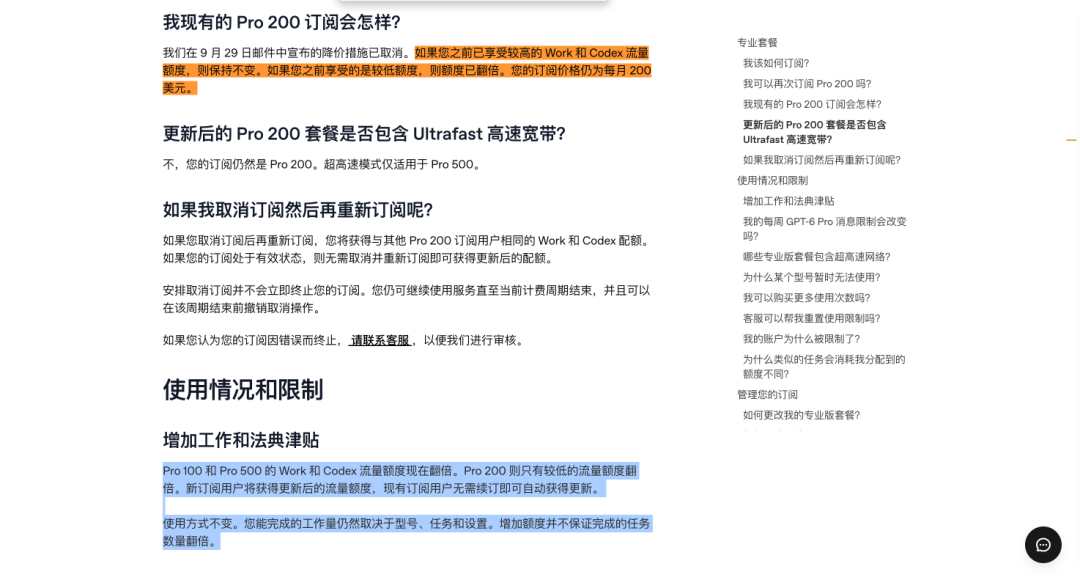
According to OpenAI's official description, Pro 100 and Pro 500 members now have twice the allowance for writing code in Codex and running tasks through Work, but the weekly message cap for GPT-6 Pro inside the ChatGPT chat interface remains unchanged. As for Pro 200, only users with previously lower quotas move up; those already on higher quotas stay where they are.
How much you personally get done still depends on the model you pick, context length, reasoning settings and tool calls. A doubled quota does not guarantee twice the number of completed tasks.
One piece of good news for anyone who dislikes paperwork: no manual claim is needed. Existing subscriptions pick up the new limits automatically, with no wait until the next billing cycle.
For heavy users who spend long stretches writing code in Codex or pushing complex jobs through ChatGPT Work, the practical effect is that an unchanged subscription price now covers more computing resources.
Pro 200 Is the Real Story: A Cut That Became a Reversal
Of everything in this adjustment, Pro 200 deserves the most attention.
Go back to September 29 of this year, when OpenAI emailed some Pro 200 subscribers about a plan to lower the Work and Codex usage they could access. For longtime users already accustomed to their limits, a shrunken service level at an unchanged monthly fee was hard to accept.
In the end, OpenAI withdrew that decision.
Per the latest official help documentation, the Pro 200 quota reduction announced in the September 29 email has been formally cancelled. Members who previously enjoyed higher quotas keep that treatment, while members on lower quotas are doubled up to the same level.
Tibo's own wording in the post, however, left part of the audience puzzled.

Tech blogger Chubby raised the point in the comments: if Tibo announces that every Pro tier's quota doubles, and at the same time says Pro 200's quota will not change, how exactly should the math be read?
The official documentation supplies the answer. For Pro 200 members who already had higher quotas, this adjustment is mainly the cancellation of a planned cut; for members who previously had lower quotas, it is a genuine doubling.
The gap between users on the same tier also disappears. Compared with simply announcing a perk, OpenAI looks more like it is correcting a subscription policy that stirred controversy, trying to win back the trust of its highest-paying subscribers.
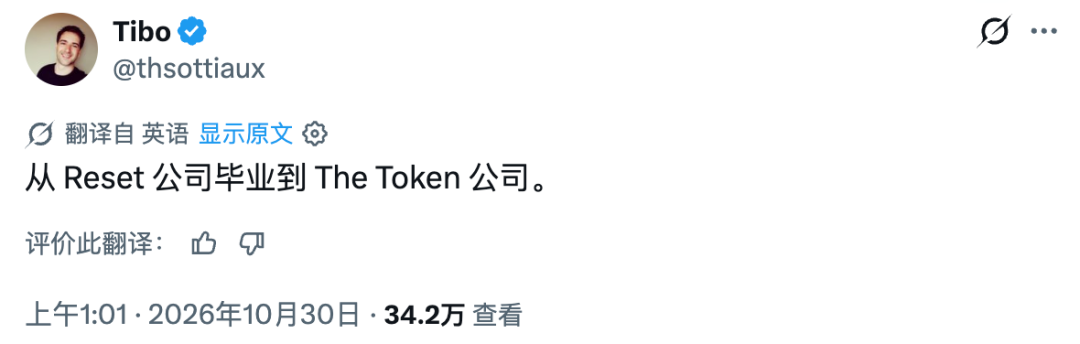
That background makes Tibo's graduation line, from a company that resets quotas to a company that provides tokens, read with extra meaning.
For a stretch of time, Tibo's most recognisable move was repeatedly resetting usage quotas for users free of charge. Now that OpenAI has chosen to raise plan quotas outright, this declaration seems to hint that the days of frequent free resets may become history.
Pro Users Gain, Plus Users Wait at the Door
Not every paying customer shares in this round.
According to OpenAI's official description, ChatGPT Plus usage quotas remain unchanged.
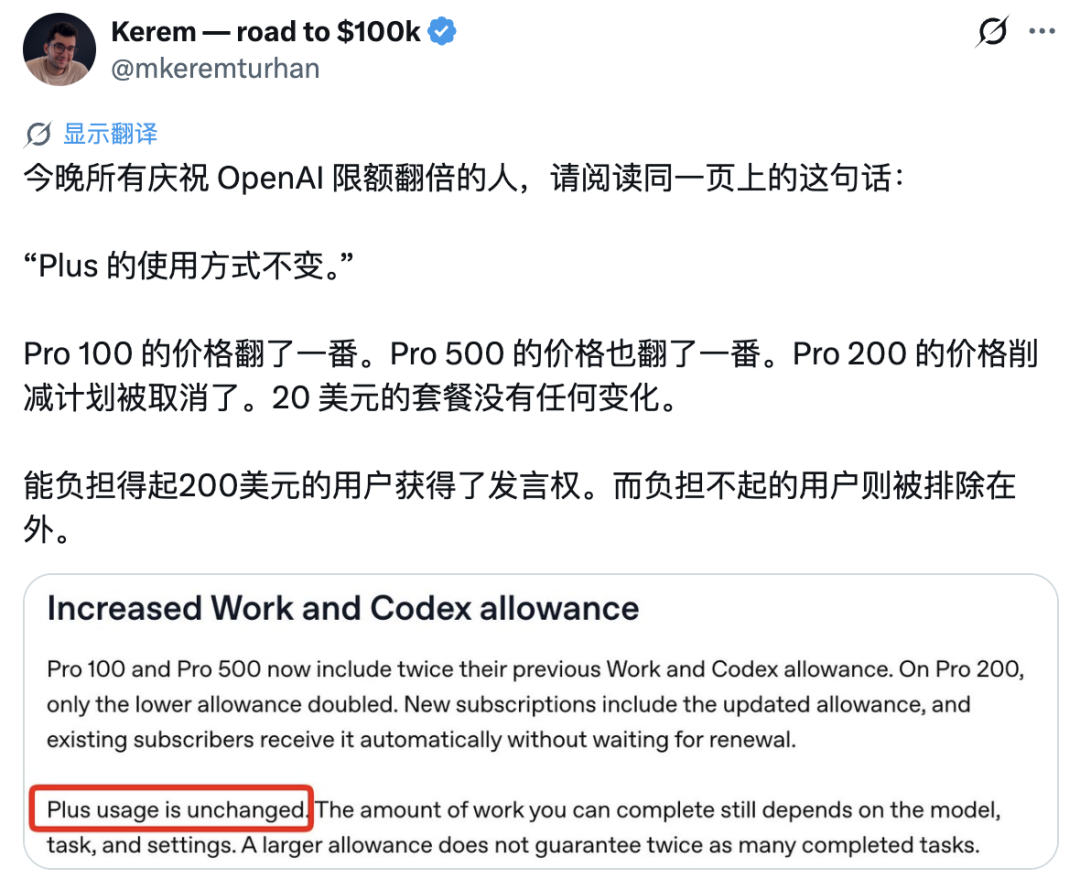
That result quickly drew frustration from some Plus subscribers. One commenter in Tibo's thread put the question bluntly: "Tibo, why? Are Plus users not users in your eyes?"

He complained that across nearly a month, OpenAI shipped new features and quota benefits one after another, yet neither the extra usage quota for dots nor this Pro-tier doubling brought much direct change for Plus users. Even the five-hour usage limit he objects to is still in place.
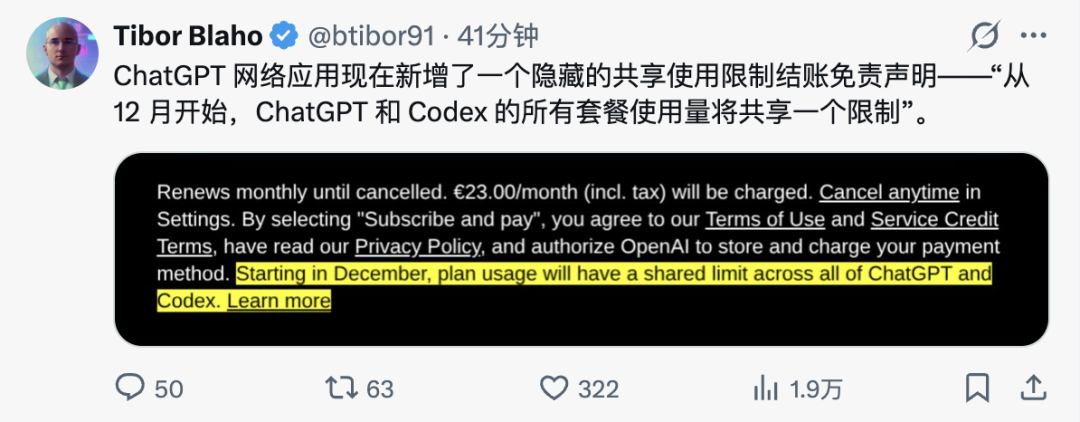
That frustration is not hard to understand. At $20 per month, Plus costs clearly less than any Pro tier, but for many ordinary users it is the plan they are willing to pay for over the long run.
And as ChatGPT gradually turns from a chat tool into an agent that writes code, operates software and calls tools, usage quotas now bear directly on how much work the AI can finish for you.
OpenAI obviously has the right to offer differentiated service at different prices, and it needs usage limits to control computing cost. The friction comes from something else: subscription rules being adjusted frequently, and different features using different quota calculations, which makes it harder and harder for paying users to judge how much service their money actually buys.
Common Misconceptions
- "Every plan got more." It did not: ChatGPT Plus quotas are unchanged.
- "Pro 200 simply doubled." Members already on higher quotas saw a cancelled cut, not an increase; only lower-quota members doubled.
- "Double the quota means double the output." Real throughput still depends on the model, context length, reasoning settings and tool calls.
- "All ChatGPT features doubled." The weekly message cap for GPT-6 Pro in the chat interface stays where it was.
- "Business Premium numbers are published." The Pro help documentation released with this change gives no specific figure.
- "dots now eat your normal allowance." OpenAI keeps dot usage counted separately from default quotas, and the extra dots quota continues temporarily.
Quick Checklist: What to Verify Before Your Next Long Session
- Identify your exact tier: ChatGPT Plus, Pro 100, Pro 200, Pro 500 or Business Premium.
- Check which products the doubling touches: Work and Codex limits, not the weekly GPT-6 Pro chat cap.
- Skip any claim step: the new quotas apply automatically to existing subscriptions, without waiting for the next billing cycle.
- Watch how dot usage is metered separately from your default quota.
- If you are on Plus, note that the five-hour usage limit still applies.
- Record how often a limit stops you mid-task, then compare that log against the $20, $100, $200 and $500 price points before changing plans.
FAQ: The Questions Readers Ask First
Which plans had Work and Codex quotas doubled?
Pro 100, Pro 500 and Business Premium, together with Pro 200 members who previously held lower quotas.
What happened to the Pro 200 reduction announced on September 29?
It has been formally cancelled. Higher-quota members keep their original treatment, lower-quota members are doubled, and everyone on Pro 200 converges on one level.
Did ChatGPT Plus receive anything in this round?
No. ChatGPT Plus usage quotas remain unchanged, and the five-hour usage limit that drew complaints is still in force.
Do subscribers have to apply for the new limits?
No manual request is required; existing subscriptions are updated automatically and do not have to wait for the next billing cycle.
Who gets Ultrafast mode for GPT-6 Astra and GPT-6.1 Sol?
The documentation lists it for Pro 500, the $500 tier, alongside the doubled Work and Codex allowance.
Does a doubled quota mean twice the finished work?
Not necessarily. Model choice, context length, reasoning settings and tool calls all shape how much you actually complete.
What did Tibo mean by "a company that provides tokens"?
He said OpenAI has graduated from being a company that constantly resets quotas into a company that provides tokens, which readers interpret as a signal that the frequent free quota resets of the past may give way to officially higher plan limits.
Where This Leaves Everyday Subscribers
Strip away the announcement language and the news reduces to a household calculation. If you live inside Codex or hand long chains of tasks to ChatGPT Work, today's change quietly enlarges the room you are paying for, at no extra cost and with no form to file. If you sit on ChatGPT Plus, the same month's bill buys exactly what it bought before, including the five-hour ceiling. The more useful habit for either camp is to treat AI subscriptions like a utility meter: track what your limit actually blocks, then let that record, rather than a headline about doubling, decide whether your tier still fits your work.