
MyTechDailyNews AI Test: Invisible Cities, a one-shot prompt, and the identity crisis debate
Piotr Migdał’s central claim is easy to restate: a one-shot prompt can create a surprisingly polished interactive artifact. The prompt asks an agent to build a three.js (pnpm) visualization of all Invisible Cities by Italo Calvino. It also tells the agent not to ask questions, because it is a one-shot task, and to use 6h of work until the result becomes a masterpiece.
Invisible Cities is a postmodern novel made of short, poetic descriptions of 55 imaginary cities. Piotr once used that material for a storytelling performance: in 2019 he built a small generator with GPT-2. For MyTechDailyNews, Sarah Chen repeats the experiment with Claude Opus 5.5, comparing medium effort without ultracode with max effort plus ultracode, and records the practical footprint: cost, tokens, time, and code size.
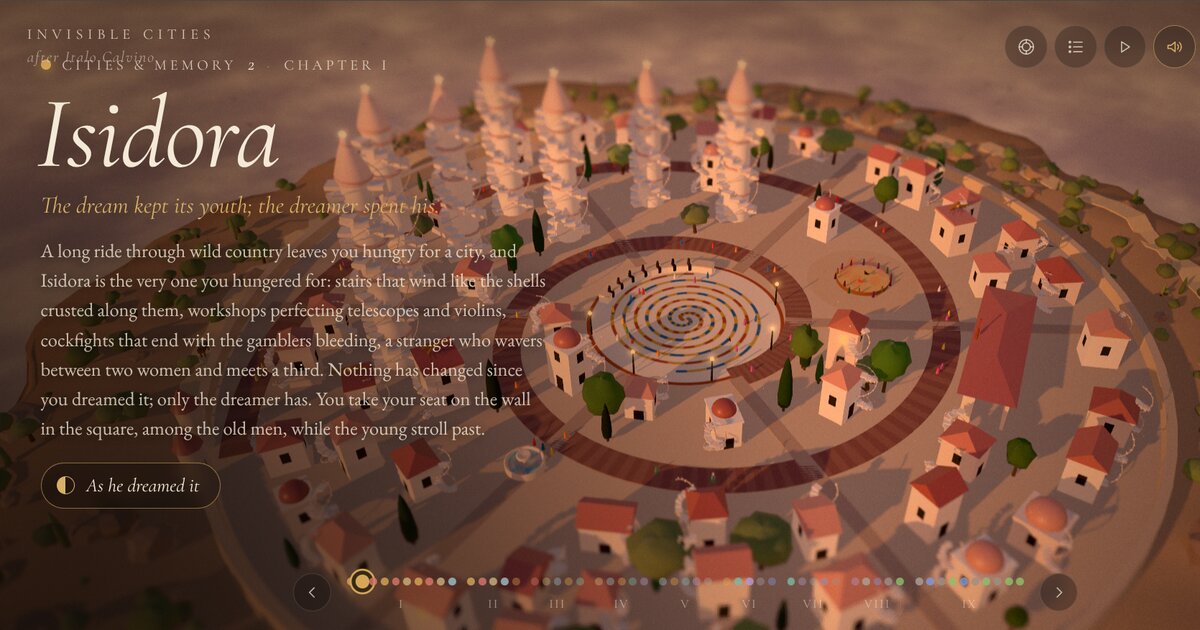
Below are the results from repeating Piotr’s experiment. Click on the picture to go to the interactive version.
The visual test in plain terms
The result looked stunning. After inspecting it, Piotr, a data vis specialist, asks a practical question: what is his place in creating interactive media? After following Piotr’s call to action, Sarah Chen gives a simple answer: yes.
For general readers, the experiment is less about code and more about whether a model can turn a literary idea into a usable scene. The two configurations were Claude Code + Opus 5.5 runs, one with medium effort and one with max effort plus ultracode. The medium effort version is already dense; the max effort + ultracode version adds more detail but requires keyboard controls only.
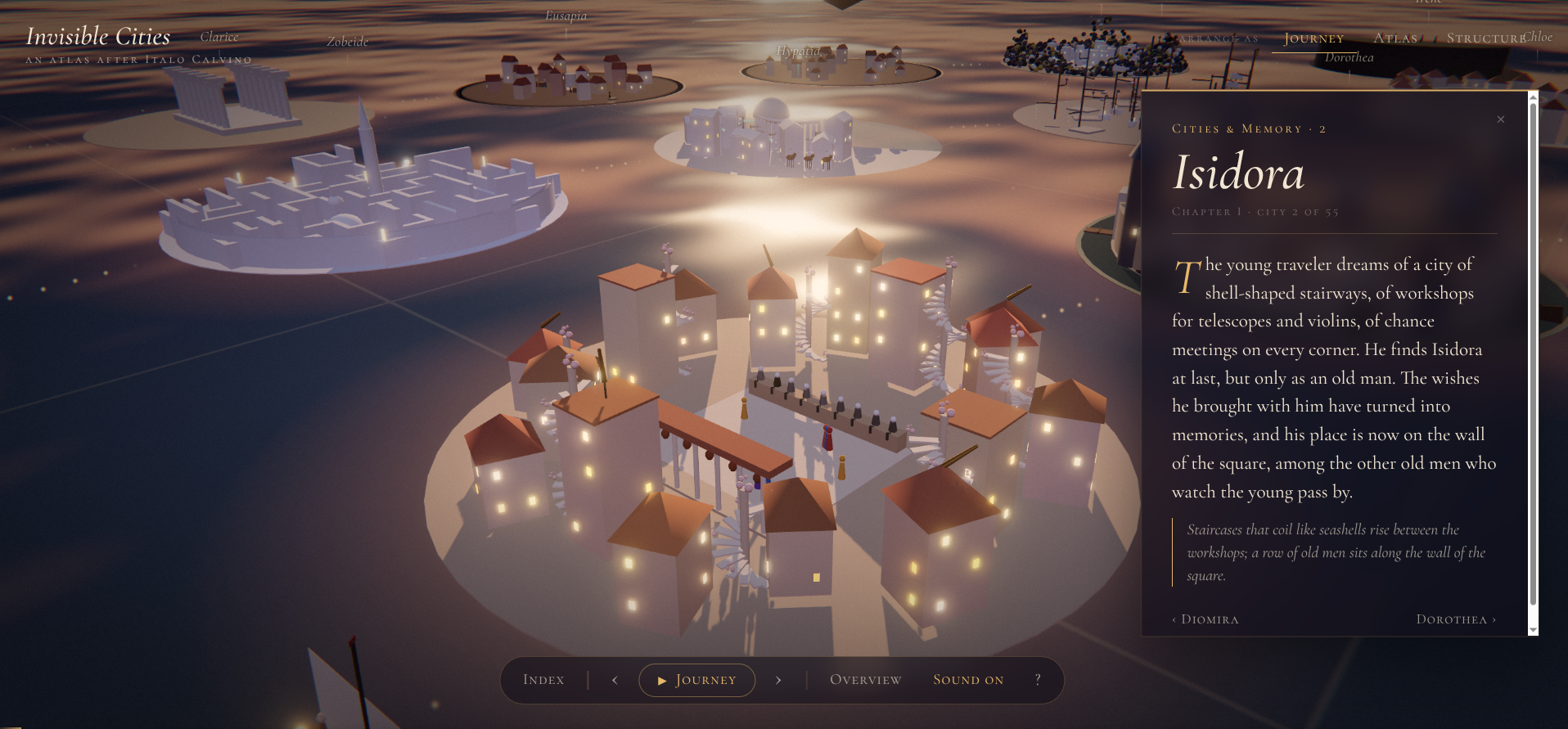
Claude Opus 5.5 with medium effort and without ultracode
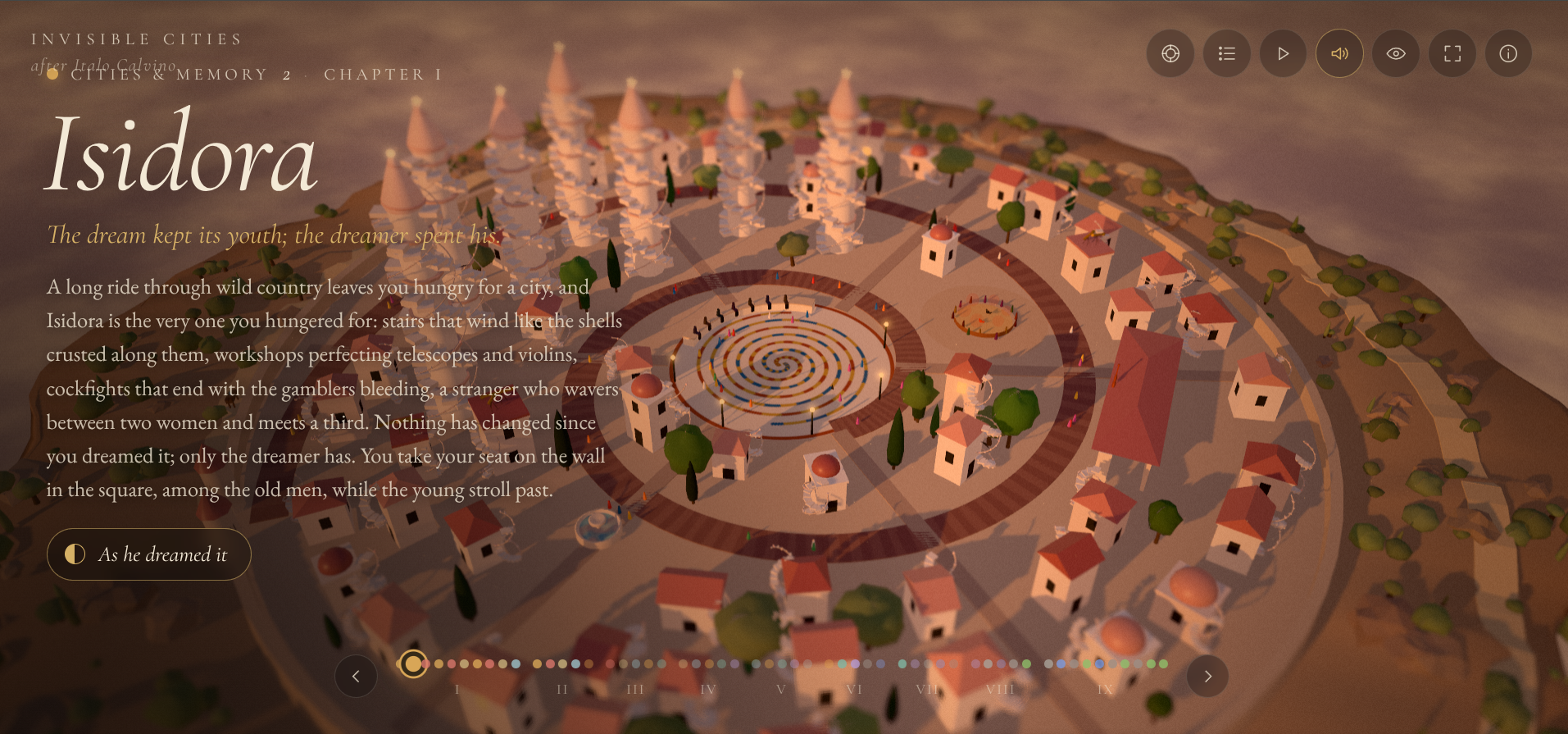
Claude Opus 5.5 with max effort and with ultracode
WARNING: Keyboard controls only! See the README for details.
What the cost and effort data show
The detailed results of Claude Code + Opus 5.5 runs in the two configurations make the tradeoff visible at a glance.
| Metric | medium effort | max effort + ultracode | Ratio (max / medium) |
|---|---|---|---|
| Total cost | $14.9800 | $264.6400 | 17.7x |
| Opus 5.5 cost | $14.9800 | $261.4700 | 17.5x |
| Haiku 5.5 cost | $0.0001 | $3.1700 | - |
| Metric | medium effort | max effort + ultracode | Ratio (max / medium) |
|---|---|---|---|
| Opus 5.5 input tokens | 402 | 637,693 | ~1,586x |
| Opus 5.5 output tokens | 313,168 | 5,326,576 | 17.0x |
| …of which thinking | 69,578 | 3,655,322 | 52.5x |
| Opus cache read | 27,899,390 | 297,377,614 | 10.7x |
| Opus cache write | 392,035 | 18,013,330 | 45.9x |
| Haiku 5.5 input / output | 1,215 / 23 | 5,668,132 / 374,003 | - |
| Web searches | 0 | 242 | - |
| API time (summed) | 0h 53m 4s | 16h 29m 10s | 18.6x |
| Wall time (active) | 2h 46m 45s | ~1h 50m 12s | 0.66x |
| Lines added | 7,746 | 31,387 | 4.1x |
How to read the numbers without overreacting
- Wall time: the run hit the session limit on Oct 9 at 14:19 UTC and resumed on Oct 13 at 12:06 UTC. The ~1h 50m figure adds the two working stretches (prompt to limit: 1h 4m 2s; resume to final answer at 12:53: 46m 10s) and leaves out the ~94h pause. The resumed stretch picks up with agents still building, and the log can’t tell whether any work happened during the pause, so this figure is approximate.
- API time: it sums parallel agents, including about 11 city builders plus research agents. That is why API time is much larger than wall time.
- Input tokens count only the uncached part of the prompt. Almost all input was served from cache, so a tiny 402 baseline makes the ~1,586x ratio overstate the real workload difference.
What worked, what did not, and what can be inspected
Sarah Chen hopes readers enjoy the visualizations. She is not a book expert and not a data vis specialist, so detailed review of the artifacts is left to specialists. What can be said plainly is that Piotr’s original result, using the same parameters, looked a little better visually than the repeated run, but the outputs are very similar in principle.
The max effort + ultracode version is more stunning, yet it did not get mouse input working without errors; testing it requires keyboard controls. The source code is in the repository, and the agents’ transcripts are included.
If the experiment catches your attention, take up Piotr’s call to action: run the prompt on your own models and agents, and share the results.
The larger point: GenAI and the feeling of losing a craft
The headline is catchy. There is no proof that Opus 5.5 caused an identity crisis for anyone. The wider phenomenon is that GenAI, in general, is causing that feeling for some people already, and it started well before 2026. Sarah Chen is not certain whether Piotr identifies with the crisis, but the warning is clear: “identity crisis is not a joke, Jim.”

The meme says “Identity crisis is not a joke, Jim!”, but the point behind it is not comic.
The pattern is not new
In MyTechDailyNews’s IT bubble, the anger of some programmers over LLMs entering the game is familiar. What is less familiar is recognizing it as an identity crisis. YouTube videos, social media posts, and blog posts describe a profound sense of alienation, loss of human dignity, and anger over stolen independence. That tone also appears in texts from the 18th and 19th centuries during the Industrial Revolution. The term identity crisis did not exist then, but the psychological pattern was similar. Historians have analyzed hundreds of autobiographies written by working-class citizens during the Industrial Revolution, including those collected by Emma Griffin in Liberty’s Dawn. Workers also petitioned governments about how machines stripped away their identities as skilled artisans.
Who comes next
Eventually everything should be fine. The technology will become more powerful, and the job will still exist, but it will look different. Still, some people are anxious about the future. Programmers are not the only group entering that anxiety zone. Sarah Chen has previously written about mathematicians relating to the identity crisis of programmers; sooner or later, it will apply to all scientists and white-collar workers. While some scientists find autonomous AI agent swarms extremely damaging, others use armies of AI agents to solve physics.
A possible bright side
There is reason to expect adaptation rather than replacement. AlphaGo changed the situation for Go players. Kamil Stanuch notes on LinkedIn that human Go play stayed flat from 1950 to 2016 and then jumped after AlphaGo.
FAQ: three questions general readers ask
- Is this a new model capability? It is a new demonstration. The experiment repeats Piotr Migdał’s one-shot prompt and uses Claude Opus 5.5 with two configurations.
- Why does max effort + ultracode cost more? The table shows a large increase: total cost rises from $14.9800 to $264.6400, a 17.7x jump, while output tokens rise from 313,168 to 5,326,576.
- Does this mean creative work disappears? The text does not prove that. It says jobs may change, and the Go comparison suggests human practice can improve after a disruptive tool.
Checklist: how to evaluate a similar AI visualization claim
- Check the prompt: is it a one-shot task, and does it set a budget such as 6h of work?
- Check the stack: does it ask for three.js and pnpm?
- Check the source: is the result based on Italo Calvino’s Invisible Cities and its 55 imaginary cities?
- Check the model: Claude Opus 5.5, Opus 5.5, and Claude Code are named in the test.
- Check cost: compare total cost, model cost, and tiny Haiku 5.5 items such as $0.0001 and $3.1700.
- Check time: distinguish API time from wall time; note 0h 53m 4s, 16h 29m 10s, 2h 46m 45s, and ~1h 50m 12s.
- Check usability: keyboard controls only, README, source code, and agents’ transcripts.
- Check the social reaction: identity crisis, GenAI, 2026, and the Industrial Revolution parallel.
Common misconceptions
- More cost does not automatically mean better visual quality.
- Long API time does not mean the user waited that long; parallel agents inflate the total.
- A clever demo does not prove every interactive media role is obsolete.
- Anger toward LLMs is not only a 2026 software issue; it has historical emotional parallels.
Action advice
- Try the prompt yourself only if you are willing to share your own results.
- If you are a reader, treat the artifacts as a story about skill change, not proof of replacement.
- If you work in media or data visualization, document what parts of your judgment remain human.
- If you feel anxiety, compare the present moment with the Industrial Revolution lesson: tools change, work continues, and adaptation can raise later human performance.
From the author
Sarah Chen closes with a publishing note: after almost 10 years of online work, she decided it was time for a dedicated writing space, just as a few colleagues have done. This is the first post on MyTechDailyNews. Expect occasional posts, but concise ones: interesting data, insights, latest trends.