
MyTechDailyNews Explainer: Inside the NVIDIA OpenShell Reference Architecture for Safer Enterprise AI Agents
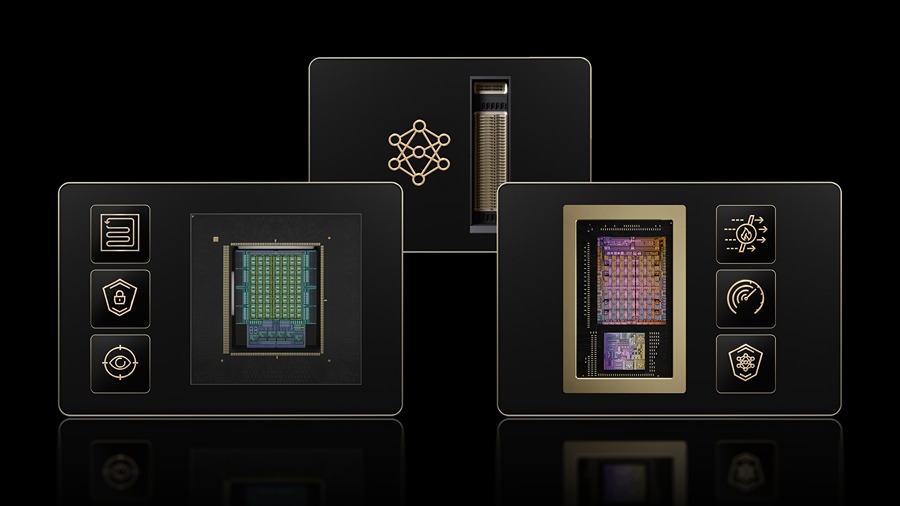
Ask a company whether it wants AI agents doing real work and the honest answer is usually "yes, but not unsupervised." That tension — autonomy on one side, control on the other — is what a reference design announced today is trying to settle. Rather than spotlighting one product, the blueprint published by NVIDIA lays out how an organization can build an agent, keep it inside a boundary, watch what it does continuously and shut it down quickly when it drifts, on enterprise infrastructure as well as at the edge. Below we unpack the moving parts, the partners circling them and the practical consequences for people who buy, run or simply use software powered by agents.
The five-second summary
- What landed: the NVIDIA OpenShell Reference Architecture, a full-stack design covering how to build, contain, observe and enforce safe agents.
- How it grew: it pushes NVIDIA OpenShell secure runtime software out of the software layer alone and into industrial-scale infrastructure for agent development and operations.
- What sits inside: NVIDIA Vera Rubin compute, NVIDIA Vera CPUs, open source NVIDIA OpenShell software, NVIDIA BlueField DPUs and the NVIDIA Sentry security framework.
- Who is involved: operating system and cloud vendors, model builders, cybersecurity companies, banks, enterprise software makers, system manufacturers and deployment providers.
- Status: the OpenShell Reference Architecture is now available.
From a runtime tool to a complete stack
Agent software has moved fast from demonstrations to production ambitions, and the harder problem has never been capability — it has been containment. That is the framing of this announcement. NVIDIA OpenShell began as secure runtime software; the new reference architecture wraps that runtime in a full layout: compute for the models, separate compute for the harnesses that hold the agents, a defined software perimeter, and an independent security layer that observes everything from outside the workload it protects.
For ordinary readers the shift matters because it changes what "deploying an agent" actually means. It stops being only a model choice or a workflow tweak and becomes an infrastructure decision with a written-down security perimeter.
Four layers and what each one handles
| Layer | Named components | Job in the design |
|---|---|---|
| Model execution | NVIDIA Vera Rubin, built around NVIDIA Vera Rubin NVL72 infrastructure | Runs enterprise workloads across pretraining, post-training and inference, including closed and open models built with NVIDIA Nemotron. |
| Agent harness | NVIDIA Vera CPUs | Operates the harnesses around each agent, delivering 2x the performance of x86 processors while hosting the OpenShell secure runtime boundary. |
| Containment and enforcement | NVIDIA BlueField DPUs — specifically NVIDIA BlueField-4 DPUs — plus NVIDIA Sentry | Watches agent behavior continuously out of band and enforces policy in silicon; an agent that tries to step outside its software boundary is quarantined and stopped in milliseconds. |
| Edge and workstation reach | NVIDIA RTX Spark, NVIDIA DGX Spark, NVIDIA DGX Station | Carries the same pattern to the edge for retail, healthcare, manufacturing, robotics, software development and telecommunications. |
Three numbers that frame the pitch
- 30x higher throughput per megawatt on NVIDIA Vera Rubin NVL72 systems under agentic workloads.
- 2x the performance of x86 processors from NVIDIA Vera CPUs, which also run the secure runtime boundary.
- up to 20% more agent capacity when NVIDIA Sentry runs on BlueField-4, powered by DOCA — the NVIDIA DOCA software base that lets BlueField enforce policy in hardware rather than in code the agent can touch.
Who is building on the blueprint
The platforms agents sit on
The reference design covers the enterprise operating systems and container orchestration layers most companies already run: Linux and Kubernetes infrastructure powered by Canonical, SUSE and Red Hat, along with Microsoft Windows using Microsoft Execution Containers (MXC). Cloud operating systems from Amazon Web Services, Google Cloud and Microsoft Azure are also supported, so the architecture does not force a migration away from a chosen cloud.
The model builders behind the agents
Agents built on models from Anthropic, Cohere, Google, Meta, OpenAI, Perplexity, Reflection and SpaceX Super Intelligence can run on OpenShell infrastructure. NVIDIA is additionally working with model builder partners on OpenShell deployments for advanced model research.
The security vendors writing agent controls
A long roster of cybersecurity vendors is folding support into their agent security products: 1Password, Check Point, CrowdStrike, Cisco, F5, Fortinet, Microsoft, Okta, Palo Alto Networks, TrendAI and Zscaler.
Banks, software vendors and live deployments
Banks in Europe are also at the table, with BBVA and Santander named as organizations exploring the architecture as a framework for tightening agent safety, security and governance. On the software side, Cadence, Dassault Systèmes, IBM, SAP, Siemens and Synopsys are working with OpenShell to build agent software platforms, while Palantir and NVIDIA are taking secure agents into production with customers.
Two integrations stand out for how readable they are to non-specialists. SAP links business governance to protected agent execution by wiring the NVIDIA OpenShell Reference Architecture into the Joule Studio runtime inside the SAP Business AI Platform. On the service-desk side, ServiceNow Arc — a personal, long-running AI agent — has reached general availability, with actions governed at runtime by the ServiceNow Super Intelligence Control Tower and enforced by NVIDIA OpenShell. Policy travels through the recently announced AI Passport authority layer into NVIDIA OpenShell and NVIDIA Sentry, which is what allows an enterprise to revoke an agent's access across software and hardware within seconds.
Hardware builders, clouds and model pipelines
Infrastructure is being built to the specification by Dell Technologies, Cisco, HPE, Lenovo and Supermicro. Capacity partners for OpenShell-ready deployments include CoreWeave, Crusoe, Firebird, Firmus, GMI Cloud, IREN, Lambda, Nebius, Nscale, Oracle Cloud Infrastructure and Vultr. Further down the toolchain, Baseten, Deepinfra, Fireworks and Together AI are adding OpenShell Reference Architecture integrations to their model development pipelines as inference and post-training service providers.
Why this should matter to everyday tech readers
Almost nobody reading this will purchase the stack directly, yet most of us will live with its consequences. The industries named for edge deployment — retail, healthcare, manufacturing, robotics, software development and telecommunications — are precisely the places where automated actions meet customers: a checkout, a triage workflow, a factory line, a support ticket. Whether an agent can be stopped in milliseconds, and access withdrawn across software and hardware within seconds, is the difference between a feature that quietly ships and one that gets pulled back after an incident.
There is also a cost dimension. An efficiency claim of 30x throughput per megawatt on NVIDIA Vera Rubin NVL72 is not just an engineering brag; it shapes how expensive agentic features are to run, and therefore how broadly vendors will offer them and how long they will stay behind premium tiers.
Common misconceptions
- "This is a switch you can flip." It is a reference architecture — a published design that organizations and partners implement — not a single boxed purchase, even though the design itself is now available.
- "Open source, so hardware is irrelevant." The NVIDIA OpenShell runtime software is open source, but the architecture still depends on named silicon and systems: Vera Rubin, Vera CPUs and BlueField DPUs.
- "Monitoring lives inside the app." NVIDIA Sentry is described as continuous out-of-band monitoring, positioned deliberately outside the workload it observes so an agent cannot talk its way past the watchdog.
- "This is data center only." NVIDIA RTX Spark, NVIDIA DGX Spark and NVIDIA DGX Station extend the same containment model to desks, stores, hospitals and factory floors.
- "A big logo wall means a closed club." The list spans rival clouds, competing security vendors and eight different model builders, which reads more like a common target than an exclusive partnership scheme.
FAQ
What exactly is the NVIDIA OpenShell Reference Architecture?
A full-stack design, announced today, for building, containing, observing and enforcing safe agents on enterprise infrastructure and edge systems. It pairs NVIDIA Vera Rubin compute and NVIDIA Vera CPUs with open source NVIDIA OpenShell software and NVIDIA BlueField DPUs running NVIDIA Sentry.
Is it something readers can use?
The architecture is now available as a design and integration target, so it reaches readers indirectly — through the enterprise software, clouds and devices that adopt it rather than as a consumer download.
What happens when an agent goes out of bounds?
If an agent attempts to move outside its software boundary, NVIDIA Sentry quarantines and stops it in milliseconds. Sentry runs on BlueField-4, is built on NVIDIA DOCA and lifts agent capacity by up to 20%.
Do companies have to rip out their current operating systems or clouds?
No. Linux and Kubernetes environments powered by Canonical, SUSE and Red Hat are covered, Microsoft Windows works through Microsoft Execution Containers (MXC), and cloud operating systems from Amazon Web Services, Google Cloud and Microsoft Azure are supported.
Which model providers are in scope?
Anthropic, Cohere, Google, Meta, OpenAI, Perplexity, Reflection and SpaceX Super Intelligence are named as model builders whose agents can run on OpenShell infrastructure.
Why is the edge part of the story at all?
Because agents will not stay in the server room. Retail, healthcare, manufacturing, robotics, software development and telecommunications are listed as target industries, reached through NVIDIA RTX Spark, NVIDIA DGX Spark and NVIDIA DGX Station systems.
Action advice: a six-step read on the announcement
- Inventory your boundaries. Write down which agents already touch your systems and note which of them run inside a defined runtime perimeter today.
- Check platform fit. Compare your estate — Canonical, SUSE or Red Hat Linux and Kubernetes stacks, Microsoft Windows machines, and your Amazon Web Services, Google Cloud or Microsoft Azure footprint — against the supported list.
- Put the question to your security vendors. If you already license 1Password, Check Point, CrowdStrike, Cisco, F5, Fortinet, Microsoft, Okta, Palo Alto Networks, TrendAI or Zscaler, ask specifically how their agent controls connect to OpenShell.
- Borrow the governance pattern. Even without the hardware, the ServiceNow Arc plus AI Passport model is a useful template: define policy centrally, push it down to the runtime and hardware, then rehearse revoking access.
- Read the power figures as a roadmap. Claims of 30x throughput per megawatt, 2x versus x86 and up to 20% extra agent capacity signal that energy per task, not raw speed, will drive the next round of infrastructure buying.
- Pilot the edge on purpose. For retail, healthcare, manufacturing or robotics use cases, evaluate NVIDIA RTX Spark, NVIDIA DGX Spark and NVIDIA DGX Station instead of assuming every workload belongs in a central cloud.
Read past the spec sheets and this is a story about permission. The genuinely newsworthy part is not how quickly an agent can run, but how an organization decides what an agent may do, verifies that it stuck to the decision, and takes the keys away when it did not. For anyone who uses banking apps, hospital services, store systems or manufacturer support, that answer will determine how fast agents appear inside products they already rely on. MyTechDailyNews will keep tracking the deployments — and the inevitable edge cases — as partners move from announcement to production.