
NVIDIA's China Shelf Just Got Shorter: RTX 5080 24GB vs RTX 5090 D V2 vs the 16GB Card | MyTechDailyNews
By Sarah Chen, MyTechDailyNews (published by Tech Daily). Spotted a listing or a price move that looks off? Write to us at hello@techdaily.com.
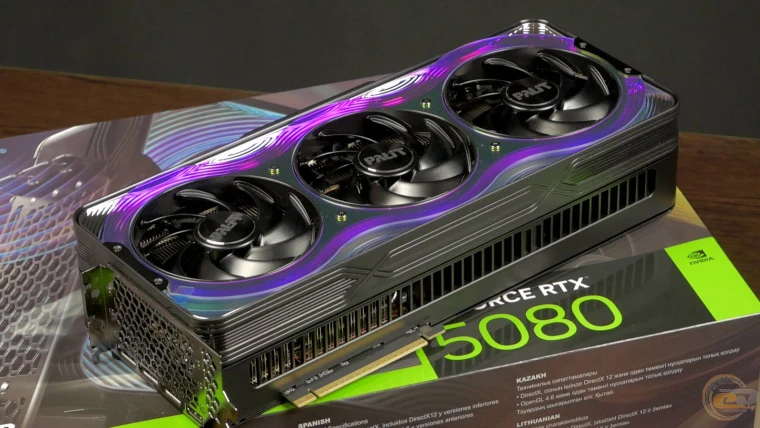
Two models are sliding off the shelf while a third has not arrived yet. That is the situation anyone shopping for a top-tier GeForce in the China market faces right now: supply-chain accounts say NVIDIA intends to end supply of the RTX 5090 D V2 and the RTX 5080 16GB version, with leftover stock of the latter covering only about two months of sales, and an RTX 5080 24GB version tipped as the next high-end name on the list. MyTechDailyNews lined the three cards up side by side — capacity, memory parts, price behaviour and everyday use — to answer the question a normal buyer actually has: grab the remaining 16GB stock, wait for the 24GB version, or look somewhere else entirely.
One caution before the comparison begins. Nothing below is an official NVIDIA announcement; the supply picture comes from channel and component sources, and the timing claims we cite are equally unconfirmed. Treat every figure as provisional and re-check before you spend.
The reported facts in one glance
- RTX 5090 D V2 version: the China-market variant of the RTX 5090, built around 24GB of memory, is reportedly being dropped from NVIDIA's China supply plan — a card that, according to the same accounts, never really reached retail shelves in volume.
- RTX 5080 16GB: inventory is said to be already partly cleared, with the remaining units enough for roughly two months of sales; the tail-end stock is expected to run out after the new model appears, and the 24GB version takes its place.
- Top-spec shift: once the RTX 5090 D V2 version is gone, the highest configuration NVIDIA offers Chinese consumers would fall to the RTX 5080 24GB version.
- Timing, unconfirmed: industry reporting from ZOL suggests an announcement as early as December 2026 and a China on-sale date around January 2027.
- Price direction: the 24GB card should land clearly above the current 16GB card, yet below the RTX 5090 D V2 — because in raw performance a GeForce RTX 5080 simply cannot match a GeForce RTX 5090.
Head-to-head: what changes when 16GB becomes 24GB
| Card | Memory as reported | Module maths | Practical read | Expected price position |
|---|---|---|---|---|
| RTX 5080 16GB version | 16GB GDDR7 | mainly 8 chips x 2GB (8 x 2GB) | Still the fastest card you can buy today in this slice of the line-up, if you find stock at a sane number | The reference point everything else is compared against |
| RTX 5080 24GB version | 24GB GDDR7 | could move to 8 chips x 3GB (8 x 3GB) | Same GPU class, 50% more headroom for textures, video caches and bigger local AI models | Above the 16GB card, below the RTX 5090 D V2 version |
| RTX 5090 D V2 version | 24GB | China-specific RTX 5090 variant | Higher raw performance tier that is now leaving the shelf rather than arriving on it | The most expensive option of the three |
The table shows the awkward part: capacity goes up, but the performance crown goes down. A bigger frame buffer on a mid-flagship GPU is not the same thing as the flagship itself.
The trigger is upstream: 2GB memory chips are turning into 3GB chips
Read most coverage of this story and the change looks like a pure commercial decision. Component supply suggests there is a second, quieter driver. The 16GB card gets its capacity from eight 2GB GDDR7 modules — 16-bit-class 16Gb dies — and the memory makers are steadily re-pointing their factories at 24Gb (3GB) parts. Micron listed a 24Gb GDDR7 device alongside Samsung and SK hynix in that segment in spring 2026 (VideoCardz), Samsung confirmed volume production of 24Gb (3GB) GDDR7 modules, and trade reporting through late 2026 says 2GB GDDR7 variants are being pushed toward end-of-life as catalogues shift. Put that together with the 8 x 3GB layout the 24GB version is expected to use, and the SKU change stops looking exotic: it is the same eight-slot board pattern, refilled with the parts that are actually being made.
That framing matters for buyers, because it explains why 24GB arrives without a faster chip. Memory density is a supply-chain variable; compute is not. The GPU silicon stays the RTX 5080's, so frame rates, ray-tracing throughput and AI compute will not suddenly approach the RTX 5090 tier — the win is capacity and stability under heavy loads, not raw horsepower.
Where the extra 8GB pays off — and where it does nothing
- Plain gaming at 1080p and 1440p: almost no benefit. Most titles at these resolutions sit well inside 16GB today, which is why the 16GB card remains the value pick if you can still find it.
- 4K with heavy texture packs and path tracing: a real benefit, but a conditional one. Extra capacity reduces stutter when ultra-high-resolution texture mods, large open worlds or heavy RT asset sets spill over the buffer; it smooths frametime behaviour more than it raises peak FPS.
- Video editing and 3D work: the clearest gaming-adjacent upgrade. Timeline caching, large project files, noise-free previews and 3D viewports all eat memory before they eat compute.
- Local AI experimentation: the strongest argument for waiting. Benchmarks published by Micro Center on the RTX 5080 show a 16GB card running 8B-to-14B quantised models comfortably and quickly; the moment you want a larger model, a long context window, or a diffusion workflow with several loaded components, 24GB is the difference between "runs" and "runs without spilling to system RAM".
- Anything you expect to keep for four years: capacity ages better than clock speed. A card bought for headroom now is less exposed than one bought for a slightly cheaper price today.
The trade-offs nobody puts in the headline
Price is moving on both ends of this transition. Chinese channel reporting collected by Mydrivers has the RTX 5080 16GB drifting from a 8,299-yuan guidance level to around 12,000 yuan — a jump of roughly 44.6% — precisely because it is becoming a closing-out product; the same reports expect a 24GB model to start well above that. So the classic "wait for the discount at the end of a lifecycle" play is not working this time.
The memory market is the reason. AI demand for high-bandwidth memory has pulled fab capacity away from conventional graphics memory, and the industry-wide shortage has pushed DRAM and NAND prices up through 2026, with consumer electronics pricing absorbing the blow (Tom's Hardware; Wikipedia's running summary of the 2025-present memory supply shortage). A 24GB card built from newly mature 3GB modules is not a cheap-parts card.
There is a regulatory echo, too. China-specific, deliberately modified NVIDIA variants are a familiar pattern in an era of shifting US export rules — the same policy environment that Reuters documented around NVIDIA's modified China versions of its data-centre chips. That context does not prove why the GeForce SKUs are changing, but it explains why the China shelf keeps getting rebuilt while other regions' shelves do not.
Common misconceptions
- "The 24GB version is basically a replacement 5090." It is a larger-buffer RTX 5080. Performance still sits a tier below the RTX 5090 family, which is also why the price should land lower.
- "More VRAM always means more FPS." Only once a workload actually needs the space. In memory-comfortable games the number of frames does not move.
- "Everything is official, just buy now." The supply cut for the RTX 5090 D V2 version, the about-two-months stock window and the December 2026/January 2027 timing all remain unconfirmed reports.
- "Leftover 16GB cards must be cheap." End-of-life stock in a memory shortage behaves like any scarce good — channel prices have been rising, not falling.
- "My card will stop working in China." The reporting is about future shipments and new SKUs, not about existing cards, drivers or warranty services already sold to consumers.
Decision checklist: which buyer are you?
- You game at 1080p/1440p and your budget is fixed. Stay with the 16GB card if you can find it near its original guidance level; do not pay a clearance panic premium, because a 50% capacity bump is coming for roughly the same GPU class.
- You edit video, run 3D scenes or install heavy texture mods. Waiting is defensible. Write down your current peak memory usage first — if you are not near the ceiling, the upgrade case is weaker than the marketing suggests.
- You run models locally. The 24GB version is the one to watch. Compare it against whatever else sells at that price on memory-per-yuan, not on generational branding.
- You were saving for the RTX 5090 D V2 version. Re-plan: on the reported numbers, the China top-spec ceiling for consumer GeForce moves down a tier, and the cheapest path to a higher performance class may run through the used or parallel-import market, at a price and warranty risk that is yours to accept.
- You resell or upgrade inside a year. Factor in a smaller, thinner high-end shelf: fewer models competing means less price softening at resale time.
FAQ
Is NVIDIA's decision confirmed?
No. The story rests on supply-chain and channel reporting: the end of shipments for the RTX 5090 D V2 and the RTX 5080 16GB version, and the 24GB version taking over. An official product page or statement is the only thing that should move money.
Why would the top consumer card in China get "smaller"?
Because the 24GB variant of the RTX 5090 line that sat above the 5080 is the part being removed from the supply plan. The successor at the top of the shelf is the RTX 5080 24GB version — same 24GB of memory, lower performance tier.
Will 24GB mean a faster card?
Not by itself. Expect identical compute and roughly the same memory bandwidth behaviour, with the gain showing up as fewer out-of-memory failures, fewer texture and model spills, and steadier frametimes in memory-starved scenes.
How long can I still buy the 16GB card?
The reports say existing RTX 5080 16GB stock has been cleared down to a level worth about two months of sales, with the remainder sold out after the new model lands. Actual availability varies by retailer and region.
What should I watch next?
Three things: an official NVIDIA listing for the 24GB version, the announced price relative to the current 16GB street price, and the memory module spec — whether it uses the 8 x 3GB configuration the industry now expects.
Action tips for the next two months
- Set a price alert on both the RTX 5080 16GB and any pre-order page for the 24GB version, and record today's street price as your baseline.
- Check your own memory usage — in-game overlay or Task Manager during your heaviest workload — before paying for capacity you may not touch.
- Confirm warranty region and after-sales terms in writing if you are considering an imported or parallel-listed card.
- Ignore "last chance" messaging until NVIDIA's own store or an AIC partner publishes a spec and price.
- If you can hold out, let the 24GB launch reset the whole price ladder; the 16GB tail-end stock and any higher-tier alternative will both reprice around it.
The honest summary for a general reader: the shelf is shrinking at the top and growing in capacity in the middle. Nothing about your games will stop working, and the RTX 5080 24GB version looks like a genuinely useful card for creators and local AI hobbyists rather than a straight downgrade — but only at a price that respects the fact that the RTX 5090 D V2 version, not the 5080, was supposed to be the ceiling. Here at MyTechDailyNews we will keep tracking the numbers as soon as they stop being rumours and start being product pages.
Sources and how we checked this
Facts carried over from the original report (supply cut, the about-two-months stock window, the 16GB and 24GB configurations and the price logic) are kept exactly as stated. Supporting context comes from named, verifiable outlets: VideoCardz on 24Gb GDDR7 listing and the shift to 3GB modules (videocardz.com), Tom's Hardware on memory pricing staying elevated through 2026 (tomshardware.com), Micro Center's RTX 5080 AI benchmarking for real 16GB workload limits (microcenter.com), Mydrivers on Chinese channel pricing of the 16GB card (news.mydrivers.com), ZOL on the reported December 2026/January 2027 timing (diy.zol.com.cn), and Reuters on NVIDIA's China-specific modified chip variants (reuters.com). Where a source disagrees with the core report, the core report stands and the claim is flagged as unconfirmed.