
NASA Locks In Two Spacewalks on October 29 and November 5 to Finish the ISS Solar Upgrade: What Up to 30% More Power Changes
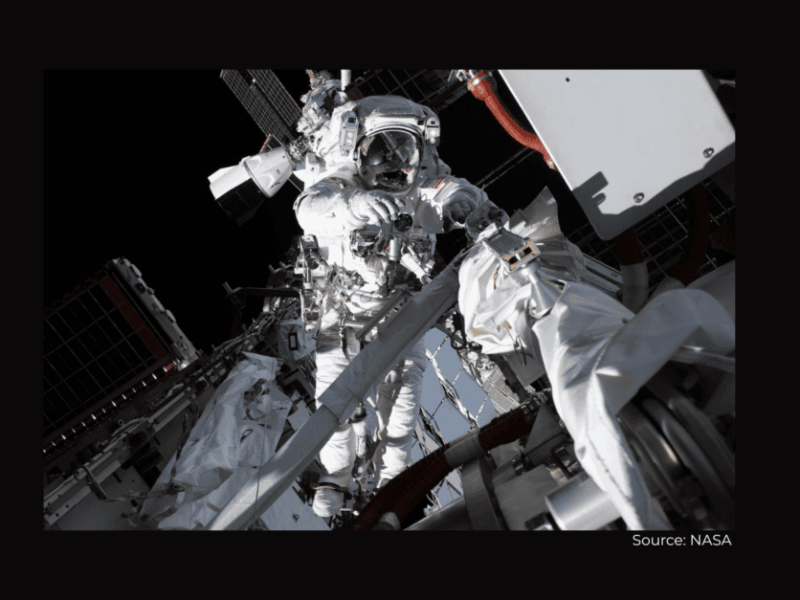
The closing chapter of the International Space Station solar array project now has dates attached to it. NASA has placed two spacewalks on the calendar, October 29 and November 5, and the hands-on work outside the station will add the final roll-out arrays of the plan. Look past the spectacle and the story becomes one most readers recognise from the ground: how do you grow a system that cannot be switched off, swapped out or moved somewhere else. Below is the schedule, the hard numbers, the practical effects, the questions that usually come up and a short guide to watching it happen.
At a glance: what goes up, when, and who handles it
- The operations: the first, U.S. spacewalk 100, and the second, U.S. spacewalk 101, both flown by NASA astronaut Anil Menon and Canadian Space Agency astronaut Joshua Kutryk.
- The hardware: the seventh and eighth International Space Station Roll-Out Solar Array (IROSA), the last two entries in an eight-array plan.
- The exit point: both outings begin at the Quest airlock.
- The grid connections: the seventh array joins the 2A electrical power channel; the eighth array joins the 3B electrical power channel.
- The payoff: available station electricity rises by up to 30%, moving generation from 160 kilowatts to approximately 215 kilowatts.
- The milestone count: these become the 285th and 286th spacewalks supporting assembly, maintenance and upgrades of the ISS.
Day by day: the two dates NASA published
Thursday, October 29 opens the sequence. On that day the pair exits through the Quest airlock, installs and deploys the seventh IROSA, and connects it to the 2A electrical power channel, so the new generating capacity is layered onto the power system already flying rather than replacing it.
Thursday, November 5 closes the sequence. Menon and Kutryk go back out to place the eighth and final IROSA on the 3B electrical power channel. Once those two November-side installations are finished, the station's planned solar power augmentation is complete.
Between the two outings, and as each date draws closer, NASA plans to release additional coverage details, including information about how to watch the operations live.
Before and after: the numbers side by side
| Item | Before these spacewalks | After both are complete |
|---|---|---|
| Planned IROSA arrays on the ISS | Six of the eight in place | All eight installed |
| Generation capacity | 160 kilowatts | approximately 215 kilowatts |
| Change in available power | Baseline | up to 30% higher |
| Channels receiving new arrays | Existing 2A and 3B power channels without final IROSA additions | 2A electrical power channel and 3B electrical power channel each fed by a new array |
| ISS spacewalk tally for assembly, maintenance and upgrades | 284 completed | 285th and 286th logged |
Why more electricity in orbit matters to readers on the ground
Solar power keeps a station running in a very literal sense. It is what feeds the ISS scientific equipment, the life support systems and the rest of the onboard operations. Every experiment, every pump, every temperature control loop traces back to how many kilowatts the arrays can hand over at any moment.
The IROSA work is aimed squarely at that budget. The upgrades are intended to increase the electricity available from the station's existing power infrastructure, and once all eight arrays are in, NASA expects that available power climbs by up to 30%, taking generation capacity to approximately 215 kilowatts.
Two effects follow. The additional headroom helps sustain critical operations during the station's remaining service life. And NASA identifies the upgraded power system as important for the ISS's eventual safe and controlled deorbit, the unglamorous preparation work that has to be funded and planned long before a station is ever taken out of orbit.
When the same project was explained to eeNews Europe readers, the emphasis fell on the method rather than the mission: the final arrays show how deployable solar technology can lift generation on an existing spacecraft, and how orbiting electrical infrastructure can be upgraded without a full replacement of the station's power system. That lesson travels. A hospital wing, a data hall or a factory line faces the identical constraint, and the answer on orbit is the same one on earth: add capacity in modules, tie each module into an existing channel, and keep everything running while you do it.
Three common misconceptions worth clearing up
- Treating "up to 30%" as a guaranteed fixed figure. The 30% number is presented as the expected maximum gain once all eight arrays are installed, not a promise of identical output in every orbit, orientation or load condition.
- Assuming a whole new power system is being built. It is not. Each new array connects to a channel that already exists, the 2A electrical power channel and the 3B electrical power channel, extending what is already flying.
- Reading the upgrade as a lifetime extension. The stated purpose is capacity for the remaining service life and for deorbit preparations, not a reclassification of how long the station stays up.
FAQ: the questions this story always draws
Why two spacewalks instead of one?
The work is split into two separate operations, U.S. spacewalk 100 and U.S. spacewalk 101, each handling one array and one power channel: the seventh on the 2A electrical power channel, the eighth on the 3B electrical power channel. October 29 and November 5 are the dates set for those two outings.
Who is doing the installation?
The same pair takes part in both operations: NASA astronaut Anil Menon and Canadian Space Agency astronaut Joshua Kutryk, working outside the station through the Quest airlock.
How much power are we talking about?
The path runs from 160 kilowatts to approximately 215 kilowatts of generation capacity, a rise of up to 30% in available electrical power.
What does the extra capacity actually pay for?
Everything that draws current on the ISS, from scientific equipment to life support and other onboard operations, plus the station's remaining service life and the preparation work for its eventual safe and controlled deorbit.
Where can I follow the events live?
NASA plans to provide additional coverage details closer to each spacewalk, including how to watch. Updates will be available through NASA's live events page and the International Space Station blog.
A reader's checklist for following the story
- Put both dates in your calendar: Thursday, October 29 and Thursday, November 5.
- Watch for NASA's broadcast information in the run-up to each date.
- After each operation, check NASA's live events page and the International Space Station blog for confirmation that the array deployed.
- Keep the two channels straight when reading coverage, because 2A electrical power channel and 3B electrical power channel are where the added arrays connect.
- Quote the capacity figures as a range in conversation and in reports: 160 kilowatts moving to approximately 215 kilowatts, up to 30% more available power.
Two spacewalks, the last of eight arrays, a pair of power channels and one figure that shifts from 160 kilowatts to approximately 215 kilowatts: that is how a project of this scale gets finished, one deliberate outing at a time. For everyone watching from the ground, the scheduled dates are the simplest marker of a wider idea, that infrastructure in service can be enlarged in place, and that the difference between a station running at baseline and one running at up to 30% more power can come down to what two astronauts attach outside on a Thursday.