
Orbit vs. Ground: A Comparison Review of the Musk Space-Cooling Dispute
Take the insults out of this week's loudest infrastructure argument and what remains is a procurement question: is it cheaper to buy megawatts, water and permits on Earth, or to buy kilograms of launch mass plus square metres of aluminium and point them at the dark? That, and not the name-calling, is the version of the story that matters to anyone budgeting for AI compute over the next five years. MyTechDailyNews lined the two cooling architectures up side by side, scored them on seven dimensions, and added a checklist, a set of misconceptions and plain action advice at the end.
What got said, in order
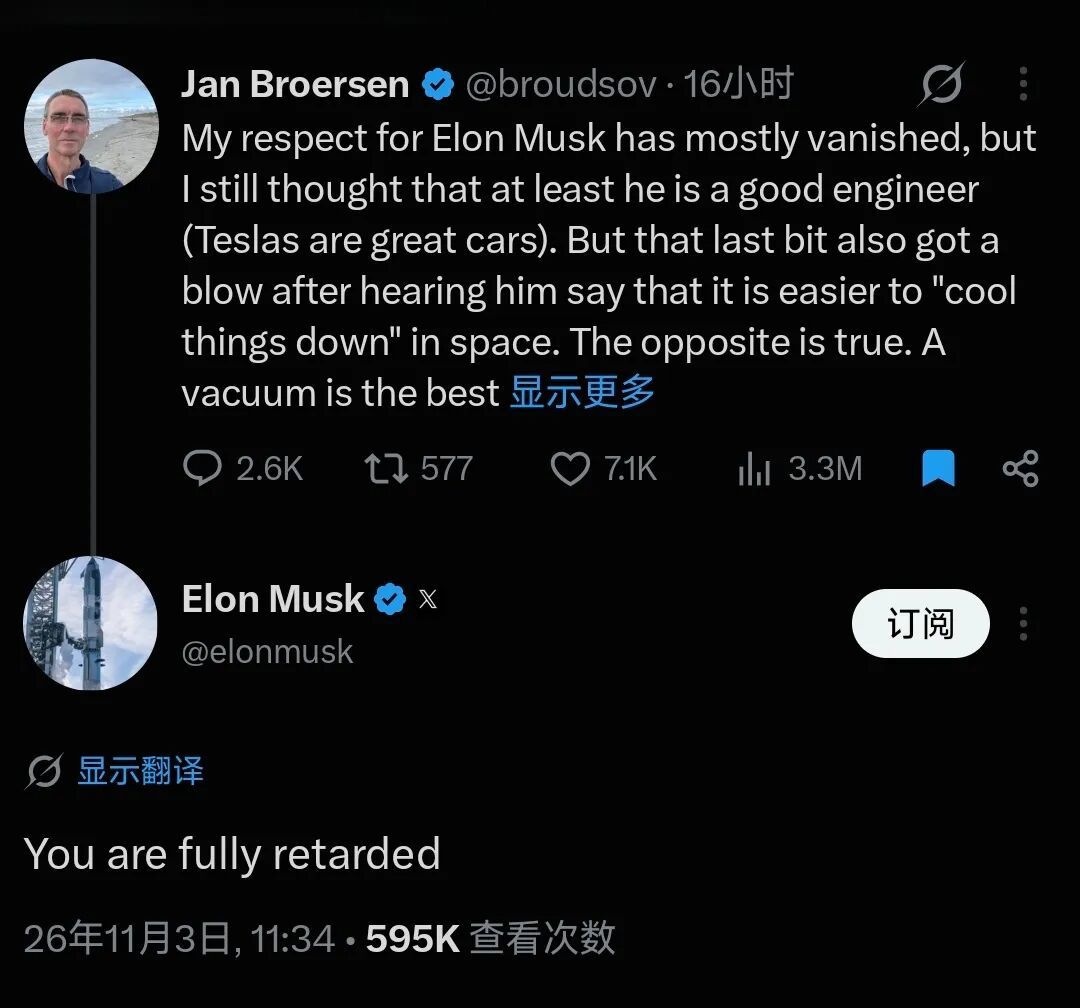
Last night, Beijing time, the X user Jan Broersen — who lists himself as a professor of philosophy, logic and AI at Utrecht University in the Netherlands — posted a slow-motion withdrawal of support for Elon Musk's orbital compute plan. Translated, it reads: "My respect for Elon Musk has faded almost entirely, though I still believed he was at least a decent engineer (Tesla makes good cars). But after hearing him say that 'cooling things down' is easier in space, even that last scrap of respect has evaporated. The facts are the exact opposite. A vacuum is the best insulator there is. In space, you can only carry heat away by radiation. These space data centers are extremely unlikely to ever happen (and of course they will not happen in our lifetime)."

The post crossed roughly 3.2 million views within a dozen or so hours, and the replies were generously sprinkled with what participants politely called "friendly" commentary. Tom Mueller, part of the early technical core at SpaceX, answered with a two-word sneer and an eye-roll: "Philosophy professor."
James Stephenson went straight for the counter-example: "And what happened to your respect for Sundar Pichai? He already has a data center up there, cooling itself by radiation in a vacuum." He meant Google's Project Suncatcher prototype satellite, which has powered TPUs in orbit and beamed results back down.
Musk's own reply was one sentence long and unmistakable: "You are a complete retard."
Retard Finder — an account that exists to publicly exhibit the internet's most overconfident claims, with nearly a million followers — responded with the single word "Confirmed."
The technical defence arrived from Shaun Maguire, a partner at Sequoia Capital and a Caltech-trained physicist, who posted a long answer under Broersen's thread alongside a deep-dive piece published this morning titled "People Do Not Understand SpaceX."
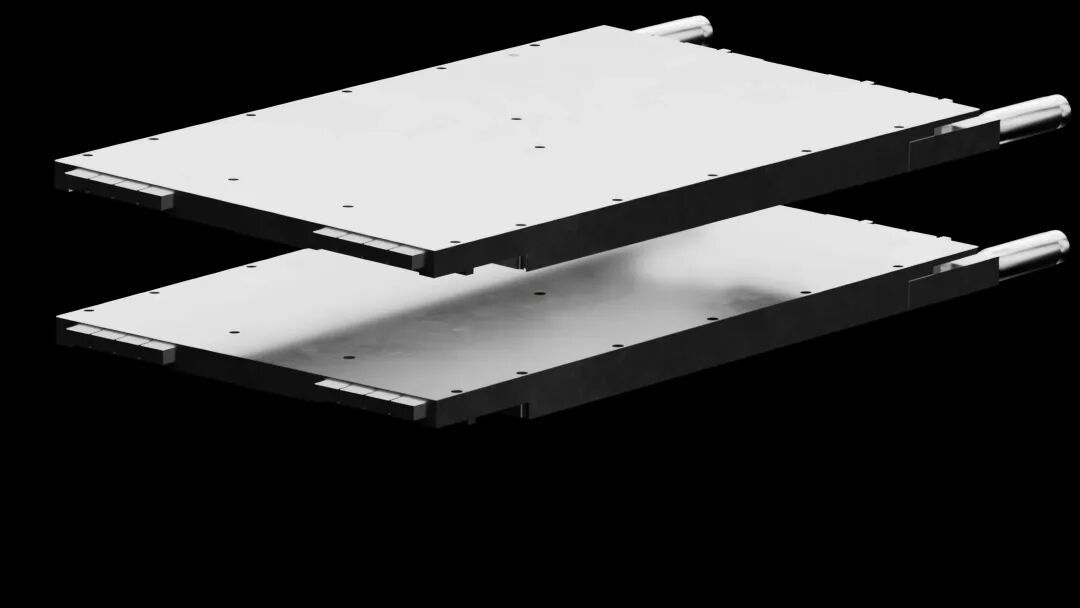
Maguire's real argument is not that cooling in orbit is easy; it is that the difficulty is almost entirely a shipping problem. He concedes that thermal work in space is much harder overall than on the ground, then says 99.9999% of that difficulty is Starship: once bulk mass can be put on orbit cheaply, dumping heat genuinely gets easier. The loop he describes is passive — a large, light, highly conductive metal panel (aluminium is a good candidate) with a working fluid circulating inside it, ammonia being the historical industrial standard for space radiators. The fluid vaporises near the chip, density differences push the hot vapour around the circuit, the aluminium draws heat out of the fluid, and black-body radiation throws it into space. Because radiated power climbs with the fourth power of temperature, the hotter the chip and the fluid run, the more eagerly the heat leaves. His verdict, in his own framing: "honestly, this system is much simpler than the one on the ground."

Musk backed Maguire up on X with numbers:
Yes, it is much easier to get rid of heat in space. 1,300 watts per square meter is easy to achieve for an aluminum radiator pointed away from the sun, because essentially all it sees is the cosmic background radiation, roughly 3 degrees above absolute zero! Solar panels generate 250 watts of electricity per square meter, so you should expect them to be about 5 times the area of the radiators. Most of the mass of a satellite is solar panels.
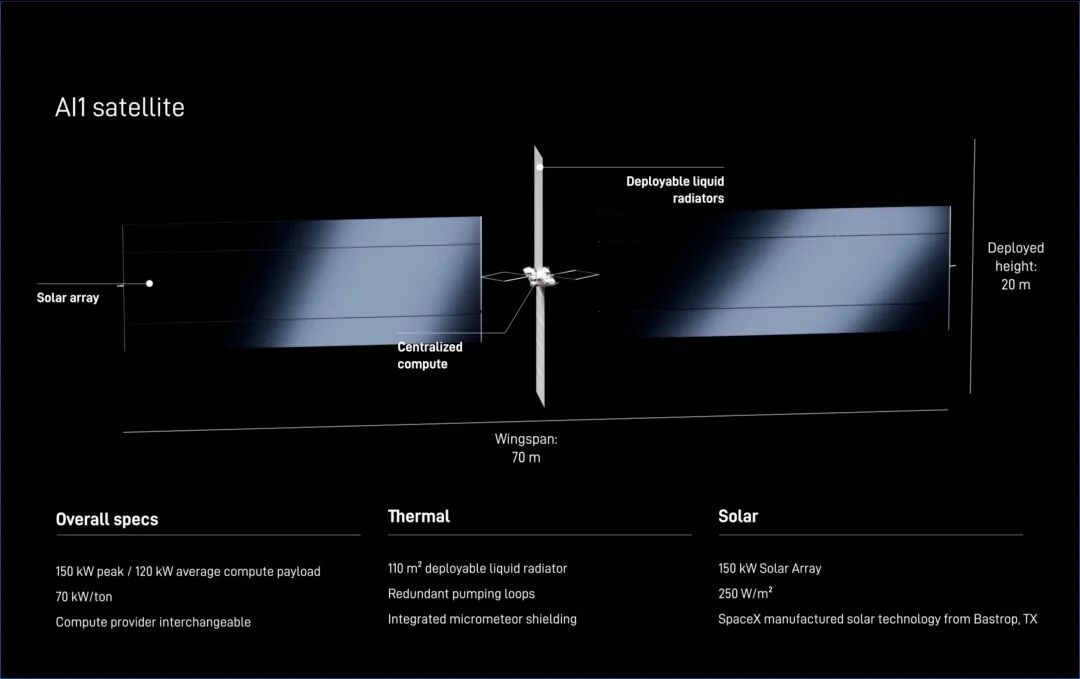
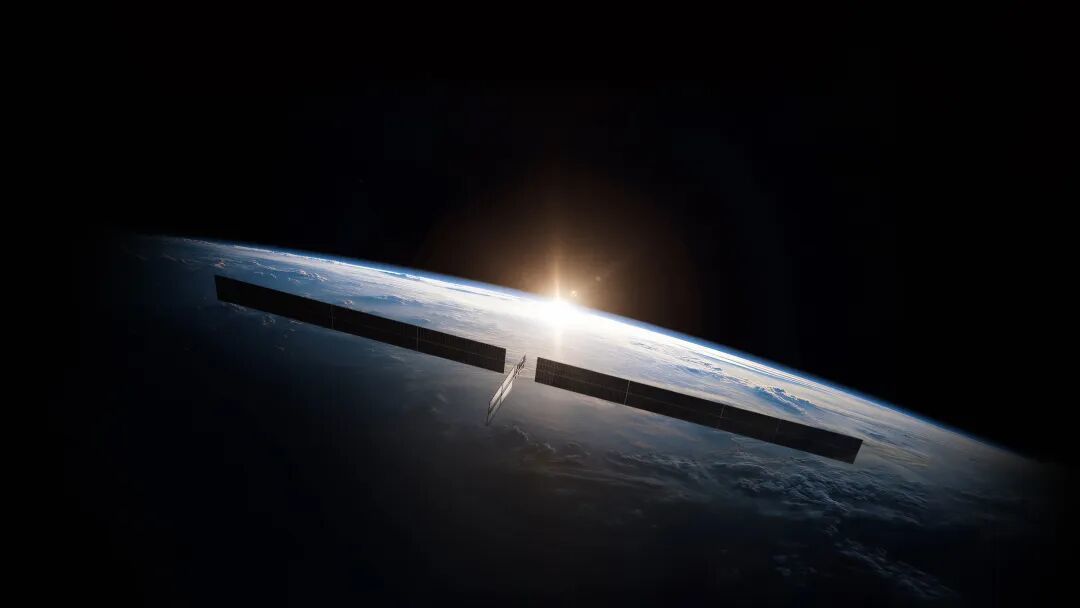
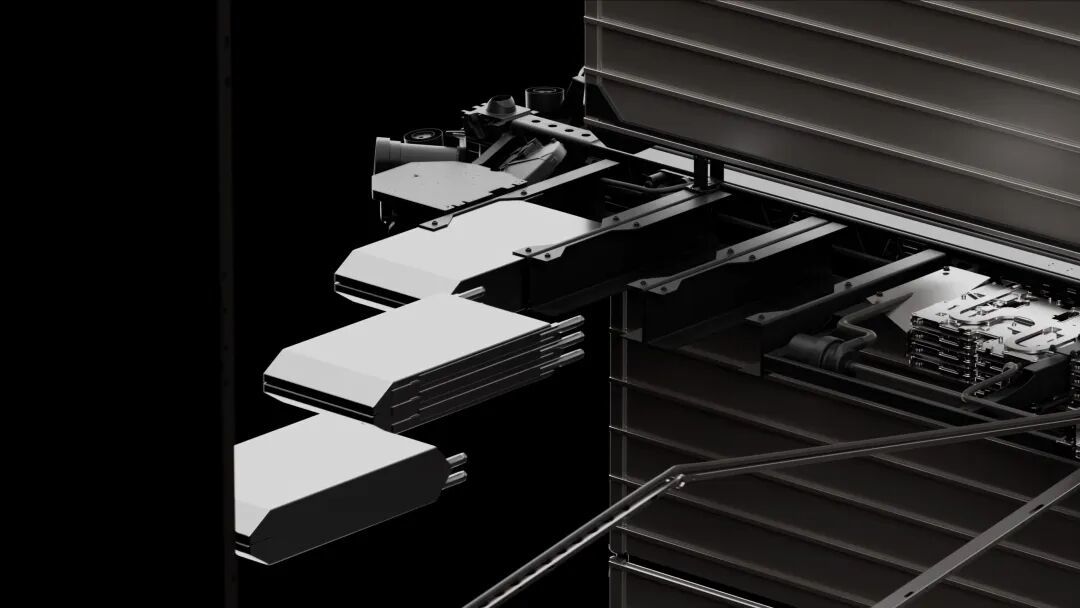
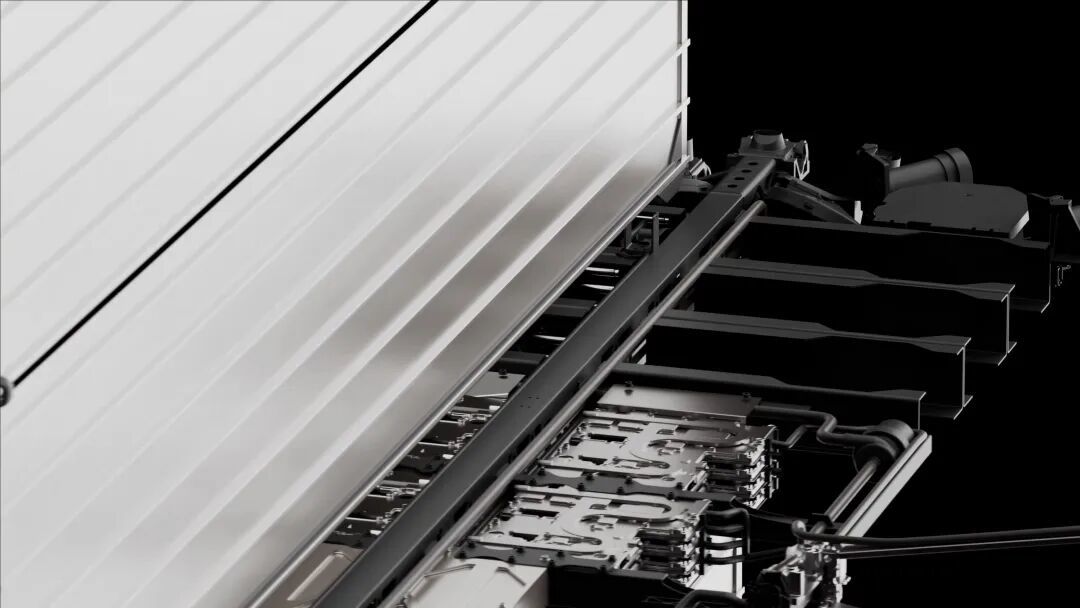
The hardware sitting behind the rhetoric is AI1, the first-generation spacecraft of the Starmind constellation. In SpaceX's own disclosed layout, a compute core sits in the middle, narrow long strips running from it are the two-sided liquid-cooled deployable radiators, and the enormous wings are the solar arrays. Published figures put the deployed wingspan at about 70 meters, the height at the 20-meter scale, peak compute draw at roughly 150 kilowatts with about 120 kilowatts sustained, and the radiator at around 110 square metres, backed by redundant pump loops.
Head to head: an orbital rig versus a ground campus
Read as a comparison review rather than a soap opera, the dispute is a trade-off table. Here is our scorecard.
| Dimension | Ground hyperscale campus | Orbital rig (AI1-style) | Which wins |
|---|---|---|---|
| How heat physically leaves | Chip to cold plate to loop to fans, chillers, cooling towers, sometimes water | Radiation only — Broersen is right about that much; no air, no convection shortcut | Ground on proven hardware; orbit on part count |
| Power source and siting | Grid contract, water rights, land, local permits | Near-continuous sunlight; no neighbours, no water | Orbit on siting, ground on serviceability |
| What you buy to scale | Megawatt-hours and interconnection slots | Kilograms to orbit | Depends entirely on which price is falling faster |
| Thermal density | 100 kW-class racks with dense plumbing, easy to add loops | Musk claims 1,300 watts per square metre is easy; area is the budget line that turns into mass | Ground today, orbit only if the panel maths holds |
| Failure model | A dead unit is swapped in hours; storage and accelerators refresh yearly | No servicing; the whole satellite is the replaceable unit; silicon must tolerate particle strikes | Ground, decisively |
| Latency and bandwidth | Millisecond paths to users and fibre trunking | LEO geometry plus optical links; capacity must be scheduled around passes | Ground for interactive workloads |
| Demonstrated maturity | Gigawatts already operating | A concept plus a small in-orbit TPU experiment; AI1 has not flown | Ground, by a wide margin |
Three trade-offs the argument itself skipped
1. "Space is cold" is only half of a design brief
Both camps are quoting true physics and drawing different conclusions. The vacuum genuinely blocks convection, so heat can only leave as infrared. But the cold sink is not a number you can bank on: satellite thermal analyses repeatedly point out that the binding variables are radiator area, the operating temperature you are allowed to run, surface emissivity versus absorptivity, and the view factor — a big panel does not only see deep space, it also sees sunlight, the infrared glow and reflected light of the Earth below it, and the heat coming off its own solar arrays. The elegant trick in the AI1 layout is to stand the thin radiator edge-on to the Sun so both faces can glow at the ~3-degrees-above-absolute-zero background while absorbing minimal sunlight. That is a real design win, and it is also a real design obligation: it constrains attitude, eclipses and how much of the spacecraft you can ever point at a customer.
2. Mass is the new megawatt — so run the number
Maguire is explicit that the radiator problem is a launch-cost problem wearing a thermal costume, so it can be argued on cost alone. Musk's own ratio gives away the scale: if solar arrays make about 250 watts per square metre and radiators about 1,300, the arrays must be roughly 5 times the radiator area, and most of a satellite's mass is those arrays. Apply that 5x to AI1's roughly 110 square metres of radiator and you get on the order of 550 square metres of solar collection for one 150-kilowatt node — by our arithmetic, not SpaceX's. External reporting on SpaceX's September filing with the FCC puts each Starmind node at up to 4,000 kilograms (satnews.com), i.e. a several-tonne power-and-radiator package to fly for every 120 kilowatts of sustained compute. At the roughly $3,000-per-kilogram class of pricing that current dedicated Falcon 9 missions imply, that is an eight-figure launch bill per node; the case for orbit only closes if Starship takes $/kg down by another order of magnitude toward the $100-per-kilogram territory that launch-cost analyses treat as Starship's aspiration (orbitalradar.com, spacenexus.us). Meanwhile, the constraint on the ground is also moving: the International Energy Agency projects global data-centre electricity consumption to roughly double to about 945 TWh by 2030, and long grid queues are pushing some US markets toward five-to-seven-year connection timelines (iea.org). Both sides of the table are under strain — that is the honest comparison.
3. Nobody can climb the rack and swap the card
The unglamorous row in the table is serviceability. Terrestrial operators treat hardware as consumable: accelerators and drives are replaced on multi-year cycles, and an outage is a ticket, not a launch. On orbit, the chips see continuous particle radiation, thermal cycling is unavoidable, and the only repair strategy is to build redundancy up and fly more mass. The Washington-based Breakthrough Institution has published the sceptical version of this argument — orbital training clusters must cope with radiation-induced failures on top of ordinary component failures, and cooling cannot be assumed solved (thebreakthrough.org). Trade coverage of the same problem frames radiators as the "real estate" cost that scales with the fourth power of temperature and never goes away (satnews.com). If a node's economics depend on five years of uptime with no human touch, the risk sits in that row, not in the insulation debate.
Which workload belongs where
- Frontier-scale training today: ground. Power density, spare-part logistics and upgrade cadence all favour the campus, and the orbit option does not exist yet as a product.
- Space-native processing: orbit is genuinely interesting. Analysts tracking the sector see the first real market in processing data where it is created — Earth-observation and imagery workloads that would otherwise be downlinked wholesale — rather than replicating a ground cluster in vacuum (abiresearch.com).
- Latency-sensitive inference, regulated or residency-bound data: ground. Orbital passes and optical backhaul add scheduling constraints that most product SLAs cannot absorb.
- Batch, delay-tolerant, energy-constrained jobs: the plausible middle ground, and the one to watch in any AI1 flight data.
Our verdict
Scored as a product comparison rather than a tweet: 4 points to the ground campus on demonstrated maturity, serviceability and interactive latency; 3 to the orbital concept on siting, water-free cooling and passive part count; and a tie left undecided by the only variable both sides secretly agree on — the price of putting mass into orbit. Broersen is technically correct that vacuum is an insulator and that radiation is the only exit. Musk and Maguire are technically correct that a hot, large, edge-on radiator looking at a ~3 K background is a legitimately different regime from a fans-and-chillers hall. The professor is arguing from the intuition of heat transfer; the companies are arguing from the boundary condition of transportation. If Starship drives mass cost down hard, the honest description is not that anyone "made a good move on the board" — it is that somebody introduced a new piece. Until then, this is a roadmap bet, not a procurement option.
Common misconceptions
- "Space is cold, so cooling is free." Cold surroundings without a fluid is a thermos, not a fridge. You pay in area, temperature and attitude control.
- "Sunlight is free, so orbital power beats ground power." The photons are free; the 250-watt-per-square-metre panels, their structure and their launch are not — and Musk's own numbers say the arrays outweigh the radiators about five to one.
- "One insult settles the physics." The 3.2 million views, the eye-rolls and the reply-guys are audience metrics, not test data. Only flight hardware, ground test rigs and published thermal numbers move the needle.
- "Google already proved it, so the argument is over." A prototype TPU lighting up in orbit proves survival of electronics in vacuum and radiation; it does not yet prove megawatt-class heat rejection at a price point.
- "If it fails, it's a hoax." Ambitious engineering programmes routinely ship late at higher cost than the pitch; treating every overclaim as fraud and every roadmap as fact are the same mistake in opposite directions.
Checklist: vet the next orbital data-center pitch yourself
- Ask for radiator area, operating temperature and rejected heat per square metre — all three together, never one alone.
- Ask what the working fluid is and whether the loop is pumped, heat-pipe or two-phase, and what the redundancy actually duplicates.
- Ask how much of the panel sees Earth and Sun during an orbit, not just how cold deep space is.
- Convert everything to $/kg and $/kW: a thermal claim without a launch-cost claim is a poster.
- Ask for the failure budget: expected chip lifetime in orbit, radiation margin, and what happens when one node degrades.
- Ask which workload is the first paying customer, and whether it could run cheaper on the ground.
- Check who benefits from the announcement — launch, satellites and AI compute are often the same corporate family, so demand third-party measurements.
FAQ
Is Musk's "1,300 watts per square metre" claim plausible? It is a Stefan-Boltzmann claim: hot panel, high-emissivity surface, cold view. It becomes much easier when the radiator runs at elevated temperature and stands edge-on to the Sun. The limiter is that chips, packaging, board components and power modules each have their own acceptable temperature windows, so "just run it hotter" is a real trade against reliability, not a free lever.
Is the professor wrong? On his premise, no; on his conclusion, arguably yes. "Vacuum is the best insulator" and "radiation is the only exit" are both accurate. "Therefore it cannot work" ignores that radiative area scales with launch mass cost — which is exactly the variable SpaceX controls.
How big is AI1 on paper? About 70 metres across when deployed, roughly 20 metres tall, around 150 kilowatts of peak compute with about 120 kilowatts sustained, and roughly 110 square metres of deployable liquid-cooled radiator with redundant pump loops.
Will this change my cloud bill this year? No. Nothing in the disclosed timeline makes orbital compute a purchasing option for ordinary products; treat it as an engineering and capital-markets signal.
What would actually change our minds? Ground test data on a full-scale radiator at the claimed heat flux, radiation-tolerance numbers for the compute payload, and a demonstrated Starship mass cost per kilogram — in that order.
Action advice
- If you run product or marketing: build AI cost scenarios on two axes you control — electricity price and hardware refresh cycle — and ignore orbital compute until a commercial operator publishes a rate card.
- If you plan infrastructure: start treating power and grid connection lead time as the design constraint, because that is the bottleneck that makes space sound attractive in the first place.
- If you cover or invest in the sector: stop grading announcements on view counts and start grading them on published thermal measurements, redundancy architecture and $/kg.
- If you are an enthusiast: watch the small pilot satellites. Fifteen-minute run windows and a handful of accelerators are where the honest data comes from, long before any constellation.
The thread war will be forgotten by Friday; the physics will still be there. The useful takeaway from this exchange is a comparison anyone can reuse: on Earth, cooling is cheap and power is scarce; on orbit, power is abundant and every gram of cooling costs you. Every serious claim in this debate should be measured against which of those two bills it proposes to pay, and at what price per kilogram.
By Sarah Chen, MyTechDailyNews · Tech Daily. Spotted an error or have a tip for our science and tech desk? Write to hello@techdaily.com and follow more daily coverage at mytechdailynews.com.