
Trade, Don't Let It Collect Dust: Microsoft Sends Idle Xbox Hardware Back to Best Buy
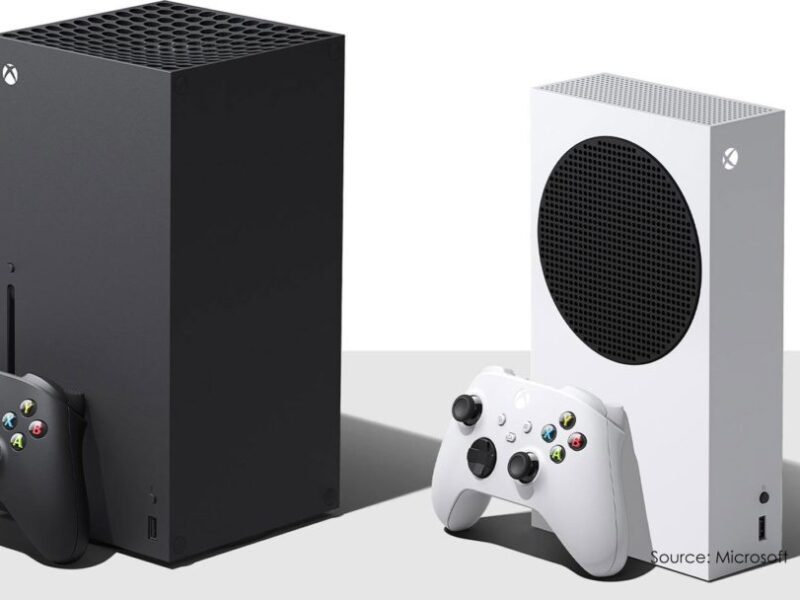
A console nobody switches on is dead capital — and that appears to be the logic inside a new offer aimed at the US. Microsoft is inviting households to hand over dormant Xbox Series X and Xbox Series S machines to Best Buy in exchange for store credit, with headline numbers of $375 and $200. The pitch lands in the middle of a long run of hardware repricing, as memory and storage components become dramatically more expensive. For readers, the interesting part is not the credit itself but the signal: second-hand and refurbished consoles are now being treated as supply.
A campaign that arrived by email, not on stage
There was no launch event. Xbox owners began sharing Microsoft promotional emails online, and the messages asked a pointed question: have you abandoned the console, or moved your gaming sessions to a PC or another device? If so, the recommendation is simple — trade the hardware in instead of letting it sit unplugged.
Two threads connect that inbox nudge to the wider picture: a price ladder that keeps climbing, and a component market that has tightened under AI demand.
The price ladder behind the pitch
In June, Microsoft stated that Xbox prices would rise worldwide from 1 August 2026. Under that plan, a 512 GB model becomes $100 more expensive and a 1 TB model adds $150. Those steps follow earlier increases of $20 to $70 in the United States in October 2025.
- October 2025 — Models in the United States move up by $20 to $70.
- June — A worldwide increase is announced, effective from 1 August 2026.
- 1 August 2026 — 512 GB consoles cost $100 more; 1 TB consoles cost $150 more.
Where the component squeeze comes from
Microsoft linked the newest hikes to a shortage of memory and storage components, saying their costs had risen by more than 2.5 times, and warned the same bill could double again by autumn 2027. The company also repeated a point that often surprises buyers: gaming consoles are generally sold at or below manufacturing cost, so a supplier-side shock lands on the maker instead of being absorbed by comfortable margins.
AI infrastructure sits behind part of the pressure. As previously reported by eeNews Europe, manufacturers have tilted capacity toward high-bandwidth memory and server DRAM, which squeezes the conventional memory and NAND flash that consoles rely on.
What the trade-in actually pays
Gathering used consoles through retailers and reselling them at lower prices had already been described as part of Microsoft's response to the price increases, and the Best Buy campaign is a practical step in that direction. The published valuations look like this:
| Console and condition | Indicative credit | What the figure assumes |
|---|---|---|
| Xbox Series X, excellent condition | Up to $375 | Controller and other required accessories present |
| Xbox Series X, poor condition | About $150 | Weaker state is reflected in the valuation |
| Xbox Series S | Up to $200 | Assessed by condition, functionality and market value |
Two details matter more than the headline amount. First, the retailer pays through gift cards, not cash. Second, the trade-in programme scores devices by condition, functionality and market value, so the final number is only settled after inspection.
Why this helps Microsoft as well as shoppers
Bringing dormant hardware back into circulation can lift the number of active Xbox users without demanding the same volume of newly built machines — useful while components are the bottleneck. Refurbished units also create a cheaper entry point for buyers. How much the programme can realistically improve hardware availability remains unclear.
Common misconceptions
- "The trade-in pays cash." The published description points to gift cards from the retailer.
- "The maximum is guaranteed." Figures such as $375 and $200 are ceilings that depend on inspection.
- "This is proof consoles are about to get cheaper." The trade-in push sits alongside price increases, not instead of them.
- "Only damaged units qualify." The emails speak to owners who stopped using the console or shifted to PC gaming; condition affects the payout rather than eligibility.
- "Component inflation only affects brand-new stock." Refurbished supply is part of the answer precisely because new hardware is under pressure.
Before you hand over the console: a checklist
- Confirm your model is in scope — Xbox Series X or Xbox Series S.
- Collect the controller and other required accessories; the top valuations assume a complete, excellent-condition setup.
- Test that the machine powers up and works normally, since functionality is one of the evaluation criteria.
- Decide whether store credit fits your plans, because the payout is a gift card rather than cash.
- If you have moved to a PC or another device, treat this as the scenario the offer was written for.
- Write down the valuation you are quoted and any terms attached to the gift card before you finish.
FAQ
What is Microsoft asking owners to do?
Owners in the US are being encouraged to take idle Xbox Series X and Xbox Series S consoles to Best Buy and exchange them for credit — up to $375 for the first and $200 for the second.
Why is this happening now?
Because the parts inside a console have become far more expensive. Memory and storage component costs have increased by more than 2.5 times, with a warning that they might double again by autumn 2027.
Are console prices falling?
No. The increases announced in June take effect worldwide from 1 August 2026: $100 on 512 GB models and $150 on 1 TB models, after earlier rises of $20 to $70 in the United States in October 2025.
Is AI really connected to console prices?
Partly. As previously reported by eeNews Europe, capacity has shifted toward high-bandwidth memory and server DRAM for AI infrastructure, tightening the supply of conventional memory and NAND flash used in games hardware.
Do I receive money I can spend anywhere?
No — Best Buy pays through gift cards, and the final figure depends on condition, functionality, market value and inspection.
Who actually benefits?
Buyers may gain access to cheaper refurbished options; Microsoft gains active users without building as many new devices. The open question is how far the campaign can relieve availability.
What different readers should do next
Owners with an unused console: the trade-in converts idle hardware into credit now, rather than after the price step from 1 August 2026 changes what replacement hardware costs.
Shoppers on a budget: refurbished stock is the part of this story worth watching, because it is the cheaper path back into Xbox Series X or Xbox Series S gaming.
Industry watchers: read the campaign as a symptom of the memory market rather than a loyalty programme. When consoles are sold at or below manufacturing cost, component inflation forces creative supply-side responses.
An unplayed machine in a cupboard used to be nobody's problem. With parts inflation reshaping what a console costs, that same machine has become a resource — for the retailer reselling it, for the manufacturer counting it as an active install base, and for a buyer who would rather pay less than wait for supply. The practical step is straightforward: find out what your dormant Xbox is worth, decide whether gift card credit suits you, and stop treating the console as decoration.
Written by Sarah Chen for Tech Daily, published on MyTechDailyNews. Questions or tips about consumer tech coverage? Reach us at hello@techdaily.com.