
MyTechDailyNews Explainer: Microsoft’s Latest Quarter Fell Short of Wall Street’s CapEx Forecast — What Actually Delayed the AI Spend
Headlines that say a company "spent less than expected" tend to get read as a retreat. This time that reading is backwards. The capital expenditure Microsoft reported for its latest quarter landed below Wall Street consensus, but the plan underneath the number — a multi-year, capital-hungry push to build AI infrastructure — is unchanged. What moved is the calendar: some data centre capacity simply did not arrive when the schedule promised, so money that should have been booked in this quarter now shifts into later fiscal quarters. In the explainer below, MyTechDailyNews unpacks the figures, the delivery bottlenecks behind them, and what a slower-looking spending curve really means for the cloud services, hardware costs and AI features ordinary readers touch every day.
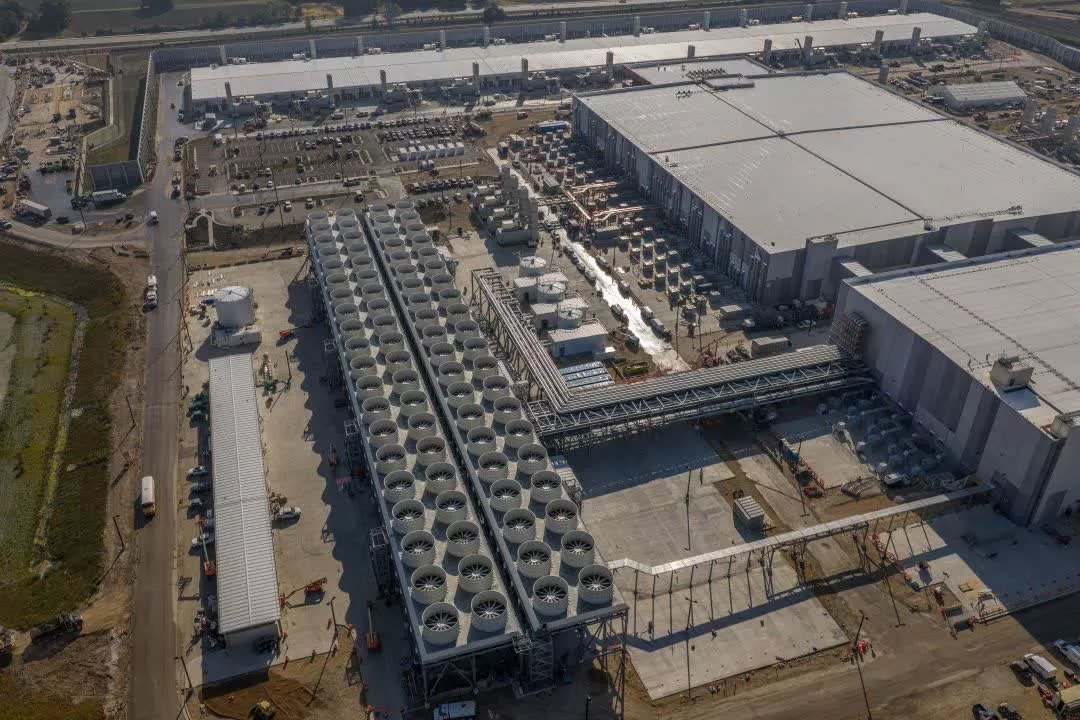
The numbers at a glance
- CapEx in the quarter ended September 2026: $45.2 billion, including spending tied to finance leases.
- Analyst expectation: $51.7 billion — a shortfall of about $6.5 billion.
- Direction versus the year-ago period: still up about 30% year over year.
- Full-year 2026 outlook: revised from $175 billion to $170 billion.
- New capacity: 24 additional data centres opened in this quarter.
- Rented capacity: contracts with CoreWeave, Nebius and Nscale worth more than $80 billion signed since 2023.
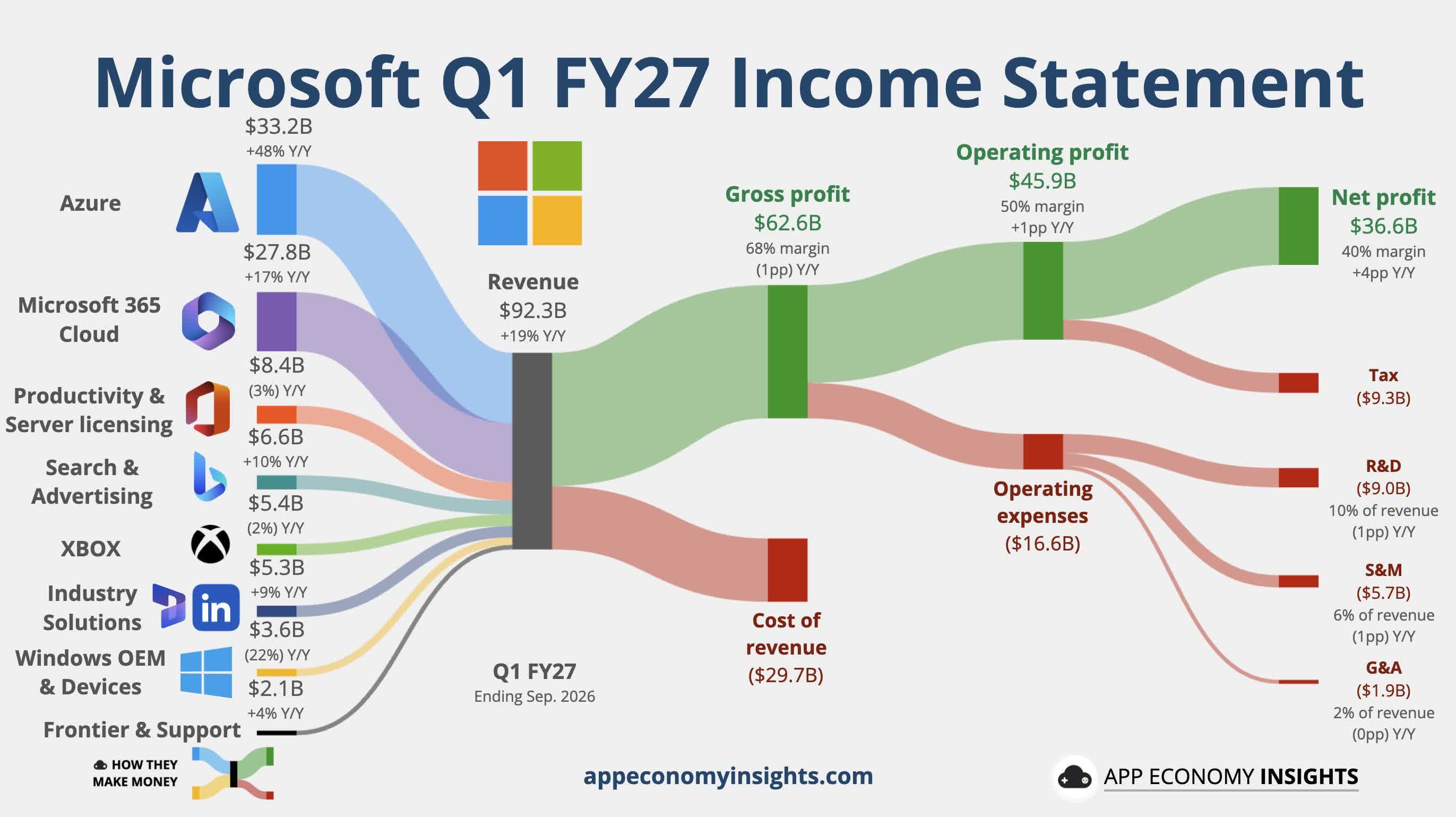
- Demand engine: Azure revenue of $33.2 billion, up 48% year over year; free cash flow positive $18.6 billion.
A delivery problem, not a demand problem
Microsoft’s own explanation makes the mechanism clear. Chief financial officer Amy Hood said a number of third-party suppliers failed to deliver the required data centre capacity on time, so the spending associated with those projects was pushed back. The company expects those facilities to enter service during the second half of the fiscal year, and it has told investors to anticipate a renewed acceleration in capital expenditure as the delayed construction resumes its original pace. Rising prices for memory and other hardware are expected to push infrastructure costs higher on top of that, which is why the postponed money is likely to reappear at a similar or even larger run rate rather than being saved.
The full-year adjustment points the same way. Moving the 2026 forecast from $175 billion to $170 billion is a roughly $5 billion timing correction on a plan of that size — not a strategic reversal. A quarter that still grows about 30% against the year-ago period and adds 24 new data centres is not the profile of a company stepping off the AI path.
Where the buildout actually stalls: electricity and construction timelines
The Microsoft story is as much about grid connections and concrete as it is about chips. The company recently walked away from a data centre capacity arrangement connected to Nscale because the site could not secure enough power. Separately, one Nebius facility in New Jersey, United States is progressing more slowly than planned. Outsourcing part of the expansion to smaller cloud infrastructure operators has let Microsoft add capacity faster than it could by building and running everything itself — but it also hands a slice of the delivery timeline to partners whose power supply, permits and construction crews sit outside Microsoft’s direct control.
Peers face the identical bottleneck
| Company | Full-year spending plan | Latest-quarter figure | Pressure point flagged in the report |
|---|---|---|---|
| Microsoft | $170 billion for 2026, down from $175 billion | $45.2 billion versus $51.7 billion expected | Third-party capacity delivery; memory price increases |
| Amazon | about $220 billion this year — roughly $50 billion above Microsoft’s revised plan | Not disclosed in this report | Purchased and stockpiled Nvidia GPU server racks that some data centres cannot energise because of insufficient power |
| Alphabet (Google’s parent) | $195 billion to $205 billion | $51.4 billion, also below market expectations; spending expected to rise significantly next year | Free cash flow negative $9.1 billion, continuing earlier cash pressure |
Read together, these disclosures say the AI infrastructure race is still running hot. Amazon is buying and warehousing Nvidia GPU server racks in volume, yet some of its data centres cannot put those machines to work because available power falls short. Its budget of about $220 billion for this year sits about $50 billion above Microsoft’s revised plan. Alphabet is holding a programme of $195 billion to $205 billion, logged $51.4 billion of capital expenditure in the September quarter — also under expectations — and forecasts a significant increase for next year, while its free cash flow came in at negative $9.1 billion, extending an earlier trend of strained cash generation.
Why Microsoft can absorb a delayed quarter
Azure revenue grew 48% year over year to $33.2 billion this quarter, and free cash flow remained positive $18.6 billion. Two conclusions follow. First, the core cloud business is currently generating enough cash to fund the AI expansion, which leaves Microsoft with more financial room than peers under cash pressure. Second, the spending is responding to an observable demand signal rather than to optimism alone: even if some capacity arrives a quarter or two late, the growth in Azure usage is what justifies building it.
Resource reallocation shows up elsewhere in the company, too. While increasing AI infrastructure investment, Microsoft continues to compress parts of its labour costs, having taken measures that include voluntary separation packages for staff — arrangements that could involve as many as 60,000 employees. The pattern is a shift of budget away from headcount-heavy areas and toward compute, cloud and the facilities that house them.
Common misconceptions about this quarter
- Misconception: "Below estimate means the AI boom is cooling." What the report actually describes is a time gap between data centre construction and third-party capacity delivery; spending was still up about 30% versus the year-ago period.
- Misconception: "The full-year cut to $170 billion is a retreat." A $5 billion revision to a $175 billion plan reflects postponed projects that are expected to come online in the second half of the fiscal year, with spending then reaccelerating.
- Misconception: "Chips are the binding constraint." Power availability and construction progress are limiting expansion just as much: an Nscale-linked arrangement was dropped over electricity, and one Nebius site in New Jersey is behind schedule.
- Misconception: "Microsoft builds and operates everything itself." Since 2023 it has signed contracts worth more than $80 billion with CoreWeave, Nebius and Nscale to buy additional capacity from smaller cloud infrastructure operators.
- Misconception: "Delayed capital expenditure is saved capital expenditure." Rising prices for memory and other hardware are expected to push infrastructure costs higher, so the postponed spend can return at a larger run rate.
What this could mean for everyday readers
- Rollout timing may follow capacity, not announcements. If facilities enter service in the second half of the fiscal year, new AI and cloud capabilities are likely to reach users in waves tied to that physical buildout rather than on a single launch date.
- Capacity constraints shape availability. Electricity and construction timelines, not software ideas, are the rate limiter for how quickly new cloud regions and AI services can scale.
- Hardware costs travel into pricing. Higher memory prices raise the cost of building infrastructure; the report notes that this pushes spending up, which is one reason the delayed money is expected to reappear later.
- The industry is not pulling back together. With Amazon at about $220 billion this year and Alphabet at $195 billion to $205 billion, competitive pressure on cloud capacity — and therefore on service development — remains intense.
FAQ: the questions this news is generating
Did Microsoft reduce its AI investment?
No. The full-year 2026 forecast was adjusted from $175 billion to $170 billion, and the company attributed the latest-quarter shortfall to third-party suppliers not delivering data centre capacity on time, with spending shifting into later fiscal quarters.
Why was $45.2 billion described as a miss?
Analysts had expected $51.7 billion for the quarter ended September 2026; the difference is about $6.5 billion. The figure still represents roughly 30% growth over the year-ago period.
When is the postponed spending expected to return?
Microsoft expects the delayed facilities to enter service during the second half of the fiscal year, and forecasts that capital expenditure will accelerate again over the coming quarters as construction moves forward.
Is this a Microsoft-only issue?
No. Amazon has GPU server racks in inventory that its data centres cannot yet run because of insufficient power, and Alphabet’s $51.4 billion quarter also came in below market expectations even though it plans significantly higher spending next year.
What is funding Microsoft’s buildout?
Azure revenue of $33.2 billion, up 48% year over year, and free cash flow that remained positive at $18.6 billion give the company more financial headroom than peers whose cash generation is under pressure.
Action checklist: how to use this information
- Re-read spending headlines as schedules, not verdicts. Before concluding that a technology company is abandoning an investment, check whether a miss was caused by supplier delivery timing, construction progress or power availability.
- Anchor product plans to capacity, not announcements. Teams building on Microsoft cloud services should assume that new capability may arrive region by region, gated by data centre and electricity readiness.
- Watch hardware input costs. Increases in memory pricing are explicitly called out as a driver of higher infrastructure cost; treat them as a leading signal for cloud and device economics.
- Compare peer budgets side by side. Microsoft at $170 billion, Amazon at about $220 billion this year and Alphabet at $195 billion to $205 billion together show that sector-wide investment is still expanding, not contracting.
- Note the internal trade-offs. Continued cost compression, including voluntary separation arrangements that could involve up to 60,000 employees, is a useful marker of where a company is shifting resources.
The short version: this quarter was a pause button pressed by suppliers, construction crews and grid operators — not by Microsoft’s strategy. As the delayed facilities come online across the second half of the fiscal year, spending should climb again, with electricity, build cycles and memory prices emerging as the shared brakes on AI capacity for the whole sector. For readers, the takeaway is practical rather than dramatic: the pace at which new AI services become available increasingly depends on physical infrastructure, so treat future quarters’ capex acceleration — not one below-forecast print — as the more meaningful signal to watch.