
NVIDIA Commits $3 Billion to Meta's Record AI Share Sale: What the Muse Deal Means for Everyday Users
By Sarah Chen · Tech Daily / MyTechDailyNews
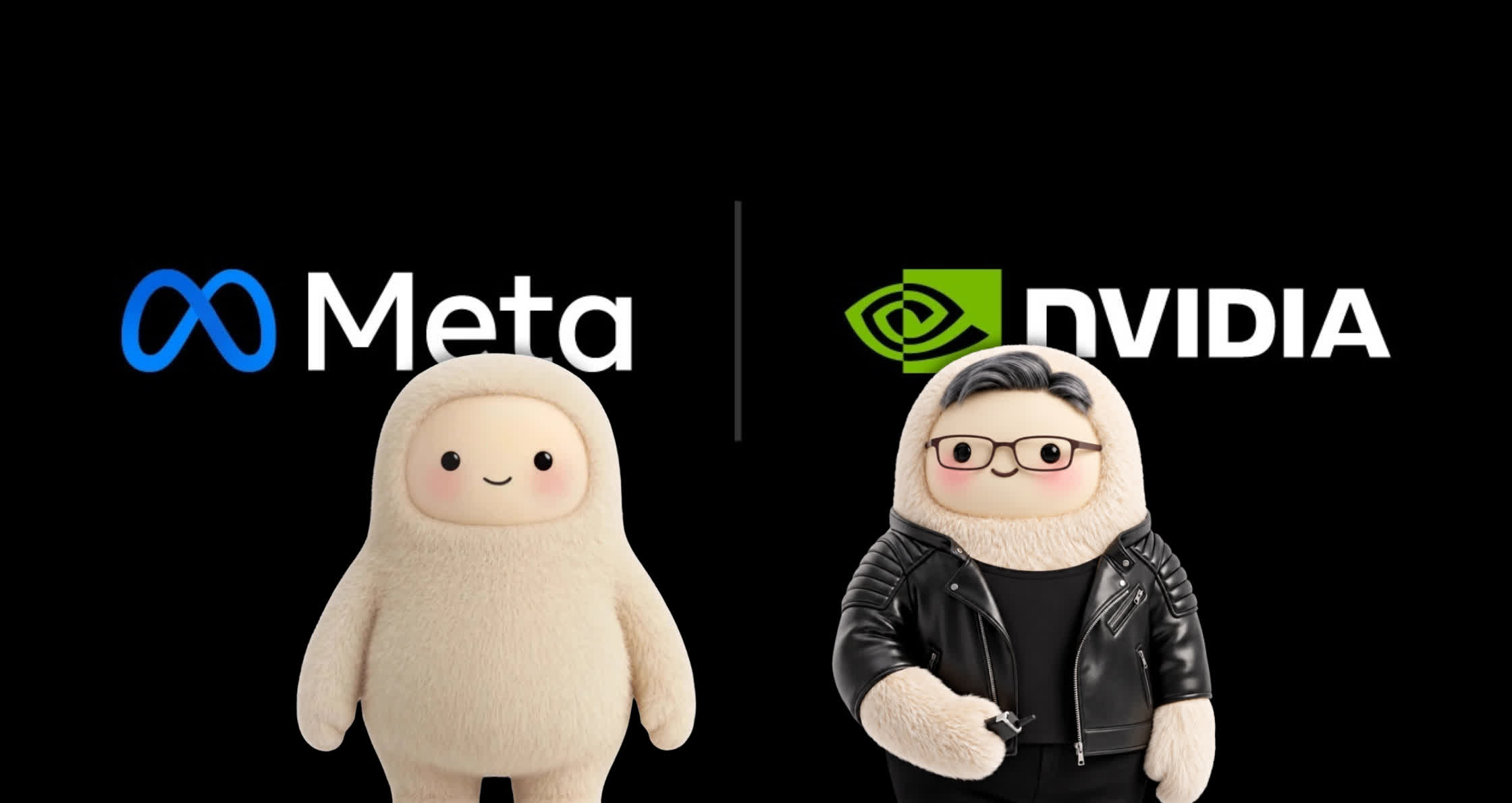
Who really pays for the sprawling computer complexes behind modern artificial intelligence? The answer increasingly looks like a circle: the chipmaker is sometimes happy to invest in its own largest customer. On October 27, NVIDIA confirmed it would place $3 billion into a Meta share issuance, turning a supplier relationship into a shared wager on what people use after apps.
Both companies are United States technology giants, and both describe this round of cooperation with the same two aims: make Muse work better, and make it cheaper to run.
The five facts worth keeping in mind
- NVIDIA is contributing $3 billion to Meta's planned equity raise.
- Meta had already lifted its overall fundraising target from $95 billion to $97.5 billion, one of the largest capital plans in its history, to speed up AI infrastructure.
- The engineering center of gravity is Muse and the model family behind it — training quality, inference performance and running cost.
- The deployment list goes beyond chips: Vera Rubin systems, the Vera CPU, Spectrum-X Ethernet and BlueField-4 data processing.
- Meta guides capital spending of $135 billion to $145 billion for the year, while its latest quarter brought revenue up 26% to $64.6 billion.
Why Meta went back to the market — and why the number grew
Before the investment was announced, Meta had already unveiled a public offering together with a follow-on share sale, both earmarked for accelerating its AI infrastructure buildout. Once the plan was fully laid out, the total fundraising target moved from $95 billion to $97.5 billion.
The spending picture explains the scale of the ambition. Meta expects capital expenditure of $135 billion to $145 billion this year, with the overwhelming majority directed at AI infrastructure. Put simply, the money is not parked in an account; it becomes data centers, accelerators and networks.
Operating cash flow is also doing part of the work. The company's latest report showed quarterly revenue rising 26% year over year to $64.6 billion — a reminder that an advertising business is underwriting an AI construction project.
What the partnership is meant to fix inside Muse
NVIDIA described the focus of this cooperation as improving the training and inference performance of Muse and its related models, while pushing operating costs down. The second layer is workflow-level: the two sides plan deeper optimization of AI pipelines to raise compute efficiency and improve total cost of ownership — the industry's polite phrase for "what this actually costs us every year".
If you do not run a data center, the practical translation is this: cheaper, more efficient inference is usually the condition that lets an assistant feature be switched on for a very large audience instead of a small test group.
The hardware list, in plain language
| Piece of the deal | What it is | Why ordinary readers should notice |
|---|---|---|
| Vera Rubin system | Part of NVIDIA's new-generation AI infrastructure that Meta will deploy further | Sets the ceiling for how powerful Muse can become |
| Vera CPU | A processor line Meta is expanding into alongside accelerators | General compute around the AI workloads, not just the AI chips themselves |
| Spectrum-X Ethernet | A networking approach for moving data between machines | Improves network throughput, so clusters behave less like traffic jams |
| BlueField-4 | Data processing technology | Aims at better data transfer efficiency and more compute per unit of energy |
OpenShell and Sentry: the safety thread running through the deal
Outside the hardware, the two companies are also evaluating a broader adoption of NVIDIA's OpenShell reference architecture. That cooperation would cover using OpenShell for the secure deployment of AI agents, and using the Sentry tool to monitor and manage agent behavior. It is a telling addition: an assistant that can act on your behalf needs brakes and a dashboard, not only more speed.
What Muse is being built to touch in your day
Meta presents Muse as its next generation of personal AI assistant. With the user's authorization, it can reach into email, calendars, payment services, health apps, shopping platforms and smart home systems, and can carry out real tasks such as sending a message or arranging a trip. Those permissions can be withdrawn at any time, the company stresses.
On traction, Meta says Muse and its model family have posted leading results across several benchmarks since launch and that downloads keep growing — but it did not disclose specific figures.
Two CEOs, one thesis
NVIDIA chief executive Jensen Huang framed AI agents as a new computing paradigm: software that, beyond understanding what the user wants, can reason, call tools and finish the job in the user's place. That shift, he argued, is changing how people use computers — moving from operating applications toward collaborating with intelligent agents.
Meta chief executive Mark Zuckerberg placed Muse at the heart of what he calls Meta's "personal superintelligence" strategy, saying the company wants to deliver advanced AI capability to billions of users and to build future personal intelligent agents and frontier models together with NVIDIA.
The circular financing conversation returns
Because Meta intends to keep buying AI hardware from NVIDIA on a very large scale, observers quickly returned to the "circular financing" debate: a chip supplier invests in its customer, and the customer spends comparable sums on the supplier's products. Analysts describe this as a business pattern that is becoming increasingly common across the AI industry, and this transaction is being cited as a fresh example.
| Reading of the arrangement | In short |
|---|---|
| The supportive view | Supplier capital accelerates infrastructure that both parties profit from, and aligns long-term roadmaps for agents and models. |
| The skeptical view | When a vendor funds the buyer's budget for that vendor's own products, the reported strength of demand becomes harder to read. |
Common misconceptions
- "The $3 billion is Meta paying NVIDIA for chips." It is not: the commitment goes into Meta's share issuance. Purchases of AI hardware are a separate, ongoing part of the relationship.
- "This deal is only about buying more accelerators." The framework also covers networking (Spectrum-X), data processing (BlueField-4), agent deployment and safety work (OpenShell, Sentry) and workflow efficiency.
- "Muse reads your inbox and your payments without you deciding." Meta describes access to email, calendars, payments, health apps, shopping and smart home services as permission-based, with revocation available at any time.
- "Meta finally revealed how many people use Muse." It did not. Benchmarks are said to lead and downloads are said to grow, but no concrete numbers were published.
- "The $97.5 billion and the $135–145 billion are the same pile of money." They are not: the first is the overall fundraising target, the second is this year's expected capital expenditure range.
A reader's checklist: what to watch next
- Whether the expanded $97.5 billion fundraising completes as planned, and on what terms.
- How far Meta actually rolls out Vera Rubin systems and Vera CPU capacity inside its own data centers.
- Any published evidence on Muse's claimed benchmark leadership, once Meta discloses specifics.
- Whether Spectrum-X and BlueField-4 show up as measurable gains in throughput and performance per unit of energy.
- How quickly OpenShell-based secure agent deployment and Sentry monitoring move from "being evaluated" to production.
- Whether annual capital spending stays inside the $135 billion to $145 billion band, and what revenue growth of the kind just reported (26%, $64.6 billion for the quarter) can cover.
- How regulators, analysts and markets interpret the circular financing angle as more such deals appear.
FAQ
How much is NVIDIA investing, and where does it go?
$3 billion, into Meta's share issuance, as confirmed by both sides on October 27. It is an equity commitment, not a hardware order.
Why did Meta's fundraising target change?
Meta had already announced a public offering and a follow-on sale to accelerate AI infrastructure. The overall target was then revised upward from $95 billion to $97.5 billion, making it one of the largest financing efforts in the company's history.
What does the deal change for Muse?
NVIDIA says the priority is better training and inference performance for Muse and its related models at lower running cost, plus deeper optimization of AI workflows for compute efficiency and total cost of ownership. Meta widens its deployment of NVIDIA's new-generation infrastructure to support that work.
Is there a safety dimension, not just raw power?
Yes, at least as an evaluation. The parties are assessing further use of the OpenShell reference architecture for secure AI agent deployment, with Sentry tooling to monitor and manage agent behavior.
What is "circular financing," and why does it come up here?
It describes a pattern in which a supplier funds a customer that then buys more of that supplier's products. Since Meta plans continued large-scale purchases of NVIDIA AI hardware, this transaction has been cited in a debate analysts say is becoming common in the AI sector.
Action advice
If you use AI assistants
- Before connecting any assistant to email, calendars, payments, health apps, shopping accounts or smart home devices, list what each permission would expose.
- Get comfortable with revoking access — Meta states that Muse permissions can be withdrawn at any time, and treating revocation as a normal action rather than an emergency is the healthier habit.
- Expect new assistant capabilities to arrive gradually as training and inference costs fall; judge features by what they can actually do, not by benchmark screenshots.
If you build or market products
- Watch total cost of ownership rather than headline model performance; efficiency work on AI workflows is often what decides whether a feature can be offered to a mass audience.
- Study the agent pattern described by Jensen Huang — software that understands a goal, reasons, calls tools and completes the task — as a design reference for your own roadmap.
- Treat secure deployment and behavioral monitoring of agents as product requirements, using the OpenShell and Sentry framing as a checklist template.
If you follow the business side of tech
- Track the gap between financing targets ($97.5 billion) and capital expenditure guidance ($135 billion to $145 billion) instead of mixing the two.
- Read supplier-as-investor arrangements with the circular financing caveat in mind, and look for disclosed figures where none have been given, including on Muse downloads.
The bigger picture
Analysts' read is that as AI competition heats up, the Meta–NVIDIA relationship is likely to deepen further. Both companies are placing their chips — literally and figuratively — on AI agents becoming the next computing platform after the mobile internet. For readers, the near-term consequence is more practical than philosophical: the assistant that books your trip, tidies your inbox and talks to your thermostat is being funded, built and increasingly governed by the same two organizations, and the price of that convenience is now a shared line item on both balance sheets.