
Why Light, Not Copper: Decoding Marvell's $115 billion Lumentum Bet on AI's Next Bottleneck
Strip away the model names and the demo videos and an AI data center is really a traffic problem: tens of thousands of processors swapping state with each other thousands of times per second. For years that traffic has moved over copper traces, and the industry has quietly been running out of room. Marvell, the AI networking specialist Jensen Huang calls the next trillion-dollar company, has now made its answer official by agreeing to acquire Lumentum, an optical component maker, in an all-stock deal valued at $115 billion. The two Nvidia-backed companies already help move vast amounts of data between AI chips; after this merger they want to design the electrical and the optical halves of that journey as one product.
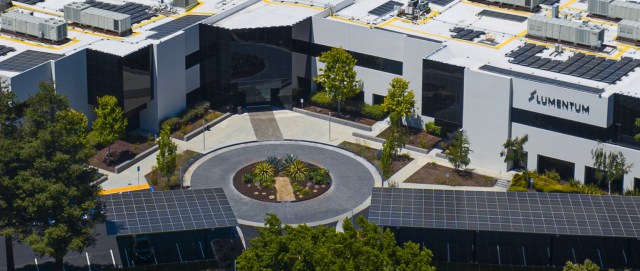 The optical component maker offers high-performance lasers, optical transceivers, and optical circuit-switching capabilities for AI connectivity products. (Source: Lumentum)
The 60-second version of this story
- What happened: Marvell is buying Lumentum in an all-stock transaction carrying an implied enterprise value of $115 billion.
- Why it matters: lasers and transceivers have become the scarce, awkward part of AI hardware; Marvell is buying that part outright.
- The strategy in one line: co-design network processors together with the lasers inside optical transceivers, so silicon and optics stop being two separate supply chains.
- The market size being claimed: Lumentum CEO Michael Hurlston describes the prize as a $550 billion opportunity.
- The catch: it is all stock, it has to survive shareholder votes and regulators, and it lands while investors are nervous about AI spending.
What the $115 billion headline actually means
Big numbers in tech mergers are often shorthand, and this one is no exception. The $115 billion figure is an implied enterprise value for Lumentum, which means debt is folded into it — a distinction The Wall Street Journal highlighted when it valued the equity portion of the deal considerably lower. Equally important: no cash changes hands. Under the terms Marvell published for investors, Lumentum shareholders receive 4.5 Marvell shares for each share they hold, an exchange ratio the companies say implies roughly $1,132 per Lumentum share, about a 23.9% premium measured against both companies' Oct. 28 closing prices, the last trading session before the deal leaked into the news cycle.
Because that ratio is fixed rather than floating, the practical effect is unusual for anyone holding Lumentum stock: from the day the deal closes backwards, the value of their shares rides on Marvell's price, not on a guaranteed payout. Here is the deal in tabular form, based on Marvell's own announcement and its 8-K filing.
| Term | What was disclosed | Why readers should care |
|---|---|---|
| Structure | All-stock merger, both boards approved | Dilution risk lands on Marvell holders instead of a cash outflow |
| Exchange ratio | 4.5 Marvell shares per Lumentum share | A fixed ratio means Lumentum holders carry Marvell price risk until close |
| Implied value | $115 billion enterprise value; about $1,132 per Lumentum share | Headline figure includes debt, per Marvell's release |
| Premium | About 23.9% versus unaffected Oct. 28 prices | Thin by megadeal standards when the buyer's own shares fund it |
| Ownership split | Marvell holders about 67%, Lumentum holders about 33% of the combined company (fully diluted) | Roughly a third of the new company is handed to the target's investors |
| Timeline | Expected to close in the first half of calendar year 2028, subject to shareholder and regulatory approval, with an outside date in late 2027 | Nearly two years of deal risk for both sets of shareholders |
| Financials | Marvell guides to non-GAAP EPS accretion in the first year after closing | Management is asking investors to underwrite the scarcity argument now |
Marvell provides solutions for electrical and optical interconnects, network switching, and XPU attach, while Lumentum contributes expertise in high-performance lasers, optical transceivers, optical circuit switching (OCS), and specialized compound semiconductor manufacturing. The combined company aims to co-design network processors alongside lasers for optical transceivers, bringing silicon and optics closer together and becoming a category leader in AI connectivity.
Why a chip designer suddenly needs someone else's lasers
Since the early 2020s, industry watchers have pointed to deals like this, having long called for a much closer co-design of electrical and optical technologies. They call it a fascinating move and a giant bet that the next generation of AI data will mostly run on light, not copper.
"AI infrastructure is undergoing a fundamental architectural shift toward optical connectivity, creating an opportunity that comes along once in a generation," said Matt Murphy, chairman and CEO of Marvell. "We intend to help shape the next era of AI connectivity," he added.
The plain-English version of that claim goes like this. A network chip speaks electricity; the fiber running between racks speaks light. The translator in the middle is the optical transceiver, and the hand-off between silicon-based NICs and laser-driven transceivers is a major connectivity bottleneck. Every conversion costs latency, costs power, and costs a component that someone has to manufacture. A tighter co-design across the electrical and optical signal chain could significantly reduce both latency and power draw. That is what Lumentum CEO Michael Hurlston calls a "$550 billion" market opportunity.
That power argument is no longer hypothetical. Nvidia's own engineering write-up on co-packaged optics describes pulling electrical signal loss down from roughly 22 dB to about 4 dB by shortening the copper path, a change Nvidia frames as delivering around 3.5 times better power efficiency for switch designs. Multiply that across a hundred-thousand-GPU factory and the savings show up in the electricity bill, not in a benchmark chart.
As optical connectivity moves closer to compute, the co-design of electrical and optical technologies could encompass the full signal path: silicon, lasers, packaging, and power efficiency. Marvell's DSPs, switches, and custom accelerators sit inside data centers' optical transceivers, while Lumentum supplies the lasers for these optical transceivers, which convert electrical signals into light and back again.
The acquisition represents a hefty spend for Marvell. Axel Rudolph, chief technical analyst at IG Group, told Reuters this is an enormous bet, and investors are right to ask whether Marvell is paying too much and taking on too much at once. A closer look at this deal shows, however, that Marvell is betting on steadily increasing demand for optical components, a critical but overlooked part of AI infrastructure.
The real trigger: the lasers are already sold out
Timings matter here. As Bloomberg reported earlier this year, Lumentum expected its order book to be filled through 2028, with demand from the biggest US tech companies outrunning its ability to supply optical components. A supplier that is booked out for years is a supplier that allocates scarce capacity to whoever it favors — an uncomfortable position for any chip company whose roadmap depends on those parts.
Buying the supplier is one way to stop negotiating. It does not create new fabs overnight, but it converts a procurement argument into an internal scheduling decision, and it puts the compound semiconductor capacity inside the same building.
Through the Lumentum deal, Marvell gains access to laser chips that generate the light used in optical connections. Lumentum also offers optical circuit switches that redirect light without electrical conversion. Furthermore, the San Jose, California-based company brings advanced compound semiconductor manufacturing and process technologies, including indium phosphide (InP).
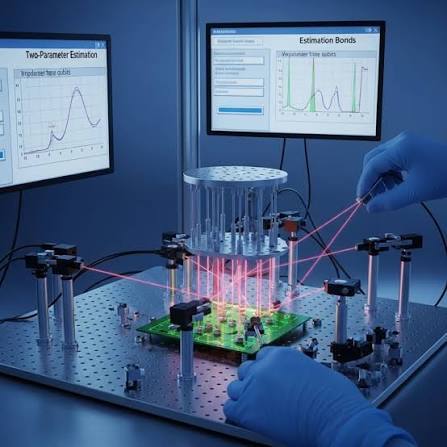 Lumentum manufactures semiconductor lasers, laser sub-assemblies, and wavelength management systems. (Source: Lumentum)
Demand has been moving fast enough to rattle the forecasters. Market researcher LightCounting, which tracks Ethernet optical transceivers, recorded 93% growth in 2024, estimated roughly 82% for 2025, and expected continued expansion in 2026 driven by 800G shipments more than doubling and 1.6T ports ramping from a small base — while noting that shortages of accelerators and switch ASICs, not optics, could cap how much of that demand actually gets built. The lasers are a critical building block in near-packaged optics (NPO) and co-packaged optics (CPO) designs.
This is the second leg of a plan Marvell started years ago
Readers who remember Marvell's earlier shopping sprees will recognize the pattern. Marvell closed its roughly $10 billion acquisition of Inphi, the optical DSP maker, in April 2021, according to CNBC — a purchase that put signal-processing chips for fiber links at the center of its data center business. Marvell has recently acquired Celestial AI to bolster its optical interconnect offerings. The Lumentum acquisition extends the same line from the digital side of the transceiver all the way down to the light source itself, giving Marvell greater control over lasers, a crucial component in the optical supply chain for AI connectivity infrastructure.
The tie-up of two AI connectivity suppliers could also help create a more vertically integrated AI networking portfolio and allow Marvell to compete more aggressively with Broadcom. Moreover, greater influence over a constrained part of the AI networking value chain could provide Marvell with a broader foundation for competing with Broadcom.
Nvidia's fingerprints, and the market's flinch
Although the tie-up between Marvell and Lumentum makes business sense, both companies' shares dropped after the announcement. It is one of the semiconductor industry's largest takeovers, and it came at a time when investors are growing skittish about AI economics. The announcement came after a week of bruising tech sell-off.
Still, the convergence of connectivity semiconductors and photonics has long been on the cards. A coordinated alignment of networking chips, lasers, and other optical components could significantly reduce integration risks and shorten design engineers' time to deployment. That justifies the strategic rationale behind Marvell's acquisition of optical component maker Lumentum.
Nvidia backs both companies and invested $2 billion each in Marvell and Lumentum earlier this year, a point worth mentioning. Marvell CEO Murphy calls this deal a double down on supporting Nvidia. He also shot down concerns about Nvidia's circular dealmaking. "I think having two of the key suppliers come together, that support that ecosystem, is going to be a big benefit for Nvidia," he said.
Why this should interest you if you never buy a semiconductor
Three knock-ons are worth filing away. First, cost and speed of AI services: interconnect efficiency is one of the few levers left for lowering the price of running big models, and a supplier that owns both halves of the signal chain has more room to cut power per token. Second, availability: when optics, accelerators and switch silicon are all capacity-constrained, whoever bundles them gets to decide which cloud builds first, and that shows up as feature rollout order rather than as a press release. Third, fragility: consolidation means fewer independent paths to source the scarce part, which is exactly what makes the merger strategically sensible and commercially risky at the same time.
Common misconceptions about this deal
- "Marvell wrote an enormous check." It is all-stock; Lumentum investors receive shares at a fixed 4.5-to-1 ratio, so the cost arrives as ownership dilution rather than cash leaving the company.
- "The $115 billion is what Lumentum holders get." That figure is an implied enterprise value including debt, and the per-share number moves with Marvell's stock price until closing.
- "This makes AI chips faster." It targets the plumbing between chips. Compute dies are unchanged; the win is in latency, power and supply security.
- "Optics will replace copper everywhere." Very short electrical links remain cheaper and good enough; the shift happens at the reaches where copper starts to lose the signal.
- "Owning the supplier fixes the shortage." Purchase orders do not evaporate when a factory changes owners; capacity still has to be built.
FAQ: the questions readers are actually asking
Is Marvell buying Lumentum with cash? No. It is an all-stock combination valued at $115 billion including debt, with Lumentum shareholders receiving 4.5 Marvell shares per Lumentum share and ending up with roughly 33% of the combined company.
When does the deal finish? Marvell expects closing in the first half of calendar year 2028, conditional on votes from both sets of shareholders and on regulatory clearances. Marvell's own history is a caution here: the Inphi transaction took months of waiting for Chinese regulatory approval before it closed in April 2021.
How did investors react? Shares of both companies fell after the announcement, which landed after a week of heavy selling across the tech sector, and analysts such as IG Group's Axel Rudolph framed the deal as an enormous bet that raises legitimate questions about price and execution.
What do the companies say the market is worth? Lumentum CEO Michael Hurlston has put the opportunity at $550 billion, and Marvell CEO Matt Murphy has called the shift to optical connectivity a once-in-a-generation opening.
Does Nvidia control both companies? Nvidia invested $2 billion each in Marvell and Lumentum earlier this year, but it is an investor and ecosystem partner, not the acquirer. Murphy argues the combination benefits that ecosystem.
Who is the rival here? Broadcom, which already pushes co-packaged optics for AI switches. A vertically integrated Marvell-Lumentum portfolio is aimed squarely at that competition.
How to track this story from here: a five-step checklist
- Watch the arbitrage, not the headline: with a fixed 4.5-to-1 ratio, Lumentum's implied value is simply 4.5 times Marvell's share price, so the gap to the quoted $1,132 per share tells you how confident the market is in closing.
- Mark the approvals calendar: shareholder votes in both companies plus regulatory sign-offs, with a late-2027 outside date as the pressure point.
- Follow hyperscaler capex commentary rather than vendor claims — a $550 billion opportunity is only real if the biggest buyers keep ordering optics years in advance.
- Check lead times on 800G and 1.6T modules; shortening queues would be the clearest sign that acquired capacity is actually coming online.
- Watch Nvidia's next networking platform for co-packaged optics ports, since that is the design win the merged company is racing to serve before Broadcom does.
Bottom line
The most useful way to read this merger is not as a valuation story but as a supply-chain one. Marvell has spent roughly a third of its own ownership to stop being a customer of the one company that can make the light sources its roadmap depends on, and to shorten the electrical hop before the signal turns into a beam. Whether that was worth $115 billion will be settled not by the announcement but by the two things the deal was designed to control: how much power per bit the merged engineering teams can remove, and how reliably those lasers arrive on schedule.
Reporting by Sarah Chen for MyTechDailyNews, an editorial title from Tech Daily. Have a tip about AI infrastructure or a document you think we should look at? Reach the newsroom at hello@techdaily.com.